


Please consider supporting our mission to help everyone better understand and become smarter about the Jewish world. A gift of any amount helps keep our platform free of advertising and accessible to all.
This is a guest essay by Jacinta Vulcani, a writer and independent historical researcher.
You can also listen to the podcast version of this essay on Apple Podcasts, YouTube Music, YouTube, and Spotify.
You may have heard that, before Israel was established, Jews and Muslims lived peacefully alongside one another for centuries, and that this “idyllic coexistence” was only destroyed “when Zionism reared its head.”
It’s a popular argument, particularly in discussions about the Israeli-Palestinian conflict. The implication is that hostility toward Jews in the Muslim world is a relatively modern phenomenon, one that emerged in response to Zionism and the establishment of Israel.
But how accurate is that?
Following the Islamic conquests, Jews and Muslims did live alongside one another for more than a thousand years. They traded together, shared languages and customs, and sometimes developed close personal relationships. During certain periods, such as the Crusades, both communities were victims of religious persecution and terrible violence.
But this is only part of the story.
Under traditional Islamic law, Jews were generally considered inferior to Muslims. They faced special taxes, restrictions on their religious practices, and, at various points throughout history, forced conversions, expulsions, horrific pogroms and massacres. Their treatment varied considerably depending on where they lived and who happened to be ruling at the time, but the underlying legal distinction between Muslims and non-Muslims was a recurring feature of life under Islamic rule.
Generally, both Jews and Christians were classified as the Arabic term dhimmi, a status that offered certain protections but also institutionalized their subordinate position in society.
To understand what Jewish life was actually like in the Muslim world, we first need to understand what that meant.
During the seventh and eighth centuries, Muslim armies conquered vast territories across the Middle East and North Africa, eventually expanding into other parts of Asia. These conquests were often accompanied by violence against populations adhering to various indigenous and non-Muslim religions, including Zoroastrians, Hindus, Buddhists, and followers of other religious traditions across Arabia, Africa, and Asia.
As Muslim rulers consolidated their control over these territories, they came to govern large Jewish and Christian populations that had lived there long before the arrival of Islam.
Under Islamic law, Jews and Christians were generally distinguished from other non-Muslim communities because they were recognized as “People of the Book.” This designation referred to their adherence to monotheistic religions based on scriptures that Islam regarded as earlier divine revelations. As a result, they were generally granted dhimmi status, which meant they were recognized as protected non-Muslim subjects.
In practice, Jews were usually permitted to practise their religion, own property, operate businesses, and maintain their communal institutions. They could establish synagogues, educate their children, engage in commerce, and preserve their religious traditions. However, this protection came with significant conditions.
Jews were not considered equal to Muslims. They were expected to acknowledge Muslim political supremacy and comply with laws that explicitly distinguished them from the Muslim population.
One of the most prominent requirements was the payment of the jizya, a special tax imposed on adult non-Muslim men. Muslims paid other forms of taxation, of course, but the jizya was specifically levied on non-Muslim subjects because of their religious status.
Jews also frequently faced restrictions on the clothing they could wear, the construction and maintenance of synagogues, their ability to worship publicly, and their right to provide evidence in court. In some places, these restrictions extended to their homes, occupations, and everyday interactions with Muslims.
The enforcement of these rules varied considerably. Some rulers ignored certain restrictions or applied them loosely, while others enforced them with extraordinary severity.
It is true that Jews often enjoyed greater security under Muslim governments than they did in parts of medieval Christian Europe, where persecution could be even more brutal. But that comparison does not establish that Jews under Muslim rule were treated as equals, or that their subordinate legal status was somehow just. After all, being treated better than Jews were treated in medieval Europe is hardly an impressive standard.
The dhimmi system was fundamentally built upon religious inequality. Even under relatively tolerant rulers, Jewish rights existed within a legal and political framework in which Muslims occupied the superior position. The degree of freedom Jews enjoyed ultimately depended on the policies of those who governed them. And as Jewish communities across the Muslim world would discover repeatedly over the centuries, those policies could change dramatically.
Muslim armies conquered Egypt during the 640s, bringing under Islamic rule a land where Jewish communities had existed since ancient times.
Under the Fatimid dynasty, a Shiite Muslim caliphate that came to power in 969 and ruled Egypt alongside parts of North Africa and the Middle East, many Jews prospered as merchants, craftsmen, scholars, and government officials.
Some achieved considerable wealth and influence, demonstrating that Jewish life under Muslim rule was not uniformly characterized by persecution. But the prosperity of certain individuals did not mean that Jews as a community were free from discrimination or hardship.
Documents preserved in the Cairo Genizah, a remarkable collection of hundreds of thousands of Jewish manuscripts and records discovered in a synagogue in Old Cairo, reveal some of the considerable difficulties faced by Jews during this period.
One account, written by a Jewish poet during the 12th century, describes his need to hide because he could not afford to pay the jizya. Another letter, written during the medieval period, recounts a man’s responsibility for paying the tax on behalf of himself and his sons, including incidents in which tax officials pursued him and threatened him with imprisonment.
These records provide a glimpse into the everyday consequences of a legal system that treated Jews as subordinate subjects, even during periods remembered for their relative tolerance.
Conditions became particularly difficult under Caliph al-Hakim, the sixth Fatimid ruler, who governed from 996 to 1021. Al-Hakim imposed distinctive clothing requirements upon Jews and Christians, ordering them to wear black garments. Men were required to wear black turbans, while women were forced to wear mismatched footwear. Jewish men were also required to wear bells around their necks when entering public bathhouses so that they could be identified.
His persecution extended beyond clothing restrictions. He ordered the destruction of Jewish and Christian places of worship, resulting in the demolition of numerous synagogues and churches throughout his territories. Many Jews fled or converted to Islam under the pressure of his policies.
Although these measures were later relaxed, and converts were eventually permitted to return to Judaism, their reversal did not erase the social attitudes that had helped sustain them. Prejudice does not simply disappear because the laws enforcing it have been repealed.
Further restrictions followed under the Mamluks, who ruled Egypt from 1250 to 1517. In 1354, anti-non-Muslim riots erupted in Cairo, during which Jews and Christians were attacked in the streets and threatened with death if they refused to convert to Islam. Egypt eventually abolished the jizya in 1855, but the disappearance of this particular tax did not mark the end of anti-Jewish hostility.
By 1947, approximately 42,000 Jews were living in Cairo alone. Yet the upheavals that followed Israel’s establishment in 1948 contributed to the mass departure of Jews from Egypt and other Arab countries. Across the region, approximately 850,000 Jews fled or were expelled in the decades surrounding Israel’s establishment, leaving only a fraction of Egypt’s Jewish population by the 1970s.
A Jewish community that had existed in Egypt for centuries was almost entirely gone.
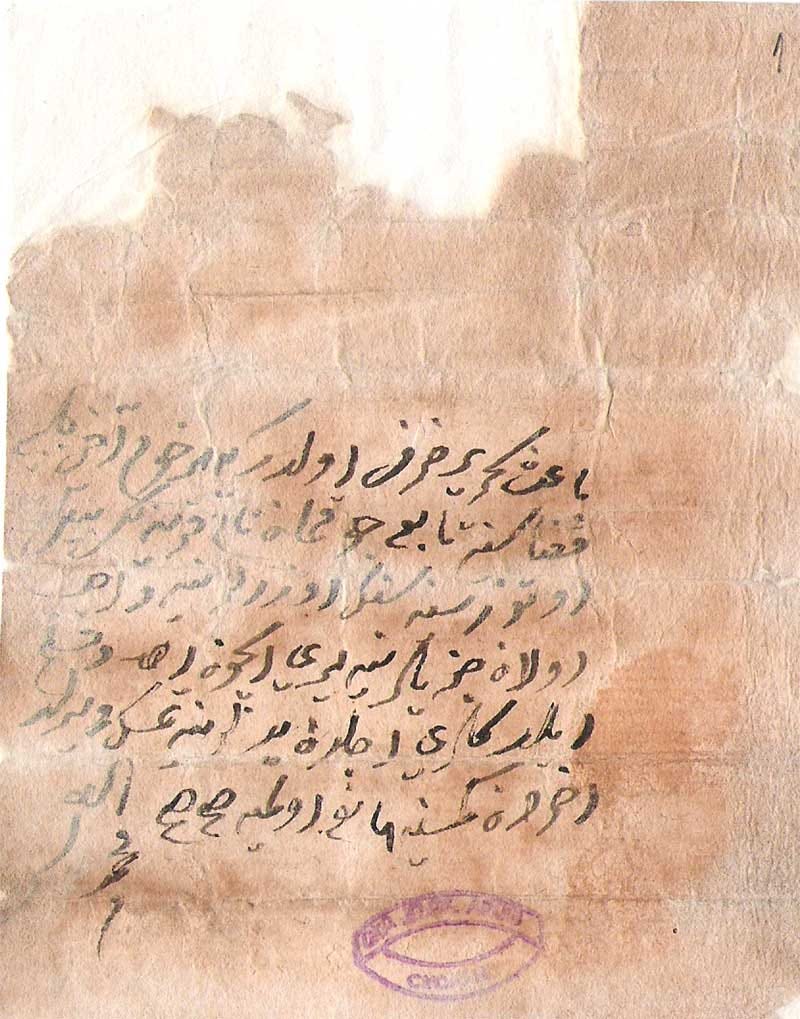
By the time Muslim armies conquered Mesopotamia during the seventh century, Jews had already lived in the region for well over a thousand years.
Under Sasanian Persian rule, Jewish communities had enjoyed a considerable degree of autonomy, allowing them to practise their religion, maintain their institutions, and administer many of their internal affairs.
Even after the Muslim conquest and the subsequent imposition of dhimmi status, Iraq remained one of the most important centers of Jewish learning in the world. The famous academies of Sura and Pumbedita, established centuries earlier in Babylonia, continued to play a central role in the development of Jewish religious law and scholarship.
Jewish intellectual and religious life flourished in these institutions, producing works that would influence Judaism for generations.
But these achievements did not change the Jews’ subordinate legal position. During the ninth century, Caliph al-Mutawakkil introduced stricter regulations targeting non-Muslim communities, demonstrating once again how quickly conditions could deteriorate under a change in leadership.
By the 1940s, approximately 135,000 Jews were living in Iraq. They had obtained citizenship, voting rights, and parliamentary representation, reflecting important legal and political improvements.
However, greater legal equality did not eliminate the anti-Jewish hostility that persisted beneath the surface. In June 1941, following the collapse of Rashid Ali’s pro-Axis government, Arab mobs launched violent attacks against Jews in Baghdad. More than 100 Jews were murdered, while Jewish homes and businesses were looted and destroyed.
Some soldiers participated in the attacks, although other Muslims risked their own safety to shelter Jewish neighbours. The massacre became known as the Farhud, one of the most devastating episodes in the history of Iraq’s Jewish community.
The mass exodus came approximately a decade later. Between 1950 and 1951, roughly 120,000 Iraqi Jews fled amid state persecution, surrendering their citizenship and losing their property in the process. By 1967, approximately 98 percent of Iraq’s Jewish population had disappeared. One of the oldest Jewish communities in the world, a community that had helped shape Judaism itself, had been almost entirely uprooted.
Islam reached Yemen during the seventh century, and under successive Zaydi Shi’i rulers, Jewish communities were subjected to the jizya and an extensive collection of discriminatory restrictions.
Jews were forbidden from riding horses, carrying weapons, or wearing brightly coloured clothing. They were prohibited from constructing homes taller than those belonging to Muslims and were even required to walk to the left of Muslims.
These rules were not simply administrative inconveniences. They were designed to reinforce the inferior status of Jews in everyday life, ensuring that the distinction between Muslims and non-Muslims remained visible.
In 1679, Imam Ahmad ibn Hasan ordered Jews from large parts of Yemen to abandon their homes and relocate to the inhospitable region around Mawza. Mawza was notorious for its extreme heat, arid conditions, poor water quality, and scarcity of resources. Many of the Jews forcibly relocated there died from hunger and disease.
Those who survived were eventually permitted to return after approximately a year, largely because their skills and economic contributions were needed. But returning did not necessarily mean recovering their homes or possessions, much of which had already been lost.
Another particularly disturbing policy concerned Jewish orphans. Under certain Zaydi interpretations of Islamic law, Jewish children who had lost their parents could be taken into Muslim custody and raised as Muslims. In practice, this meant that children could be forcibly separated from their grandparents, siblings, and other relatives, even when surviving family members were willing to care for them.
The policy was enforced again during the 20th century under Imam Yahya. During the 1920s and 1930s, Jewish organizations in Mandatory Palestine helped rescue hundreds of Yemeni Jewish orphans who were at risk of forced conversion. Many were secretly smuggled out of Yemen and brought to Palestine, where they could retain their Jewish identity.
By the 1930s and 1940s, at least 10,000 Jews were living in Sana’a’s Jewish quarter, part of a much larger Jewish population scattered throughout the country. But this centuries-old community would soon experience a dramatic transformation.
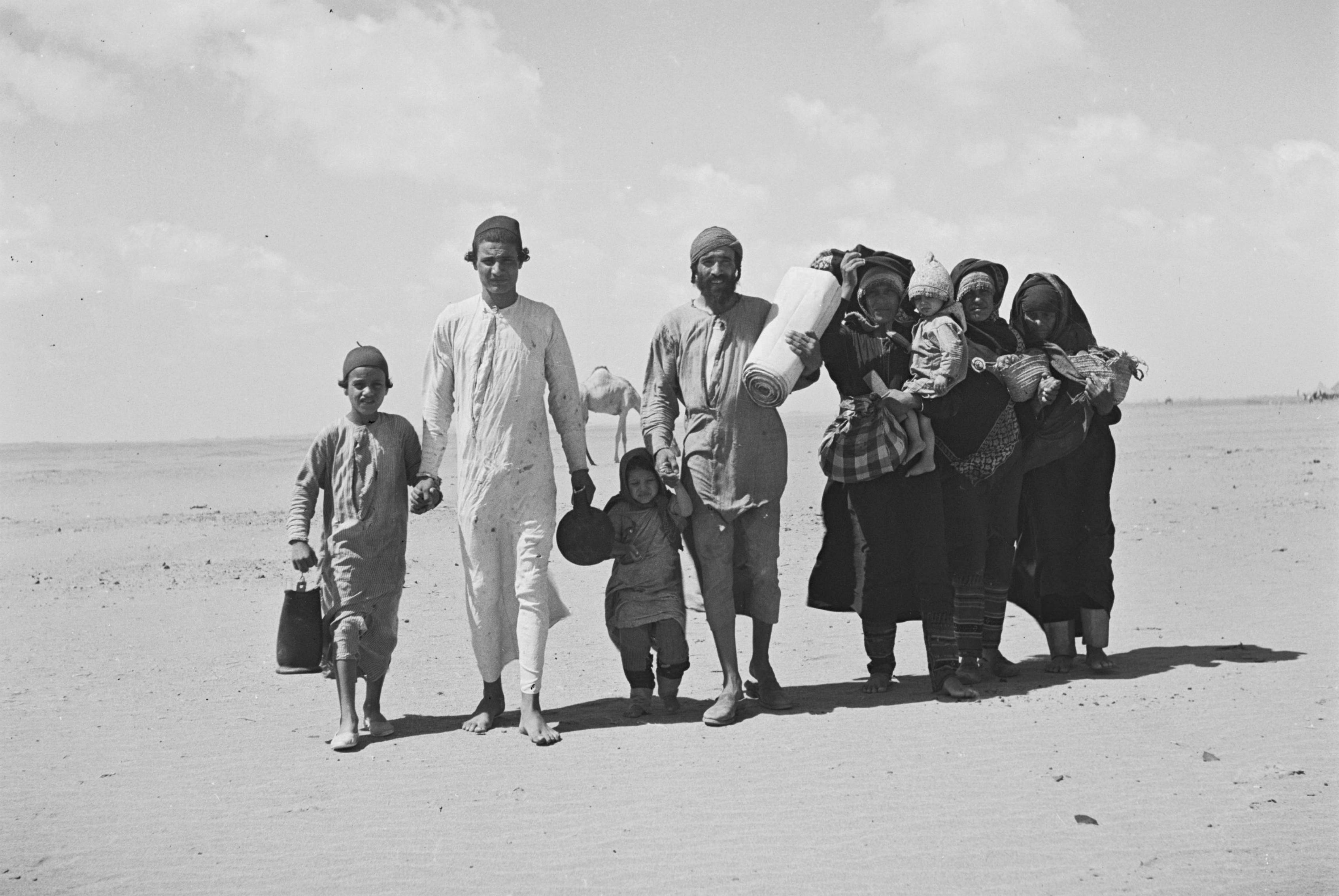
Between 1949 and 1950, approximately 49,000 Yemeni Jews were evacuated to Israel through Operation Magic Carpet. Many undertook dangerous journeys on foot to reach the British-controlled port city of Aden, where aircraft transported them to the newly established Jewish state. By the early 1950s, almost the entire Jewish population of Yemen had departed.
For centuries, Yemeni Jews had lived as a vulnerable minority under rulers who could restrict their rights, confiscate their property, or interfere with their religious identity. With the establishment of Israel, they finally had somewhere to go where their security did not depend on the tolerance of another religious majority.
Jewish communities existed in Persia long before Muslim armies conquered the Sasanian Empire during the seventh century.
Over the centuries, Jews experienced periods of relative stability alongside episodes of severe discrimination and persecution. Conditions became especially difficult following the establishment of the Safavid dynasty in 1501, which introduced a strict Shi’i religious system.
Under this system, Jews were frequently regarded as ritually impure. They faced restrictions on their religious practices, occupations, and everyday interactions with Muslims. In some places, they were forbidden from handling food intended for Muslim consumption or entering public bathhouses used by Muslims. Such restrictions reflected a broader religious worldview in which Jewish contact with Muslim society could itself be regarded as contaminating.
There were also periods of forced conversion. In 1656, Shah Abbas II issued a decree compelling Jews to convert to Islam. Some Muslim officials resisted implementing the order, and the policy was eventually reversed by 1662.
Nearly two centuries later, in 1839, a mob attacked the Jewish community of Mashhad. The city’s Jews were forced to convert to Islam, although many continued to practise Judaism secretly, preserving their religious identity behind the appearance of conformity. By around 1900, Iran had a Jewish population of at least 40,000, many of whom lived in poverty.
Political reforms between 1906 and 1911 introduced greater legal equality, including Jewish parliamentary representation and changes to religious taxation. Nevertheless, non-Muslims remained excluded from certain positions, including government ministerial office.
These reforms marked meaningful improvements, but they did not completely dismantle the religious and political inequalities that had shaped Jewish life for centuries.
Then came the Islamic Revolution of 1979. Ayatollah Khomeini’s rise to power transformed Iran from a pro-Western monarchy into an oppressive Islamic republic. Amid renewed persecution, political uncertainty, and restrictions, tens of thousands of Jews fled the country.
Once again, a longstanding Jewish community found its future threatened by a political system in which its security depended on the attitudes and policies of those in power.
The historical region (not to be confused with an autonomous country or civilization) of Palestine — encompassing what is today the State of Israel, Judea and Samaria (also known as the West Bank), and Gaza — came under Muslim rule during the seventh century.
The Roman province of Judaea was renamed Syria Palaestina around 135 CE by Roman Emperor Hadrian, following the suppression of the Bar Kokhba revolt, a major Jewish rebellion against Roman rule. In 1516 and 1517, it became part of the Ottoman Empire.
Jewish communities had lived in the region long before either conquest, and under Muslim rule they were generally subjected to the same dhimmi framework found throughout much of the Middle East. Jews were permitted to practise their religion and maintain their communities, but these rights were accompanied by special taxes, legal restrictions, and various forms of social humiliation and mistreatment.
In Jerusalem, for example, Jews were at times required to wear distinctive yellow clothing. In public bathhouses, they could be required to identify themselves and were provided with inferior towels. These practices served as everyday reminders of their subordinate status.
The history of anti-Jewish violence in Palestine also predates modern political Zionism. In 1834, during a revolt against Egyptian rule, Arab villagers attacked the Jewish community of Safed. Jews were beaten, raped, and robbed, while their homes and synagogues were pillaged and their possessions stolen. This violence occurred decades before organized political Zionism emerged, and more than a century before the establishment of Israel.
During the 19th century, the Ottoman Empire introduced important reforms, including an 1856 decree promising greater religious equality. These measures sought to modernize the empire and improve the legal standing of its non-Muslim populations.
But centuries of discrimination and persecution, both in Europe and throughout the Muslim world, had already contributed to a growing conviction among Jews that their future could not depend indefinitely on the goodwill of others. They needed a homeland where they could govern themselves, defend themselves, and exercise rights that did not depend on the whims of foreign rulers or the tolerance of the local population. This was one of the central motivations behind the emergence of modern Zionism.
During the First World War, Britain established control over Palestine and committed itself to supporting the establishment of a Jewish national home. By 1922, approximately 84,000 Jews were living in the territory. As Jewish immigration increased, so too did Arab opposition, often inflamed by propaganda promoted by Arab nationalist and extremist leaders. This hostility contributed to serious outbreaks of anti-Jewish violence in 1920, 1921, and 1929.
The 1929 Hebron massacre was particularly devastating. Hebron’s Jewish community had maintained a presence in the city for thousands of years, long before the emergence of modern Zionism or the Israeli-Palestinian conflict. Nevertheless, Arab rioters attacked the community, murdering 67 Jews and devastating its institutions and homes.
Meanwhile, disputes over Jewish worship at Jerusalem’s Western Wall became increasingly politicized. Some Arab leaders deliberately spread rumours that Jewish religious activity threatened Muslim holy sites, exploiting these accusations to inflame hostility and encourage violence. One of the most influential figures in this period was Amin al-Husayni, a prominent Palestinian Arab leader who later collaborated with Nazi Germany and helped disseminate Nazi propaganda throughout the Arab world.
His political activities illustrate how antisemitism became increasingly intertwined with elements of Palestinian nationalist politics, drawing on religious hostility, political opposition to Zionism, and eventually European antisemitic ideology.
But the persecution of Jews in Palestine did not begin with al-Husayni, modern Zionism, or the establishment of Israel. It had existed, in different forms and at different levels of severity, for centuries.
The establishment of modern State of Israel did not create the historical vulnerability of Jews living as minorities under foreign rule. It emerged, in large part, as a response to that vulnerability — reversing one of the most common narratives about the origins of Jewish-Muslim hostility.
