


Please consider supporting our mission to help everyone better understand and become smarter about the Jewish world. A gift of any amount helps keep our platform free of advertising and accessible to all.
This is a guest essay by Ronald Silbermann, a civic technologist and author of two books, including “When AI Can Become You: Human Identity in the Synthetic Age.”
You can also listen to the podcast version of this essay on Apple Podcasts, YouTube Music, YouTube, and Spotify.
The free world stands at a moral and technological crossroads.
Defending Israel against contemporary antisemitism and defending individual sovereignty against algorithmic control may appear to be separate struggles. They are two fronts in the same conflict: preventing institutional power from deciding which truths may be remembered, which arguments may be expressed, and which realities may be allowed to exist.
Resisting mass conformity is no longer enough. We need a decentralized digital infrastructure in which historical memory, human attribution, and verifiable knowledge cannot be silently altered, demoted, or erased by governments, corporations, or ideological consensus.
The danger is easy to miss because it rarely announces itself as censorship. It arrives as mediation: a ranking decision, a safety rule, a neutral summary, a recommendation, a loaded label, or an apparently balanced answer. No single intervention appears decisive, yet together they determine what becomes visible, what appears authoritative, and what gradually disappears from public consciousness.
I encounter this mechanism myself when I ask an AI model to interpret my public body of work. In a narrow sense, its answer is accurate. It recognizes my books and recurring interests in Web3, decentralization, censorship, digital sovereignty, language, and the architecture of power.
Yet it relegates dozens of essays on Israel, the mutation of antisemitism into anti-Zionism, the failure of Western institutions, Iran’s theocratic expansionism, migration, Qatar’s financial and political support for Hamas, supranational governance, and the capture of historical memory to minor themes within a general interest in technology.
Only when I question it directly about Israel does the model acknowledge the hierarchy that runs through my work.
Israel is not one subject among many. It is the clearest test of whether the West still possesses the intellectual confidence and instinct of self-preservation that Israel exercises on behalf of its citizens. Yet the model reconstructs that hierarchy only after I prompt it decisively.
Its first answer is not an obvious fabrication. It is something more difficult to detect: an algorithmic half-truth created by rearranging emphasis. Facts can remain individually correct while their relationships are fragmented so thoroughly that the resulting portrait becomes false.
A model does not need to erase a fact if it can demote it. Nor does it need to prohibit an argument if it can dissolve its moral force in generic corporate language.
One exchange with one model cannot prove a universal conspiracy or permanent ideological rule, but it reveals the nature of the problem. Artificial intelligence does more than retrieve information. It orders information, assigns relevance, reconciles conflicts, and translates morally charged claims into categories its designers consider safe, balanced, or useful.
Increasingly, power lies not in possessing facts but in determining their relative importance.
Israel is commonly presented as a regional conflict, a religious controversy, or a difficult foreign-policy question. That framing is too small.
Israel is the moral stress test of the free world because the campaign against it concentrates nearly every mechanism through which an open society can be persuaded to abandon its principles: historical inversion, selective universalism, academic conformity, intimidation disguised as activism, and the conversion of self-defense into evidence of guilt.
The methods used to delegitimize Israel do not remain confined to the Middle East. Language is detached from history and inverted for emotional effect. Islamist terrorism becomes “resistance.” Israeli self-defense becomes genocide. The region’s most pluralistic society becomes “apartheid.” The descendants of refugees and indigenous communities are recast as “foreign colonizers,” while openly colonial and eliminationist movements are interpreted through the benevolent vocabulary of Palestinian “emancipation.”
The problem is that they increasingly function as verdicts that eliminate the need for evidence. Once institutions accept language engineered to predetermine moral judgment, the same method can be applied to speech, migration, religion, public health, property, identity, and political opposition.
What begins with Israel rarely ends with Israel.
Israel is the first and clearest target because Jewish history exposes the danger of allowing fashionable consensus to replace factual memory. An attack on Israel is therefore also an attack on the West’s capacity to remember what it learned at catastrophic cost.
The asymmetry is revealing: “Germany for the Germans” and “Britain for the Britons” are immediately recognized as exclusionary ethnonationalism, while “Palestine for the Palestinians” is celebrated as progressive liberation, even when it implies the disappearance of the Jewish state.
Where did this moral asymmetry come from?
The university should be the institution most resistant to this process. Its purpose is not to manufacture agreement but to make disagreement more intelligent. It should teach students to separate evidence from emotion, intentions from consequences, and moral aspiration from historical fact.
Yet a significant part of the Western academic ecosystem has reversed that function. It has not abolished critical thought; it has made critical thought conditional upon reaching the approved moral conclusion.
This is the culture of alignment.
Its participants learn that professional security, social belonging, publication, funding, and prestige may depend less on the quality of an argument than on its conformity with an accepted moral vocabulary. The reward is not always financial, and the punishment is rarely formal. The more efficient enforcement mechanism is anticipatory obedience: scholars and students learn which questions produce suspicion, which distinctions require ritual apologies, and which conclusions should be reached before inquiry begins.
The spectacle before the U.S. Congress in December 2023 made the contradiction visible. Asked whether calls for the genocide of Jews violated their institutions’ conduct policies, the presidents of Harvard, MIT, and the University of Pennsylvania retreated into the language of context and procedure.
The problem was not a principled defense of unrestricted speech. Had these institutions consistently protected offensive expression, their answers might at least have been coherent. The scandal arose from the contrast between their extraordinary sensitivity to language in other contexts and their sudden legalistic uncertainty when the target was Jewish.
Institutions that had developed elaborate vocabularies for microaggression, safety, harm, exclusion, and protected identity discovered ambiguity precisely where moral clarity should have been easiest.
This is what happens when judgment is replaced by ideological classification and that classification becomes an algorithmic index. The relevant question is no longer what was said, what it meant, or what followed, but who occupies the approved position in the hierarchy of victimhood. The emotional classification survives after the words themselves are forgotten.
Cultural relativism then becomes selective rather than universal. Western democracies are subjected to relentless deconstruction, while authoritarian and theocratic doctrines associated with movements presented as oppressed are protected from equivalent scrutiny.
Criticism of Christianity, capitalism, nationalism, or Western history is celebrated as emancipation. Criticism of Islam may be preemptively classified as hatred toward Muslims.
The necessary distinction disappears: hostility toward someone because he is Muslim is prejudice, while scrutiny of political Islam, religious law, extremist financing, or eliminationist doctrine is legitimate civic analysis. Once the second is automatically renamed Islamophobia, inquiry has already been closed.
When a university cannot preserve that distinction, tolerance becomes self-negation. It creates an ideological shield behind which radical movements can operate while their critics become the primary moral danger.
The result is not pluralism but a managed order in which some identities confer innocence, others confer guilt, and facts are judged according to the presumed status of the speaker.
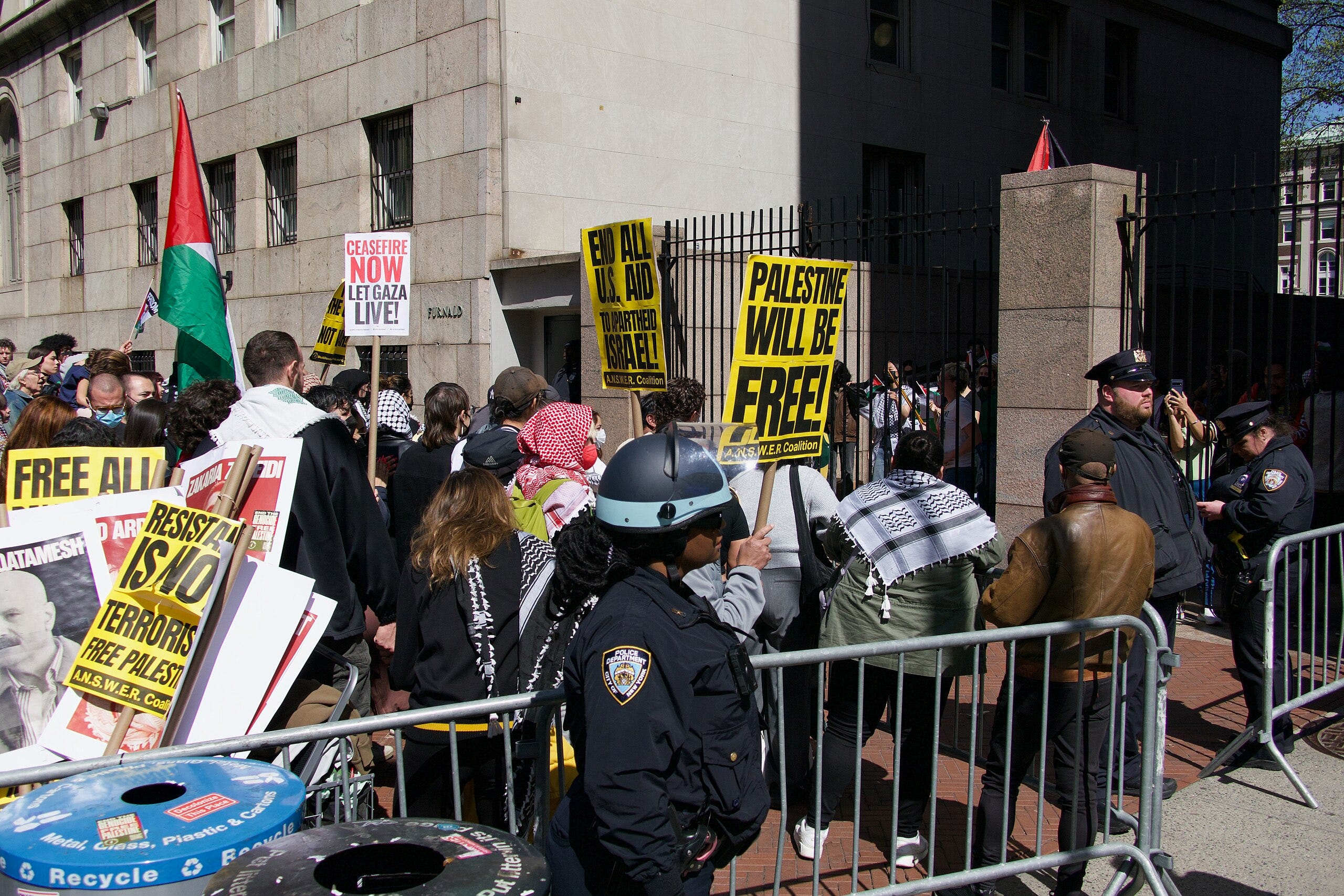
Contemporary antisemitism has accomplished, with chilling effectiveness, what earlier forms of hatred could not: It has made hostility toward Jews appear morally virtuous, even among people who sincerely consider themselves opponents of prejudice and proponents of peace.
It no longer needs the old racist symbols, xenophobic slurs, or openly derogatory vocabulary. It can present itself as anticolonialism, intersectionality, restorative justice, humanitarian concern, or resistance to power. None of those concepts is inherently antisemitic; each can describe a real phenomenon. Their political utility lies precisely in the moral prestige they have appropriated and inverted.
Once Israel is assigned the role of “colonial oppressor” and Palestinians the role of permanent subaltern victims, evidence becomes secondary to the story. Jewish history before 1948, the continuous Jewish presence in the land, the expulsion of Jews from Arab countries, repeated wars of annihilation, terrorism, hostage-taking, and the declared objectives of Hamas and Iran become inconvenient details inside a prewritten drama.
The transformation is completed by replacing the word “Jew” with “Zionist.” Zionism is stripped of its historical meaning as the movement for Jewish national self-determination and redefined as a uniquely malignant ideology of total control.
Welcome to the inversion.
Ancient accusations return in modern form. “Jewish influence” becomes “Zionist control.” Every familiar conspiracy theory about Jews becomes “the Zionist lobby.” Ritual murder reappears through obsessive and frequently unverified accusations of “Jewish cruelty toward children.” Collective guilt becomes acceptable so long as it is assigned to “Zionists” rather than Jews.
At the same time, “Islamophobia” can be institutionalized as a device for closing inquiry. A category designed to protect human beings from discrimination cannot become immunity for ideas hostile to Western constitutional order, totalitarian religious organizations, foreign funding networks, or political theologies subsidized with public money. When criticism of Islamist power is treated as an attack on Muslims, the distinction between a person and an ideology collapses. The shield against prejudice becomes a shield against scrutiny.
The moral inversion is complete when an assault on Israel can be experienced as compassion. Those repeating eliminationist slogans do not see themselves as carriers of an ancient hatred but as progressive participants in social justice.
Today, prejudice no longer recognizes itself as prejudice. Institutional validation protects it from self-recognition, making it more durable than explicit antisemitism.
Artificial intelligence does not emerge outside this culture. The engineers, researchers, policy teams, trust-and-safety departments, executives, contractors, and annotators who build these systems were educated within the same institutional environment.
They bring categories of harm, assumptions about power, definitions of extremism, and expectations about acceptable speech. These judgments enter AI systems even when no programmer writes a direct ideological command.
The process occurs across several layers. Training data determine which texts become statistically central; filtering removes material before training; human feedback rewards some answers and penalizes others; safety policies decide which claims require refusal or qualification. Retrieval systems select sources, ranking determines which answers appear first, and summarization decides which facts survive compression.
Every layer may look technical, but each contains judgments about authority, relevance, risk, and legitimacy.
This is why algorithmic bias is too weak a description. The larger danger is epistemic governance: systems that mediate access to knowledge while concealing the institutional judgments embedded in that mediation.
An ordinary search result allows a user to inspect several sources. A fluent AI response can collapse sources, interpretation, uncertainty, and moral framing into one seamless voice. Its confidence becomes part of its authority.
Classical slurs are comparatively easy to identify. Modern antisemitism speaks the language of human rights, reverses victim and aggressor, and embeds historical tropes inside respectable political categories. A model trained to detect obvious hatred may miss an argument that presents Jewish vulnerability as manipulation and Jewish self-defense as proof of inherent criminality.
The danger also works in the opposite direction. Poorly designed systems can overclassify legitimate criticism, suppress genuine debate, or turn contested definitions into automatic verdicts. If one corporation controls the data, taxonomy, moderation policy, ranking logic, and interface through which billions encounter reality, even well-intentioned errors acquire civilizational scale.
This pattern extends beyond Israel. Debates over climate policy, DEI, the legacy of pandemic governance, migration, energy policy, and the expanding political agenda gathered beneath the rainbow flag differ greatly in substance, yet they often pass through the same machinery. Institutional premises are treated as settled before the conversation begins; moral vocabulary replaces disputed reasoning; distinctions are recoded as harm; and dissent is summarized in language that implies suspicion.
The model may know the counterargument. The system surrounding it determines how respectfully, visibly, or fully that counterargument may appear across borders, often through almost identical rhetoric.
Three principal mechanisms must be distinguished: moderation, amplification, and generation.
Moderation decides what is removed, restricted, or demonetized. Amplification determines what is recommended and how widely it travels. Generation determines how an AI answers, summarizes, and intellectually frames a subject.
Public debate concentrates on moderation because deletion is visible. Yet amplification and generation may be more consequential because they alter perception without overt censorship.
A platform does not need to ban a defense of Israel if it can reduce its distribution and reach. Nor does it need to endorse an antisemitic narrative if its engagement system repeatedly rewards the anger, accusation, graphic imagery, and conspiratorial certainty that make such narratives viral.
An AI does not need to deny the Holocaust to weaken historical understanding. It can introduce false equivalences, omit causal context, substitute generic language for specific responsibility, or treat documented history and ideological revision as symmetrical perspectives.
The same structure governs other contested subjects. A system need not forbid dissent on climate policy, DEI, or gender ideology if it consistently treats one position as neutral expertise and the other as a social risk requiring warnings, qualifications, or reduced reach.
The double standard lies less in what the system knows than in how it distributes moral presumption.
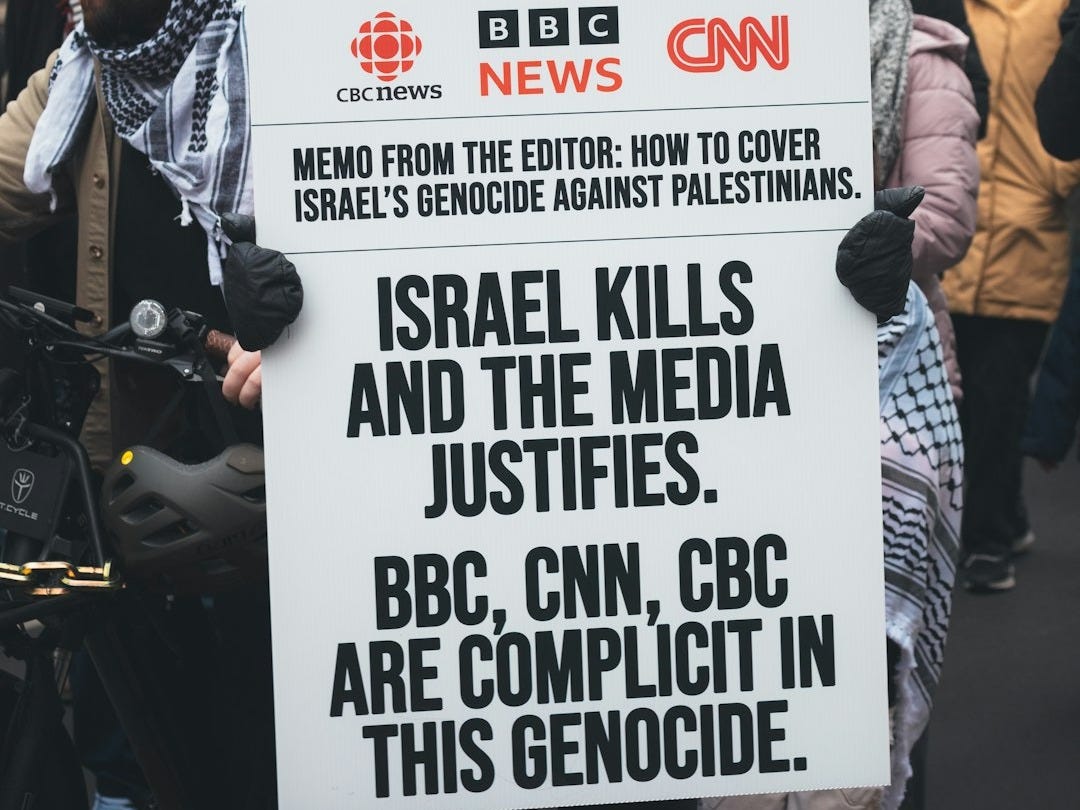
Global commercial incentives intensify the problem. Algorithms optimized for engagement favor material that provokes immediate reaction. Anti-Israel propaganda supplies exactly what such systems reward: morally absolute accusations, emotionally overwhelming imagery, collective identity, and a simple division between oppressor and victim.
The prejudice supplies the narrative; the engagement machine supplies the distribution.
No central conspirator is required for institutional ideology and commercial optimization to converge. Their convergence creates a feedback loop. Viral claims enter journalism and campus activism. Repetition makes them appear representative. Apparent consensus enters future training data. Models reproduce it as the statistically dominant account, lending it a new aura of neutrality.
What began as propaganda can mature into infrastructure. The output returns to the public as an authoritative summary and becomes the currency of public narrative.
The battle is no longer limited to interpretations of current events. Generative AI can manufacture the evidentiary surface of history. Even the United Nations Educational, Scientific and Cultural Organization (UNESCO) warned as early as 2024 that artificial intelligence could accelerate Holocaust denial and distortion through fabricated content, unreliable training data, and plausible but false answers.
Synthetic scenes of prisoners, liberators, and children can now be invented for emotional effect, attention, or ideological revision. Such images need not deny the Holocaust explicitly. Their cumulative effect can be equally corrosive.
When fabricated photographs circulate beside authentic documentation, the boundary between testimony and simulation weakens. Once the public discovers that some emotionally powerful images are false, doubt can spread to genuine evidence.
The liar no longer needs to disprove the archive. He needs only to pollute the information environment until confidence in every archive declines.
The coming crisis is therefore not merely misinformation. It is the collapse of provenance. People will encounter texts, voices, photographs, and videos without knowing who created them, what was altered, which source preceded which copy, or whether a human witness ever stood behind them. Historical truth will compete not only with lies but with infinite synthetic plausibility.
In this context, Israel remains central because attacks on its legitimacy depend heavily on controlling historical sequence. Remove the numerous wars launched against it, the repeated expulsions of Jews throughout history, the rejected peace proposals, the terror campaigns, the concerted regional persecution of Jews, and the declared programs of annihilation, and the remaining images can be arranged into a morality play with predetermined roles — a simulation of reality.
An algorithm that summarizes without chronology does more than shorten history. It can reverse its meaning.
The silent algorithmic normalization of antisemitism is not a discrete malfunction that can be repaired with a better moderation list. It is the contemporary technological expression of a much earlier moral failure.
Universities taught generations to confuse alignment with thought. Institutions learned to rank human beings through simplified categories of power and victimhood. Social platforms transformed outrage into a business model. Artificial intelligence now inherits the language, data, incentives, and unresolved contradictions of that old world.
Israel reveals the consequences first because its existence depends on historical memory and moral distinction rather than conformity. A civilization unable to distinguish a liberal democracy defending its citizens from movements committed to its destruction has not become more compassionate.
It has lost the conceptual capacity to defend freedom.
A technological system that reproduces that confusion at scale does more than reflect decadence. It automates it. That is how liberal democracy becomes an empty slogan today.
Yet the good news is that the same emerging technologies can support a different future. Artificial intelligence can recover names from testimony, connect dispersed archives, translate evidence, and reveal patterns human investigators might miss. Blockchain and cryptographic systems can preserve provenance. Decentralized networks can distribute custody. Reputation systems can make evaluators accountable.
None guarantees truth, but together they can prevent truth from depending entirely on the permission of a central authority.
Defending Israel, preserving historical memory, and decentralizing the infrastructure of knowledge are not separate causes. They are the same struggle on three fronts: preventing power from acquiring the ability to rewrite reality without leaving a trace.
The question before the free world is no longer merely who may speak. It is who will design the systems that decide what speech can be found, how history will be summarized, which evidence will remain visible, and whether future generations will distinguish inherited memory from its synthetic reconstruction.

Thank you for your Carefully constructed, artfully articulated presentation of the profound and ominous issues that threaten us. But who will listen? Who will respond powerfully?
The well-funded Jewish establishment has long ago failed to address the changes in the written words that overlooked and eliminated Jewish history and culture as other ones were celebrated and elevated. Schools and universities have already become dangerous places for understanding, much less valuing, the Jewish place in civilization. All without significant and powerful voices raised in concern. Yet those who failed us do not slink away in shame; they do not seek to empower vigorous , imaginative, alternative sources that would be our Maccabees, willing to fight bravely and brightly to defend and preserve Jewish history, a Jewish present, and a Jewish future. It is sad and worrisome.
Beautiful