


Please consider supporting our mission to help everyone better understand and become smarter about the Jewish world. A gift of any amount helps keep our platform free of advertising and accessible to all.
You can also listen to the podcast version of this essay on Apple Podcasts, YouTube Music, YouTube, and Spotify.
The Israel Defense Forces (IDF) is often discussed as a single entity, but in reality it is a complex ecosystem of highly specialized units, each with a distinct role, culture, and history.
Despite the global image of the IDF as an aggressive fighting force, its guiding principle is the second word in its name: defense. The IDF is designed to protect Israel, its citizens, and its sovereignty — but this aspect is often overlooked. Media and popular narratives focus on warfare, raids, and operations, giving the impression of unprovoked aggression.
In reality, the IDF operates well below its capabilities — some in full public view, others almost entirely in the shadows. Together, they reflect how Israel thinks about security: not as brute force alone, but as intelligence, precision, adaptability, and survival.
Here are seven IDF units worth knowing:
1) Sayeret Matkal
Function: Strategic Reconnaissance and Counterterrorism
Sayeret Matkal is Israel’s most famous special forces unit, known for extreme selectivity and intellectual rigor, and often compared to the British SAS or U.S. Delta Force. Operating directly under IDF Military Intelligence, its primary mission is deep reconnaissance and high-risk strategic operations far beyond Israel’s borders.
The unit came to global prominence in 1976 during Operation Entebbe, when Sayeret Matkal succeeded in rescuing 102 passengers and crew of an Air France aircraft hijacked by terrorists at Uganda’s Entebbe Airport, nearly 5,000 kilometers (3,000 miles) from Israel. The operation succeeded against extraordinary odds and became a landmark moment in modern counterterrorism, reshaping how states think about hostage rescue and long-range special operations.
Long before that, Sayeret Matkal played a quiet but crucial role in the lead-up to the 1967 Six-Day War, conducting clandestine reconnaissance missions deep inside enemy territory. During the Yom Kippur War, when Israel was caught off guard by coordinated surprise attacks, Sayeret Matkal was again deployed to gather real-time intelligence in areas where conventional forces had limited visibility.
Many of Israel’s political and military leaders (including prime ministers Benjamin Netanyahu, Ehud Barak, and Naftali Bennett) served in Sayeret Matkal — reflecting its emphasis not just on physical excellence, but decision-making under pressure.
2) Shayetet 13
Function: Naval Commandos
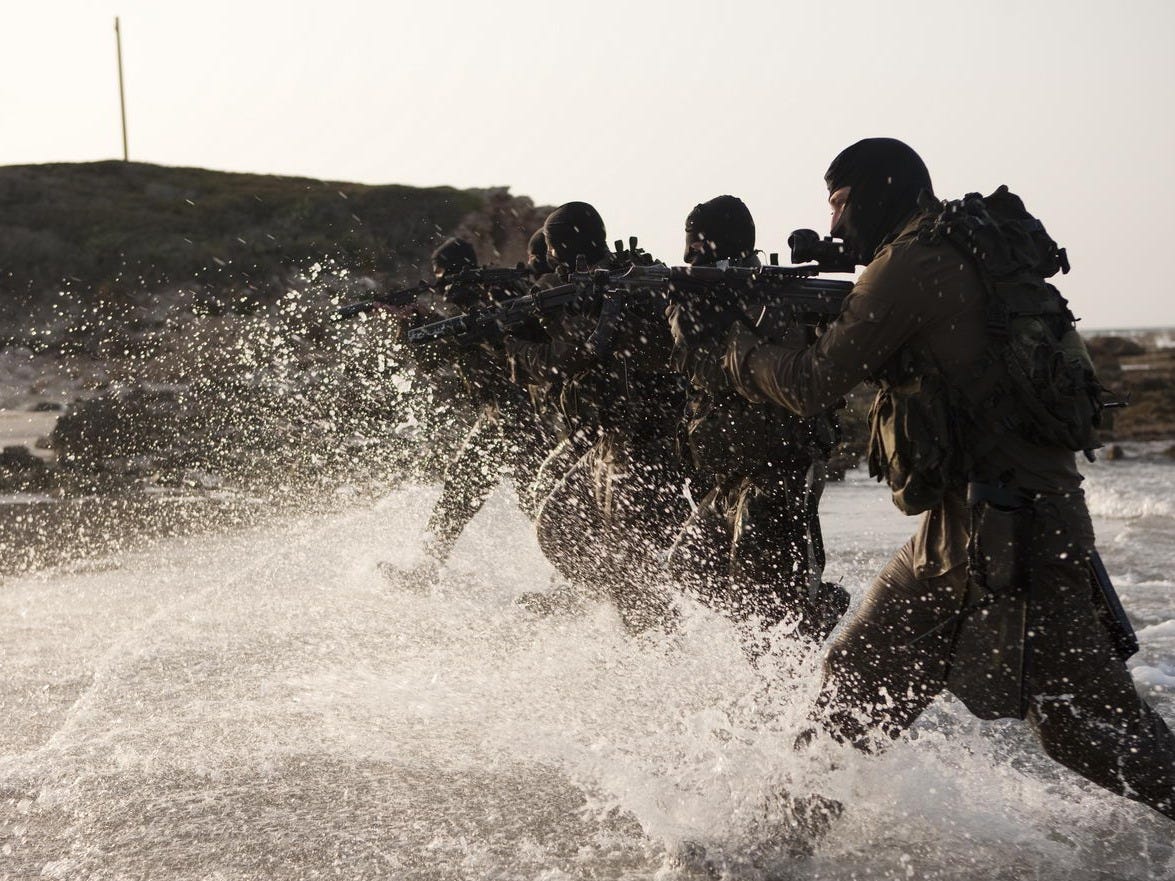
Shayetet 13 is the IDF’s elite naval special forces unit, specializing in maritime counterterrorism, sabotage, and coastal operations. Comparable to the U.S. Navy SEALs, the unit operates at sea, on land, and underwater.
Israel’s geography makes maritime threats particularly sensitive; ports, offshore infrastructure, and naval supply routes are critical. Shayetet 13 exists to ensure that Israel maintains dominance in these domains, often in total silence.
At the outbreak of the 1948 Arab–Israeli War, Yohai Ben-Nun founded Shayetet 13. He commanded a force that sank the Egyptian Navy flagship, the Emir Farouk, in the Israeli naval campaign in Operation Yoav, for which he was awarded the Hero of Israel decoration.
For decades, one of Shayetet 13’s greatest advantages was psychological rather than kinetic: surprise from impossible places. Veterans of Shayetet 13 often say the most dangerous enemy wasn’t a terrorist or a soldier; it was the water itself. There are accounts of missions conducted in extreme cold, heavy currents, poor visibility, and long underwater transits with zero margin for error.
In 2002, Shayetet 13 played a central role in Operation Noah’s Ark, the seizure of the Karine A, a ship carrying a massive shipment of Iranian-supplied weapons intended for Palestinian terror groups. The interception took place far from Israel’s shores, in international waters, at night. The ship was taken intact, the crew detained, and the weapons exposed to the world.
3) Unit 8200
Function: Signals Intelligence and Cyber Operations
Unit 8200 is the IDF’s largest unit, and arguably its most strategically important. It is responsible for signals intelligence (SIGINT), cyber defense, cyber offense, and advanced data analysis. This unit embodies Israel’s belief that information superiority can prevent wars, or shorten them dramatically.
Often compared to the U.S. National Security Agency, Unit 8200 plays a central role in early threat detection, intelligence-driven targeting, and technological innovation. Its alumni have gone on to shape Israel’s tech sector, founding startups and leading major global companies. According to the Director of Military Sciences at the Royal United Services Institute in 2015, “Unit 8200 is probably the foremost technical intelligence agency in the world and stands on a par with the NSA in everything except scale.”
Unit 8200 is believed to have developed a collection of computer malware related to Stuxnet, a malicious computer worm that targeted supervisory control and data acquisition systems, and is believed to be responsible for causing substantial damage to the Iran nuclear program after it was first installed on a computer at the Natanz Nuclear Facility in 2009.
A year later, The New York Times cited “a former member of the United States intelligence community” alleging that Unit 8200 used a secret kill switch to deactivate Syrian air defenses during Operation Orchard, an Israeli airstrike on a suspected nuclear reactor in Syria in 2007.
And, according to a New York Times article from 2017, Unit 8200’s hack of Kaspersky Lab (a Russian cybersecurity company) allowed them to watch in real time as Russian government hackers searched computers around the world for American intelligence programs Israelis who had hacked into Kaspersky’s own network alerted the United States to the broad Russian intrusion of U.S. systems.
4) Shaldag
Function: Elite Airborne Commandos
Shaldag specializes in clandestine operation, combat search and rescue, commando style raids, hostage rescue, irregular warfare, long-range penetration, military intelligence operations, special operations, and special reconnaissance within enemy territory. It was founded in 1974, in the aftermath of the Yom Kippur War, by Muki Betser, a Sayeret Matkal veteran who brought several Matkal veterans with him.
Shaldag operators undergo the longest training phase of any unit in the IDF, lasting 22 months, including a parachuting course, a counter-terrorism course, all-weather and all-terrain navigation exercises, air-to-ground cooperation and airborne operations, and a two-week course in enduring enemy captivity, including being subjected to a surprise mock kidnapping, held in prison-like conditions, and subjected to threats, interrogation, physical violence, and humiliation.
In 1991, Shaldag took part in Operation Solomon, securing the airlift of 14,000 Ethiopian Jews from Addis Ababa to Israel. In September 2024, Shaldag conducted a raid in Syria near the city of Masyaf and destroyed an underground precision missile factory built by Iran.
5) Tzanhanim
Function: Paratroopers Brigade
The Paratroopers Brigade is an airborne infantry brigade known for speed, adaptability, and combined-arms operations. While parachuting is now a smaller part of its mission, the brigade remains one of the IDF’s most versatile infantry formations.
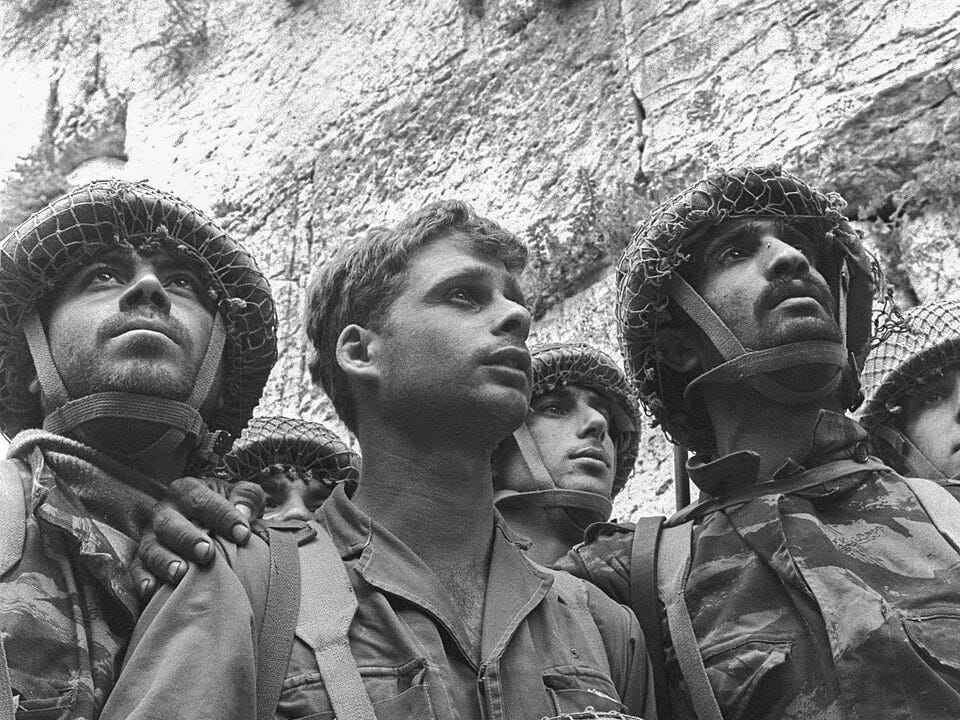
Historically central to Israel’s early wars, the Paratroopers helped shape the IDF’s offensive doctrine. In the 1967 Six-Day War, reservists from this unit, formed into the 55th Paratroopers Brigade, took part in the capture of Jerusalem. The 55th Brigade paratroopers were the ones to retake the Western Wall and the Temple Mount, considered a historic moment and the highlight of the war by the Israeli public due to the sanctity of these places to the Jewish People.
During Operation Entebbe in 1976, the Paratroopers force was tasked with securing the civilian airport field, clearing and securing the runways, protection and fuelling of the Israeli aircraft.
6) Maglan
Function: Reconnaissance
Maglan is a reconnaissance unit that specializes in operating behind enemy lines and deep in enemy territory, using advanced technologies and weaponry. The unit’s name means “Ibis” (a group of long-legged wading birds) because, according to one officer, “Maglan is a bird that knows how to adapt in every situation.”
Very little is known about the unit, only that the force performs top secret operations behind enemy lines, deep within hostile territory. Like Sayeret Matkal, Maglan reports to the IDF’s General Staff and not to one of its regional commands.
Recruits train extensively for 18 months in what is considered to be one of the most challenging training courses in the IDF. After six months of basic and advanced infantry training within the Paratroopers Brigade, the soldiers then must complete a 60-kilometer (37-mile) beret march to Maglan’s base to continue their training. Physical standards are high, with candidates required to carry equipment weighing about 70 percent of their body mass over several dozen kilometers. About two-thirds of the candidates drop out due to the harsh nature of the program.
In 2018, Maglan snipers won the IDF International Sniping Competition, overcoming units such as Sayeret Matkal, the US Navy SEALs, and US Army Sniper School.
7) Home Front Command
Function: Civil Defense
Unlike the other units on this list, the Home Front Command is focused inward. Its mission is to protect Israeli civilians during wars, missile attacks, natural disasters, and emergencies. It was created in 1992 in response to the lessons of the Persian Gulf War, which was the first war since the 1948 Arab–Israeli War in which centers of civilian population faced significant threat.
Among other responsibilities, the Home Front Command trains, guides, and operates Magen David Adom (MDA), Israel’s national emergency medical, disaster, ambulance and blood bank service, as well as firefighting and rescue services.
In 2021, the Home Front Command released an application for iPhone and Android that provides localized alerts to missiles and other dangers. Following the Hamas-led massacre in Israel on October 7th and the subsequent war, the Home Front Command organized emergency alerts for over 37,000 missiles and drones launched at Israel.
Although it typically only works for emergencies within Israel, the Home Front Command’s reach was expanded to cover the 2024 and 2025 host cities of the Eurovision Song Contest, due to fears of anti-Israel violence targeting Israelis and local Jewish communities.
Israel has also sent Home Front Command troops to assist with emergency rescue and service abroad, including after a major earthquake in Albania in 2019, a residential building collapse in Florida in 2021, and major earthquakes in Turkey in 2023.
Honorary Mention: Military Advocate General’s Corps
Function: Domestic and International Law
The Military Advocate General’s Corps is responsible for implementing the rule of law within the IDF. The unit’s objectives include integrating the rule of law amongst IDF commanders and soldiers; providing commanders with the tools for the effective performance of their missions in accordance with the law; and working with the IDF to achieve its goals on all legal fronts.
Contrary to international belief, the IDF does not allow a single soldier, on the ground or in an aircraft, to unilaterally decide when to strike a target. In fact, the question of whether a strike is proportionate is not left to commanders or generals.
Instead, Israeli military guidelines require that proportionality assessments be prepared and reviewed by the Military Advocate General’s Corps. These military lawyers determine whether a proposed strike is legally permissible under international law and the rules of war. They are independent, cannot be pressured by the military, and are not part of the chain of command. Every military lawyer is personally accountable for their decisions, which are based on the evidence available at the time.
Because some decisions — balancing likely military advantage against potential civilian harm — can be extraordinarily complex, the legality of certain strikes may even be referred to the Israeli Supreme Court for immediate review before action is taken. This system ensures that every strike is measured, scrutinized, and accountable, reflecting the IDF’s focus on restraint, legality, and proportionality in combat.
The IDF is the finest, most ethical military on the planet. They make every Jew proud of our homeland.
Was hoping you included the 7th Armored Brigade. The oldest tank division in the IDF. Has served in every war.