


Please consider supporting our mission to help everyone better understand and become smarter about the Jewish world. A gift of any amount helps keep our platform free of advertising and accessible to all.
You can also listen to the podcast version of this essay on Apple Podcasts, YouTube Music, YouTube, and Spotify.
Western reactions to the latest unrest in Iran reveal a familiar misunderstanding that has distorted Western analysis of the Middle East for decades.
Much of the coverage has framed the demonstrations as a response to an “economic crisis,” as though inflation, unemployment, or sanctions alone explain the scale and intensity of the unrest.
In reality, the crisis is largely the product of deliberate, compounding choices. For decades, the Iranian regime has prioritized investing in ideology, exporting “revolution,” and funding proxies across the region — from Hezbollah in Lebanon, to militias in Iraq and Syria, to Hamas and Palestinian Islamic Jihad in Gaza — over investing in its own people. Domestic infrastructure, education, healthcare, and private-sector opportunity have been chronically neglected, while elite corruption concentrates wealth and preserves loyalty through patronage networks.
This combination of mismanagement, graft, and ideological adventurism produces the structural stagnation that fuels an “economic crisis.” Hence, what is unfolding in Iran is not merely an economic breakdown; it is the exposure of a far deeper and more entrenched structural crisis, one that cannot be reduced to material hardship or policy mismanagement.
Instinctively, perhaps, Western observers interpret such moments through their own historical experience. Mass protests are assumed to signal democratic awakening. Brutal repression is taken as proof that a regime is nearing collapse. Public rage is read as a demand for liberal reform rather than as a symptom of systemic decay. When reality refuses to cooperate with these expectations, the failure is blamed on bad luck, foreign interference, or insufficient international pressure — but rarely on the assumptions themselves.
The truth is more uncomfortable: The Middle East is not a region struggling to become the West and repeatedly falling short. It is a region operating according to its own political, cultural, religious, and historical logics — many of them illiberal, many of them durable, and many of them fundamentally incompatible with Western expectations. Iran’s crisis is not an exception to this pattern; it is one of its clearest expressions.
Western thinking about the Middle East is dominated by projection. We assume that, beneath different accents, cuisines, and customs, people there are “basically just like us.” That if only corruption were removed, borders redrawn, or the right international programs funded, the region would naturally converge toward liberal democracy, pluralism, and peaceful coexistence.
This belief is comforting. It is also wrong.
The Middle East is not failing to become the West. It is functioning according to its own political, cultural, religious, and historical logics — many of which are deeply illiberal and fundamentally incompatible with Western assumptions. Until this reality is confronted honestly, Western policy, media narratives, and moral judgments will continue to fall well short.
Most Middle Eastern societies are not liberal societies temporarily derailed. They are illiberal societies by design. Individual rights, freedom of expression, minority protections, and equality before the law are not foundational norms across much of the region. Power flows through families, tribes, clerical hierarchies, and security services rather than accountable institutions. Loyalty is personal, not procedural. Justice is discretionary, not blind.
Western observers are routinely misled by surface modernity — skyscrapers, smartphones, luxury malls, English-speaking elites. But modern infrastructure does not equal liberal culture. A society can import technology without importing the values that produced it. When protests erupt, Westerners instinctively read them as demands for democracy. More often, they are struggles over who should rule, not over how power should be constrained once obtained.
Religion is central to this misunderstanding. In much of the Middle East, Islam is not merely a private faith, but a civilizational framework that shapes law, legitimacy, and identity. Religion is not privatized; it is political. It informs legal systems, gender norms, concepts of sovereignty, and the status of dissenters and non-believers. This creates a fundamental clash with Western assumptions about secular governance and equal rights.
Doctrines that place Islam in a position of public and legal supremacy are not fringe ideas in many societies; they are historically embedded and institutionally reinforced. This does not mean all Muslims endorse them, nor that Muslim individuals are incapable of liberal thought. It means that when Islam functions as a dominant political order rather than just another faith, pluralism becomes conditional and rights become negotiable.
The treatment of minorities makes this plain. The Middle East once contained ancient Christian, Jewish, Yazidi, Samaritan, and other communities that predated Islam by centuries or millennia. Today, many have vanished or are rapidly disappearing. Bethlehem, the birthplace of Jesus, was a city of Arab Christians who made up about 86 percent of the population through 1950, but under the Palestinian Authority, Christians have been pushed out, representing less than 10 percent of Bethlehem’s population as we speak.
In the mid-20th century, North Africa and the Middle East were home to nearly a million Jews, with vibrant communities that had existed for centuries. Morocco alone had roughly at least 250,000 Jews, while Algeria’s population numbered around 140,000 and Tunisia’s around 100,000. In the Arab heartlands, Iraq counted approximately 135,000 Jews, and Egypt had approximately 75,000.
Today, the picture is starkly different: Morocco retains only about 2,000 Jews, Algeria fewer than 200, and Tunisia roughly 1,000. Iraq and Egypt are nearly devoid of Jewish residents, with only a few dozen individuals remaining in each country. Across the region as a whole (excluding Israel), the Jewish population has plummeted from nearly one million in the 1950s to no more than 15,000 today.
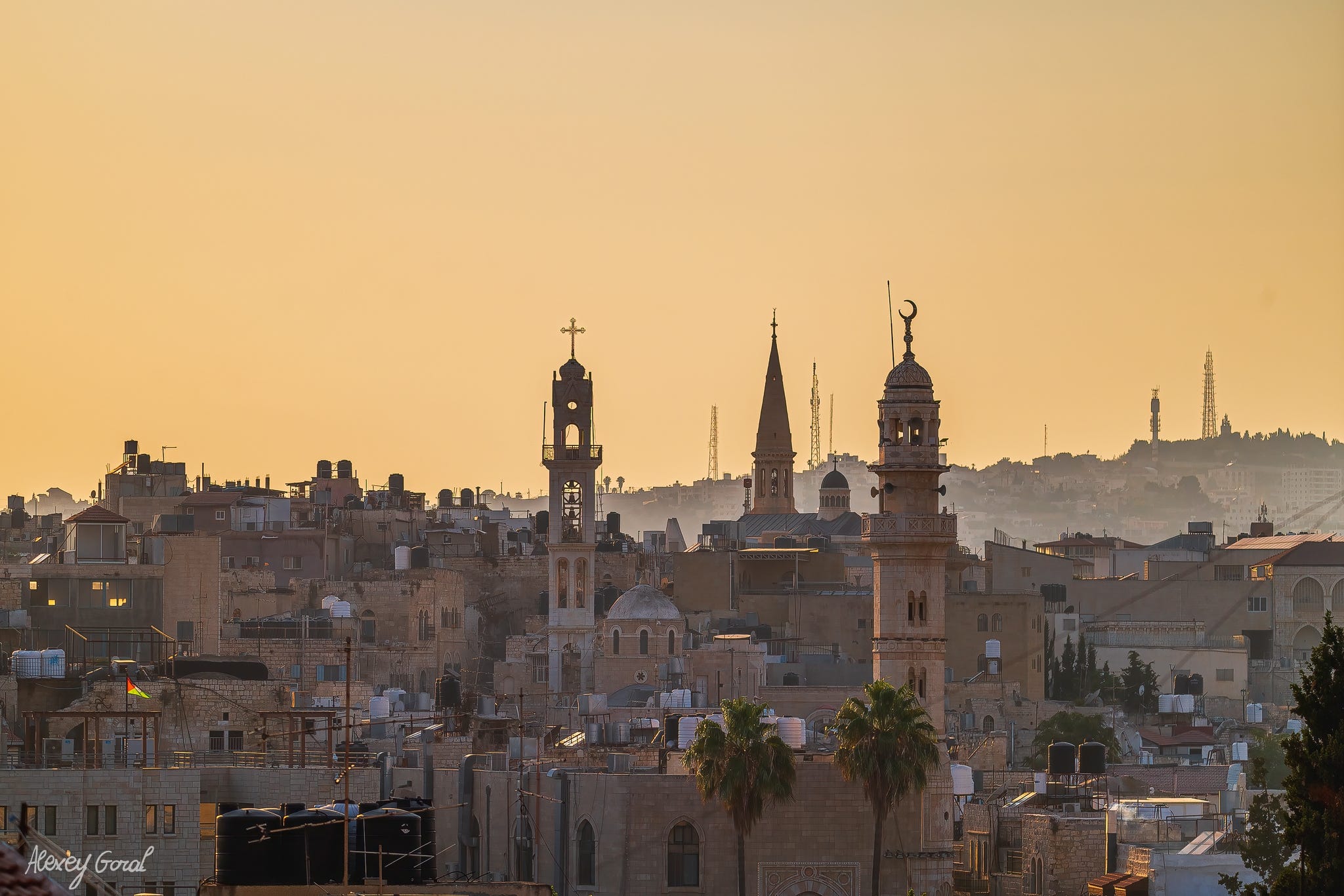
Their decline is not an accident of recent wars alone, but the cumulative result of legal inferiority, social pressure, episodic violence, and lack of protection. Minorities are the clearest diagnostic of a society’s moral architecture, and across much of the region, the pattern is unmistakable: Equality is not tolerated.
At the same time, the region’s economic structure intensifies social strain. The Middle East has among the youngest populations in the world, yet one of the least economically dynamic. Large youth populations enter societies with weak education systems, limited private-sector opportunity, skills not relevant or not sufficient enough to participate in the global workforce, and state-dominated economies that reward loyalty over competence. This produces not only poverty but status frustration — a gap between expectation and reality, between what young people believe they deserve and what they can realistically attain.
That frustration rarely remains economically focused. In societies where political accountability is absent and self-critique is discouraged, resentment seeks an external target. Regimes and movements alike redirect anger away from domestic failure and toward symbolic enemies, transforming socioeconomic stagnation into ideological grievance. Jews and Israel, long embedded in regional narratives as conspiratorial or omnipotent forces, become convenient vessels for blame. Israel, in particular, serves as a uniquely useful scapegoat: close enough to personalize resentment, successful enough to provoke humiliation, and distant enough to absolve local elites of responsibility.
This dynamic is not incidental; it is cultivated. Anti-Israel and antisemitic narratives provide believable scapegoats for failure while preserving regime legitimacy. They offer young, frustrated populations a sense of moral superiority without requiring institutional reform, personal accountability, or structural change. Rage is redirected outward, identity is hardened, and instability is perpetuated — not despite this process, but because of it.
Even in the West, now-mainstreamed narratives routinely attribute this frustration to Israel, the West, or colonialism. For some, these explanations are emotionally satisfying, but analytically shallow. The deeper causes are structural stagnation and governance systems that suppress innovation, accountability, and upward-mobility. Resentment follows, and ideology gives it direction.
Cultural dynamics reinforce these pressures. Much of the region operates not according to the Western guilt-based rule of law, but according to honor–shame logic, a cultural framework that governs social behavior in many traditional societies, including large parts of the Middle East and North Africa. It’s a way of organizing morality, social order, and personal conduct around reputation, respect, and social perception, rather than internal conscience (guilt) or formal legal codes.
In such a culture, honor is earned through behavior that meets communal or family expectations; honor is public and relational, and how others perceive you matters more than how you feel internally. Punishment may be informal, immediate, and symbolic, and often involves restoring honor through retaliation or public demonstration. In a Western context, stealing is wrong because it violates law or ethics; in an honor–shame context, stealing could also bring shame on your family or tribe if discovered, and the “correction” might involve public restitution, revenge, or a ritual apology.
As such, reputation outweighs legality. Collective punishment replaces individual accountability. Public humiliation demands public retaliation. Violence is often symbolic and performative, intended to restore honor rather than achieve strategic ends. Western observers, shaped by legalistic moral frameworks, consistently misinterpret such actions as irrational. They are not irrational within their own logic; they are culturally intelligible, even expected.
Then there’s the politics of the Middle East, which is often maintained not through legitimacy, but through rentier economics. Oil and gas revenues allow governments to minimize taxation while maximizing subsidies, buying loyalty instead of consent. Citizens receive benefits rather than rights and, in exchange, surrender political agency. This system produces short-term stability but long-term dependency, stagnation, and fragility. When revenues fall or populations outgrow subsidies, repression increases. Reform is deferred until crisis makes it unavoidable.
History further complicates Western illusions. Early Islamic empires expanded primarily through military conquest. Conquered populations were subordinated; economically and socially treated as second-class non-Muslims; and gradually absorbed or erased through legal, linguistic, and cultural pressure. Over time, entire civilizations disappeared not merely politically but civilizationally. Unlike European colonialism, which often ruled overseas while leaving core cultures intact, Islamic expansion frequently involved permanent cultural replacement. The ruins remain; the societies do not.
This historical memory matters because it shapes contemporary attitudes toward power, dominance, and coexistence. It informs a worldview in which supremacy is not an aberration but a legitimate order, and in which compromise is often perceived as weakness rather than virtue.
Ironically, Israel exists as the region’s most destabilizing mirror. It is a non-Arab, non-Muslim society that built a functioning liberal democracy in the same geography, under far harsher conditions, while absorbing refugees, fostering innovation, and sustaining civic institutions. Its existence exposes the emptiness of claims that the region’s failures are inevitable or purely colonial. This is why opposition to Israel so often exceeds rational political disagreement and takes on existential intensity. It is not merely a territorial dispute; it is a civilizational affront.
Still, many Western observers assume the Israeli-Palestinian conflict is the engine of Middle Eastern instability, as if the region revolves around Israel. The reality is the opposite: The Middle East shapes the conflict far more than the conflict shapes the Middle East, an important observation I learned from Avi Melamed, a former Israeli security official and author who now runs the nonprofit, “Inside The Middle East: Intelligence Perspectives.”
Rival states, sectarian powers, and ideological movements frequently use the Palestinian cause as a proxy or pawn in broader geopolitical contests, whether to challenge rival neighbors, curry domestic legitimacy, or mobilize regional support. Iran, for example, leverages Palestinian issues to project influence across the Arab world; Gulf states have alternately inflamed or constrained the narrative to protect strategic interests.
The conflict does not drive Middle Eastern politics; it is instrumentalized by it. Recognizing this flips the usual Western perspective that Israel is the cause of regional instability, a convenient narrative that many actors in the region are happy for Western media outlets, academics, NGOs, and even politicians to ignorantly propagate.
Israel becomes a convenient mirror for internal failings, a target for redirected rage, and a symbolic arena for ideological and sectarian contests. In other words, regional dysfunction does not follow the conflict; it creates it. The Israeli-Palestinian conflict could’ve been solved yesterday if it wasn’t for nefarious actors who benefit from its decades-long ceaseless struggle.
To add insult to injury, Western activists and institutions often reinforce this dynamic by validating grievance without demanding agency, excusing dysfunction while condemning outcomes. Reform fails not because people do not want dignity, but because systems that reward blame over responsibility cannot sustain it.
This is why revolutions repeatedly disappoint. Revolutions remove rulers, not cultures. Institutions collapse faster than norms can be rebuilt. Power vacuums are filled not by technocrats, but by the most organized illiberal actors: militias, clerics, and security forces. The Arab Spring did not fail by accident; it failed predictably.
Western media plays a central role in perpetuating misunderstanding. Middle Eastern actors are infantilized, stripped of agency, and portrayed as passive victims of external forces. Moral asymmetry is routine: The West is held responsible for its actions, while regional actors are explained away. Emotional storytelling replaces structural analysis, and outrage substitutes for understanding.
None of this means reform is impossible. None of it denies diversity within the region. None of it absolves Western powers of historical mistakes. But realism demands acknowledging that societies are shaped by deep structures, not slogans. Projection is not understanding. Empathy without analysis is not advocacy.
The Middle East is not unknowable. It is misunderstood because Western observers insist on seeing it as they wish it to be rather than as it is. As long as that fantasy persists, the region’s outcomes will continue to shock those who refused to see them coming.
A comprehensive analysis reveals a prevalent Western misunderstanding of the Middle East. This perspective challenges the notion of misconception, positing that instead, Western actions are primarily driven by economic interests, particularly greed concerning oil resources. Such a viewpoint suggests that strategic decisions are less about genuine comprehension and more about the pursuit of vital commodities. Consequently, the dynamic between the West and the Middle East can be seen as a complex interplay of resource acquisition and geopolitical maneuvering. Understanding these underlying motivations is crucial for a more accurate interpretation of regional interactions.
A brief history reminder:
"Coup 53: The Story of How Operation Ajax Killed a Nascent Iranian Democracy
By Janet Levy
Playing the game of What if…? with history is usually futile. But sometimes it yields valuable lessons. For instance, What if the CIA and MI6 had not orchestrated the overthrow of Iranian Prime Minister Mohammad Mosaddegh in 1953? Consider one possibility – that Iran might have become a bastion of democracy and not what it is today, a threat to the interests of the U.S. and its allies and the biggest cause of instability in the Middle East."
https://www.americanthinker.com/articles/2023/04/coup_53_the_story_of_how_operation_ajax_killed_a_nascent_iranian_democracy.html
https://edition.cnn.com/interactive/2020/01/world/us-iran-conflict-timeline-trnd/
Ayatollah Ruhollah Khomeini, the man who was installed in Iran by Jimmy (peanut) Carter.
Background: Long-standing U.S.–Iran alliance
The U.S. had a close alliance with Shah Mohammad Reza Pahlavi for decades. This began in earnest after the CIA- and MI6-backed 1953 coup ousted Prime Minister Mossadegh and strengthened the Shah’s rule. That event greatly increased U.S. influence in Iran and helped set the stage for long-term domestic resentment at the monarchy’s ties to the West. ([Encyclopedia Britannica])
U.S. policy in 1978–1979 shifted amid crisis
By the late 1970s, mounting protests against the Shah’s authoritarian rule, economic problems, and repression turned into broad revolutionary unrest.
Human rights pressure:
President Jimmy Carter campaigned on human rights. This made the U.S. government less willing to support the Shah’s harsh repression of dissent compared with earlier administrations, weakening his position. ([Wikipedia])
Advisers and diplomacy:
Newly declassified documents show the Carter administration engaged in extensive contact with Khomeini’s allies and discouraged a last-ditch military coup to save the Shah. U.S. envoys also worked quietly to build accommodation between Khomeini’s circle and elements of Iran’s military. ([Wikipedia])
The Self-Preserving Tyrants
The Ayattollas and Mullahs
are tyrants who prioritize their self-preservation at the expense of their people and are essentially parasites on the body politic.
They view the state and its citizens not as entities to serve, but as resources to be exploited for their own benefit and continued hold on power.
Their rule is characterized by a fundamental inversion of governance: instead of governing for the welfare of the governed, they govern to protect their personal dominion.
Great analysis!