


Please consider supporting our mission to help everyone better understand and become smarter about the Jewish world. A gift of any amount helps keep our platform free of advertising and accessible to all.
This is a guest essay by Melissa Brodsky, a writer focused on media literacy, modern antisemitism, and history.
You can also listen to the podcast version of this essay on Apple Podcasts, YouTube Music, YouTube, and Spotify.
In 1968, Poland found a politically acceptable word for a Jew it wanted gone.
Twenty-three years after Auschwitz was liberated, Polish Jews were packing their suitcases again. They were professors, doctors, journalists, military officers, actors, students, engineers, civil servants, and families whose roots in Poland went back generations. Some had survived the Holocaust. Some had fought in the Polish army. Some had returned after the war, rebuilt careers, raised children, and tried to make lives in a country where entire Jewish neighborhoods had disappeared.
By 1968, the Polish communist government had found a word that could cover almost any of them. It could describe someone who supported Israel or had relatives there. It could be attached to a professor who criticized the government, a journalist who had fallen out of favor, or a party official someone wanted pushed aside. A person didn’t even have to consider himself one.
The word was “Zionist.”
In June 1967, Israel fought the Six-Day War against Egypt, Syria, and Jordan. The Soviet Union had armed and backed the Arab states, and Moscow’s allies across Eastern Europe followed its political lead after Israel’s victory. Poland broke diplomatic relations with Israel. Some Polish Jews were happy Israel had survived.
On June 19th, Władysław Gomułka, the leader of communist Poland, stood before a trade union congress in Warsaw and spoke about Jews who had celebrated Israel’s victory. He warned of a “fifth column” inside Poland and suggested that people who felt greater loyalty to Israel should leave.
About three million Polish Jews had been murdered during the Holocaust. The people now being questioned about their loyalty included survivors and their children. They had Polish birth certificates, Polish educations, Polish jobs, Polish military records, and Polish addresses. Still, the government began looking more closely at their ancestry.
Jewish officers and others suspected of sympathy for Israel were removed or demoted in the military. Party officials came under scrutiny. Security services gathered information about citizens of Jewish origin, including people who had been detached from organized Jewish life for years. Whether someone actually belonged to a Zionist organization was becoming less important than what the government could find in a family tree or personnel file.
There was another fight happening inside Poland’s Communist Party. Interior Minister Mieczysław Moczar had built a nationalist faction known as the “Partisans,” many of them men with wartime resistance credentials who wanted greater influence inside the government. Removing officials branded as Jewish or Zionist created vacancies for other people to fill. Antisemitism and political ambition worked quite well together.
Even some communist leaders thought Gomułka had gone too far with “fifth column.” The phrase was removed from the published version of his speech. Everyone who had listened to the speech had already heard it.
The confrontation that brought all of this into the streets didn’t begin with Israel. It began at the theater. Adam Mickiewicz’s “Dziady” was playing at Warsaw’s National Theatre in late 1967. Written in the 19th century, the play contained passages about Russian oppression, and Polish audiences living under Soviet domination understood the parallels. Their reactions during the performances made the government increasingly uncomfortable.
Authorities limited the number of performances and eventually canceled the production. On January 30, 1968, the final performance ended and students walked to the monument of Mickiewicz in Warsaw to protest censorship. Police arrested demonstrators, and the dispute moved onto university campuses, where resentment had already been building over censorship and government interference in intellectual life.
Two University of Warsaw students, Adam Michnik and Henryk Szlajfer, were expelled after informing foreign journalists about the protests. On March 8th, students gathered in the university courtyard to demand their reinstatement and greater freedom. Police, militia units, and government-backed “worker activists” moved into the crowd and beat demonstrators.
Protests spread to universities and cities across Poland. Tens of thousands of students participated. Authorities detained about 2,700 people, students were expelled, academics lost their jobs, and dozens of protesters eventually went before courts.
The government now had to explain why young Poles were protesting against a Polish communist government, and it already had a convenient answer. State newspapers, radio, and television began connecting the unrest to “Zionists.” Factory meetings and “anti-Zionist” rallies were organized around the country where workers were expected to denounce Israel, Zionism, and the supposed conspirators operating inside Poland. A protest over censorship had been turned into evidence of a Jewish conspiracy.
Professors disappeared from universities. Journalists lost their positions. Government employees were dismissed. Military officers were removed or demoted. Party members were expelled. Writers, filmmakers, researchers, administrators, and other professionals watched careers built over decades disappear.
The government also revived “żydokomuna,” the old accusation that Jews were collectively responsible for communism. This produced a useful contradiction: Poland’s communist government could attack Jews for being associated with Stalinism while accusing the same Jews of serving Israel, the West, and American imperialism. A person could be too communist and insufficiently loyal to communist Poland at the same time.
Names appeared in newspapers and workplace meetings became places to denounce colleagues. Jewish ancestry could suddenly cost someone a job, while people who defended Jewish friends and coworkers could find themselves under attack too.
The purge created opportunities for other people. Professors removed from universities left chairs to be filled, while officials forced from government left offices behind. Academics who advanced into positions vacated during the purge became known derisively as the “March docents.” Calling someone a Zionist could clear more than a person’s reputation. It could clear his desk.
By the spring and summer of 1968, families were applying to leave, but leaving meant surrendering Poland first. People of Jewish origin applying to emigrate to Israel were required to relinquish their Polish citizenship and return their identity cards and passports. The government issued them a green, sometimes blue, booklet called a travel document.
Inside was a sentence that said what their Polish passport no longer could: “The possessor of this travel document is not a citizen of the Polish People’s Republic.”
There was no replacement citizenship listed because there wasn’t one. Poland had made the person stateless. Some of the people carrying those booklets had survived the German occupation, losing parents, siblings, spouses, children, cousins, grandparents, and entire communities. They had survived ghettos, hiding places, camps, forests, deportations, and executions and returned to Poland after the war.
Now the government had figured out how to expel Jews with paperwork. A person could walk into an office as a Polish citizen and leave it without a country.
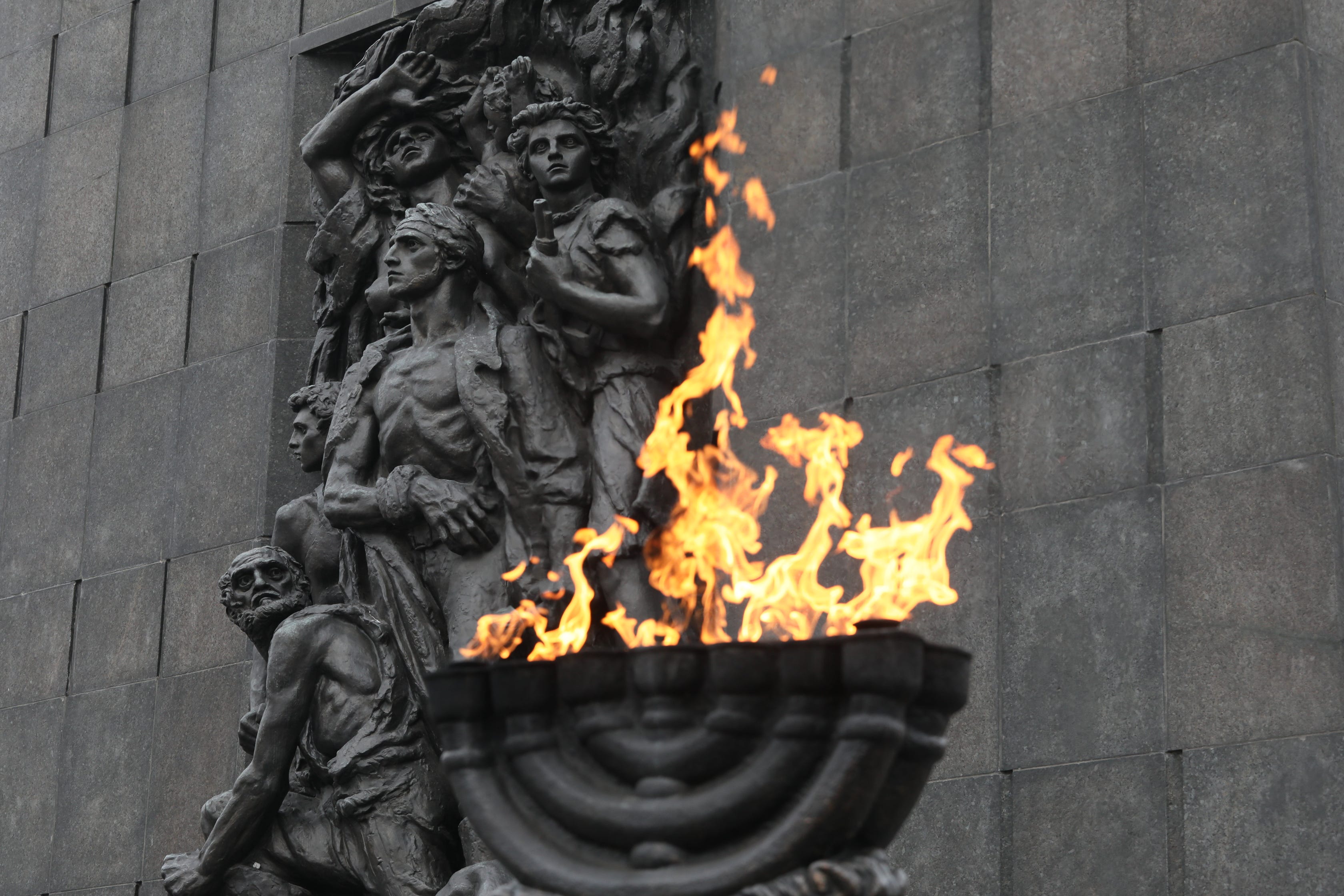
Warsaw’s Gdański railway station became the departure point people remembered. There were suitcases and trunks on the platforms. Friends came from work, neighbors came, relatives came, and other Jews preparing for their departures came to say goodbye.
Janina Goldhar remembered crowds filling the station when her family left. Another Warsaw resident, Estera Migdalska, remembered going there so often to see Jewish friends off that it became almost routine. Trains carrying emigrants toward Vienna were leaving again and again.
The trains usually went first to Vienna. From there people continued toward Israel or made arrangements for somewhere else. Those heading for the United States sometimes traveled through Italy. Their belongings often traveled separately by sea in containers and could take weeks to catch up with them. Families had to inventory what they were taking, and some possessions, including works of art, needed additional permission before they could leave the country.
The paperwork said Israel because Jewish emigrants were made to declare Israel as their destination, but many never went there. They scattered to Sweden, Denmark, France, the United States, Israel, and elsewhere. Some didn’t speak Hebrew, weren’t religious, and had spent their entire lives considering themselves Polish. Poland had called them “Zionists” and processed their departures accordingly.
Among those who left was Ida Kamińska, one of the great figures of 20th-century Yiddish theater. Her mother, Esther Rachel Kamińska, had been known as the mother of Yiddish theater. Ida grew up onstage and became an actress, director, playwright, and translator.
She survived the war in the Soviet Union and returned afterward to a Poland where almost everything that had supported the country’s prewar Jewish cultural world was gone. She helped rebuild Jewish theater and eventually became director of the State Jewish Theatre in Warsaw.
In 1965, Kamińska starred in the Czechoslovak film “The Shop on Main Street,” about the destruction of a Jewish community during the Holocaust. The film won the Academy Award for Best Foreign Language Film, and Kamińska received an Oscar nomination for Best Actress. Three years later she left Poland.
Writer and actor Henryk Grynberg had already decided not to return after traveling to the United States with the theater company. Grynberg had survived the Holocaust as a Jewish child in occupied Poland. His father, younger brother, two uncles, and five aunts had been murdered.
The departures took a disproportionate share of Poland’s educated professional class. The percentage of university students and people with university degrees among the post-March emigrants was several times higher than in the Polish population as a whole. Doctors, scientists, professors, writers, artists, engineers, and students joined the people carrying those one-way travel documents through Gdański station.
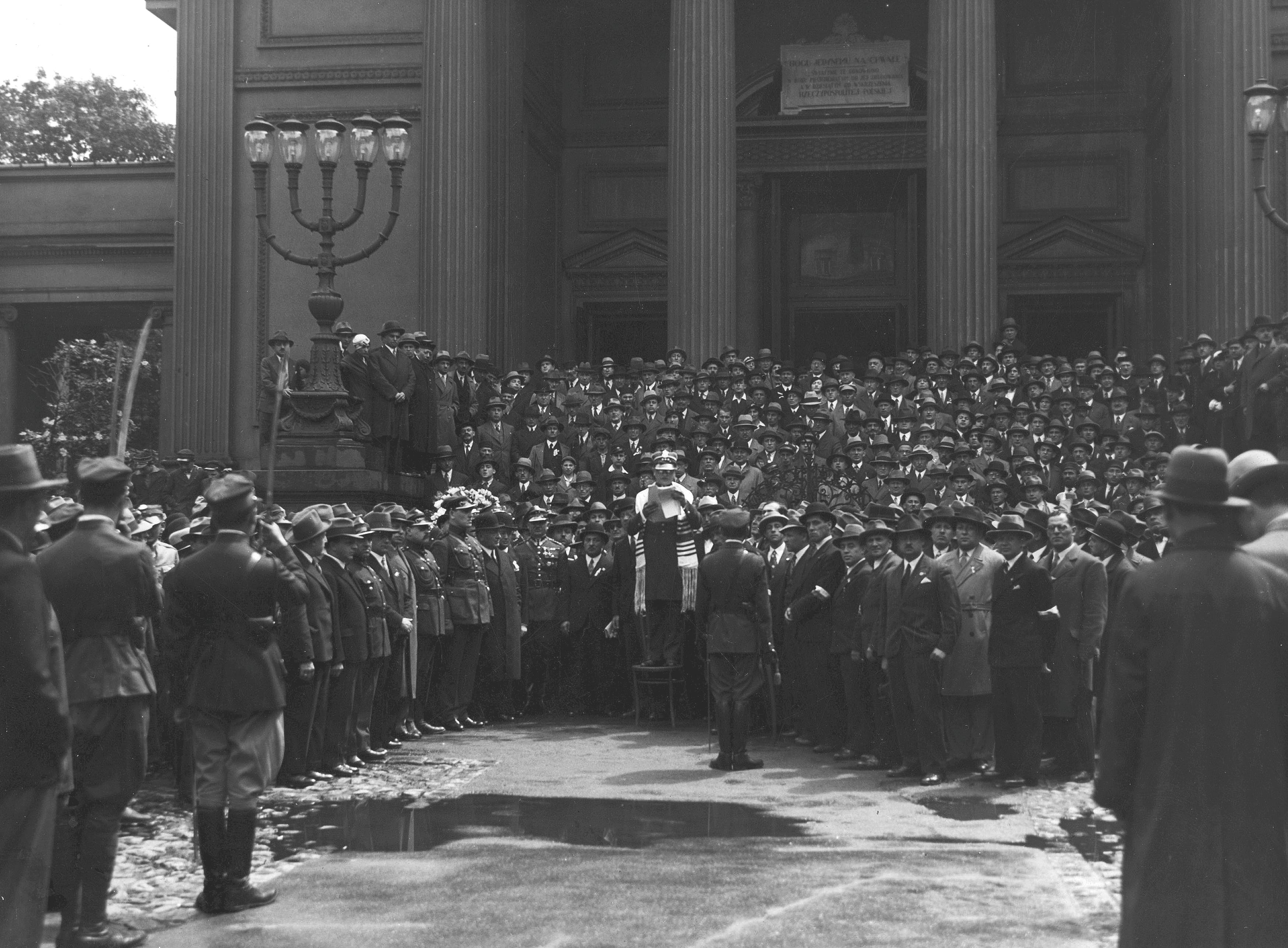
Before World War II, Poland had been home to about three million Jews. Warsaw was one of the great Jewish cities of the world, filled with Yiddish newspapers, schools, synagogues, political movements, theaters, publishing houses, businesses, charities, and religious institutions.
The Holocaust destroyed most of that world. Tens of thousands more Jews left Poland after the Kielce pogrom in 1946. Another large wave departed in 1949 and 1950, followed by tens of thousands during the political thaw of the late 1950s. The people still there in 1968 were what remained after all of it.
About 13,000 people of Jewish origin left during the post-March exodus, with some estimates closer to 15,000 depending on who is counted. In absolute numbers, it was smaller than some earlier postwar Jewish emigration waves, but it took a huge share of the Jews who were still there.
Organized Jewish life in Poland lost families, professionals, students, artists, and community leaders. Parents and grandparents sometimes stayed while children and grandchildren left. Because emigrants had surrendered their citizenship, returning wasn’t simply a matter of buying a ticket. They had to apply for Polish visas as foreigners, and some were refused permission to return even for family funerals.
Official propaganda rarely needed the word “Jew.” Conveniently, “Zionist” could do the work. “Zionists” were accused of controlling the student protests, tied to former Stalinists, and portrayed as people serving Israel, West Germany, and American imperialism.
Historian Dariusz Stola has spent years studying the campaign and argues that even calling it an “anti-Zionist campaign” can be misleading. It began as an anti-Israel campaign after the Six-Day War and became anti-Jewish. A person’s actual beliefs about Zionism became almost irrelevant. A Jewish parent or grandparent could matter more; so could relatives abroad or an entry in a government file.
“Jew” would have said plainly what Poland was doing only two decades after the Holocaust. “Zionist” sounded political and gave the government something it needed: deniability. The people losing their jobs knew who was being targeted, as did the families selling what they could before leaving and the officials collecting their passports and citizenship documents.
Years later, a plaque was placed at Warszawa Gdańska for the people who left during the post-March exodus. It carries a line by Henryk Grynberg: “They left behind more than they had.”
Some of their travel documents survived too. One in POLIN Museum’s collection belonged to Aleksander Kaganowicz, a student who had been studying in Italy when the campaign began. He returned to Poland to help his family prepare to leave. His document was issued on December 31, 1968 and expired on February 10, 1969. His luggage cleared customs in Warsaw on February 8th.
On February 11th, Kaganowicz finally boarded a train out of Poland. Border authorities pulled him off at Zebrzydowice because his travel document had expired the day before and detained him for a day.
He eventually crossed the border carrying that little government booklet. Where a passport normally identified its holder’s citizenship, Kaganowicz’s identified what he no longer had: “The possessor of this travel document is not a citizen of the Polish People’s Republic.”
My grandmother’s relatives left Poland in 1967 or 1968 and settled in Israel. I knew of the communist government’s purges of Jews. They were the casualties. That part of my family today live in Israel.
Today I live in DC. Our next mayor is a member of the Democratic Socialists. I expect history to repeat itself…again.
This is my also story. When Israel won the six-day war in 1967 and the young Jews of Poland openly celebrated for the first time ever, the Communist Party was infuriated. Poland was ruled by Russia. Soviet tanks were found in the desert. Israel defeated not only Egypt but also Russia. The Polish party took 'this Jewish pride' and went on offensive, that in Poland, a 'Zionist conspiracy' was growing against the government. Mass media and the secret police used the words Jews and Zionists interchangeably. Civil rights demonstrations held by students and 'intellectuals' the government, turned into propaganda. An Antisemitic undertone followed, and Jews were singled out. The targeting of Jewish students, professors, and professionals followed. The result was that most Polish Jews lost their jobs and about 40,000 were forced out of Poland. Of the over 3 million Jews who lived in Poland before the war, about 100,000 Jews remained at the end of World War II. By 1958, 50,000 left, to Israel and other parts of the world, the rest like my parents chose to stay, and ten years later they were being forced to leave once again. By the time communism fell in Poland in 1989, only 5,000–10,000 Jews remained in the country. Most of them were the old or those who concealed their Jewish identity.