


Please consider supporting our mission to help everyone better understand and become smarter about the Jewish world. A gift of any amount helps keep our platform free of advertising and accessible to all.
This is a guest essay by Vanessa Berg, who writes about Judaism and Israel.
You can also listen to the podcast version of this essay on Apple Podcasts, YouTube Music, YouTube, and Spotify.
For decades, diaspora Jews have been told that solidarity was a moral obligation.
Show up for civil rights, march for equality, fight discrimination everywhere because injustice anywhere threatens justice everywhere — and many Jews, countless Jews, did show up.
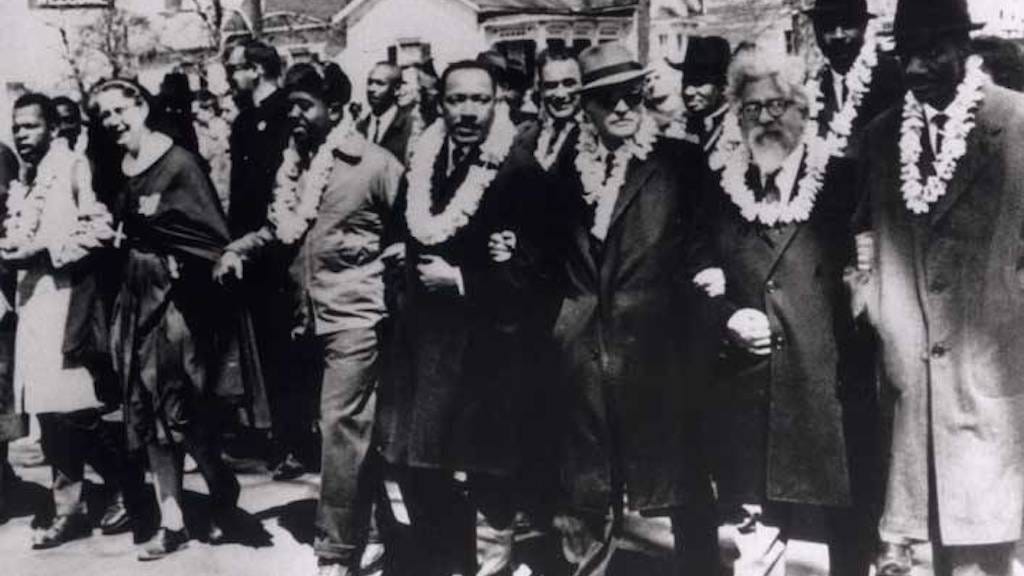
During the Civil Rights Movement, for example, Jewish activists funded organizations, provided legal support, marched in the streets, and in some cases died alongside Black Americans fighting segregation in the South. Jewish lawyers helped litigate civil rights cases. Jewish philanthropists funded Black institutions and causes. Rabbis famously marched in Selma, Alabama. Two of the three civil rights workers murdered in Mississippi in 1964 (Andrew Goodman and Michael Schwerner) were Jewish.
The so-called “Black–Jewish alliance” became one of the defining moral coalitions of 20th-century America. Even Martin Luther King Jr. spoke positively about Israel and repeatedly defended the legitimacy of Zionism. “When people criticize Zionists, they mean Jews. You’re talking antisemitism,” he said.
After the 1967 Six-Day War, King expressed strong support for Israel’s survival and security. He rejected efforts to isolate or delegitimize the Jewish state, saying: “Peace for Israel means security, and we must stand with all our might to protect its right to exist, its territorial integrity.” King did not see Zionism as racism or colonialism. He understood Jewish nationalism in the context of Jewish persecution, statelessness, and survival after the Holocaust.
But by the late 1960s, tensions were emerging between some Black nationalist groups and Jewish organizations. Some activists began adopting anti-Zionist rhetoric aligned with Soviet and Third World revolutionary politics. King resisted that trend. He maintained relationships with Jewish leaders and rejected antisemitism even when it became politically fashionable in certain activist circles.
October 7th reawakened this politically fashionable antisemitism in many Black people and organizations. Jews have been stunned to learn that the moral language of human rights, anti-racism, and civil rights is not universal. Instead, much of the Black world hesitated, rationalized, celebrated, or redirected blame toward Jews, the primary victims of October 7th.
Before October 7th, some of the loudest voices (often Black ones) framed every issue through the language of oppression and liberation. But on October 7th and thereafter, suddenly they had no interest in applying those principles to Jews.
The explanation often given is that Jews are now perceived not as a vulnerable minority, but as “white,” “privileged,” or “oppressors.” This is nonsense. Jews are not “white” (though some are European or have European ancestry); Jews are not privileged (our parents and grandparents and so forth worked incredibly hard and sacrificed a whole lot so that we can enjoy a good life today); and Jews are definitely not “oppressors.”
Anyone who has read a history book knows that Jews are among the most oppressed people of the last 2,000 years, until recently. Perhaps the only reason Jews are no longer, by and large, oppressed is because much of the world felt bad about the Nazis slaughtering 6 million of us, which created a “post-Holocaust halo” that effectively permitted Jews to prosper in many countries.
But that halo is evaporating, fast. And now, many people — including many Black people — are outwardly using language and engaging in actions that are completely antisemitic, no matter how much they try to hide behind the language of “anti-Zionism.” If a Black person can call something racism and everyone has to shut up and profusely apologize, then Jewish people can call something antisemitism and Black people should listen loud and clear.
It turns out, many Black people would vehemently disagree with that statement. This is because they believe that “Black people can be prejudiced but not racist” and “only groups with systemic power can be racist.” Again, this is nonsense. If we agree that certain people in society should not benefit from double standards, say, in the workplace, then how in the world are we to accept this absurd double standard that Black people can only experience racism and never dish it out?
One of the most revealing aspects of this moment has been the complete historical illiteracy surrounding slavery, colonialism, and power.
In modern discourse, the transatlantic slave trade is often presented not merely as a historical atrocity, but as the defining and singular moral crime of civilization itself. Western societies are treated as uniquely guilty. Europeans are cast as uniquely barbaric. Entire modern political frameworks are built around this narrative.
But history is larger and more complicated than activist mythology. Historian John Hunwick once observed:
“It is probably true to say that for every gallon of ink that has been spilt on the transatlantic slave trade and its consequences, only one very small drop has been spilt on the study of the forced migration of black Africans into the Mediterranean world of Islam and the broader question of slavery within Muslim societies.”
That omission matters.
Estimates suggest that between 12 and 17 million Africans were enslaved across the Islamic world over roughly 14 centuries. Some scholars believe even those numbers are conservative. The Atlantic slave trade transported roughly 11 to 14 million Africans over several centuries. The scales were comparable. The duration was not.
The Islamic slave trade stretched continuously across more than a millennium — from North Africa to the Middle East, Persia, the Ottoman Empire, and beyond. Historian Paul Lovejoy noted that at the outbreak of the American Civil War, there were likely more slaves in the Muslim states of the West African Sahel than in the American Confederacy.
Yet this history is rarely discussed in “progressive” spaces.
Why?
Because it disrupts a simplistic moral narrative in which “oppression” is treated as uniquely “white” and uniquely European — both labels that many Black people place onto Jews, often inaccurately.
None of this minimizes the horrors of Atlantic slavery, but it does contextualize them. History is not a children’s story with permanent heroes and villains assigned by race.
What many Jews realized after October 7th is that they had misunderstood the nature of modern coalition politics. They assumed solidarity meant reciprocity. But for many Black people, solidarity is transactional. Jews were welcome in coalitions so long as Jews remained useful to other causes and silent about their own particular interests. The moment Jews asserted Jewish self-interest, especially through support for Israel, many former allies recategorized them as enemies.
This is one of the reasons Zionism is so widely misunderstood. Zionism is not “white supremacy.” It is not colonialism. It is not a theory of racial domination. Zionism is the belief that Jews, like every other people, have the right to self-determination in their ancestral homeland. It emerged from persecution, exile, massacres, expulsions, pogroms, and statelessness. It was a liberation movement for one of history’s most persecuted minorities.
If Black folks genuinely believed in indigenous rights, decolonization, cultural survival, minority self-determination, and collective security, Zionism should fit naturally into that framework. Instead, Jews are often treated as the one people on earth denied the rights routinely demanded for everyone else.
That contradiction is not accidental. It reveals that many contemporary ideological movements (such as “Black Lives Matter”) are not actually organized around universal moral principles. They are organized around power narratives in which Jews occupy a uniquely resented position.
There is a tragic irony in seeing some activists align themselves with Islamist movements that openly promote theocratic authoritarianism, misogyny, homophobia, religious repression, and political violence — all while presenting themselves as champions of liberation. Groups like Hamas and Hezbollah are not civil rights organizations; they are Islamist movements rooted in extremist ideologies.
Yet after October 7th, many Black activists treated them less as terrorist organizations and more as symbols of revolutionary resistance. That should disturb anyone who genuinely cares about human rights. The problem is not merely political disagreement. It is deep moral rot.
A worldview that divides humanity into permanent “oppressors” and permanent “oppressed” eventually stops evaluating actions morally. It evaluates them tribally. And once morality becomes tribal, atrocities can be justified so long as the “correct” side commits them.
For Jews, none of this should be entirely new. Jewish history contains a recurring lesson: Alliances matter, friendships matter, coalitions matter — but no minority can outsource its survival to others, because political movements change, incentives change, and ideological fashions change.
The events after October 7th exposed how fragile many supposedly universal moral commitments really were. Jews were told for years that silence is violence. Then Jews screamed in pain and much of the world responded with silence, justification, or celebration.
The people who resent Jews the most often misunderstand Jews the most. They imagine Jewish success as something sinister, conspiratorial, inherited, manipulative, or illegitimate because that explanation is emotionally easier than confronting the real answer: Jewish success is not genetic, magical, or secretive.
Jewish success is, at least in large part, cultural. And that culture was built under pressure most people would not survive.
Jews spent centuries as scattered minorities with no stable sovereignty, frequently expelled, segregated, massacred, economically restricted, and scapegoated. In many societies, Jews were banned from owning land, excluded from guilds, prohibited from entering entire professions, and periodically robbed or expelled whenever rulers needed political distractions or financial resets.
A weaker civilization would have disappeared. Instead, Jews adapted. They built portable forms of strength. If you cannot rely on the state, you build community. If you can lose your property overnight, you invest in education because knowledge cannot be confiscated as easily as land. If your survival depends on competence, literacy becomes sacred. If your people are vulnerable, family cohesion matters more. If your future is uncertain, long-term thinking becomes instinctive.
Jewish culture evolved around durability.
That is why Jews disproportionately emphasize education, entrepreneurship, scholarship, professional excellence, argumentation, adaptability, and intergenerational continuity. These are not random traits. They are survival mechanisms refined over thousands of years.
And the irony is that many of the people most obsessed with “Jewish power” would benefit enormously from studying Jewish culture honestly instead of demonizing it. I’m talking about our emphasis on literacy, our obsession with education, our transmission of values across generations, our preservation of family structures, our encouragement of debate and intellectual seriousness.
None of these are conspiracies; they are behaviors. And behaviors matter.
One of the most destructive lies modern society tells struggling groups is that success must always come from oppression, exploitation, cheating, or privilege. That narrative destroys agency. It teaches resentment instead of imitation.
Historically, successful minority groups almost always develop strong internal cultures because they cannot rely on majority protection. Jews, Armenians, Lebanese Christians, Parsis, overseas Chinese communities, Indians in East Africa, and many others succeeded under difficult conditions not because the world handed them advantages, but because they built resilient communal structures.
That does not mean every Jew is successful. It does not mean Jews never fail. It does not mean discrimination is imaginary. And it certainly does not mean history was fair to Jews. Quite the opposite.
The Jewish story should permanently destroy the modern fantasy that victimhood automatically prevents achievement. Jews experienced catastrophe after catastrophe — expulsions, pogroms, ghettos, massacres, the Holocaust, Soviet repression, Middle Eastern ethnic cleansing — and still rebuilt through culture, discipline, education, and communal continuity.
This is partly why antisemitism so often mutates into conspiracy thinking. People see disproportionate Jewish achievement in certain fields and assume there must be a hidden mechanism because they do not want to examine cultural explanations. Cultural explanations are uncomfortable because they imply responsibility, standards, and behavioral choices matter.
Conspiracy theories are psychologically easier.
It is easier to believe Jews secretly control systems than to ask why Jewish parents tend to pressure their children academically. It is easier to blame invisible networks than to examine differences in literacy, family stability, long-term planning, or community expectations. It is easier to resent outcomes than to study inputs.
And this is where many Black people become deeply confused. They spend enormous amounts of time analyzing external oppression and almost no time analyzing internal culture. Every disparity becomes evidence of discrimination, exploitation, or systemic malice. Almost never do they ask whether some cultures systematically produce behaviors more compatible with stability and success.
That is not racism; it is civilization-level reality.
Cultures are not equal in outcomes. Values matter, norms matter, expectations matter, delayed gratification matters, educational priorities matter, and family structures matter. Jews learned this the hard way because history forced us to.
The tragic irony is that instead of learning from one of history’s most resilient minority groups, many people have been taught to hate Jews precisely for succeeding. That resentment will never improve anyone’s life, but learning might.
Jews have long been the useful idiots for black organizations. Starting with funding the creation of the NAACP, Jews have helped blacks. But the article overlooks something actually worse than what is described. Blacks have long been the most antisemitic identifiable group in the US. Pew polls as recently as 2023 showed 44% of black to have antisemitic views. That long predates October 7.
Blacks identify with Palestinian Arabs. Blacks are humiliated by Jewish history, where Jews suffered vastly more, but despite it all, accomplished what blacks could not, in nearly all fields of endeavor.
This is not news. It is merely confirmation of facts that were hidden in the misplaced Jewish tendency to empathize with all suffering -- except their own.
We tried repairing the world for 3000 years. You know the saying, it is insane to do the same thing over and over again and expect a different result.
Don’t kid yourself—black anti-semitism is nothing new. It’s been going on in the US since the late 60s, at least and is the reason why former Jewish leftists Marty Peretz and David Horowitz changed sides.
My father ran into Stokeley Carmichael in Honolulu airport in the 60s. Stokely called my 6’5”, veteran father a “Jewboy” and threatened to riot in an affluent Jewish suburb in which he thought we lived. (Ours was actually very modest). The black-Jewish alliance that liberal Jews get so misty-eyed over was always a one-way alliance, on behalf on blacks.