


Please consider supporting our mission to help everyone better understand and become smarter about the Jewish world. A gift of any amount helps keep our platform free of advertising and accessible to all.
You can also listen to the podcast version of this essay on Apple Podcasts, YouTube Music, YouTube, and Spotify.
For most of Jewish history, Israel was not something Jews could take for granted. It was something they could barely imagine.
Jews spoke about Jerusalem while living in Baghdad, Warsaw, Fez, Tehran, New York, and Buenos Aires. They faced Jerusalem when they prayed. They mentioned its rebuilding at weddings. They ended Passover seders with the promise of returning there. They fasted every year to mourn its destruction.
Generations of Jews lived and died without ever seeing the land they mourned. Then, almost impossibly, the Jewish state returned.
Today, Israel has cities, universities, highways, major technology companies, beaches, sports teams, elections, traffic jams, television shows, celebrities, restaurants, and arguments about the price of groceries.
It has, in many ways, become normal. That normality is one of Zionism’s greatest achievements. It may also be one of its greatest dangers. Because once something becomes normal, people begin to assume it is permanent.
Many Jews in Israel and across the diaspora now take Israel for granted — not necessarily because they do not care about it, but because they have never known a world without it. Israel is simply there. It appears on maps. Flights come and go every day. Its government governs. Its athletes compete under its flag. Its soldiers protect its borders. Its technology powers many parts of the modern world.
The Jewish state can begin to feel like a fact of nature rather than one of the most improbable achievements in human history. The Jewish holiday of Tisha B’Av (meaning the ninth day of the Hebrew month of Av), which we observe today, exists to destroy that illusion.
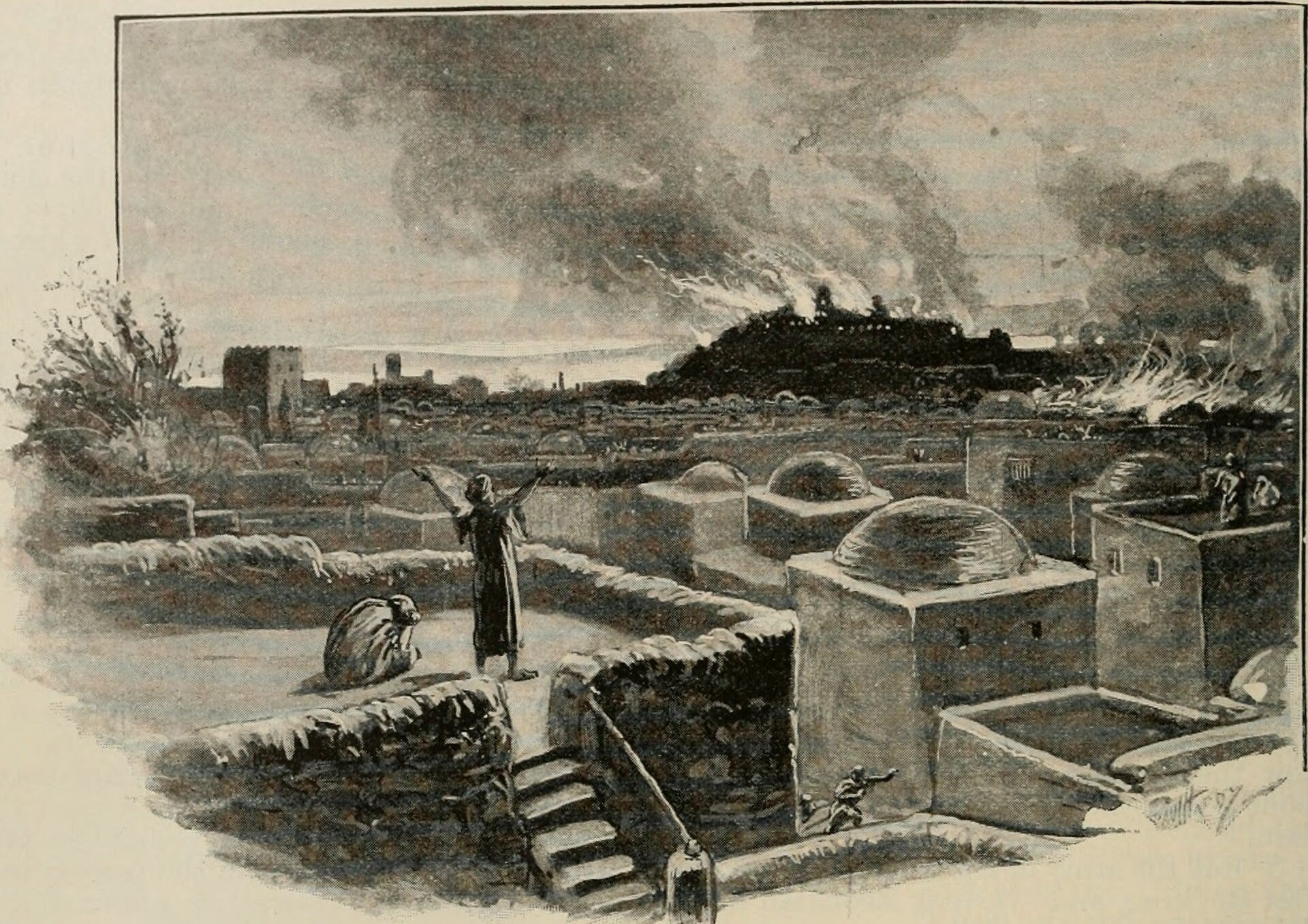
Every year, Jews sit on the floor and mourn the destruction of Jerusalem. We read the Book of Lamentations and remember a city that once appeared permanent, a Temple that once seemed indestructible, and a Jewish society that could not imagine losing everything it had built. Tisha B’Av is not only a day about what happened two thousand years ago. It is a warning against historical arrogance.
It reminds us that Jewish sovereignty has existed before. And it has disappeared before.
The Jewish People once had a capital, a government, an army, a priesthood, political institutions, and a national center in Jerusalem. Jews were not always exiles dreaming of return. They were once a sovereign people living in their own land. Until they were not.
The Temples were not destroyed because Jews had failed to build anything. They were destroyed after Jews had built something extraordinary. That is precisely the point. Civilizations rarely believe they are fragile while they are flourishing. Institutions rarely imagine their own collapse. People living inside history often assume that the world around them will continue because it has continued until now.
Jerusalem’s destruction was not merely the loss of a building. It was the collapse of an entire Jewish world. That is why Tisha B’Av remains necessary even after the establishment of Israel — perhaps especially after the establishment of Israel. A stateless people needs memory to preserve hope. A sovereign people needs memory to restrain complacency.
For Jews in exile, memory kept Jerusalem alive. For Jews with power, memory must keep humility alive.
There is a temptation to think that Israel’s military strength, economic success, and international influence make the Jewish state fundamentally different from the fragile Jewish communities of the past. In many ways, they do.
Israel is not a powerless Jewish minority pleading with a foreign ruler for protection. It is a sovereign country capable of defending itself. That difference matters. It is the difference between Jewish history being determined entirely by others and Jews having the ability to shape their own future.
But Jewish power should never become Jewish amnesia; Israel’s existence is not guaranteed by history. Indeed, history guarantees nothing. States survive because people protect them, strengthen them, sacrifice for them, and understand what would be lost without them. The danger is not only that Israel’s enemies may underestimate its strength. It is that Jews may underestimate its significance.
For many Israelis, the country can become merely the place where they were born. Its Hebrew language, Jewish calendar, national institutions, and Jewish majority feel ordinary because they have always been present. Young Israelis can grow up frustrated by the government, the cost of living, the religious establishment, the secular establishment, the traffic, the bureaucracy, and the endless political arguments without ever fully confronting how historically abnormal their normal lives are.
They can speak Hebrew without considering that for centuries Hebrew was largely a language of prayer and text rather than street signs, romantic relationships, comedy shows, and arguments with taxi drivers. They can complain about the state without remembering that generations of Jews had no Jewish state to complain about. They can leave Israel believing it is merely one country among many, without realizing that every other country they might move to is ultimately someone else’s national home.
None of this means Israelis must admire every government or accept every policy. Taking Israel seriously does not require political obedience. A state worthy of Jewish memory must also be worthy of Jewish debate.
But there is a difference between criticizing Israel because one feels responsible for it and dismissing Israel because one assumes it will always be there. There is a difference between demanding that the Jewish state improve and forgetting what it means for the Jewish People to possess a state at all.
Diaspora Jews face a different version of the same problem. Israel may become a vacation destination, a summer program, a political issue, or an occasional crisis appearing in the news.
Some diaspora Jews relate to Israel primarily through fear. They think about it when rockets fall, wars begin, hostages are taken, or antisemitism rises. Others relate to it primarily through politics. Israel becomes a test of ideological purity: something to defend, condemn, distance themselves from, or use as evidence in arguments with other Jews.
But Israel is not merely a cause. It is not a charity project. It is not a foreign-policy debate. It is the restoration of Jewish life in the place from which Jewish life was torn.
Jews do not have to live in Israel to understand that, but Jews who see no connection between their own Jewish existence and the existence of Israel have forgotten something fundamental. For two thousand years, Jews did not preserve the memory of Jerusalem so that their descendants could one day treat Jerusalem as someone else’s concern. They did not place the longing for Zion at the center of Jewish prayer because they expected future Jews to view Zion as an optional political interest.
Tisha B’Av reveals the depth of that connection. A people does not mourn the destruction of a foreign city every year for two millennia. It does not face that city in prayer. It does not break a glass at weddings to remember it. It does not promise, generation after generation, to return.
The continued observance of Tisha B’Av is one of the clearest proofs that Jewish attachment to Israel was never invented by modern Zionism. Zionism transformed an ancient memory into modern political action. The Jewish state was built because Jewish memory refused to die. Now the Jewish state must help ensure that Jewish memory does not die.
Israel cannot assume that sovereignty alone will sustain Jewish identity. A Jewish flag, Jewish army, and Jewish majority do not automatically produce a society that understands Jewish history. Israel can become physically Jewish while becoming historically forgetful. It can preserve Jewish power while losing sight of why Jewish power became necessary.
It can teach military victories without teaching the centuries of vulnerability that preceded them. It can celebrate independence without fully explaining dependence: the dependence Jews once had on kings, governments, churches, rulers, mobs, and political movements that could withdraw their protection at any moment.
A Jewish state without Jewish memory risks becoming merely a Hebrew-speaking country on the Mediterranean. Its citizens may know how the state functions without knowing why it matters. Tisha B’Av prevents Jewish independence from becoming shallow. It forces a sovereign people to remember what sovereignty costs — and what its loss once cost far more.
The lesson is not that Israel is constantly on the verge of destruction. The lesson is that no achievement exempts a people from responsibility. Memory is not panic. Memory is discipline. It tells Israelis and Jews across the diaspora that the state we inherited must be protected. It tells us that Israel is not a distant abstraction but part of the inheritance we received. It tells a powerful Jewish People that strength without wisdom can still be squandered. And it tells a frightened Jewish People that destruction is not the end of the Jewish story.
That may be the most important lesson of all: Tisha B’Av commemorates the destruction of Jewish sovereignty, but the existence of Tisha B’Av is itself proof that the Jewish People survived that destruction.
The Romans destroyed Jerusalem, but they could not force Jews to forget it. They dismantled Jewish political independence, but they could not erase Jewish national consciousness. They scattered Jews across continents, but they could not convince them that exile was their natural condition. Every year Jews mourned. Every year they remembered. Every year they passed Jerusalem to the next generation. Eventually, memory became return.
That is why Tisha B’Av is not only a day of grief. It is one of the foundations upon which Israel was rebuilt. The Jewish state did not emerge from nowhere. It emerged from a people who refused to allow absence to become erasure.
But now that the absence has ended, a new challenge has begun: Can Jews possess Israel without becoming numb to its existence? Can Israelis live normal lives without mistaking normality for permanence? Can diaspora Jews argue about Israel without forgetting that Israel is more than an argument? Can Jewish sovereignty survive not only military threats, but the slow erosion of Jewish historical consciousness?
A Jewish state needs aircraft, intelligence, diplomacy, economic strength, and defensible borders. It also needs Jews who understand why the state exists. It needs memory strong enough to produce gratitude, responsibility, and perspective.
For centuries, Jews ended their celebrations by remembering Jerusalem. Today, we must remember Jerusalem while living inside its restoration. That may be harder. Longing for something requires imagination. Protecting something one already possesses requires discipline.
Tisha B’Av asks us to sit briefly inside the world without Israel — not because that world is our present, but because it was our past. And because remembering that past may be one of the things that protects our future.
One of the best posts that I read about the importance of Tisha Be'Av.
Thank you for reminding us who we are and why the State of Israel matters.
Education starts at home 🏡.
The Jewish People are surrounded by vicious wolves which are motivated by Jealousy and Hatred of us. We would do well to remind ourselves of this fact every hour of every day of every month of every year. We are a group of monitors in Europe here in the Diaspora who have been reporting on sixty years of organised and vicious Antisemitism in The State, including the re-forming and re-organisation of The Nazi Party, who have been caught planning the mass murder of Jews and Non-Jews alike. This is what Israel is needed for. The enemy is real, and concurrent. Say this loudly, and say this too: Israel is massively respected for the work she does in protecting the whole world from Genocidal Nazism and from each of the other Totalitarian ideologies which would have enslaved the whole world. Our record defending Freedom is proven and True, and Israel is absolutely necessary for this. Thus we continue. Am Israel Chai.