


Please consider supporting our mission to help everyone better understand and become smarter about the Jewish world. A gift of any amount helps keep our platform free of advertising and accessible to all.
You can also listen to the podcast version of this essay on Apple Podcasts, YouTube Music, YouTube, and Spotify.
Every time an American administration pressures Israel, a familiar argument reappears: Israel is told that it has no choice but to comply because it depends on the United States.
The argument is resurfacing once again as Washington negotiates ad nauseam with the Islamic Republic of Iran, seemingly desperate for an agreement with the Islamist regime.
If a deal emerges that leaves Iran’s nuclear infrastructure intact, allows Tehran to rebuild its economy, or merely postpones rather than eliminates the threat, Israelis will inevitably face the same question: Must Israel accept it?
The answer is no — because Israel has never depended on America for its survival.
In fact, much of Israel’s history can be understood as a series of moments in which Israeli leaders concluded that their nation’s security required them to act despite American opposition.
Many people assume the United States has always been Israel’s unwavering patron. History tells a different story.
When the modern State of Israel declared independence in 1948, the United States imposed an arms embargo on the entire region, including the newborn Jewish state fighting for its life against multiple invading Arab armies. American officials feared antagonizing Arab governments and wanted to maintain neutrality. Israel survived anyway.
In the 1950s, Israel’s primary military partner was not America but France. The weapons that helped build the Israel Defense Forces did not arrive from Washington. They arrived from France.
Then came the 1956 Sinai Campaign. Israel, Britain, and France launched a coordinated operation against Egypt after Gamal Abdel Nasser nationalized the Suez Canal and intensified attacks against Israel. The United States responded by forcing all three countries to withdraw. Washington sided with Egypt’s position at the United Nations. U.S. President Dwight Eisenhower threatened severe consequences if Israel remained in Sinai. Israel ultimately complied.
The lesson was clear: American support had limits.
A few years later, in 1963, another confrontation emerged. U.S. President John F. Kennedy became deeply concerned about Israel’s nuclear program. He demanded intrusive inspections and warned that America’s commitment to Israel could be jeopardized if his conditions were not met. Israel resisted. Successive Israeli governments maneuvered around American pressure, protected the program, and ultimately established what became the foundation of Israel’s strategic deterrent.
Had Israeli leaders treated American approval as the ultimate consideration, the Middle East might look very different today.

The same pattern repeated itself in 1967. As Egypt massed forces in Sinai and closed the Straits of Tiran, Israel appealed to the international community. The response was paralysis. Washington urged restraint. Israel struck anyway. The result was the Six-Day War, one of the most consequential military victories in modern history.
Ironically, it was only after Israel demonstrated overwhelming military strength that America began viewing it as a major strategic asset. As American professor Walter Russell Mead famously observed, Israel did not become strong because it had an American alliance. It acquired an American alliance because it had become strong. That distinction matters. The relationship was built on Israeli strength, not the other way around.
The most dramatic example came in 1981. U.S. President Ronald Reagan’s administration opposed Israel’s decision to attack Iraq’s Osirak nuclear reactor. Israeli leaders understood that destroying the reactor would create a diplomatic crisis with Washington. They did it anyway.
The world condemned Israel. Years later, after Saddam Hussein invaded Kuwait and the United States found itself leading a coalition against Iraq, many American officials quietly acknowledged that Israel had prevented a far more dangerous reality: a nuclear-armed Saddam Hussein. Again, Israel acted first and earned respect later.
This pattern extends beyond military operations. The story of Israel’s nuclear program itself is a testament to national determination rather than American sponsorship. A reactor was not built through American generosity. It emerged through a remarkable partnership with France, driven largely by the persistence of a young Israeli politician named Shimon Peres, who navigated collapsing governments, international opposition, and immense geopolitical pressure to secure the agreement.
Israel’s most important strategic capabilities were often developed not because Washington approved, but because Israeli leaders concluded they were necessary.
None of this diminishes the value of the U.S.-Israel alliance. America provides military “aid,” diplomatic backing, intelligence cooperation, advanced weaponry, and economic partnership. No serious observer should dismiss those contributions.
But an alliance is not dependence. Dependence means one country cannot survive without another. That does not describe Israel. The Jewish state existed before American military “aid” became substantial. Israel fought wars before American weapons became part of its arsenal. Israel built its intelligence services, nuclear deterrent, defense industries, and technological economy largely through its own initiative.
And if history teaches anything, it is that American presidents themselves respect Israeli independence more than Israeli obedience. Whenever Israel demonstrated confidence in defending its vital interests — from 1948 to 1967 to Osirak — it ultimately strengthened its standing in Washington. Whenever Israel appeared hesitant to act in defense of its own security, it invited pressure.
That reality is especially relevant today. The Iranian regime has spent nearly half a century pursuing regional hegemony, sponsoring terrorist organizations across the Middle East, developing ballistic missile capabilities, and advancing its nuclear ambitions. Israel’s assessment of that threat is not theoretical. It is existential. American presidents naturally view Iran through the lens of American interests. Israeli prime ministers view Iran through the lens of Israeli survival.
Those perspectives overlap much of the time, and sometimes they do not. When they diverge, Israeli leaders have a responsibility that transcends diplomatic convenience. They are accountable first and foremost to the citizens who sent them to govern and to the soldiers who will bear the consequences of their decisions. The Jewish state was not created so that others could make its most important security decisions. It was created precisely so that Jews could make those decisions themselves.
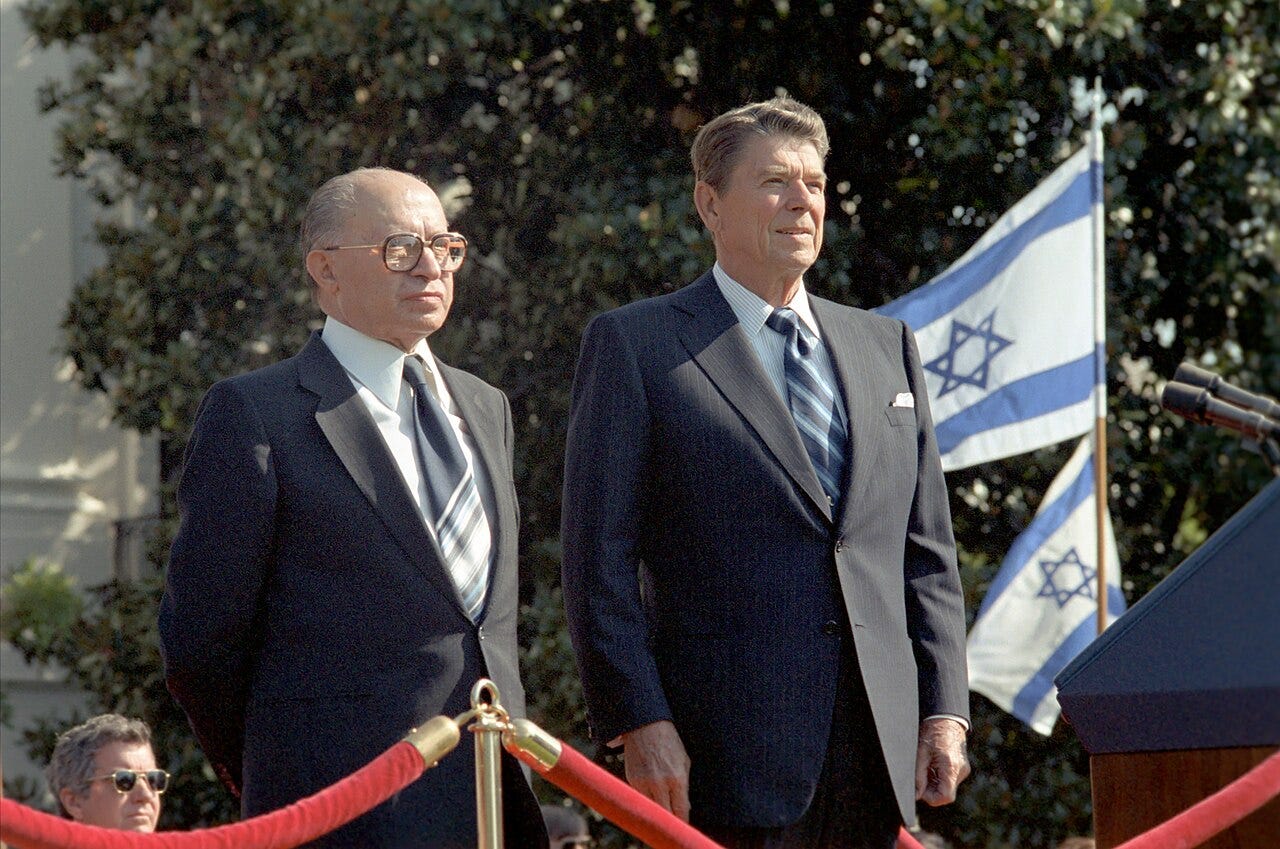
The United States remains Israel’s closest ally, but allies are not masters. And sovereign nations do not outsource their survival. If Washington reaches an agreement with Tehran that Israeli leaders believe endangers the future of the Jewish state, they should remember the lesson repeated throughout Israel’s history: Israel has benefited enormously from America, Israel values America, Israel enjoys America as an ally, but Israel does not depend on America. It never has.
As geopolitics across the world continues to go through somewhat of a revolution (or at least an evolution), the U.S.-Israel alliance remains vital, but Israel’s strategic future no longer rests on one bilateral relationship alone. A new regional architecture is emerging — one built around India, the Gulf states, and especially the United Arab Emirates.
For decades, India kept its relationship with Israel quiet, balancing Cold War politics and domestic sensitivities. Full diplomatic normalization came only in 1992. The breakthrough came in 2017, when Indian Prime Minister Narendra Modi visited Israel — the first sitting Indian prime minister ever to do so. He did something symbolically important: he embraced Israel openly, without routing the visit through Ramallah as previous diplomatic choreography demanded.
On a later visit, Modi stood in the Knesset (Israeli parliament) and declared: “India stands with Israel firmly with full conviction.” He closed with “Am Yisrael Chai” and “Jai Hind.” That was not diplomatic small talk. It was civilizational signaling.
Today, India and Israel cooperate in defense technology, intelligence sharing, cybersecurity, agriculture and water technology, AI and innovation, and the India–Middle East–Europe Corridor (IMEC).
That corridor matters enormously. IMEC aims to connect India to Europe through the Gulf and Israel, creating a strategic and economic alternative to China’s Belt and Road Initiative. Israel is not a peripheral player in this project. It is a central node.
India is the world’s most populous country, a rising economic superpower, and a state increasingly aligned with Israel on security and technology. No, India is not “replacing” America tomorrow. But the very fact that such a question can now be asked shows how much the world has changed.
Another dramatic transformation is happening in the Gulf. When the Abraham Accords were signed in 2020, many dismissed them as a photo op — a transactional deal between elites that would collapse under pressure from the Arab street.
Then came October 7th and the resulting wars. As Iran and its proxy network escalated attacks across the region, the UAE did not retreat from Israel. It moved closer. According to reports, Israel deployed an Iron Dome battery to the UAE during the conflict, complete with interceptors and Israeli personnel operating the system on Emirati soil. That would have been unthinkable a decade ago. It was the first operational deployment of Iron Dome outside Israel and the United States.
An Emirati official reportedly described the moment bluntly: “It was a real eye-opening moment. To see who our real friends are.” That is not “normalization.” That is alliance behavior.
The UAE has consistently distinguished itself from the cold peace Israel has long had with Egypt and Jordan. Emirati leaders built commercial ties, opened financial channels, condemned attacks on Israeli targets abroad, and publicly marked Holocaust Remembrance Day — something almost no other Arab capital does.
And when missiles flew, they asked Israel for some of its most sensitive defensive technology. Israel gave it to them. Israeli soldiers stood beside Emirati forces defending Gulf cities from Iranian attack.
Tehran understood the significance immediately. Iranian media denounced the Emiratis as traitors because, from Iran’s perspective, the UAE committed an unforgivable sin: It invited the Jewish state into the Persian Gulf. That relationship is now feeding into something larger: a regional bloc linking India, the UAE, Israel, Jordan, and potentially other states through trade, technology, logistics, and security cooperation.
Gulf states want Israeli technology and military capability. Israel wants regional integration and strategic depth. India wants a corridor to Europe that bypasses unstable chokepoints and Chinese dominance. The United States supports the architecture because it counters Beijing’s influence across Eurasia.
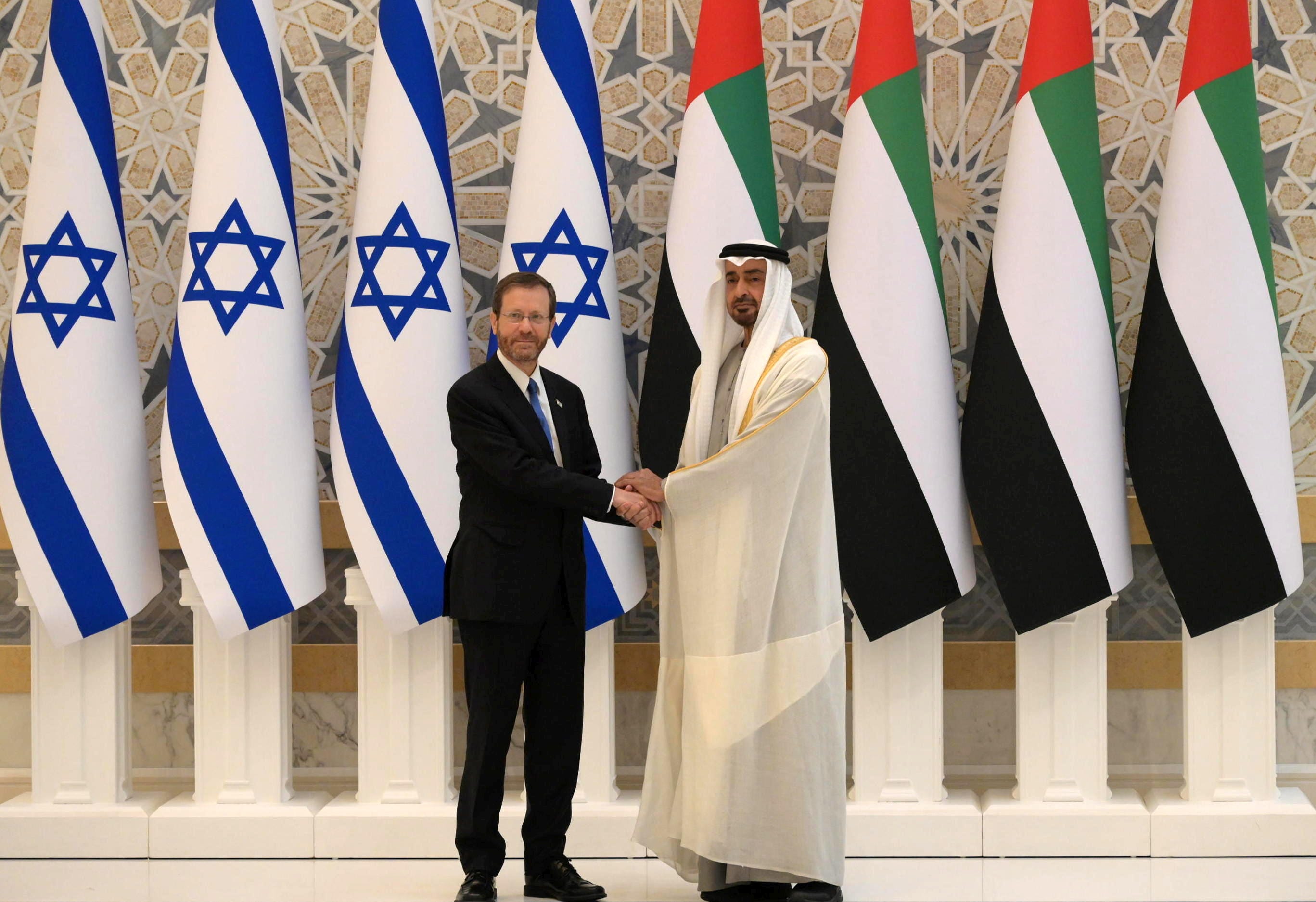
Among the deepest ironies in all of this is that Israel’s alliances have always grown stronger when Israel acted like a sovereign power rather than a client state. America respected Israel more after 1967 and 1981, not less. India embraced Israel more openly after Israel proved itself a technological and military powerhouse. The UAE deepened ties after watching Israel dismantle Iranian assets, defend itself under fire, and project hard power across the region.
Nations do not align themselves with weakness. They align themselves with strength.
Today, the United States remains Israel’s closest ally. American military “aid,” diplomatic backing, intelligence cooperation, and economic partnership are enormously valuable. No serious person should deny that.
But an alliance is not dependence. Dependence means a country cannot survive without another. That has never described Israel.
So if Washington signs a deal with Tehran that Israeli leaders believe endangers the Jewish state, the question is not whether Israel is allowed to disagree. The question is whether a sovereign nation has the right to defend itself.
Israel was founded so that Jews would make their own security decisions, not outsource them to foreign capitals. America is a vital ally, India is a rising strategic partner, and the UAE is becoming a real regional ally.
But Israel’s survival ultimately rests on one thing alone: Israel’s own willingness and ability to defend itself. It always has.
Good food for thought in this. Perhaps Israel is far from unique in needing to make its own way and never rely on America for its defense. As Ukraine is doing now and Europe is just realizing, America’s significant faction of isolationists make it an unreliable partner at best. One can never predict when it will leave you in the lurch or turn on you. And with American Democrats increasingly embracing radical Islamic propaganda, one can certainly see them turning on Israel once they regain power.
Between Trump’s capitulation to Iran and bungling of the Gaza “peace” committee, Vance’s embracing of isolationism, and the red-green alliance’s hijacking of the Democratic Party, Israel must quickly rethink the nature of it’s relationship with the U.S. Israel must remind the U.S. that it is an ally not a vassal, and the next Israeli P.M. needs to do a better job of this than Netanyahu has with Trump.