


Please consider supporting our mission to help everyone better understand and become smarter about the Jewish world. A gift of any amount helps keep our platform free of advertising and accessible to all.
This is a guest essay by Samuel J. Hyde, a Fellow at the Jewish People Policy Institute.
You can also listen to the podcast version of this essay on Apple Podcasts, YouTube Music, YouTube, and Spotify.
Imagine a new state is being established.
Within a day of declaring independence, it is attacked by all its continental neighbors. Against overwhelming odds, it withstands the assault, preserves its existence and territorial integrity, but loses one percent of its population in the war.
For the next 30 or 40 years, this country will not know a single day of genuine peace. Decades will pass before even some of its neighbors reconcile themselves to its existence. Meanwhile, its population will multiply through successive waves of immigration, many of the newcomers arriving from impoverished countries, including Holocaust survivors and Jews fleeing persecution in neighboring Arab states.
To make matters worse, this country has virtually no significant natural resources, neither oil nor gas, to sustain its economy.
Now consider a simple question: What are the chances that such a country could establish and maintain a functioning democracy?
The question becomes even more interesting when placed in its historical context. The world had just witnessed the collapse of empires and the emergence of nation-states. In the decades following World War II, nearly 100 new countries emerged across the globe, from the Middle East and Asia to Africa, the Caribbean, and elsewhere.
Upon achieving independence, most adopted democratic constitutions promising free elections, multiparty political systems, and a free press. Yet, with a few notable exceptions, India being one, the overwhelming majority failed to sustain those democratic institutions. Some descended into one-party dictatorships, others fell under authoritarian military rule, and still others embraced communism, semi-fascism, or some combination of these systems.
Yet the country in question, which began with approximately 650,000 people, most of them Jewish, grew into a nation of nine million citizens, roughly 20 percent of whom are Arabs. Against extraordinary odds, and under circumstances far harsher than those confronting most other newly established states, it somehow managed to preserve its democracy.
That country, of course, is Israel.
But the important question is not merely how Israel survived. It is how Israel managed to maintain a democratic political system in the face of internal and external pressures that might have destroyed the democratic institutions of almost any other newly established nation.
What accounts for this extraordinary disparity?
Scholars have generally offered two explanations, both of which contain elements of truth, yet neither of which is sufficient to answer the question.
The first explanation is that Judaism itself contains a tradition of democracy. Certainly, the notion of human dignity is deeply rooted in Jewish scripture. But as an explanation for the resilience of Israeli democracy, this theory leads to a rather absurd conclusion. The Davidic and Solomonic kingdoms were not democracies, nor could they have been, while the Hasmonean and Maccabean dynasties were, in one form or another, Hellenistic tyrannies.
There is nothing in the Bible, the Mishnah, or the Talmud that establishes a system of modern democratic government. Liberal democracy is a development of the post-18th-century world, and it is therefore difficult to argue that the origins and sustainability of Israeli democracy can be found in ancient Jewish religious texts.
The second explanation is that the earliest Jewish immigrants to Ottoman and later British Mandate Palestine came from Europe, bringing with them European traditions of liberalism and social democracy. Proponents of this theory often draw a comparison to the settlement of North America, where British colonists brought traditions of parliamentary government and self-rule that would eventually find expression in the American Constitution.
According to this argument, the European Jews who established the modern State of Israel similarly imported the political traditions of the Enlightenment, liberalism, and democracy.
This explanation is certainly more plausible than the first, but it too falls short of explaining what actually happened. After all, most of the Jewish olim (new immigrants) who arrived from Europe did not come from established democracies such as Britain, France, or Norway. Quite the opposite: They came largely from countries that were anything but democratic, often fleeing precisely the oppression imposed by the political systems under which they had lived.
These Jews arrived from Czarist and communist Russia, from Poland and Hungary, and from Romania, whose political systems during much of this period were hardly models of liberal democracy. Others fled Nazi Germany or countries such as Austria and Czechoslovakia that had fallen under Nazi occupation.
If the founders of modern Israel had simply brought with them the political traditions of their countries of origin, one might reasonably have expected them to reproduce some combination of authoritarianism, one-party rule, or semi-fascism. The notion that Israeli democracy was merely the product of importing European political systems into the Jewish state does not withstand even the slightest scrutiny.
The real explanation for the development and resilience of Israeli democracy does indeed lie in Jewish history, but not primarily in religious texts or the political traditions of the countries from which Jews emigrated. Rather, it lies in the historical and social experience of the Jewish People themselves.
Although European Jews possessed neither sovereignty nor complete political independence before 1948, they had accumulated centuries of experience in self-governance. Until the Holocaust, European Jewry constituted approximately 85 percent of the global Jewish population, and throughout much of its history, Jewish communities had developed institutions and practices that reflected many of the basic principles of representative government.
These communities were not sovereign states, of course, but they were meaningful political entities in their own right.
Whether Jews lived under Muslim or Christian rule, from Spain and France to Germany and Eastern Europe, they shared two fundamental priorities: establishing a place of worship and creating institutions where their children could learn Jewish history, traditions, and religious norms. Without sovereignty or the political authority of a state, they had to find a way to organize these institutions themselves.
The solution was a system of communal self-government built, to varying degrees, around elections and voluntary participation.
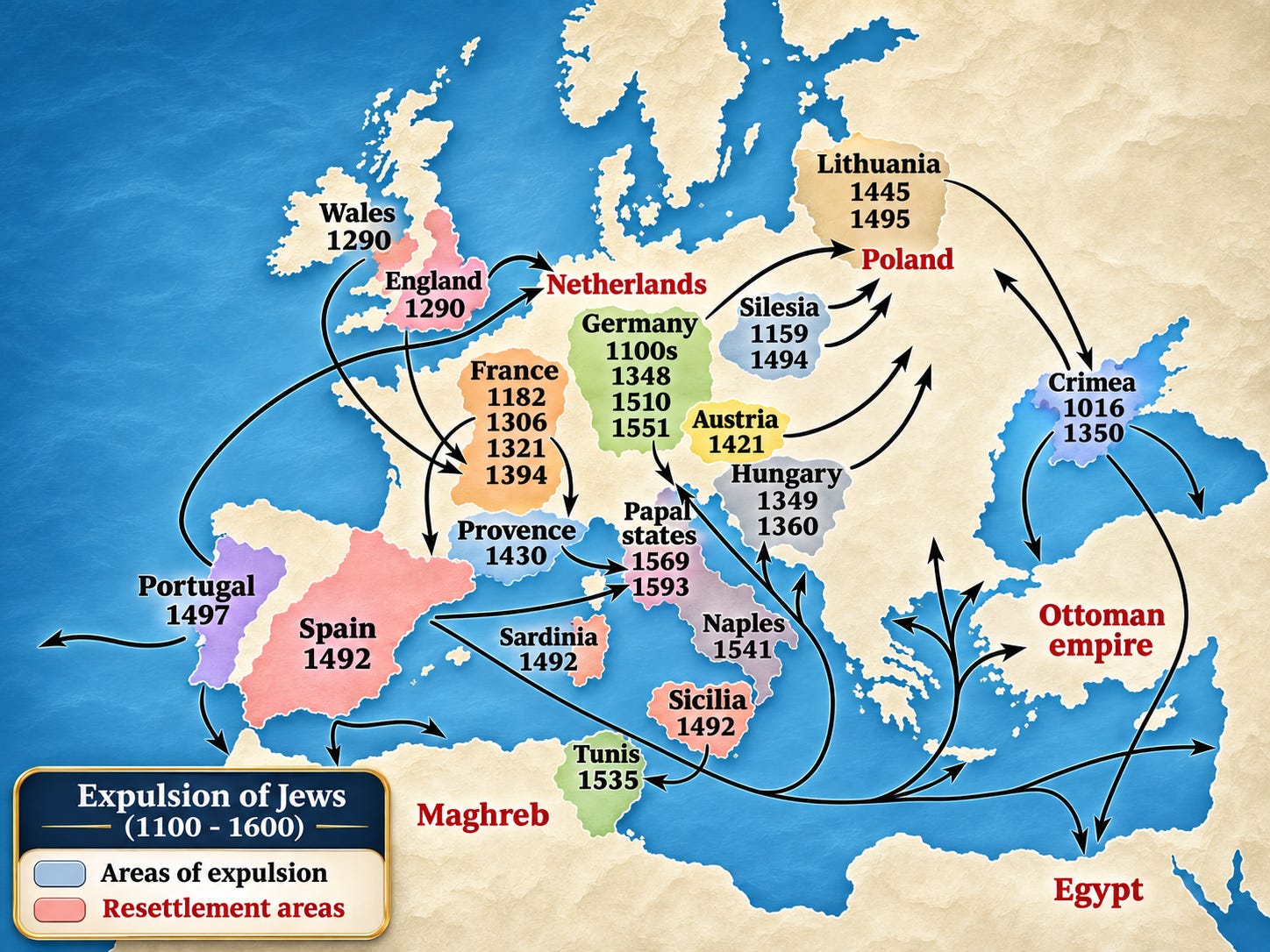
Whenever a sufficient number of Jews settled in a particular place, they organized a community and selected individuals to serve as chairmen, secretaries, treasurers, and other communal leaders. Authority did not necessarily rest with the rabbis. Sometimes rabbis were elected to leadership positions, and sometimes they were not. What mattered was that members of the community developed mechanisms for selecting those who would govern their collective affairs.
Naturally, these communities were not all equally democratic. Some were more egalitarian than others, while some were decidedly oligarchic, allowing the same families to dominate communal leadership for generations. Other communities imposed limits on how many members of a particular family could serve in leadership positions at any given time.
But whatever their differences, each community operated, in a limited yet meaningful sense, like a small city-state.
The Jewish People did not possess a modern state, but for centuries they had been practicing forms of communal politics that anticipated important features of modern elective democracy. They learned how to select leaders, administer institutions, resolve disputes, allocate resources, and manage competing interests, all without the machinery of a sovereign government.
And, of course, these systems had no shortage of political fights, personal rivalries, factions, and cliques. They contained all the nice and nasty aspects of democratic politics that one finds in Israel today. When people disliked a communal leader or rabbi, they sometimes seceded, moved across the street or to a nearby hill, and established an entirely new community.
In other words, the contentiousness of Jewish political life is hardly a modern Israeli invention.
Through centuries of such experiences, Jews became remarkably familiar with the practical mechanics of self-government: how to conduct elections, build coalitions, challenge the opposition, negotiate compromises, and establish a basic consensus around communal taxation and responsibility.
In some parts of Europe, this experience extended well beyond individual communities. In the Polish-Lithuanian Commonwealth, for example, Jews established larger regional governing bodies, most notably the Va’ad Arba’ Aratzot, or Council of the Four Lands. Its representatives gathered in Lublin to discuss matters of communal governance, regulation, taxation, and collective responsibility.
These were, in effect, political assemblies functioning without national sovereignty.
As early as the 17th century, Jewish communal leaders adopted educational requirements intended to ensure that young Jewish males spent several years studying and learned to read Hebrew. They developed taxation arrangements to finance communal institutions and established systems of mutual assistance grounded in the principle of Jewish solidarity.
When one community was devastated by natural disasters, pogroms, or wars, neighboring communities organized emergency funds to help its members rebuild or establish themselves elsewhere. Political organization was therefore not merely about choosing leaders or administering communal affairs. It also provided the institutional foundation for collective survival.
By the time modern Zionism emerged as a significant political movement in the latter part of the 19th century, Jews already possessed extensive practical experience in organizing political institutions.
When the founders of the Zionist movement convened the First Zionist Congress, they established representative bodies and conducted elections. When Jewish immigrants began arriving in larger numbers in the Land of Israel toward the end of the 19th century, they established agricultural colonies and, eventually, new urban communities, including the garden suburb that became Tel Aviv.
They did not have to invent the basic principles of communal organization from scratch. They already understood how to elect leaders, appoint secretaries, administer institutions, establish budgets, and collect communal contributions, because these were practices that Jewish communities had been developing and refining for centuries.
The first kibbutzim elected secretaries and other communal officials. Municipal communities such as Tel Aviv developed their own administrative structures. Jewish residents established mechanisms for raising and allocating funds, organizing public services, and managing collective affairs, often through voluntary arrangements.
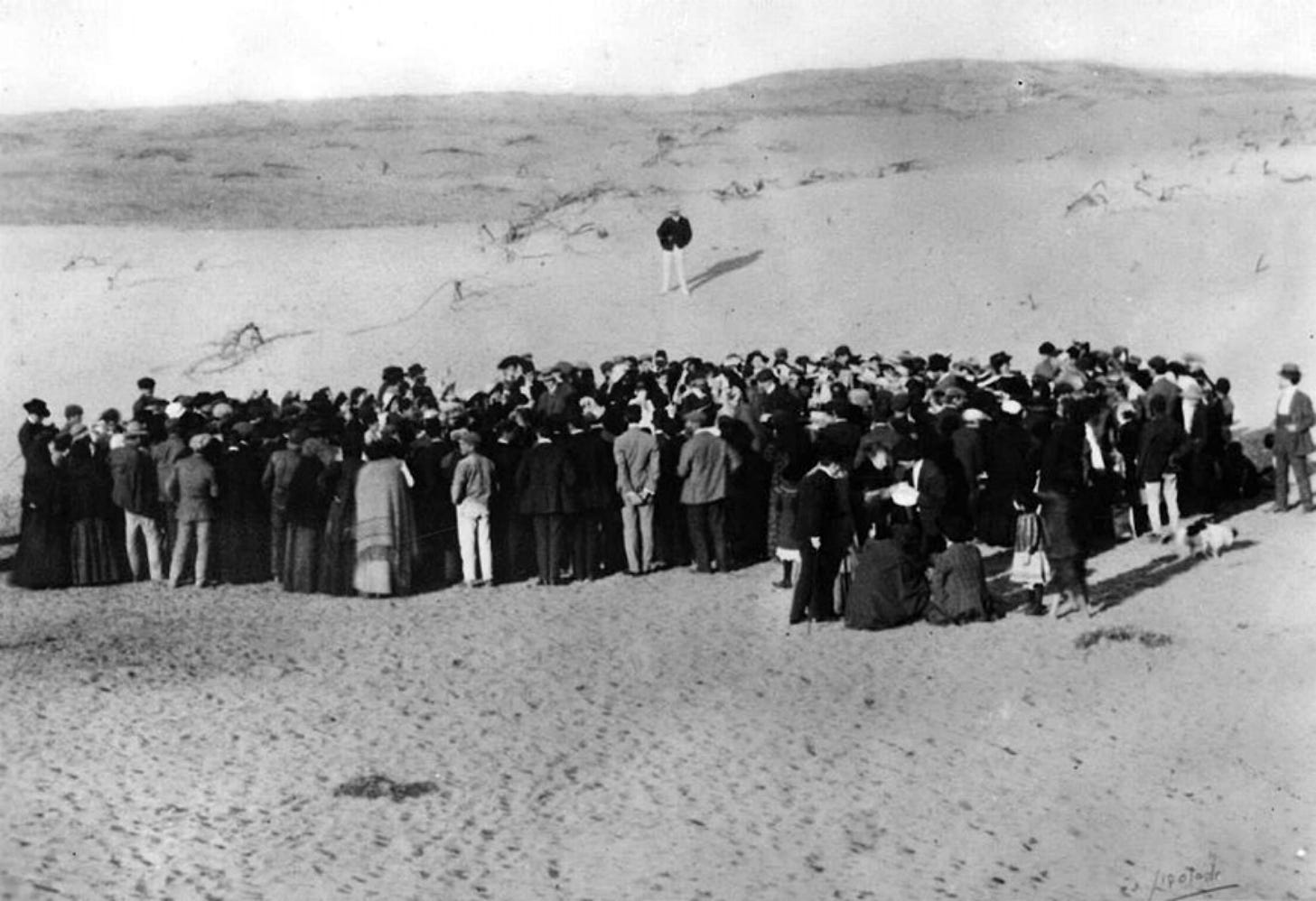
Long before the establishment of the State of Israel, the Jewish community in the Land of Israel, first under Ottoman rule and later under the British Mandate, had already laid the foundations of local self-government.
This history also helps explain one of the most distinctive features of Israeli politics today: its extraordinary fragmentation and seemingly endless coalition-building.
From the earliest years of modern Jewish political organization in the Land of Israel through the history of the State of Israel itself, no single political party has ever won an outright parliamentary majority. Parties have won pluralities, sometimes substantial ones, but never enough seats to govern entirely on their own.
Coalitions, negotiations, ideological disagreements, political rivalries, and the constant struggle to maintain a governing majority are therefore not recent defects in the Israeli political system. They are continuations of a much older tradition of Jewish political behavior.
Indeed, when the State of Israel was established in 1948, its Jewish leadership did not have to create an entirely new political system. Much of the institutional framework was already in place, having developed over decades of Jewish self-government under Ottoman and British rule.
David Ben-Gurion, who had served as chairman of the Jewish Agency, became Israel’s provisional prime minister. Individuals who had administered the treasury, agricultural affairs, and other departments of the Jewish community under the British Mandate assumed corresponding responsibilities in the new government.
The political parties were already there as well. There were several labor parties, liberal and bourgeois parties, and various left-wing Zionist workers’ movements. They had established their organizations, developed political constituencies, and learned to compete with one another long before Israel became an independent state.
And so, after declaring independence and defending the country against an onslaught of attacks intended to destroy it, the new state proceeded to organize elections.
What is remarkable is not simply that Israel held elections under such extraordinary circumstances, but that the mechanisms, institutions, and political culture required to conduct them already existed. The transition from a Jewish community without sovereignty to a sovereign Jewish democracy was, in many respects, a continuation of an existing political tradition rather than the invention of an entirely new one.
Israeli democracy, therefore, did not emerge simply because a constitutional assembly studied British or French political models and decided to reproduce them. It developed organically out of the historical political behavior of the Jewish People.
Its resilience cannot be explained solely by abstract commitments to democracy, liberalism, tolerance, or religious principles. Those values certainly matter, but their endurance in Israel owes much to the fact that the habits of self-government, political participation, communal responsibility, and institutional compromise had long been embedded in Jewish social and political life.
For centuries, Jews had been governing themselves without possessing a state. When they finally acquired one, they already knew how to practice politics, including all its disagreements, frustrations, rivalries, and necessary compromises.
And this brings us to a rather surprising conclusion about the state of Israeli democracy today.
What outsiders often interpret as evidence of political dysfunction — the constant arguments, the proliferation of parties, the unstable coalitions, the fierce opposition, and the seemingly anarchic character of Israeli public life — may actually reflect one of the deepest sources of the country’s democratic resilience.
After all, Jewish communities have been arguing over who should lead them, how they should be governed, and what their collective priorities ought to be for centuries. The arguments may be louder today, the stakes considerably higher, and the political institutions infinitely more complex, but the underlying tradition remains remarkably familiar.
In truth, when viewed through the long history of Jewish political behavior, the tumultuous and seemingly anarchic nature of Israeli politics today may be the greatest guarantee of the resilience of Israeli democracy tomorrow.