


Please consider supporting our mission to help everyone better understand and become smarter about the Jewish world. A gift of any amount helps keep our platform free of advertising and accessible to all.
This is a guest essay by Vanessa Berg, who writes about Judaism and Israel.
You can also listen to the podcast version of this essay on Apple Podcasts, YouTube Music, YouTube, and Spotify.
New York City’s Jews account for roughly 10 percent of the population, but are the targets of more than 50 percent of its confirmed hate crimes.
So what does Mayor Zohran Mamdani decide to do? Dismantle the specialized police unit that has repeatedly confronted some of the city’s most aggressive anti-Israel demonstrators.
What could possibly go wrong?
On Monday, Mamdani and Police Commissioner Jessica Tisch announced the disbanding of the New York Police Department’s Strategic Response Group, a specialized unit established in 2015 to handle counterterrorism operations, civil disorder, and large demonstrations. The unit has played a prominent role in policing pro-Palestinian protests, including the demonstrations that engulfed Columbia University following Hamas’ October 7th massacre.
Mamdani says the decision is about protecting civil liberties and preventing the police from treating peaceful protesters like terrorists. The new arrangement will separate counterterrorism operations from protest management, transferring the Strategic Response Group’s counterterrorism responsibilities to the NYPD’s Intelligence and Counterterrorism Bureau while establishing new teams focused on dialogue and de-escalation.
Fine. Peaceful protesters shouldn’t be treated like terrorists. But that argument conveniently ignores the reason specialized crowd-control units exist in the first place: Not everyone who calls himself a peaceful protester behaves like one. And no political movement in New York City has demonstrated the importance of that distinction more spectacularly than the anti-Israel movement.
We’ve watched demonstrators occupy university buildings, intimidate Jewish students, surround synagogues, clash with police, and turn public spaces into arenas of political intimidation. We’ve watched activists glorify Hamas, celebrate the perpetrators of October 7th, and chant slogans that many Jews understandably associate with terrorist attacks against their people.
But apparently the problem is not the behavior of these activists. The problem is how “aggressively” the police respond to them. That is the quasi-logic behind Mamdani’s latest initiative, and it deserves considerably more scrutiny than the mayor’s carefully packaged rhetoric about civil liberties.
Mamdani’s insistence on separating protest response from counterterrorism overlooks a rather inconvenient reality: Terrorists can exploit protest movements. Terrorists do not necessarily announce themselves as terrorists. They can operate through ostensibly legitimate organizations, participate in demonstrations alongside peaceful activists, exploit the protection afforded to political gatherings, and use protest movements to recruit supporters, raise money, spread propaganda, or conceal more sinister activities.
A demonstration attended by thousands of people exercising their constitutional rights can also attract a handful of individuals with completely different intentions. That is why law enforcement cannot afford to assume that a political demonstration and a potential terrorist threat are mutually exclusive.
This is not some paranoid conspiracy theory. In 2020, the National Counterterrorism Center, FBI, and Department of Homeland Security issued a joint assessment explicitly warning that violent extremists and terrorists exploit civil unrest and lawful public assemblies. The agencies documented how extremists had sought to capitalize on American protest movements, including a 2020 case in which an extremist who killed a federal security officer in Oakland had planned to exploit nearby demonstrations.
The overwhelming majority of protesters had nothing to do with his activities, and that was exactly the point: A legitimate protest can provide an opportunity for someone whose intentions are anything but legitimate.
So when Mamdani insists that the policing of protests must be separated from counterterrorism, the obvious question is what happens when those two worlds intersect. The city says counterterrorism capabilities will remain within the NYPD’s Intelligence and Counterterrorism Bureau, but moving organizational responsibilities around does not eliminate the possibility of terrorist operatives exploiting public demonstrations.
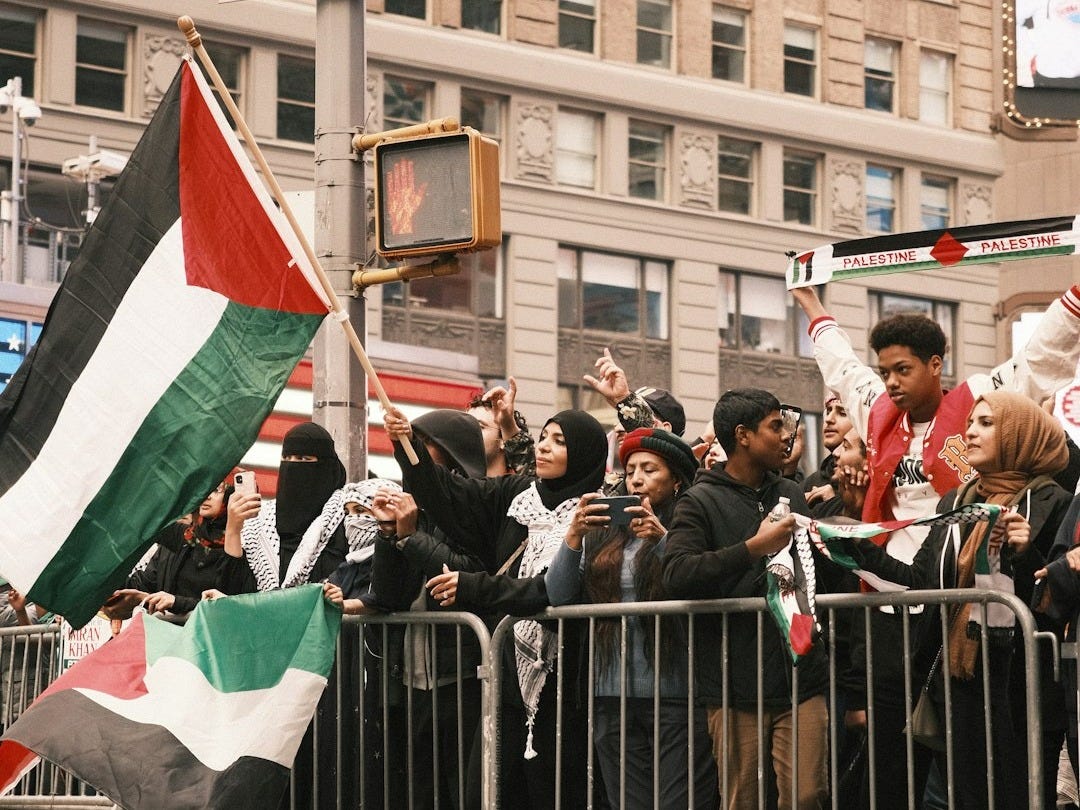
And when a mayor whose political identity is so deeply and proudly intertwined with anti-Zionism makes it more difficult for police to employ certain crowd-control tactics, Jewish New Yorkers have every right to wonder whose interests are being prioritized.
Let’s recall what happened in May at Manhattan’s Park East Synagogue. Hundreds of pro-Palestinian demonstrators gathered outside the synagogue to protest an Israeli real estate event. The confrontation became heated when protesters attempted to remove police barriers, and an NYPD officer was hospitalized with a leg injury.
The police were doing precisely what New Yorkers should expect them to do: maintaining a security perimeter around a Jewish institution hosting a controversial event. And Mamdani’s response? While affirming the rights of people to protest and enter houses of worship, his administration also made a point of condemning the synagogue’s event over its promotion of real estate sales in the West Bank.
A Jewish synagogue hosts an event. Anti-Israel demonstrators descend upon it. Protesters clash with police, an officer gets injured, and the mayor’s administration feels compelled to remind everyone that it disapproves of what the synagogue was doing. What an extraordinary set of priorities.
Since when does the mayor of New York City need to weigh in on the political content of an event taking place inside a synagogue while police are trying to maintain order outside it? Would he feel the same urgency to explain his disagreements with the organizers of a controversial event at a mosque while demonstrators were clashing with police outside?
The issue is not whether the event was politically controversial. The issue is that Jewish worshippers and visitors should not have to pass through an intimidating crowd to exercise their rights. The mayor’s personal opinions about Israel should be irrelevant to that obligation.
And this is why the Strategic Response Group decision is so troubling. When protesters were physically confronting police outside Park East Synagogue, New York needed officers who could hold the line, not merely people trained to explain the virtues of peaceful dialogue.
A police department cannot negotiate its way out of every confrontation. Sometimes the job is to tell an angry crowd that it cannot go any further, regardless of how passionately its members believe in their cause. Yet Mamdani appears considerably more enthusiastic about restraining the police than confronting the political extremism that makes such policing necessary.
Of course, none of this exists in a vacuum.
During his mayoral campaign, Mamdani repeatedly refused to condemn the slogan “Globalize the Intifada,” despite widespread concern among Jewish New Yorkers about its historical associations with violence against Jews.
This was not some harmless misunderstanding over an obscure Arabic expression. The Second Intifada included a campaign of suicide bombings and terrorist attacks that murdered Israeli civilians in buses, restaurants, cafés, nightclubs, and other public places. When Jewish New Yorkers hear people demanding that the intifada be globalized, they have every reason to consider the implications.
Just look at what transpired in France a few weeks ago, where Palestinian flags were a main feature among the violence and destruction.
Yet the man seeking to govern the city with one of the world’s largest Jewish populations spent weeks refusing to unequivocally reject the slogan. He was more concerned about offending the people chanting it than reassuring those who feared it.
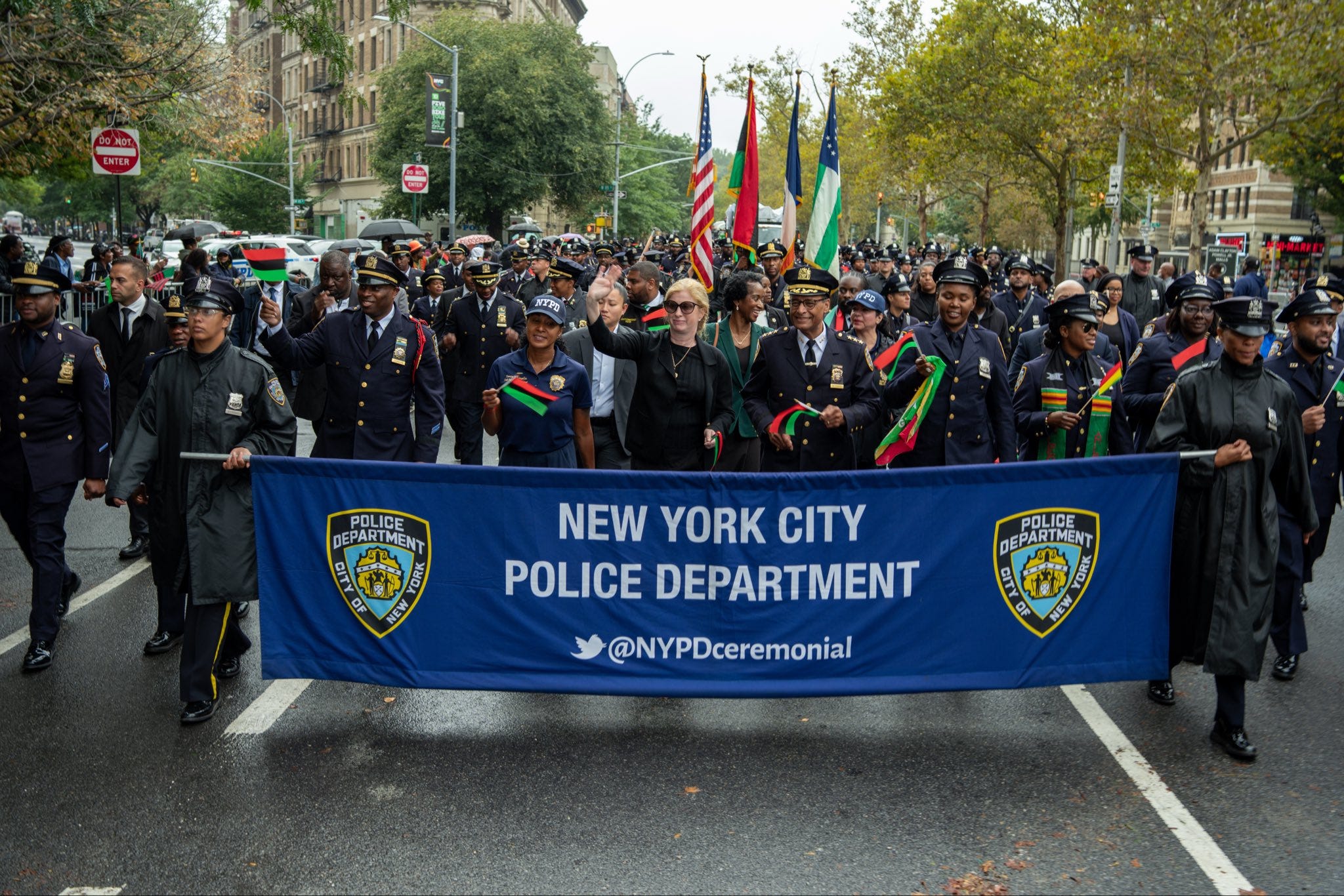
And his actions since taking office have hardly inspired greater confidence. On his first day as mayor, Mamdani revoked a series of executive orders issued by his predecessor, Eric Adams, including measures adopting the International Holocaust Remembrance Alliance’s working definition of antisemitism and restricting city participation in boycotts of Israel.
Mamdani ran his campaign promising to address New York City’s mounting problems: affordable housing, public transportation, the cost of living, public safety, the sorts of issues that actually determine whether millions of New Yorkers can afford to live in their city.
So how does rescinding the city’s adoption of the International Holocaust Remembrance Alliance’s definition of antisemitism or lifting restrictions on city participation in boycotts of Israel make life better for everyday New Yorkers? Does it lower their rent? Reduce their grocery bills? Make the subway safer?
Mamdani seems remarkably capable of recognizing Jewish vulnerability when announcing security initiatives, yet remarkably comfortable pursuing an anti-Zionist agenda even when major Jewish organizations warn about its consequences.
Now consider the political circumstances surrounding the Strategic Response Group’s dismantling. In October, anti-Zionist demonstrators protested against Mamdani himself, demanding that he disband the Strategic Response Group and remove Commissioner Tisch. Some attacked Tisch specifically because of her Zionism, while others accused Mamdani of betraying the Palestinian cause by retaining her.
The spectacle was comical. Here was a mayor whose anti-Zionism had become one of the defining features of his political career, being denounced by activists who considered him insufficiently hostile toward Israel. The mayor was not anti-Zionist enough for the anti-Zionists. And now, barely a month later, the Strategic Response Group is being disbanded.
The same activist movement that has demanded more freedom to confront Israel’s supporters and less aggressive policing of its demonstrations is celebrating the dismantling of a unit that repeatedly confronted it. The satisfaction of those activists should prompt an obvious question: What do they expect to be able to do differently once the Strategic Response Group is gone?
Will officers be empowered to intervene decisively when demonstrators cross the line from political expression into intimidation, threats, and violence? Or will the city’s new emphasis on “dialogue” create another layer of hesitation while protesters test how far they can push?
According to NYPD statistics released earlier this month, 53 percent of all confirmed hate crimes during the first 10 months of 2026 targeted Jews, despite Jews accounting for approximately 10 percent of the city’s population. The department recorded 279 confirmed anti-Jewish hate crimes during that period, an increase of 4 percent compared with the same period in 2025.
Read those figures again. More than half of the city’s confirmed hate crimes target a community representing approximately one-tenth of its population.
Imagine the public outrage if another minority community experienced such a disproportionate share of hate crimes and the mayor simultaneously announced changes to the policing of demonstrations frequently directed against that community’s institutions and political identity.
Would New Yorkers be told simply to trust the process? Would criticism of the mayor’s decisions be dismissed as an overreaction? Would concerns about public safety take a back seat to discussions about protesters’ civil liberties?
The principle should not change depending on which community is being threatened or which political cause the demonstrators claim to represent.
And this is the part of the conversation Mamdani and his supporters seem determined to avoid: The First Amendment protects the right to protest, not the right to assault police officers, threaten Jewish students, obstruct access to buildings, or physically intimidate people attempting to enter a synagogue.
A political slogan does not transform criminal behavior into constitutionally protected expression. A Palestinian flag does not grant its bearer immunity from the law. And a crowd does not become peaceful simply because its organizers call it a demonstration for human rights. Yet the language surrounding this reform seems entirely concerned with protecting protesters from police misconduct, rather than protecting the public from protesters who engage in misconduct.
The deeper concern is political. Mamdani is not a neutral observer of the anti-Israel movement. He has spent years advocating many of its central political positions. His opposition to Zionism is not some peripheral view buried deep within his policy platform. He proudly makes it one of the most recognizable features of his public identity.
Can a mayor who identifies so strongly with a protest movement be trusted to confront its extremists without hesitation? Will he apply the same standards when demonstrators sympathetic to his worldview intimidate Jewish New Yorkers as he would when protesters hostile to his worldview intimidate another community? And will Jewish New Yorkers have to wait until someone gets seriously hurt before discovering the answers?
The danger is that an administration’s political sympathies can shape its enforcement priorities without anyone ever issuing such an instruction.
Police officers notice which incidents attract condemnation from City Hall and which provoke carefully qualified statements. Activists notice which behavior results in consequences and which behavior is tolerated. And communities notice when their safety concerns seem to require endless explanations while the political grievances of those intimidating them receive immediate attention.
This is how selective enforcement can become normalized — through a series of decisions that repeatedly place other priorities ahead of their security. And when political leaders consistently treat aggressive protesters as misunderstood activists while treating demands for stronger policing as threats to civil liberties, the people being intimidated eventually get the message.
Mamdani was elected mayor of New York City, not a spokesman for the anti-Zionist movement. His job is not to determine which political demonstrations he finds sympathetic or which Jewish institutions host events he considers objectionable. His job is to ensure that everyone in his city is protected equally under the law.
And if protecting a synagogue requires police officers to physically restrain a hostile crowd, then that is what the police must be prepared to do. Because the moment an angry mob discovers that political sympathy buys it greater freedom to intimidate, this will cease to be a debate about police reform. It will become a question of whose rights New York City is actually prepared to defend.

Jessica Tisch should have resigned immediately.
Just because the vast majority of these protestors aren’t active terrorists doesn’t mean they don’t back the would-be terrorists among them.