


Please consider supporting our mission to help everyone better understand and become smarter about the Jewish world. A gift of any amount helps keep our platform free of advertising and accessible to all.
You can also listen to the podcast version of this essay on Apple Podcasts, YouTube Music, YouTube, and Spotify.
Most people look at Israel today and assume its power was inevitable: inherent Jewish power, backed by the United States and other Western powers, and dominant because of “occupation” and “settler-colonialism.”
They imagine a modern state that was born strong and simply stayed that way. In reality, Israel’s power is one of the least intuitive success stories in modern history. The State of Israel was born not only in war, but in desperation, scarcity, and uncertainty. From its first day — its first hours, really — it faced an existential battle for survival, and for years it barely resembled a functioning country at all.
On May 14, 1948, its founding prime minister, David Ben-Gurion, declared independence. Within hours, five Arab armies invaded. Israel had no strategic depth, no natural resources, no unified army, and almost no money.
Its population of roughly 650,000 included Holocaust survivors, refugees from Europe, and Jews fleeing persecution across the Middle East and North Africa. Many arrived traumatized and penniless. The country’s borders were indefensible, its supply lines fragile, and its future anything but guaranteed.
But Ben-Gurion had a knack for politics. He dissolved rival pre-state Jewish militias and forced the creation of a single national army, knowing that internal division would be fatal. He accepted borders he knew were militarily disastrous because sovereignty, even fragile sovereignty, was the prerequisite for survival. He prioritized mass immigration even when the economy could barely feed those already there, insisting that demographic strength was not a social issue but a strategic one.
Ben-Gurion was also thinking about institutions. He pushed for a civilian government that controlled the military, not the other way around. He invested in education when the state could scarcely afford bread, believing that human capital would outlast any weapon system. Famously, when generals begged him to focus exclusively on immediate security threats, Ben-Gurion replied that a nation cannot live forever by the sword alone. He recognized that the establishment and development of a Jewish state required not only political and military action, but also social, economic, and cultural efforts to build a vibrant and sustainable society.
“Our future does not depend on what the Gentiles will say but on what the Jews will do,” said Ben-Gurion, while stressing the importance of upholding the values of justice, freedom, and democracy, which are the foundation of Israel’s identity as a Jewish and democratic state. “The fate of Israel depends on two things: its strength and its righteousness,” he added.
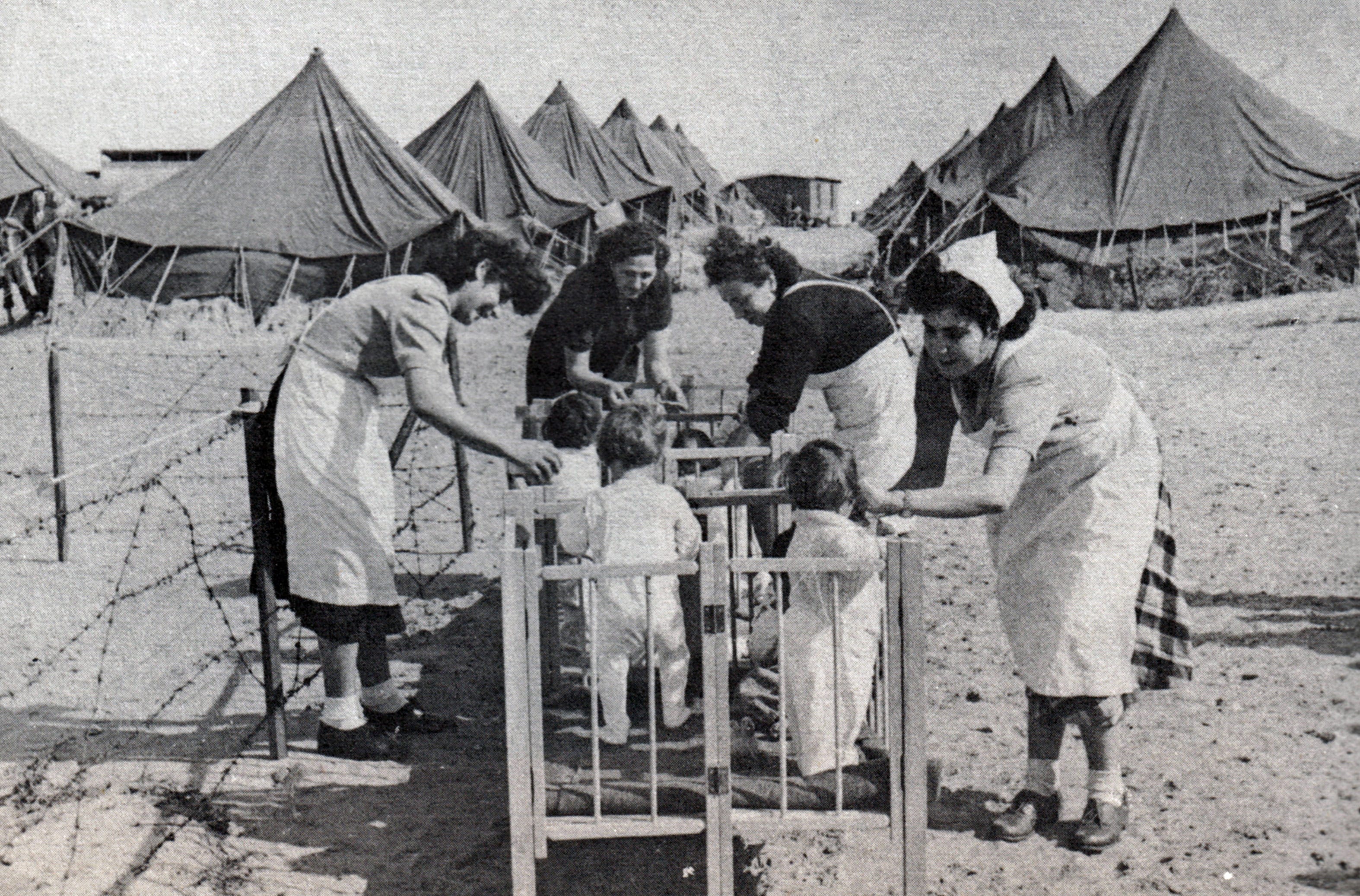
Still, Israel’s early years were marked by poverty that is hard to imagine today. Food was rationed under the tzena system. Families used coupons for bread, sugar, and eggs. Meat was rare. Shoes were repaired repeatedly because replacements were unavailable. Hundreds of thousands of immigrants lived in ma’abarot (transit camps made of tents and tin shacks) through scorching summers and cold winters. The government struggled to house, feed, and employ new immigrants while fighting constant border infiltrations and preparing for the next war.
So, how did this fragile, poor, besieged state become so powerful?
The first answer lies in leadership. Israel’s founding generation understood that survival required discipline, long-term thinking, and an almost ruthless prioritization of national interest. Ben-Gurion made deeply unpopular decisions: accepting the United Nations partition plan despite its dangerous borders, dismantling rival militias to create a single army, and prioritizing mass immigration even when the economy could barely sustain it.
He understood that sovereignty, however imperfect, was the foundation for everything else — and he also understood that he was not a one-man show, saying: “There is no single person who determines the fate of a country and there is no person you cannot do without.”
Moshe Sharett, as Israel’s foreign minister, established diplomatic relations with many nations, and helped to bring about Israel’s admission to the UN. Prior to the State of Israel’s founding, he was the head of the Jewish Agency’s Political Department and maintained secret diplomatic channels with Britain, the United States, the UN, and Arab leaders while the British Mandate was still in force. Many of these activities were illegal under British law.
During the 1940s, Golda Meir traveled to the United States to raise money for Jewish settlement and defense for the impending Jewish state. She was blunt, emotionally charged, and persuasive in a way that most men of her time could not match. By the end of her tour, she had secured millions of dollars — enough to fund arms purchases, immigrant support, and essential infrastructure.
Levi Eshkol had a reputation for intense attention to detail and patience. Stories from the 1948 war and early state years describe him counting literally every bullet, ration, and lira available to the state. In one story, a desperate arms procurement officer brought him a plan that seemed impossible: funding a critical weapons shipment while staying under budget. Eshkol personally recalculated the numbers, found room for it, and approved it within hours. Historians note that this combination of financial prudence and decisiveness under pressure is what allowed Israel to build its infrastructure and defense systems while living in near-poverty.
Isser Harel decided to break down the political and party-based barriers that existed before the establishment of the state. He employed, without distinction, former members of Jewish militias in the Shin Bet (Israel’s internal security and counterintelligence service) and later in the Mossad. This policy contrasted with the prevailing sentiment of the time, expressed by David Ben-Gurion in his policy of “Without Herut and Maki” (two political parties at the time), which marginalized members of the political Right. Employing Right-wing figures in government institutions was not common practice.
And just like that, intelligence (human, signals, cultural) became a core national asset. Israel invested in knowing more, earlier, and faster than its adversaries. This intelligence-first worldview shaped everything from military planning to diplomacy and counterterrorism, giving Israel asymmetric advantages far beyond its size.
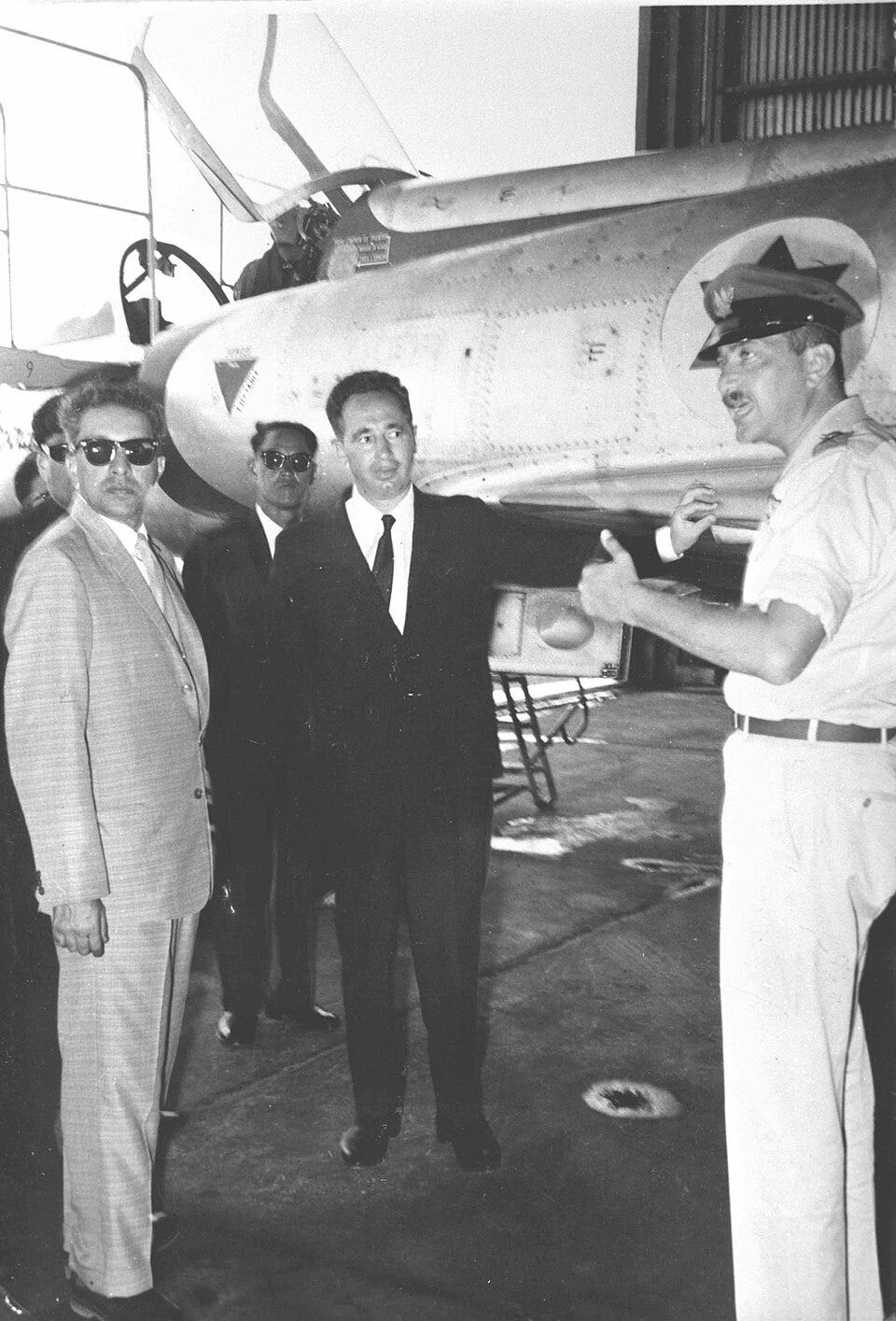
Then there was Shimon Peres, still in his 20s, who quietly built Israel’s defense infrastructure when few believed the state would last. Operating largely behind the scenes, he secured arms deals when no one else would sell to Israel and laid the groundwork for Israel’s strategic deterrence — leading to Israel’s second great advantage.
One of Peres’ first major assignments — at just 29 years old, as Director General of Israel’s Ministry of Defense — was to help plan and execute the Sinai-Suez campaign, one of the most audacious and improbable military operations of the post-World War II era. It was 1956, and as the campaign progressed, Peres had a realization about the broader levers of power Israel could (and needed) to master.
At a villa in France, Israeli, British, and French officials had gathered to finalize the campaign’s planning. Peres, then 33, approached the French foreign and defense ministers with a proposal that seemed certain to be rejected outright. Against everyone’s expectations (including his own), the French officials agreed: France would assist Israel in establishing its own nuclear-energy program.
The path ahead was anything but smooth. Resistance within Israel’s own leadership threatened to derail the plan. Soviet agents monitored construction sites, and the U.S. expressed serious reservations, culminating in tense discussions between Peres and then-U.S. President John F. Kennedy.
By September 1957, after four years of delicate negotiation, Israel was poised to sign a formal agreement with France. The French Atomic Energy Commission had agreed to provide a plutonium reactor. All that remained was the signatures of the French foreign minister and the prime minister.
Peres’ first stop, early on Monday morning, September 30th, was with Pierre Guillaumat, head of the Atomic Energy Commission and a strong supporter of Israel. Guillaumat confirmed what Peres feared: the deal could only be finalized if the French government approved it, and that government was on the verge of collapse.
Next, Peres went to Foreign Minister Christian Pineau, the deal’s chief opponent. Pineau told him he wanted to help, but couldn’t. The Americans would be furious if they learned of it, potentially crippling France’s nascent nuclear program. Worse, the Soviets could respond by arming Egypt with nuclear weapons.
Peres came prepared. The reactor was strictly for peaceful purposes, he said, and Israel would consult with France before any future changes. Moreover, he added, if the Soviets introduced nuclear weapons to Egypt independently, what could the West do then? Pineau agreed, and Peres persuaded him to draft the agreement with his secretary. Once signed, Peres offered to personally carry it to the prime minister.
All that remained was Maurice Bourgès-Maunoury’s signature. Peres waited in his office as the hours stretched from afternoon into evening. Whiskey was delivered in several rounds. By midnight, he realized two things: he would not see the prime minister that night, and Bourgès-Maunoury, trapped in parliament, was likely facing a no-confidence vote.
The next morning, David Ben-Gurion wrote in his diary that the French government had fallen over an Algerian vote and that Peres’ Paris trip was probably “for naught.” He didn’t know that late the night before, Peres had secured the prime minister’s oral approval. By nine in the morning, Peres was back in Bourgès-Maunoury’s office. Exhausted and bleary-eyed, the French prime minister was no longer in power. He had no formal authority to sign on behalf of the Fourth Republic, but with Peres’ urging, he signed the consent anyway, backdating the document to the previous day.
Peres later reflected, summing up the intense backroom maneuvering: “This date or that, what does it matter? Of what significance is that between friends?”1
But Israel’s founders also knew that defense and intelligence capabilities were only as effective as the people who operated them. Mandatory military service became not just a defense necessity, but a nation-building engine. It forced young Israelis from radically different backgrounds — rich and poor, secular and religious, tzabarim2 and new immigrants — into shared responsibility at a young age. Soldiers were expected to lead early, make decisions under pressure, and take responsibility for outcomes. That experience created social cohesion, practical leadership skills, and a deep sense of collective obligation that extended far beyond the military into business, technology, and civic life.
Israel’s diversity, often misunderstood as a weakness, became one of its greatest strengths. Jews arrived from dozens of countries with different languages, customs, and worldviews. What held them together was not uniformity, but Judaism as a civilizational framework. Jewish values emphasized education, argument, responsibility, and memory. Disagreement was normalized. Debate was expected. Participation was required.
Following October 7th, it was no surprise that hundreds of thousands of Israelis reported to their reserve units — celebrities, CEOs, and even travelers abroad who dropped everything to catch the first possible flight home. One Israeli, still serving in active reserve duty today, told me she does it not for the government or for the politicians, but for the people. Others joke that reserve duty makes them feel young again, or, as I recently overheard at a Tel Aviv restaurant, it’s a “vacation from our wives.”
This is the side of Israel that most people abroad never see: a society bound by a genuine commitment to one another, a shared sense of purpose, and an irrepressible humor even in the darkest moments. It’s the young mother who joins her reserve unit at dawn, the CEO who drops a business trip to defend his country, the neighbor who opens their home to strangers, all of them acting not for recognition, but because Israel is more than a state; it is a people, a nation.
This combination of courage, creativity, and care — the willingness to fight and laugh, to endure and innovate — is what has allowed Israel to survive impossible odds and emerge as a nation of influence, strength, and resilience. Power, in Israel’s case, has never been measured solely in tanks, planes, or nuclear weapons; it has never been about Israelis flexing their muscles to the nth degree in order to wipe out their enemies (though such capabilities are not in question).
Instead, it has always been the might of a people who refuse to be defeated, and who face the future together with both seriousness and joy.
That is what makes Israel so powerful.
“A back-dated deal with a toppled French PM: How Peres secured Israel’s nuclear deterrent.” Times of Israel.
Someone born in Israel; “sabra” in English
How do you write an article about how Israel became powerful and not mention Netanyahu, who I think it is fair to say is the most dominant figure in Israeli history (love him or hate him; I'm in the former category)?
Ben Gurion founded the nation; Netanyahu (as Obama would say) fundamentally transformed it - from a sclerotic Socialist state to "Start Up Nation" (fortunately, he transformed it in the direction opposite to that which Obama wanted to transform America). It is a tech power second only to the United States, which makes it indispensable even to fanatically anti-Semitic nations like Spain, Ireland and Norway which have found that they can't boycott Israel without damaging their own economies. Further more, Bibi enabled the development of the natural gas industry, which not only enables Israel to produce electricity without importing the energy needed for it, but even exports it to Arab nations.
Yes, Ben Gurion and the founders enabled Israel to survive. Netanyahu took it to the next level, making it a power to be reckoned with, even by those countries that hate it enough to want to wipe it out.
And Israel will need to continue to remain innovative, as those that are jealous of her achievements, will continue on the path of self destruction of their own culture and nations, in a futile attempt to destroy the State of Israel.