


Please consider supporting our mission to help everyone better understand and become smarter about the Jewish world. A gift of any amount helps keep our platform free of advertising and accessible to all.
This is a guest essay by Melissa Brodsky, a writer focused on media literacy, modern antisemitism, and history.
You can also listen to the podcast version of this essay on Apple Podcasts, YouTube Music, YouTube, and Spotify.
In the years before Egypt invaded Ottoman-era Palestine in 1831, thousands of Egyptian peasants were already crossing the border.
They were fleeing Muhammad Ali’s government, where heavy taxation, compulsory labor, and military conscription had made escape one way of avoiding the state. Correspondence preserved in the Royal Archives of Egypt places Egyptian fugitives in the districts of Jerusalem, Nablus, and Gaza. An Ottoman document dated December 24, 1831 puts the number who had fled into Ottoman Syria at approximately 6,000.
Muhammad Ali demanded their return, while Abdullah Pasha, the powerful governor based in Akko, resisted his attempts to retrieve them.
The dispute became one of the disputes surrounding Muhammad Ali’s confrontation with Abdullah Pasha and the Egyptian invasion that followed. Ibrahim Pasha’s army conquered Palestine and Syria, beginning nearly a decade of Egyptian rule and bringing another movement of soldiers, administrators, workers, merchants, military support personnel, and families north. When Egyptian forces withdrew in 1840 and 1841, the people who had established lives there didn’t all leave with them.
This is where the population history becomes much greater than one migration. Palestine was between Egypt, Syria, Arabia, and the Mediterranean, inside an Ottoman Empire that constantly moved soldiers, refugees, prisoners, officials, and displaced communities across enormous distances.
People arrived through conquest, work, pilgrimage, slavery, political exile, and government resettlement. Tribal groups crossed into new grazing lands. Refugees were given land. Political fugitives escaped across borders. Governments deliberately established communities where they wanted them.
By the time Britain began formally counting Palestine’s inhabitants after World War I, generations of these families had already been absorbed into the Arabic-speaking population. But earlier documents still preserve their origins.
The Egyptian presence remained visible long after Ibrahim Pasha’s army withdrew. Egyptian communities developed around Gaza, Jaffa, the coastal plain, and other areas, and 19th-century observers could still identify them as Egyptian.
An 1863 British Admiralty map of Jaffa is particularly striking because it labels a settlement outside the city simply “Egyptian Village.” Philip Baldensperger, born in Jerusalem in 1856 and later a contributor to the Palestine Exploration Fund, described communities including Zarnuqa and Qubeiba as Egyptian in origin. The surrounding fellahin (Arabic-speaking peasant farmers and agricultural villagers) still called their inhabitants Masriyyin, meaning Egyptians.
Decades after Egyptian rule had ended, neighboring villagers remembered who had come from Egypt.
Jaffa preserved this history particularly well because newcomers established saknāt (residential settlements or quarters beyond the old city). Egyptian migration continued during the British Mandate as well.
Immigration records include the case of an Egyptian laborer named Sayed who entered Haifa in 1931, found a series of jobs, and remained for years. When authorities tried to deport him, he appealed and supplied letters from employers. His file captures the ordinary side of migration: A man crossed a border because there was work, built a life, and tried to stay.
The Egyptian movement therefore stretched across very different periods. There were peasants fleeing Muhammad Ali before the conquest, people associated with the Egyptian administration and army after 1831, communities that remained after Egyptian withdrawal, and later workers drawn by Palestine’s expanding economy. Those streams eventually disappeared into a much broader Arab population, but the documents still separate them.
Egyptian rule and regional trade also brought Africans into Palestine. The British Government’s “1922 Handbook of Palestine” described an African population around the lower Jordan Valley and Dead Sea and specifically mentioned “a settlement from the Sudan.” Other Africans reached Palestine through slave networks connecting Africa, Arabia, and the Levant.
Jaffa contained a community known as Saknat al-Abid, commonly translated as the “Quarter of the Slaves.” Historical accounts associate its inhabitants with black Africans, including Sudanese whose presence was connected to the Egyptian period. Baldensperger later encountered black Africans living among Jaffa’s Egyptian communities and described different paths by which they had arrived. Some had been enslaved, some had been freed or escaped bondage, and others had traveled through pilgrimage routes and remained.
Jerusalem also maintained Muslim pilgrim lodgings serving travelers from Sudan, North Africa, India, Afghanistan, Bukhara, and elsewhere. Pilgrimage was another route through which temporary movement could become permanent settlement. A traveler found work, married, remained, raised children, and within generations the family’s distant origin could become little more than a memory.
The 19th century brought enormous forced population movements across Ottoman territory. Russian expansion through the Caucasus expelled Muslim communities, while European advances through the Balkans displaced others. French conquest in North Africa sent Algerian Muslims eastward. The Ottoman government faced huge refugee populations at the same time it was trying to strengthen vulnerable territories, increase agricultural production and reinforce political control.
Palestine became one of the places where these populations were settled.
Circassians driven from the Caucasus were established across the Levant, including communities at Kafr Kama and Rehaniya in Galilee. The 1922 British handbook describes Sultan Abdul Hamid II using Circassian refugee settlement as part of imperial policy.
Circassians were useful to the state as agricultural settlers, and some later served in the Gendarmerie. Their communities were connected to the wider Ottoman strategy of placing Muslim refugees in areas where the government wanted dependable settlements and stronger administrative control.
Algerian Muslims provide another substantial example. Following the French conquest of Algeria beginning in 1830, Algerian refugees migrated into Ottoman lands, and Ottoman authorities facilitated settlement in Palestine. Algerian communities became established around Safed and Tiberias and in villages including Marus, Tulayl, al-Husayniyya, Dayshum, Ma’dhar, Kafr Sabt, Samakh, Awlam, and Hawsha. Research on these communities has estimated roughly 4,000 Muslim Algerians in Palestine by 1928 and more than 6,000 by 1948.
Their arrival also belonged to an older North African presence. The British handbook traced Maghrebi (or North African) migration into Syria and Palestine to the 18th century, when North Africans could be found serving among the mercenary infantry of Ottoman pashas. Others came as pilgrims, religious settlers and later refugees. By the beginning of the Mandate, British officials estimated roughly 1,900 Magharbeh in Galilee.
The Algerian villages are especially important because they show how quickly the language of migration changes. A refugee community established in the 19th century could become a village whose children and grandchildren were born in Palestine. By the 20th century, those descendants could be counted as part of the local Arab population even though the circumstances of their ancestors’ arrival remained well documented.
The Bosnian story deserves more attention because it provides one of the clearest examples of government-assisted Muslim resettlement in Palestine.
After Austria-Hungary occupied Bosnia-Herzegovina in 1878, Muslim families began leaving for territory that remained under Ottoman rule. Political uncertainty, military conscription, and fear about life under Christian imperial administration contributed to a much larger Bosnian Muslim exodus. Ottoman authorities received these refugees and helped determine where some of them would settle.
Approximately 50 Bosnian Muslim families were settled at Qisarya (ancient Caesarea) in the early 1880s. They mostly came from Herzegovina, including areas around Mostar, Trebinje, Stolac, and Čapljina. They weren’t simply joining an established Arab town. Ancient Caesarea had largely become ruins, and the newcomers built a new community among and around them.
By the late 1880s, travelers were describing substantial stone houses with tiled roofs. The Bosnian settlers built a mosque, storage buildings, and a boys’ elementary school. Caesarea developed into an administrative center for the surrounding area, while the settlers employed neighboring Arab fellahin, traded with surrounding villages, and increasingly became part of the social world around them.
Bosnian settlement wasn’t confined entirely to Caesarea. Research into Ottoman refugee settlement also identifies Bosnian families associated with Yanun in the Nablus district and Rummana in the Jenin district, while Circassian, Turkish, and other Balkan families entered some of the same broader settlement networks.
The Bosnian identity can still be seen preserved in family names. Bushnaq, a Levantine family name derived from Bosniak or Bosnian, continued to identify Bosnian origin even as the families became Arabic-speaking and integrated into surrounding society. The Institute for Palestine Studies describes the Caesarea Bosnians as eventually becoming an integral part of the Palestinian people.
Their Palestinian identity developed in Palestine. Their Bosnian migration remained part of their history.
The collapse of the Ottoman Empire didn’t end population movement. Britain’s first census of Palestine explicitly records tribal migration into the Beersheba region from the Hejaz and southern Transjordan after 1914. The Hejaz is the western region of the Arabian Peninsula containing Mecca and Medina, while southern Transjordan lay immediately east of Palestine.
British officials attributed the movement partly to favorable rainfall around Beersheba and partly to pressure from competing tribes east of the Jordan. Ottoman authorities had estimated the tribal population around Beersheba at approximately 55,000 in 1914. The British later estimated the southern tribal population at 72,898, although many Bedouin tribes refused normal census enumeration, forcing officials to rely on tithe records, administrative estimates, and information supplied by tribal sheikhs.
The useful evidence isn’t obtained by subtracting those two imperfect numbers. The census superintendent directly recorded migration from the Hejaz and southern Transjordan into Palestine during the years immediately preceding Britain’s first census. Arab tribal movement across the new political boundaries was still occurring while British officials were trying to establish who lived inside them.
The economic expansion of the 1930s created another powerful attraction. Workers came south from the Hauran, an agricultural region covering southern Syria and extending toward today’s northern Jordan. Palestine offered wages, and Haurani labor became common enough to generate concern inside the Mandate administration.
By 1935, the issue had reached the Permanent Mandates Commission of the League of Nations. Lord Lugard raised a report attributed to the governor of Hauran claiming that 30,000 to 36,000 Hauranis had entered Palestine during the preceding months and settled there. British officials rejected the estimate as far too high, while their internal paperwork shows how seriously they were treating the migration.
The surviving files include “Police: Deportation of Hauranis,” “Deportation of Hauranis” and a Criminal Investigation Department “Report on Hauranis in Palestine.” In January 1937, Colonial Secretary William Ormsby-Gore received another paper titled “Note on illegal Arab immigration into Palestine with particular reference to Hauranis.” Britain’s representative before the League explained that frontier controls had been strengthened to prevent the entry of people the administration called “undesirable.”
Then the Arab Revolt began in 1936, and the Hauranis appeared in another set of British records. During a House of Commons debate in June, Parliament was told that “a great deal of the most murderous rioting” was being carried out by “wild Hauranis who have come in during the last few years.”
The wording is important because it connects recent migration directly to contemporary British discussion of the violence. Haurani laborers had crossed into Palestine during the economic boom, British authorities had opened immigration and deportation files concerning them, and some recent arrivals were subsequently identified among participants in the revolt.
This is also where labor migration and political movement begin overlapping. The same routes connecting southern Syria with Palestine carried seasonal workers, permanent migrants, political refugees, weapons, and eventually organized fighters. British officials were trying to police all of those movements at once.
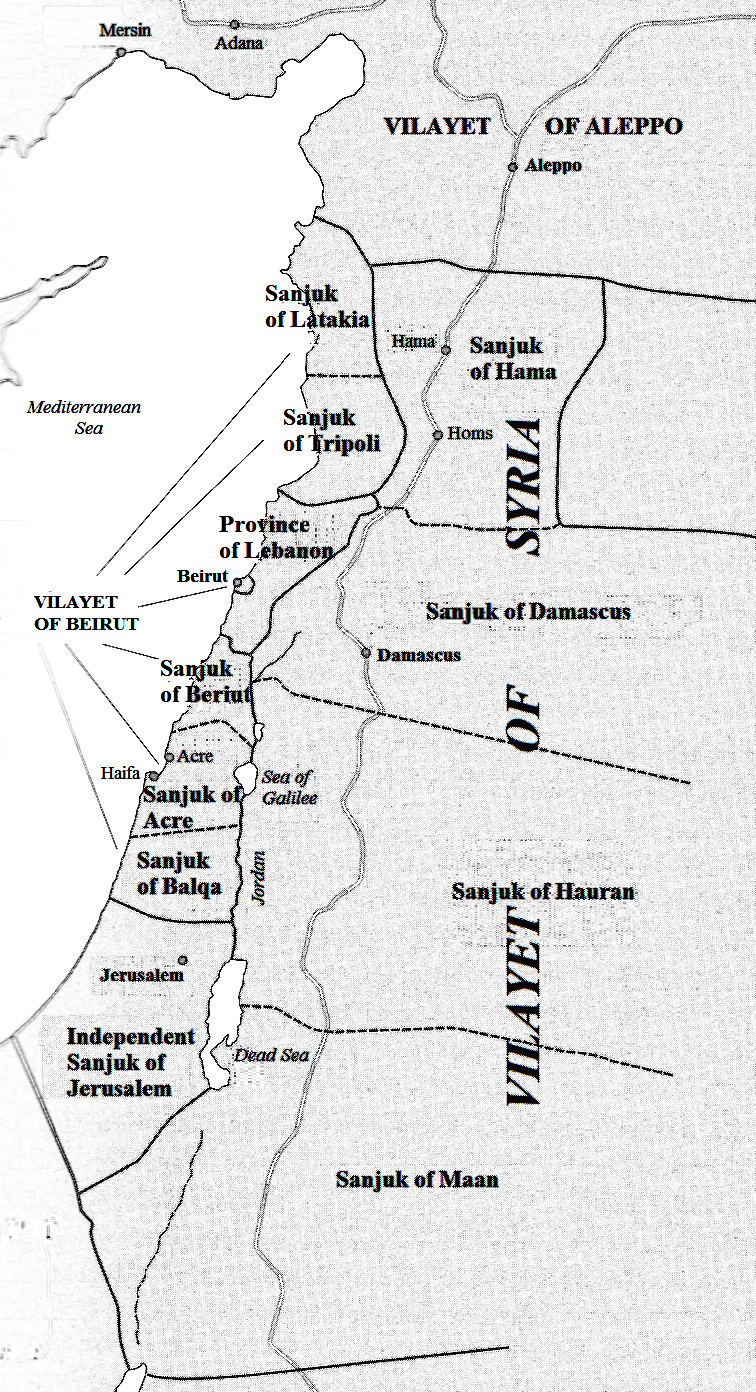
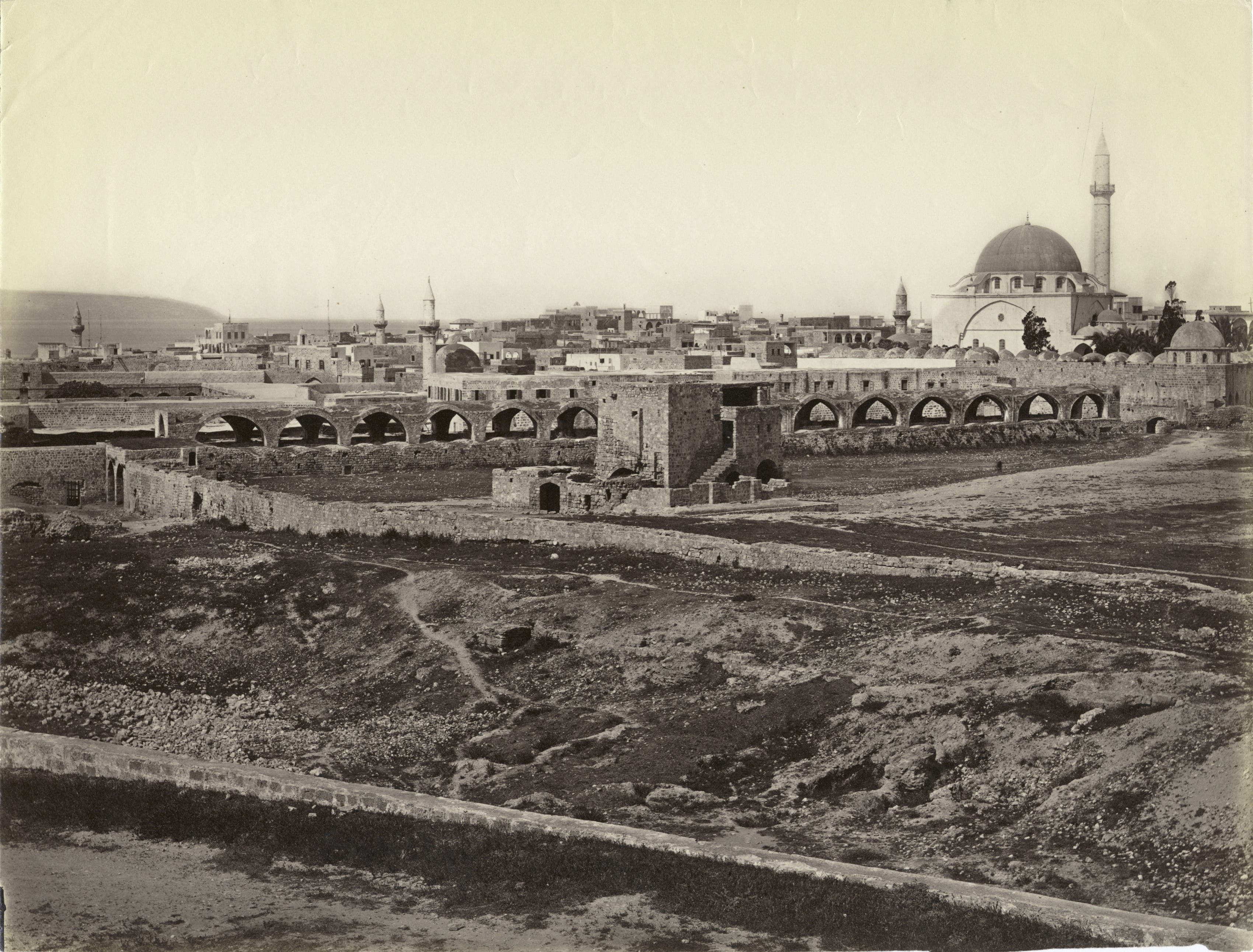
Akko, called Acre in many English-language documents, introduces another form of population movement that deserves far more attention than it usually receives: The Ottoman government used the fortified city as a destination for imprisonment and exile, including people transported there from elsewhere in the empire.
Akko’s geography made it useful for that purpose. It was a heavily fortified Mediterranean city far from Istanbul, surrounded by walls and notorious during the 19th century for disease, poor sanitation, and difficult living conditions. Historical scholarship describes Akko as functioning as an Ottoman penal colony, holding ordinary criminals, political prisoners, and other people the government wanted isolated.
A person could become a political or criminal problem hundreds of miles away and end up confined in Palestine.
The best-known exile arrived in August 1868, when Ottoman authorities banished Bahá’u’lláh, members of his family and followers to Akko. He had already been forced from Iran and moved through Baghdad, Constantinople, and Adrianople before the Ottoman government chose Akko as his final place of confinement.
Political upheaval in Syria produced another stream during the British Mandate years. In February 1936, the British House of Commons openly discussed Syrian political refugees entering Palestine and Transjordan while fleeing French repression.
One Syrian political refugee had already become enormously influential inside Palestine. Izz al-Din al-Qassam was born in Jableh, Syria. He participated in armed resistance before fleeing French rule and eventually settling in Haifa. The 1937 Palestine Royal Commission described him directly as a “political refugee from Syria.”
Al-Qassam built a following among workers and poorer Muslims in and around Haifa, preached jihad, and organized clandestine armed cells. By 1935, he and his followers had moved toward armed revolt. British police tracked the group and eventually surrounded al-Qassam and several followers near Jenin in November 1935. He was killed in the ensuing fight.
His death made him a powerful symbol and helped inspire the revolt that followed. A man who became one of the formative figures in Palestinian armed nationalism had entered Palestine after revolutionary activity in Syria and was described by the government investigating the subsequent unrest as a Syrian political refugee.
When the Arab Revolt expanded in 1936, Fawzi al-Qawuqji crossed into Palestine leading an organized force of outside volunteers. Al-Qawuqji had been born in Tripoli in Ottoman Syria, served as an Ottoman military officer, and participated in revolutionary fighting against the French in Syria. His military and political career had already taken him through several parts of the Arab world before he entered Palestine.
His force included Syrians, Iraqis, Druze, and other Arab volunteers. These men crossed into Palestine to participate in an armed conflict already underway. German diplomat Fritz Grobba met al-Qawuqji while he was commanding insurgent forces and produced a nine-page report that survives in the German Federal Archives.
French and Syrian authorities were watching the same movement from the other side of the frontier. In October 1937, Syrian Prime Minister Jamil Mardam announced action against illicit migration and arms smuggling across the Syrian-Palestinian border after French High Commissioner Damien de Martel pressed Syria to stop activity feeding the rebellion. Contemporary reporting described arms being acquired in Damascus and men being organized to cross into Palestine.
By then, the roads from Syria were carrying several populations at the same time. Haurani workers were seeking employment, merchants were moving toward Palestine’s growing economy, political refugees were escaping French rule, revolutionaries were organizing, and armed volunteers were crossing to fight.
By the 20th century, all of these histories were converging. Egyptian villages had existed long enough for their origins to become family history. Sudanese and other Africans had descendants growing up in Arabic-speaking communities. Algerian refugees had established villages across Galilee. Bosnian Muslims had rebuilt Caesarea and were becoming part of the surrounding population.
Circassians had established permanent communities. Arab tribes had crossed from the Hejaz and Transjordan. Haurani workers were coming south from Syria. Egyptian laborers were arriving in Haifa. Syrian political refugees were building movements, while foreign Arab fighters later crossed the same borders during the revolt.
The people didn’t remain permanently separated according to the labels in 19th-century government reports. Families married. Children were born. Arabic became the common language across communities with very different histories. The Egyptian’s grandson could be locally born. The Bosnian refugee’s granddaughter could grow up knowing no other home. The Algerian village could become several generations removed from Algeria. The Haurani laborer could stay instead of returning to Syria.
The national identity that eventually brought these families together developed across a population that was already old, mixed, mobile, and layered. Some families had deep roots in individual towns and villages. Others had arrived within recent generations. Still others carried both histories through intermarriage.
The historical record preserves those layers even after political language stops naming them.
These weren’t isolated curiosities scattered around an otherwise motionless population. They were part of the ordinary history of a territory positioned between empires, trade routes, pilgrimage routes, wars and shifting borders. Over generations, the newcomers became neighbors, then locals, then ancestors.
That’s why the old documents matter so much. They were written before later national narratives had reasons to simplify the population. An Ottoman official writing an exile order had no reason to anticipate today’s argument about Palestinian origins.
A British cartographer labeling an “Egyptian Village” wasn’t participating in a twenty-first-century identity debate. A census superintendent recording tribes arriving from the Hejaz and Transjordan was describing movement he had just encountered. A police officer opening a file called “Deportation of Hauranis” was trying to administer people standing in front of him.
The people who eventually became Palestinian Arabs didn’t arrive through one migration and didn’t descend through one uninterrupted population line. Their history contains families rooted in the land for centuries alongside families shaped by the enormous population movements that repeatedly crossed it.
Bravo on this excellent research about Arab itinerant workers free floating around the Levant who were attracted to Israel by the Zionist enterprise. The Ottoman records are chock a block filled with refutation of the phony Palestinian nationalist narrative. The Arab Christians used to be more numerous until forced to flee from the Islamic tribal violence: bothe real and threatened. There is also more on the re population plans with Circassians of the Ottomans (no Star Trek). And the surveys of how many historical villages have kosher mikvaot made from stone built into into their cellars
Who is the they in the title of your essay? Your essay shows that much of the population which today gives itself the title Palestinian has origins rooted in many provinces of the Ottoman empire, enhanced by the development of British Mandate Palestine due especially to the entrepreneurship of Jews and the yishuv that developed under that Mandate. The many examples certainly show that Palestinians are not the indigenous people they claim to be, predating the ancient Hebrews whom they wipe out of history. Perhaps they are the "they" your title refers to.