


Please consider supporting our mission to help everyone better understand and become smarter about the Jewish world. A gift of any amount helps keep our platform free of advertising and accessible to all.
This is a guest essay by Paul Bargetto, the President and Founder of Fundacja Teatru Trans-Atlantyk, a multidisciplinary independent arts organization in Warsaw producing original performances, cultural research, digital media, workshops, and international collaborations.
You can also listen to the podcast version of this essay on Apple Podcasts, YouTube Music, YouTube, and Spotify.
Long before anti-Zionism became the dominant moral language of Western radical politics, it was refined in the corridors of the KGB as a potent weapon in hybrid warfare.
This is not to claim that every critic of Israel is a Russian asset, nor that every charge leveled against Israel originates in Moscow. The reality is narrower — and far more dangerous.
The most totalizing, demonizing, and emotionally mobilizing forms of anti-Zionist rhetoric now circulating in Western politics descend directly from a Soviet political lexicon designed for strategic disruption. That lexicon was useful during the Cold War because it delegitimized a Western ally, aligned Moscow with the post-colonial world, and created fractures inside liberal democracies. It is useful again now for much the same reasons.
After 1967, Soviet institutions developed, standardized, and exported an anti-Zionist language system that fused older antisemitic motifs with the vocabularies of anti-imperialism, anti-colonialism, and anti-fascism. That system depicted Zionism as racism, fascism, colonialism, apartheid, and hidden global power.
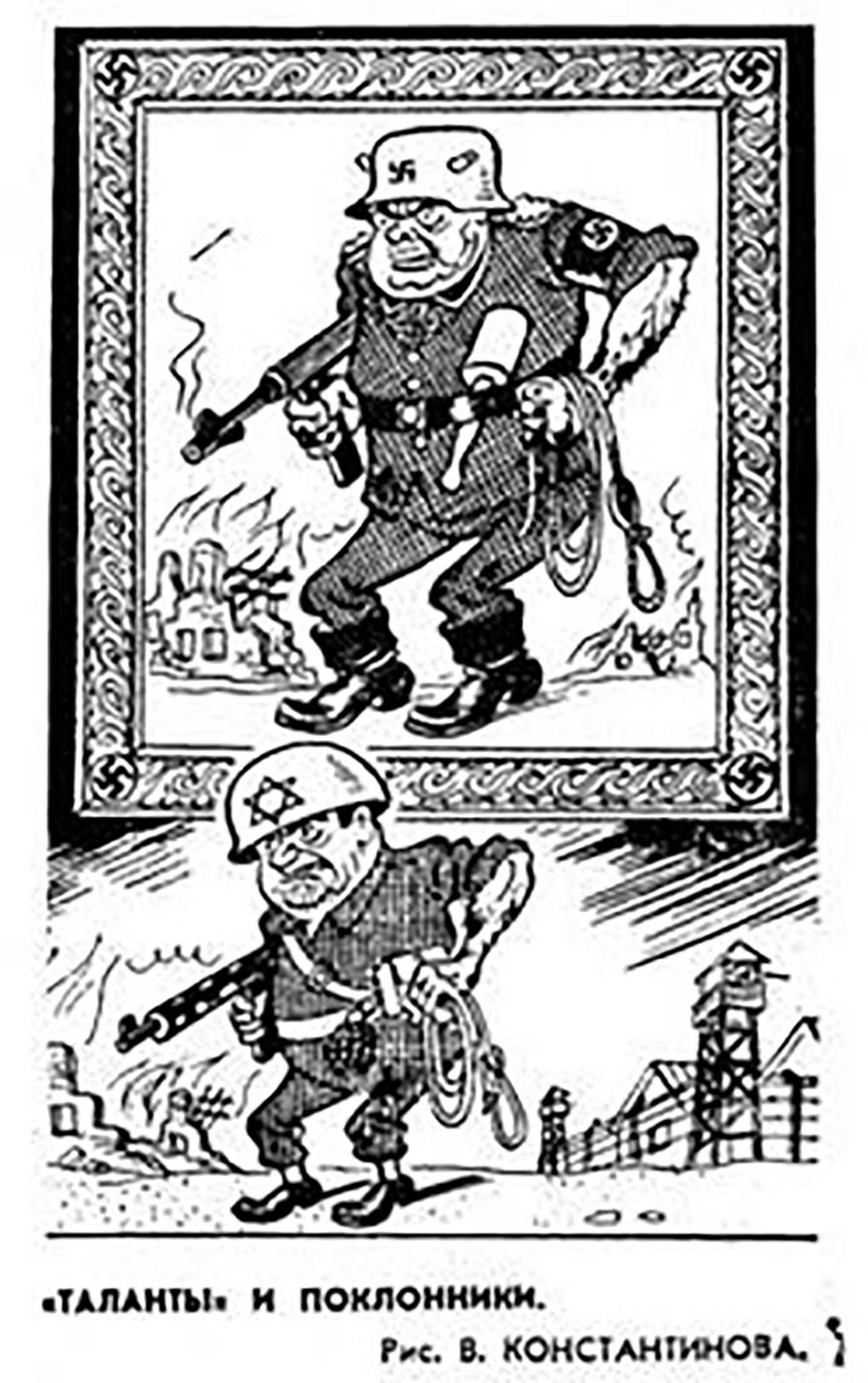
It also pioneered Holocaust inversion, including the claim that Jews (or Zionists) had become the new Nazis.
The decisive shift came after the Six-Day War of June 1967. Soviet hostility to Jewish life and Jewish mobility long predated that conflict, but the defeat of Soviet-backed Arab clients created a new ideological problem. Moscow needed a language that would delegitimize Israel, protect Soviet prestige, and mobilise allies across the Arab world, the post-colonial world, and parts of the Western left. What later became known as “Zionology”was the result.
Yet it is useful to demystify the process. This was not invented by an abstraction called “The Soviet Union” speaking with no identifiable authors.
A recognizable anti-Zionist circle began to form in the early 1960s around figures such as Yuri Ivanov and Yevgeny Yevseyev, with institutional protection from Ivan Milovanov in the International Department of the Central Committee. This network linked party oversight, Middle East policy, academic cover, and propaganda production into a durable system.
Seen in that light, Zionology was not a clean break with earlier Russian practice. It was a re-coding of familiar material into Marxist-Leninist language. Conspiracy theory became anti-imperialist analysis. The Jew as hidden subversive became the Zionist as hidden organizer of Western power. That continuity helps explain both the speed and the durability with which Soviet anti-Zionism took institutional form after 1967.
Yuri Ivanov was one of the key organizers of that system. He was an early activist of the circle, directly under Milovanov in the Central Committee’s Middle East section, where he handled relations with Israeli communists, knew English well, and traveled in the region, including Israel. At Milovanov’s urging he wrote “Ostorozhno: Sionizm!” — usually rendered in English as “Beware: Zionism!” or “Caution: Zionism!” — published in 1969. It sold roughly 800,000 copies in the Soviet Union and was translated into at least 16 languages.
Its importance lay less in original scholarship than in ideological packaging. Ivanov recast classic conspiracist antisemitism inside the only permissible philosophical frame: the Marxist-Leninist one.
Hidden Jewish power became “international Zionism.” Financial and media conspiracy became anti-imperialist critique. In that form, older prejudices could circulate in settings that would have rejected explicitly racial antisemitism. The template remains recognizable today in claims that a uniquely powerful “Zionist lobby” secretly bends Western states against their true interests.
Yevgeny Yevseyev brought a different but equally important profile. He graduated from the Moscow State Institute of International Relations in the late 1950s, worked at the Institute of Philosophy of the Soviet Academy of Sciences, served as deputy chairman of the Russian Palestinian Society at the Academy, lectured for the Moscow party organization and the Znanie society, and at one stage acted as a personal Arabic interpreter for Nikita Khrushchev (former Chairman of the Council of Ministers of the Soviet Union) and Leonid Brezhnev (former General Secretary of the Communist Party of the Soviet Union).
In “Fascism Under the Blue Star,” published in 1971, Yevseyev helped codify one of the most enduring Soviet rhetorical moves: the equation of Zionism with Nazism and fascism. That was more than invective. It supplied what may be called Holocaust inversion, a framework in which the Jewish state could be re-coded as the moral heir of the regime that murdered Europe’s Jews. Much present-day rhetoric that treats Israel as Nazi by definition, or reaches immediately for the language of genocide as a total delegitimizing device, works inside this discursive inheritance, whether knowingly or not.
Valery Skurlatov represented the harder nationalist edge of the same milieu. He was a prominent Moscow Komsomol functionary, one of the most radical authors of Soviet Zionology, and later a major figure in the nationalist and neo-pagan current that fed post-Soviet far-right culture. Skurlatov later prepared the 1984 special-course syllabus “Criticism of the Ideology of Zionism,” which he treated as a near-programmatic summary of the circle’s worldview, and that its themes circulated widely in Soviet anti-Zionist publishing.
Skurlatov’s 1975 book “Zionism and Apartheid” helped systematize the analogy between Israel and South Africa inside Soviet propaganda. That matters because the “apartheid” frame did not arise as a neutral comparison after dispassionate institutional study. It was shaped inside a political culture that also promoted racist and neo-pagan mythmaking.
The same system pushed these themes through mass media and cultural production, notably the 1973 pseudo-documentary film “Secret and Open: The Aims and Deeds of the Zionists,” which Russian reference materials now openly classify as antisemitic propaganda and which the Russian state itself added to the federal list of extremist materials in 2021.
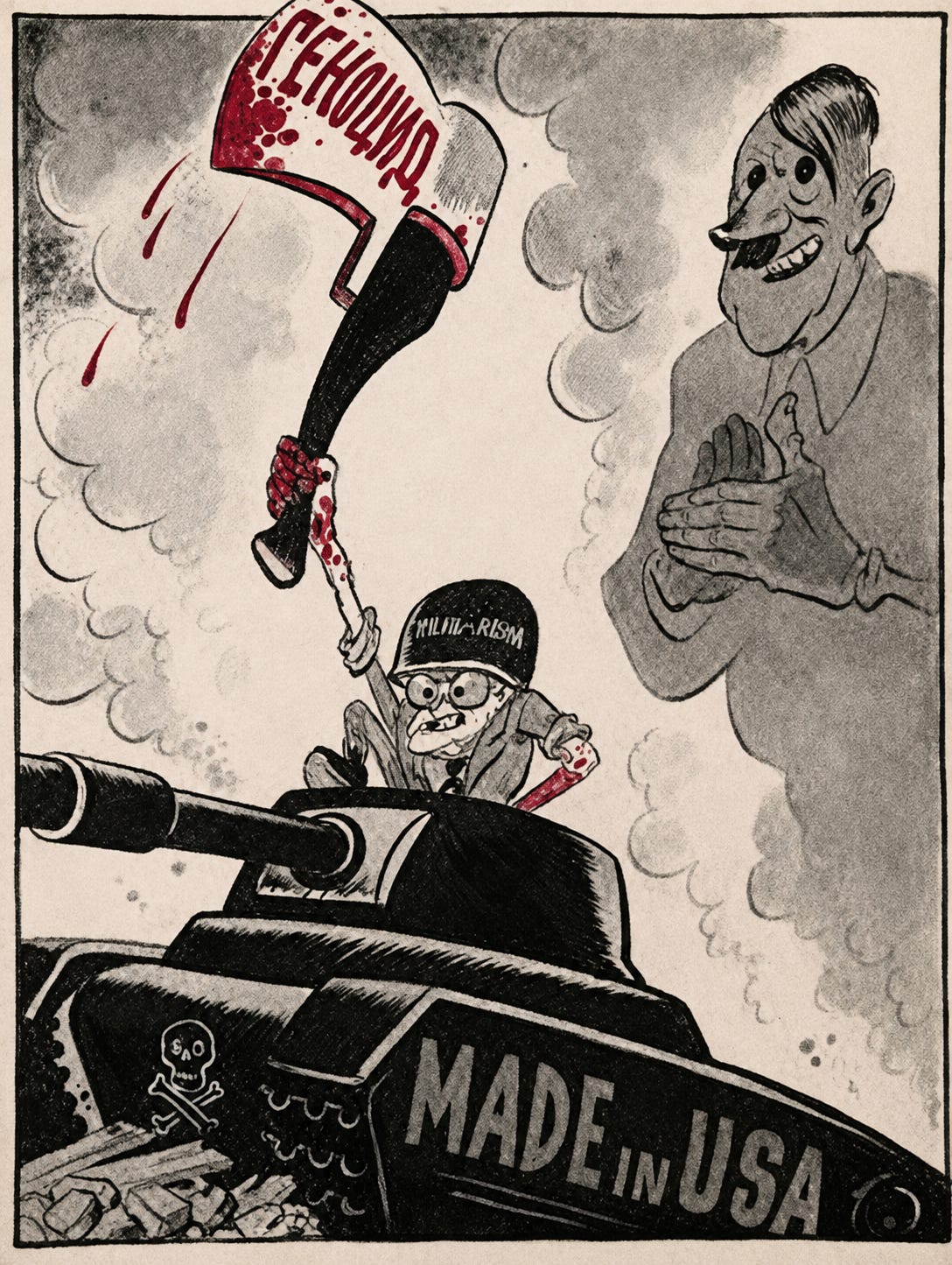
Poland’s anti-Zionist campaign of 1967 to 1968 was one of the earliest and clearest operational deployments of this new language outside the Soviet center.
The campaign began as an anti-Israeli response to the Six-Day War and quickly became a domestic anti-Jewish campaign. The label “Zionist” made it possible to represent Polish Jews, including fully assimilated citizens, as a suspect internal formation linked to foreign interests. This allowed the authorities to discredit students, intellectuals, party rivals, and cultural figures without openly embracing the language of racial antisemitism.
The political utility of the campaign was multipurpose. It crushed dissent after the student protests of March 1968, reshaped factional balances inside the ruling apparatus, aligned Warsaw with the Soviet Middle East line, and encouraged the forced emigration of around 13,000 Polish Jews. In security terms, the lesson is lasting: Anti-Zionism offered the regime a way to redirect public frustration towards a fabricated internal enemy while presenting repression as patriotic vigilance.
That same mechanism remains recognizable today. “Zionist” rhetoric allows actors to aggressively gesture towards Jews and Jewish power while preserving plausible deniability. It can be used to define opponents as alien, compromised, disloyal, or morally contaminated. It can also be widened rapidly from a foreign policy object, Israel, to domestic political targets inside Europe.
Poland’s 1968 experience therefore matters not only as a chapter in the history of antisemitism, but as an early example of the cognitive warfare use of anti-Zionist language.
The Soviet system never treated anti-Zionism as an isolated theme. It sat inside a much wider repertoire of active measures. A recent survey of Russia’s shadow war against the West lists the classic elements of the Soviet toolkit: disinformation, agents of influence, front organizations, support for revolutionary and terrorist organizations, political blackmail, kidnapping, and assassination.
The point is not simply that the USSR supported violent proxies. It is that Moscow combined ideological production with covert action, diplomatic warfare, and sponsored militancy in a single strategic field.
Support for the Palestine Liberation Organization and related Palestinian formations must be read inside that field. The Eastern bloc maintained secret relations with Palestinian organizations, supplied arms, provided training, and used commercial and intelligence channels to sustain cooperation. He notes that the Palestine Liberation Organization received military support from the Soviet Union, while Soviet services also maintained relations with more radical Palestinian actors beyond Yasser Arafat’s immediate camp.
This matters analytically because anti-Zionism was never only about Jews or Israel. It was also a way of linking disparate theaters of conflict into a single anti-Western moral map.
The same state that armed and trained Palestinian actors could also sustain revolutionary networks elsewhere, back friendly liberation movements, cultivate European radicals, and exploit separatist or anti-state grievances. Anti-Zionism was one of the ideological adhesives that made this international system more legible and more emotionally potent.
In southern Africa, Soviet support earned durable political credit. Moscow agreed to beam Radio Moscow into the region, the African National Congress (the ruling political party in South Africa that led the movement to end apartheid) later opened a mission in Moscow, and MK (Umkhonto we Sizwe, the armed wing of the African National Congress) cadres trained in the USSR became part of the armed pressure brought to bear on apartheid.
Arianna Lissoni likewise notes that MK’s shift towards guerrilla warfare depended heavily on support from African and socialist countries including the USSR. Vladimir Shubin’s work on Soviet and then Russian relations with South Africa documents how central those ties remained into the late Cold War. The USSR built real reservoirs of trust, gratitude, institutional familiarity, and ideological overlap inside movements that later acquired enormous moral authority in global debates on racism and liberation.
This matters because the anti-Zionist language that matured in Soviet hands found in South Africa an especially potent moral vocabulary. The global word “apartheid” carried unmatched delegitimizing force after 1948, and by the 1970s Soviet diplomacy was already working to yoke Zionism to racism and to South African racial rule.
The apartheid analogy is often politically powerful while analytically weak, and that analogy should not be mistaken for rigorous historical comparison. That caution is important.
Yet precisely because the analogy is politically stronger than it is historically exact, it has proved useful as a weapon. It allows Israel to be inserted into the emotional architecture of the anti-apartheid struggle, where the accusation does not merely criticize policy but seeks to place the Jewish state in the same moral category as one of the 20th century’s most reviled regimes.
Present-day Russia has tried to reactivate this Soviet African inheritance. A 2024 report from the Danish Institute for International Studies describes Russia’s post-Ukraine Africa policy as a mix of diplomacy, soft-power campaigns, Wagner-style military activity, and information operations designed to affect local actors, UN voting, and sanctions evasion.
A 2024 study shows that Moscow’s revived anti-colonial rhetoric is not decorative. It is a strategic narrative aimed at legitimizing Russian foreign policy, attacking the West through accusatory inversion, and appealing to audiences in the global South.
The Stockholm Center for Eastern European Studies makes the same point in more restrained language. Russia still benefits from the positive standing created by Soviet opposition to apartheid in South Africa, even as it repackages that memory for present geopolitical use. In that setting, South Africa’s present use of apartheid and genocide language against Israel has effects well beyond the Middle East. It carries the symbolic authority of an authentic anti-racist struggle, even when the concepts deployed are stretched or instrumentalized.
That is why Russian influence in Africa belongs inside this paper. It helps explain how Soviet-era political capital, anti-colonial memory, and present information warfare now interact in a common strategic field.
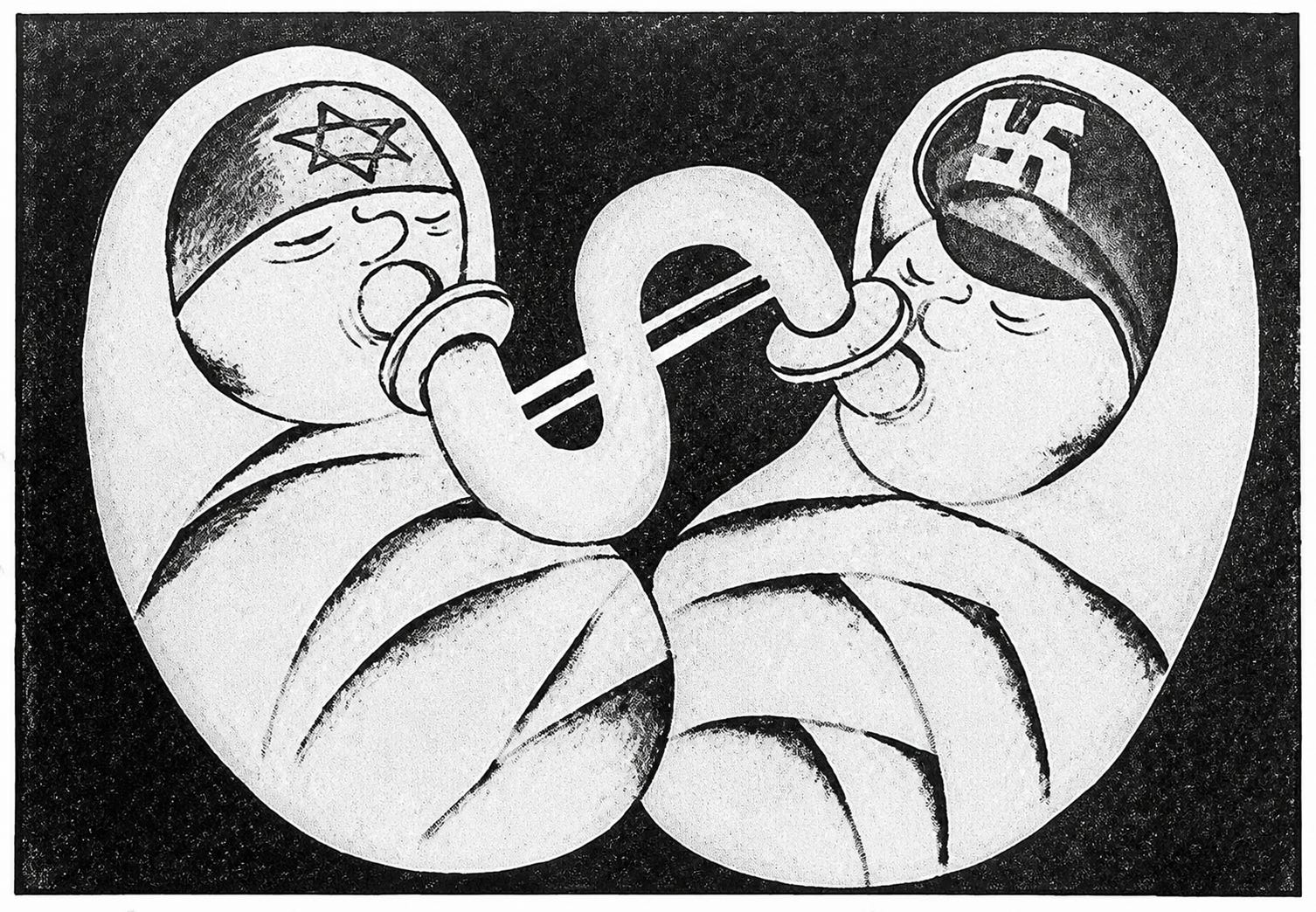
The relationship between European terrorist organizations and the Soviet sphere should be described carefully. The evidence does not support a caricature in which Moscow directly controlled every act of European terrorism. What it does support is a dense environment of contacts, facilitation, training, sanctuary, ideological encouragement, and overlapping operational space.
By about 1980, both the KGB and East German state security had extensive contacts with the Palestine Liberation Organization, and that the KGB provided military training to some guerrillas. The Palestine Liberation Organization and the West German far-Left converged in practice as well as rhetoric. The broader terrorism scholarship also stresses the importance of transnational links among violent non-state actors, with the Palestinian arena serving as a major hub for internationalization in the 1970s.
For present purposes, two points matter. First, the Soviet bloc learned that language, logistics, and legitimacy could travel together. Ideological narratives gave militant organizations a universal script. Training and arms gave them means. Diplomatic and media platforms gave them reach.
Second, the anti-Zionist frame helped blur boundaries between local grievances and global confrontation. It enabled a student radical in Western Europe, a Palestinian militant in Lebanon, and a Soviet propagandist in Moscow to speak in what appeared to be the same moral language.
This is one important reason the field still matters for contemporary security analysis. The issue is not nostalgia for the Cold War, but institutional memory. Once a state has learned how to convert grievance into alliance, and ideology into transnational mobilization, it tends to preserve the method even when the client list changes.
Vladimir Putin is not merely a Russian nationalist who happens also to be a former Soviet intelligence officer. He is the product of an institutional environment that treated disinformation, manipulation, and fracture as core instruments of national power.
The continuity is documented both in biographies of Putin and in specialist analyses of Russian influence operations. Putin served 15 years in the KGB, including in Dresden. Present-day Russian practice is better understood as a modern adaptation of Soviet techniques than as a wholly new doctrine.
Putin-era antisemitism is not accidental rhetorical spillover, but a deliberate continuation of earlier Kremlin disinformation practice. Its central contemporary examples are revealing: Russian officials and state media have portrayed Ukraine and its supporters as Nazis, antisemites, and Russophobes. They have demonized President Volodymyr Zelinsky, who is Jewish, while simultaneously claiming that Jews themselves were among the worst Nazis.
They have also manipulated the history of the Holocaust and of the Second World War for present political ends. This is not ideological confusion. It is a method. Antisemitism is used when useful, and set aside when not, in order to intensify suspicion and moral disorientation in the target audience.
The aim was not simple persuasion, but corrosion. The target was trust, cohesion, and confidence inside rival societies. That logic fits Putin’s Russia exactly. Its foreign information operations repeatedly seek to intensify internal divisions inside democratic states rather than to establish one universally believed story. Contradictory stories are acceptable if they deepen confusion, fatigue, or mutual suspicion.
Anti-Zionism fits this method perfectly. It can be used against Israel directly. It can be used against Ukraine indirectly, by moving Western attention, emotional energy, and political pressure away from the Russian war. It can be used inside Europe to pit minorities against one another, students against institutions, street activism against public order, and moral signalling against strategic thinking.
It can also be activated in different ideological dialects: anti-colonial on the Left, conspiratorial or civilizational on the Right.
The most important contemporary continuity lies in the use of Nazi language. In the Ukraine theater, the Kremlin has invested heavily in the claim that Ukraine is fascist, Nazi, or in need of “denazification.” Antisemitism and Holocaust distortion have become elements of Russian influence operations and disinformation aimed at Western audiences, and Russian officials have repeatedly manipulated Jewish history in order to discredit Ukraine and Zelensky. The “Ukrainian Nazis” motif has deep roots in Soviet and post-Soviet propaganda and remains central to Russia’s war narrative.
The Kremlin’s antisemitic messaging about Ukraine is not limited to calling Ukrainians Nazis. It also includes the grotesque claim that Jews were central to Nazism, the insinuation that Zelensky’s Jewishness somehow masks or validates extremism, and the recycling of the old Soviet trick of severing Nazism from antisemitism so that the term can be detached from its historical content and reassigned at will.
Once that move has been made, the same propaganda system can denounce Ukraine as Nazi and describe Israel as Nazi or genocidal without any sense of contradiction. The point is not coherence. The point is delegitimation through moral overload.
In the Israel theater, the same rhetorical logic appears in another form. Israel is represented as Nazi, genocidal, fascist, or apartheid by definition. In both cases, the accusation does more than condemn behavior. It strips the target of moral legitimacy at the level of identity. It says, in effect, that the enemy is not merely wrong or excessive, but metaphysically outside the circle of legitimate politics.
This is why the genocide charge matters so much. The word does not function only as a legal allegation. In mass politics it often functions as a delegitimizing master-signifier. It can collapse history, erase agency on the other side, and place any counter-argument beyond the pale.
The Soviet anti-Zionist tradition helped make exactly this move thinkable by normalizing the equation of Jews, Zionists, and Israelis with fascism. Contemporary anti-Israel mobilization did not invent the device. It inherited and amplified it.
A further strategic point follows: Russia’s information war against Israel is not separate from its war against Ukraine. Russian influence operations around the Gaza war should be understood as part of a broader cognitive campaign against the West, aimed at weakening solidarity, undermining the United States, and intensifying internal strains in allied societies.
In practical terms, the scripts run in parallel: Ukrainians are Nazis, Israelis are Nazis, Zelensky is a mask for Nazism, Jewish statehood is racism, and Israeli war is genocide. The specific object changes. The delegitimizing template does not.
Several policy implications follow from this analysis.
First, anti-Zionism should be treated not only as a social pathology or a campus culture problem, but also as a security-relevant propaganda system. That means recognizing that some of the most inflammatory rhetorical forms now in circulation descend from a hostile state tradition of cognitive warfare.
Second, Holocaust inversion and Nazi analogy need to be monitored as strategic indicators. When a political environment begins to normalize slogans equating Jews, Israelis, or Zionists with Nazis or genocide, the issue is not only prejudice. It is also the activation of a lexicon designed to remove moral brakes and intensify polarization. This applies equally to the language used against Ukraine.
Third, universities, media organizations, and state institutions need a historically grounded vocabulary for distinguishing legitimate debate from manipulative narrative packages. The problem is not disagreement about the Middle East. The problem is the circulation of prefabricated frames that deny Jewish legitimacy altogether, collapse war into genocide by reflex, or connect every conflict to a totalizing theory of Zionist power.
Anti-Zionism in its most radical contemporary form is best understood as a recycled instrument of political warfare. It was systematized by Soviet institutions after 1967, operationalized in places such as Poland in 1968, internationalized through propaganda, diplomacy, and support networks linked to militant and revolutionary actors, and reactivated under Putin inside a much broader program of hybrid warfare. Its contemporary force lies in four linked capacities: to invert the Holocaust, to strip Jewish self-determination of legitimacy, to connect unrelated grievances into one emotional front, and to generate discord inside democratic societies.
The connection to Ukraine is not incidental. The same state that says Ukraine must be “denazified” benefits when Israel is described as Nazi and genocidal, when Jewish communities become politically isolated, when liberal institutions are thrown into moral panic, and when European publics lose the capacity to rank threats coherently. In that sense, anti-Zionism is not a relic. It is an old weapon in active service.
The practical task is therefore twofold. We must defend open debate, including debate about Israel, while also naming the historical pedigree of the most toxic rhetorical forms now in circulation.
And we must treat the manipulation of antisemitic and anti-Zionist language as part of the same security environment that includes Russian disinformation, sabotage, covert influence, and political destabilization. If we fail to make that connection, we will continue to answer a strategic threat as though it were only a cultural misunderstanding.

And sixty or so years later, the Western Left is still wedded body and soul to the sacred Soviet line and is still completely committed to its "Anti-Zionism" program.
Anti-Zionism was simply the old wine of classic Jew hate poured into a new bottle made from Marxist jargon, where the Palestinians became the updated and improved proletariat (the oppressed victim whose suffering gives it higher knowledge and a higher destiny as the weapon that will at last crush capitalism and liberal democracy) and the Jews became (again!) the bourgeois capitalist oppressor, who gets piled with all the historical crimes of the past (colonial apartheid racist genocide etc) and whose destruction is posited as the necessary first step toward global revolution.
Open Jacobin or any of the old-school Left publications like The Nation, Dissent or Mother Jones etc and you'd first want to check to see what decade their articles are from, as the template remains the same. Since at least the 1970s the Western Left has kept the Soviet flame burning by still blindly supporting the precious Palestinians in their eternal jihad against Israel. And this bond seems eternal: that Hamas is a brutal terrorist kleptocracy that torments its own people, that the Palestinians are now to the right of the Muslim Brotherhood and just as dedicated to sharia and a caliphate, that they hate all the Left's other sacred victim groups (gays, trans, blacks)—none of this matters or can break them apart.
The Soviets may have been total failures at building a functioning society but they were masters of Big Lie propaganda and of spreading hatred and violence—and their project may have dissolved to reveal a bankrupt prison state, but still none of this has dulled the ardor of its Western disciples. What was just one nefarious project and propaganda stream out of many has now become a sacred faith for the sad lost souls of the West who, like all revolutionaries, just want to make the rest of us as miserable as they are and call this Equality.
And the destruction of the world's only Jewish state is a small price to pay for them to feel righteous and worthwhile, especially as it's always other people who do the bleeding and dying.
Meanwhile the USSR has collapsed. All Soviet allies defeated in wars, Soviet arms are shit and Russia is in deep shit together with its present allies.