


Please consider supporting our mission to help everyone better understand and become smarter about the Jewish world. A gift of any amount helps keep our platform free of advertising and accessible to all.
This is a guest essay by Tobias Gisle, who has a Master’s in Middle Eastern Studies from Stockholm University.
You can also listen to the podcast version of this essay on Apple Podcasts, YouTube Music, YouTube, and Spotify.
The best thing you can do to create a global movement is to murder people at random. The more grotesque your violence, the better.
Hamas understands all of this. That is why they filmed their atrocities on October 7th.
People use the word “terror” all too frivolously. After all, violence has been with us from the dawn of time, so you can draw parallels from almost anywhere: horrific wars of conquest thousands of years ago, political assassinations, or attacks on military targets carried out by irregular forces.
For my purposes here, I want to narrow it down significantly: only those who target civilians in order to promote their political or religious ideas. It is this — the arbitrary violence against civilians — that hypnotizes the public and can function as a magnet for support given the right context. In the case of the Palestinians, much of the global support does not come despite terror; rather, the terror itself is the attraction.
Philosopher Sam Harris pinpointed the problem: If you commit acts of terror, people will assume that you yourself have been treated badly. The worse the terror you commit, the worse people will assume you have been treated.
I thought it was too simple, too banal, frankly too pointless. I made the mistake of assuming rationality — that this thinking goes through a cognitive process and arrives at that conclusion. That is, of course, not the case at all. This happens emotionally; chemically, no rational thinking needed.
Within the Western psyche, there is a deep tradition of justice through suffering. Greek tragedy loves stories about kings who become beggars, or vice versa. Oedipus becomes a blinded exile after having been a king. Medusa was the prettiest girl in town, but all that prettiness had forced poor old Poseidon to court her. This threw Athena into a fit of furious jealousy because … well … obviously — of course Athena would turn Medusa into a monster for that, what was she thinking?
In the mythological world of Greece, one was meant to tremble and show humility before the gods of Olympus. Yet in turn, the gods were always capricious; they could punish you at a whim, even if you had acted righteously. Tyche, goddess of chance, spins her wheel — the tragedy or triumph that follows is all terrifyingly random.
If we take a short odyssey from the Greek world to the far eastern shore of the Mediterranean, we find a very similar tradition. Yet here, the ideas of the rise and the fall take on a more systematic character, something more than mere chance. It becomes more than curiosity, more than dramatic twists in Sophocles’ plays or in Homer’s epics.
In the Abrahamic religions, we encounter a more orderly version, where morality and a thirst for justice come to the fore. Judaism, Christianity, and Islam all have variations of the idea: that justice comes to the weak, and that the proud and arrogant will be put in their place. Chance is replaced with justice from the almighty.
For your terror to work the most effectively, you must choose the place with care. If one murders a group of villagers in Yemen or Afghanistan, the world will never talk about it. For Al-Qaeda to choose New York was great PR — very nearly perfect for maximum impact, to strike where every camera is pointed is an unbeatable idea. Almost unbeatable.
They were quickly followed by attacks in London and Madrid. Then came ISIS, which identified Paris, the City of Light, as a city to cast into darkness — massive acts of mass murder that would provide a fast track to paradise.
But even striking at these centers of civilization does not have the greatest pull, and all but a smattering of those who came to join the Caliphate of ISIS, with its slave markets and crucifixions, were Muslims. However, none of these places — not Mesopotamia, not Madrid, London, Paris or even New York — compare to the kind of superpower terror can acquire if it focuses its mass killings on the epicenter of the Abrahamic religions: Israel.
Israeli professor Yuval Noah Harari’s idea is that terror is theatre. As a historian, it comes as no surprise that his focus is time rather than place. He points out that terror only works in modern times. If you were to murder handful a few people in Jerusalem around the turn of the first millenium, no one would care; the news simply would not spread.
To make any difference back then, you would need to capture a fortress, or at least kill some important potentate. You gain no military advantage through random terror; in no way do you weaken the enemy’s forces. Indeed, it was a worthless weapon until media caught up.
Modern technology, however, has given us the golden age of terror. Now we receive terror on TV and on our phones; we can feel as though we are right there in the action ourselves. For the terrorist, the whole world is potentially an audience, and a surefire way to break through the noise is sheer brutality.
The terrorists themselves are no product of the Prophet Muhammed and his companions, either, divinely inspired or otherwise. The cultural waters they are fishing in may very well take the words of the Quran as the word of God, but even so they are ever so modern, multicultural even. The dress of the ISIS warrior is all Ninja fanfiction; the Al-Qaeda idea of tearing down skyscrapers was reportedly taken from watching too much of Godzilla destroying Tokyo. Say what you like about the Prophet Muhammed, but he was no connoisseur of Japanese 20th century cultural exports.
However, Harari takes the idea too far. He argues that the theatre itself is the whole point of terror. As is his wont, Harari writes in memorable metaphors. The metaphor he uses to describe the objective of terror is a bee flying around in a China shop with a bull. The bull is the enormous military power that modern states like the United States or Israel possesses. The bee can only sting the bull; it is the bull that destroys the China shop.
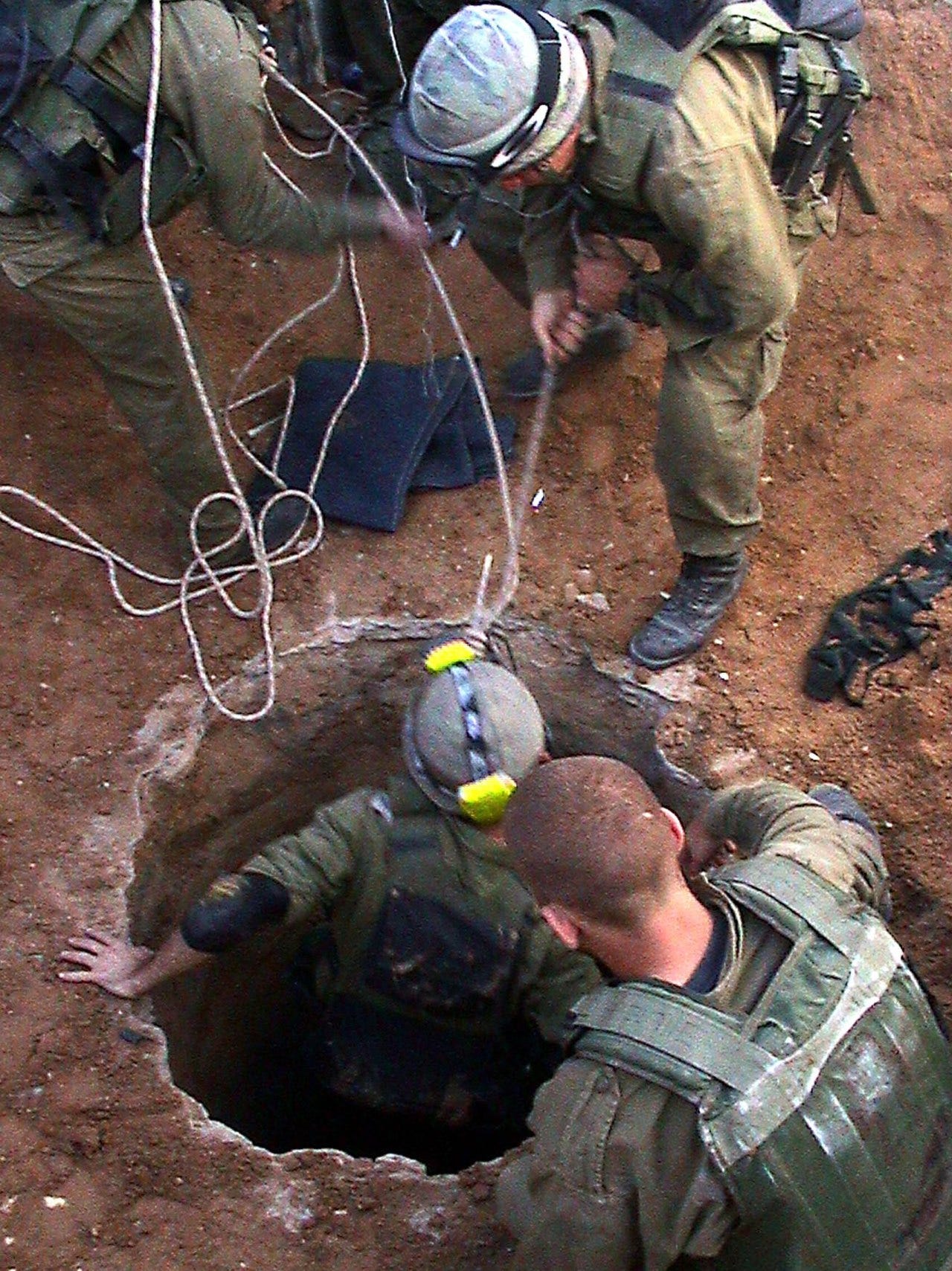
There is truth in this. Hamas knew full well that Israel would go deep and wide into Gaza after they attacked in such a savage manner. They built a tunnel system hundreds of miles long where no civilians were allowed to hide — only weapons and their fighters. The goal of 17 years of building tunnels was to ensure that as many civilians as possible would die in Gaza, and that Israel would therefore lose the media war. Hamas did indeed win the media war, by miles.
This, however, is a stepping stone to the real objective. Winning the media war is hardly Hamas’ ultimate goal. Harari, as an Israeli, ought to take the motive of the terrorist more seriously than this. The media war is merely a tool for a far more ambitious objective: They believe that winning the media war will cause everyone to abandon Israel, and without friends Israel can be defeated. Hamas seeks to defeat Israel, establish a caliphate, and cleanse the land of Jews. Hamas sees itself as the spearhead of Islam, avenging the centuries in which Islam has been subordinate to the West — a condition they seek to turn on its head.
A general rule is that just because an idea is nutty does not mean people do not believe in it. Hamas believes in their narrative deeply and sincerely. Millions of fighters and civilians across the Middle East wake up every day with a single dream and vision: that if Israel were erased, the honor of Islam would be restored. The humiliation of having a Jewish state in the middle of the Muslim world is simply too great. War is the only way to restore the honour.
For Harari’s metaphor to work, the bee would not simply want to destroy the China shop, but to take over — albeit a battered shop containing nothing but shattered China. But bees do not own shops. The metaphor collapses.
Author Paul Berman dives deeper into terrorism and its roots in his book, “Terror and Liberalism” (2004). He correctly noted that the politics of mass death hardly began with jihadists. There is a direct line from earlier totalitarian movements, both on the Right and the Left. Islamism is but one flavour of the totalitarian “demagogic, irrational, authoritarian, and extremely murderous politics, a politics of mass mobilisation for goals that were not even possible to achieve.”1
This is important. There is a common notion that “terror is a weapon of the weak.” This is not entirely wrong, but it is misleading and only contributes to myth-making. Terror against the general public is something unscrupulous groups may use when they lack power, but if and when they gain power, they do not abandon terror; they are simply given the opportunity to systematise violence against their ethnic and political opponents.
Anarchists were the first to begin using indiscriminate mass murder as a strategy. Berman recounted that writer Luigi Galleani created a group which, in the 1920s, detonated a bomb on Wall Street; 20 random people died in a symbolic act against global capitalism, in order, as Galleani wrote, “to light the spark of revolutionary victory.”
There was, of course, no anarchist world revolution. However, there was a very serious attempt at a communist one; 40 percent of the world’s population lived under communism at its height. The connection between Joseph Stalin’s form of terror from the seat of power and Galleani’s terror from his apartment in New Jersey is smaller than one might imagine. The utopia both men sought to build through violence is deeply intertwined.
The shape of the violence changes, but not its purpose. When adherents of terror take power, they can use violence at any time and kill anyone, just as in a terror attack. The arbitrariness of the violence leads to a compliant and apathetic population. Dominance is the goal of terror, even if it is all too often romanticised as “resistance.” A great example of terrorists running a country is the Islamic Republic of Iran. The terror invariably creeps into the legal system and the security forces.
The Quran itself contains many problematic passages about violence against those unbelievers in Islam and those who refuse to convert, but that in itself does not explain how terrorism came to the Middle East.
The Egyptian researcher Hussein Aboubakr Mansour discussed the influence of German philosophy in the Middle East. Former Chancellor of the German Reich, Otto von Bismarck, became a role model for many in the Arab world after the collapse of the Ottoman Empire. Bismarck had unified the various German-speaking states into a single Germany; now Arabs wanted to unify the Arabic-speaking countries of the Arab world.
That the Muslim world adopted German philosophy thus became both the obvious choice and a devastating one for the Arab world. German philosophy, originating from Georg Wilhelm Friedrich Hegel, developed during the 20th century into the totalitarian movements we saw in communism and fascism, rather than the British-French-American liberal democratic tradition that led to the liberal democracies we see in the West. Great Britain and France were, to put it mildly, unsatisfactory role models for the Arab world in the early 20th century; they were the very colonial powers occupying the lion’s share of the Arab world.
The world’s largest Islamist organisation, the Muslim Brotherhood, is a Hegelian pressure cooker. The movement takes the totalitarian and revolutionary ideas of the “new society” and the “new man” that were circulating when the movement was founded — and places Islam over all of it.
The Muslim Brotherhood was formed in 1928, just four years after the caliphate in Istanbul was dissolved — the ultimate humiliation for Islam, according to the Brotherhood. It drew on antisemitism (later it would incorporate Nazi propaganda), as well as communist ideas of anti-imperialism and armed revolution, and placed them squarely under the most radical passages of the sunnah (the teachings, practices, sayings, and silent approvals of the Prophet Muhammad) in the Quran and other violent Islamic traditions. They were not alone in believing in revolution in the Middle East. Arab nationalism, the most obvious successor to Bismarck, was also authoritarian, anti-democratic and, in practice, antisemitic.
The most striking example of cooperation between revolutionary communism and revolutionary Islamism is Iran in 1979. The Iranian Revolution was made possible by an alliance between the Left and the Islamists. The foundational ideas of the Islamic Republic were shaped in Paris, where Iranian revolutionary and sociologist Ali Shariati wove together Maoism, anti-imperialism, and Shia Islam, becoming Ayatollah Ruhollah Khomeini’s most important theorist in building the Islamic Republic of Iran.
This framework was important in creating a distinctly Shia alternative to the Muslim Brotherhood. What Shia Islam contributed was the cult of Husayn ibn Ali, its great martyr, and the “twelfth hidden imam,” the Mahdi — a messianic figure who will emerge when the world is on the verge of being healed.
In this worldview, there are the mustakbirin — the arrogant, oppressive powers, above all the “Great Satan” (the United States) and the “Little Satan” (Israel). Israel is not “little” in the sense of being unimportant, but little because the Iranian regime believes it is easier to destroy, being geographically closer and merely an “outpost” of the United States and the West anyway, as a tool to “oppress Muslims.”
On the other side stand the mustadafin, the righteous and rightful resistance against the arrogant oppressors, led by — surprise — themselves. Only by eliminating the “Little Satan” in the Middle East can the process begin that will awaken the Mahdi from his mystical slumber. Israel must die for the world to be healed.
Like the Abrahamic roots, this long, intertwined relationship between the various revolutionary currents and the Middle East — in its communist, Arab nationalist, radical Shia or radical Sunni varieties — as well as the close connection between totalitarian worldviews and terror, tells us, again, that if you truly want to achieve major success as a terrorist, even among non-Muslims, there is only one place for mass murder and war crimes: Israel.
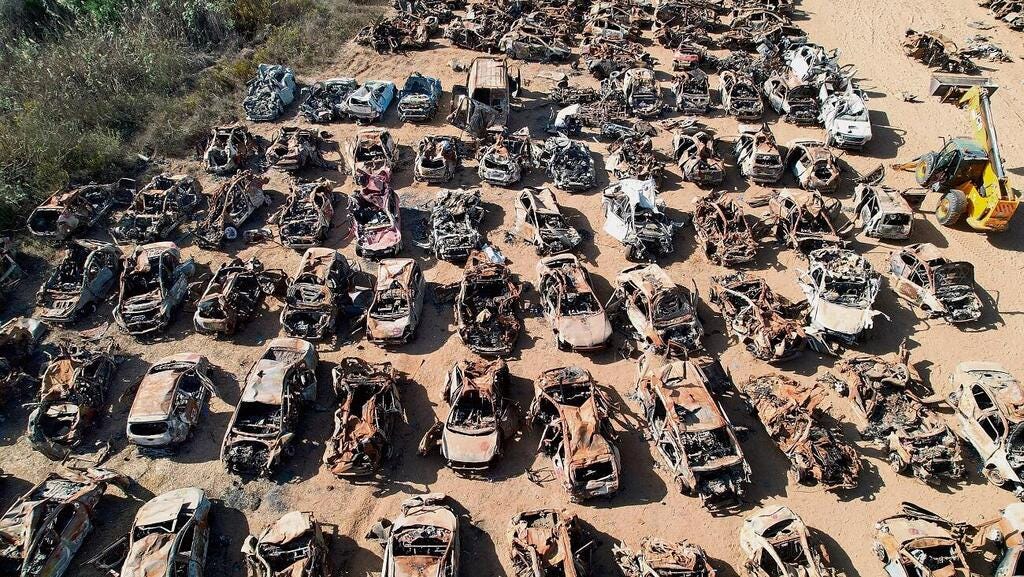
Palestinian terror is a morality play on every level. To portray Palestinians as political philosopher Frantz Fanon’s “wretched of the earth” is not an empirical reality; it is a political and religious construct that fits the theatre of terror.
Gaza City had a life expectancy before October 7th of 73 to 75 years, much like the Brexit Towns of England. The average salary was between 200 and 320 dollars a month — lower than in Israel, yes, but still higher than across the other border to Egypt, where the average salary is 150 to 300 dollars per month. This bears no resemblance to the extreme poverty found in other parts of the Arab world, where countries like Yemen and Sudan often fall well below the absolute poverty line of 50 dollars a month.
The amount of aid going to Palestinians exceeds anything else in the region; the aid Gaza received during the war was roughly 10 times higher per capita than what war-affected populations in Sudan received. UNRWA, the UN agency for Palestinians (the world’s only refugee agency for people whose great-grandparents, not themselves, fled war), has an annual budget of about one billion dollars. Palestinians should be able to live good lives, but their leaders have prioritized anything but improving their lives — from terror to fancy villas in Qatar.
When it comes to Palestinian terror, what we see is a self-fulfilling prophecy. Terror groups steal the money coming in to build tunnels, command centers, and purchase weapons — endless stocks of weapons. The education system indoctrinates children with the intense hatred that is needed to make them aspire to become martyrs. The population grows poorer, and misery increases.
Terrorists start wars, and the area becomes war-torn. They gain sympathy and aid, because no one likes to see a war-torn land, nobody wants to see a population suffer. The aid is flipped into funds, which buy more weapons and brainwash more children, so support for terror increases. Around and around it goes. Nowhere do we move closer to resolving the conflict. But in terrorists’ eyes, the system works perfectly.
Without the moral theatre, the naked truth slowly emerges. These are criminal networks and death cults that are incapable of giving their people anything but death. Hezbollah is a drug cartel; Hamas is a mafia network. Their totalitarian ideology means they do not value human life. Their core belief is the racist conviction that Jews are Untermenschen (subhumans) who must be killed for the world to achieve redemption.
But because of the moral theatre, and the belief that “the terrorist strikes from below,” millions of people believe terror is something more, that it has a nobler purpose. You can see it every time you speak to a “pro-Palestinian” activist in the West. They see none of what is actually happening, but instead “elevate” the discussion into some vague notion of justice, of David versus Goliath, of the “oppressed” who will finally be vindicated. But all this just postpones real justice and real progress.
Alas, terror works.
Berman, Paul. “Terror and Liberalism.” W. W. Norton & Company. 2004.

Terror works because the modern world lets it work. Kill civilians, film the horror, provoke retaliation, then weaponize the bodies for global sympathy. That’s the playbook. Hamas didn’t stumble into this strategy—it built it. The tunnels, the human shields, the media choreography, the moral theater: all designed to turn murder into leverage. And the West keeps rewarding it. Every activist who romanticizes “resistance” while ignoring the death cult underneath is helping the machine run. Terrorism isn’t senseless anymore. It’s calibrated. It manipulates emotion, hijacks media, and bends policy. Until the civilized world stops rewarding it, it will keep working.
As I read this excellent review of terror, I saw one common thread of victim mentality that always needs a scapegoat. Jew hatred provided that for a long time and it still continues to exist.