


Please consider supporting our mission to help everyone better understand and become smarter about the Jewish world. A gift of any amount helps keep our platform free of advertising and accessible to all.
This is a guest essay by Joanne Strasser, a postgrad fellow at the London Centre for the Study of Contemporary Antisemitism.
You can also listen to the podcast version of this essay on Apple Podcasts, YouTube Music, YouTube, and Spotify.
The first text message asked if I am all right. The second says she is thinking of me. The third contains a link and nothing else.
Only then do I see the headline: The International Court of Justice has found Israel responsible for genocide.
This morning has not happened. South Africa’s case against Israel is still before the International Court of Justice, with written pleadings scheduled through 2029, but I have imagined this day often enough that it has acquired the texture of memory.
The dog is waiting by the pantry, shifting her weight with indifferent animal patience. Upstairs, my son stomps through his room in search of a clean hoodie.
Somewhere in The Hague, the judges have risen from their leather high-backs, leaving behind a judgment arranged in numbered paragraphs, buttressed by treaties, procedural precedents, and the cataloged carnage of a long campaign.
I am an American Jew living in Ohio. I have never attended a meeting of the Israeli security cabinet, much less issued an order to its army. The Court has jurisdiction over countries, not over the Jewish People. Yet I am already sorting the messages into condolences and demands, trying to discern which friends empathize and which are waiting to see what I will say for myself.
The judges have taken pains to distinguish the State of Israel from the Jewish People, but my social feed suggests the distinction has already been lost.
In the car on the way to school, my son explains the difference between a biome and a biosphere. Afterward, I stop at Giant Eagle for La Croix, taco shells, and an onion. In the produce aisle, under the buzzing fluorescent tubes, a woman in a shiny green puffer vest squeezes an avocado and turns to her companion to say something about the organic Honeycrisp apples. Or perhaps she says, “genocide.”
The acoustics of the grocery store are treacherous. Between the artisanal sourdough and the artisanal guilt, the word has taken up residence like a low-frequency hum. You examine the skin of an eggplant and suspect the teenager stocking the citrus display has filed your family tree under international criminal jurisprudence. Paranoia, we are told, is an irrational misallocation of fear; for Jews, history suggests, it has occasionally functioned as mere pattern recognition.
I have watched the accusation acquire the authority of an axiom while the legal definition of the crime erodes beneath it. An adverse verdict would be bad enough; what I fear more is a legal standard bent to catch its target.
Dread has sent me trespassing into fields beyond my training, and to a sentence I now know by heart: With intent to destroy, in whole or in part, a national, ethnical, racial or religious group, as such. Many of us Jews repeat the treaty’s incantation as if the rigidity of the syllables could anchor a vocabulary dissolving on our tongues.
The Genocide Convention was adopted in December 1948, nearly four years after the liberation of Auschwitz. Raphael Lemkin, the Polish-Jewish jurist who invented the word, spent a decade dragging an indifferent bureaucracy into codifying it. His own parents had been murdered at Treblinka.
Yet, as the genocide scholar Philip Spencer has shown, the inversion began almost from the moment of the State of Israel’s founding, and even earlier. While the drafting committees were still arguing over commas, the word Lemkin engineered to name what was done to the Jews was turned against them while survivors were still waiting in displaced persons camps.
Everything rests upon the threshold: dolus specialis, the special intent. It is what separates genocide from war crimes and crimes against humanity, and it requires an inquiry into the governing mind of the perpetrator: Was the physical destruction of a protected group, as such, the goal, or did devastating ruin take place in the violent pursuit of military ends?
International jurisprudence has maintained, so far, an exacting discipline here. In its Bosnia judgment, and more explicitly in Croatia, the International Court of Justice held that where dolus specialis is inferred from a pattern of conduct, it must be the only inference that could reasonably be drawn. The scale of devastation cannot by itself supply the motive. A landscape of ruins admits competing readings, and brutal military necessity often accompanies the foulest political rhetoric.
Politicians and generals say vile things in wartime. Surveying the wreckage at Pearl Harbor, Admiral William Halsey vowed that before the war was over, the Japanese language would be “spoken only in hell.” Yet the Navy’s operational orders were written elsewhere. The law demands what popular opinion instinctively refuses — evidence that incendiary rhetoric actually steered the armed forces in the field.
Indeed, some of the statements the Court noted in January 2024 came from the top. Israeli Defense Minister Yoav Gallant called the enemy “human animals”; President Isaac Herzog declared that “an entire nation” bore responsibility. Prime Minister Benjamin Netanyahu invoked Amalek, the biblical enemy the Israelites were commanded to “blot out.” These were ugly words from powerful men.
But the questions the law exists to answer are whether they became military policy and whether the record admits only that inference.
The gap between rhetoric and policy is more revealing in the fight over humanitarian aid. Finance Minister Bezalel Smotrich suggested that starving two million Gazans might be “justified and moral,” while conceding the world would never permit it. National Security Minister Itamar Ben-Gvir demanded a complete halt to aid and was repeatedly overruled. Neither commanded the army, and the convoys kept moving.
The danger lies in the discreet movement of the standard itself.
In the Myanmar case, six governments, the United Kingdom and Germany among them, intervened to argue that the “only reasonable inference” test, applied too strictly, would make genocide all but impossible to prove. No one doubts the immense suffering behind the argument, yet a legal standard softened in one case rarely stays confined to it, especially when it is being crafted with the next defendant in mind.
The Court will rule on the Rohingya on November 19th, years ahead of Gaza. Should the bar drop then, a later verdict against Israel will say less about its intent than about a standard lowered to convict it.
On YouTube, I watch the legal scholar John Strawson as he traces how a treaty can be gutted while every word remains intact: war’s devastation becomes “destruction” under Article II, foreseeable suffering becomes “intent,” and the realities of urban combat are dismissed as a pretext.
Outside my kitchen, the neighbor fires up a leaf blower. Within a minute, its flat drone has swallowed the birdsong and the hammering two doors down; soon I stop hearing it at all. The conversion of accusation into fact works through a similar repetition: an NGO working paper absorbs an unverified dispatch; an advocate’s brief incorporates both; and with each steady, percussive pass, an allegation acquires the authority of an established record.
International law once had the fortitude to allow that the evidence might sustain a finding of grave war crimes while rejecting the ultimate charge. Now the slogan supplies the conclusion, and the petitions assemble the proof. Whatever the bench eventually writes will be greeted as the clerical certification of a verdict against Israel that polite society reached before the kids murdered at the Nova music festival had even been buried.
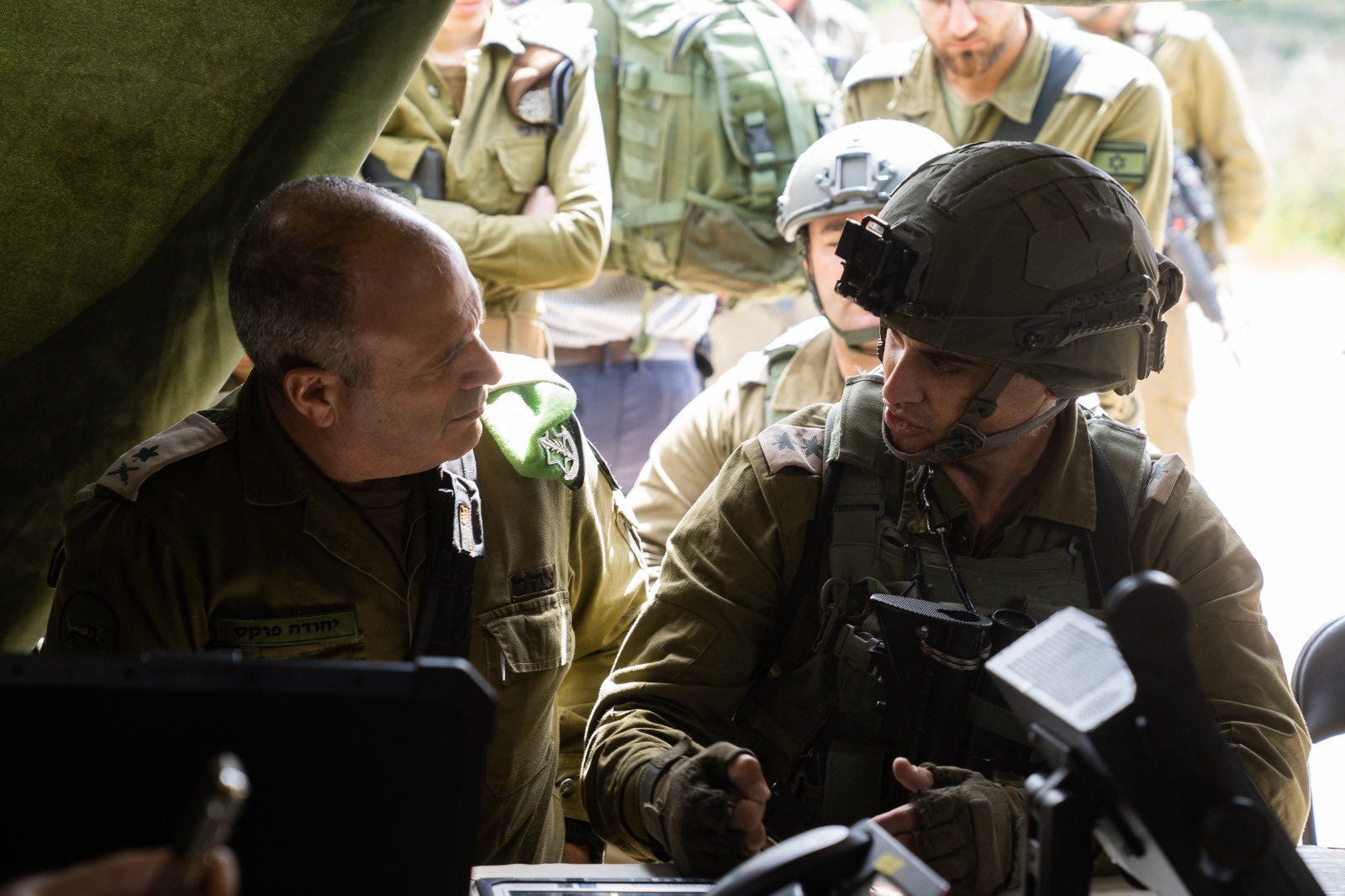
In the application it filed with the Court in December 2023, South Africa set the Gaza war inside an epic of regional original sin. It placed the fighting after October 7, 2023, against the Nakba of 1948, the territories Israel captured from Jordan and Egypt in the 1967 war, and what it called “75 years of apartheid.” Genocide followed as the final chapter of a story written before most of the participants were born.
The frameworks now standard in the field — settler colonialism, apartheid, genocide — reinforce one another and shift the burden of proof, as Günther Jikeli and Philippe Karpe have argued.
They operate like a relay: “Settler colonialism” breaks from the starting gate with the foundational claim of displacement and hands the baton to “apartheid,” which manages the apparatus of domination and delivers it to “genocide” — the anchor leg, celebrated as the inevitable consummation of a state judged illegitimate from its birth. What travels between their hands is a presumed dolus specialis.
The historical diagnosis proves the battlefield motive, and the battlefield casualties validate the historical diagnosis. Any discordant facts, such as the polio vaccinations carried out mid-campaign, the tactical pauses, the warnings to civilians, are neutralized by the theory itself and reframed as cynical theater meant to disguise the state’s true ambitions.
The track has no exit.
The laundering of libel, as Andrea Martin (co-founder and director of the Center for Jewish Legal Studies) has called it1, works much like illicit capital flowing through prestigious banks: Each deposit obscures the tainted provenance and adds a veneer of respectability. As allegations move through working groups, rapporteurs’ memos, and provisional measures hearings, their institutional transit is mistaken for evidentiary substance.
The technique has a pedigree. In 1913, Menahem Mendel Beilis stood in an imperial courtroom in Kyiv accused of ritual murder. Beilis walked free, but the trial had given the ancient hysteria the dignified formality of the state: sworn testimony, expert witnesses, an official transcript. The myth that had built the dock around him outlived the verdict.
The provisional order issued in January 2024 dealt only with preserving the rights asserted under the Genocide Convention and preventing irreparable harm while the litigation proceeded; whether genocide had occurred, and with what intent, was left for the merits.
Yet the public translation of the order immediately outflanked the text. A ruling on the plausibility of the rights South Africa claimed was transformed overnight, by the international press and the activist bar, into a finding of “plausible genocide.”
The accusation collected its dividend before the first witness was sworn. A finding against Israel will be hailed as vindication; a dismissal will be derided as cowardice or institutional capture. Thousands of pages will support the decision; most of the world will see only its last line.
I wonder if the judges can breathe the air of our century without absorbing its toxins. They attend the same conferences, read the same periodicals, and walk the same manicured avenues as the rest of the educated elite — a class for whom the denunciation of Israel has become the central sacrament of conscience.
There remains a deeper complication, one that brings me back to the word “us.”
The International Court of Justice exercises jurisdiction over states. I am a private citizen, sitting in an Ohio suburb thousands of miles from the front line, with no hand in the decisions of the Israeli security cabinet. The final decision will name a state, and its decree will run against that state alone. Yet I know with absolute certainty that it will be experienced as an indictment of us all.
Part of that identification is internal. Jewish sovereignty was hammered out of centuries in which Jewish survival depended on the generosity, whims, or revulsions of host societies, and the necessity of arms became welded to the memory of what happened when there were none. Israel remains a bedrock condition of the modern Jewish consciousness, however exhausted one may be with its current leadership.
The rest is imposed from without.
By mid-morning, the headline will be moving through my Facebook feed, some posts bare of comment, others propped beside a quote from a dissenting Jewish intellectual, a Jewish face as a prophylactic. A “progressive” friend will append a scrupulously phrased disclaimer, assuring her followers that she holds ordinary American Jews entirely blameless for the conduct of the state.
I will read that sentence several times. It was written to sever a connection, and it could only have been written in a world where the connection had already formed. My good friend, the Methodist pastor, will say that we must hold two truths at once, which I’ve come to believe is what people say once they have decided which truth to hold.
By then, I will have spent years writing that the legal standard has not been met. Those essays will remain where I published them, waiting for readers who will brandish the verdict as the end of debate. The epithet reserved for me has been coined: denier. All my life, that word has named those who erase the genocide in which my ancestors were murdered. Now it will be turned on me.
I imagine being asked to step down from the community boards on which I sit, and then I catch myself asking whether I am counting ghosts. In Philadelphia this month, anti-Zionist cyclists set off from Rittenhouse Square on a “boycott ride” past a Jewish deli and Israeli-owned falafel and hummus counters, declaring that “these Zionist establishments must go,” as though the chickpeas were complicit in the maneuvers of the Israel Defense Forces.
The charge against Israel has fused with a verdict on Jewish national existence itself. Outside observers have been assigning Jews their essence for centuries: the deicides of medieval Christendom, the parasitic contaminants of racial anthropology, the shadowy financiers of 20th-century political movements.
The terminology adapts to the fashion; the authority to diagnose us stays with others. The modern iteration speaks the language of human rights, but the cadence is ancient. The people chased out of Europe as perpetual foreigners are now denounced as foreign colonialists in the only land where their dead are buried, their language was spoken, and their collective life endured across three thousand years.
A legal instrument conceived in the shadow of the death camps to name the physical eradication of the Jews may in the end be used to prove that Jewish survival as a political entity is intrinsically genocidal.
The symmetry carries an emotional charge that threatens to cloud my legal reasoning, and I know it. The tragedy of the treaty’s creation grants no immunity to any flag. The Genocide Convention must apply to Israel as it applies to any other combatant, and its clauses must demand of Israel exactly what they demanded of Serbia.
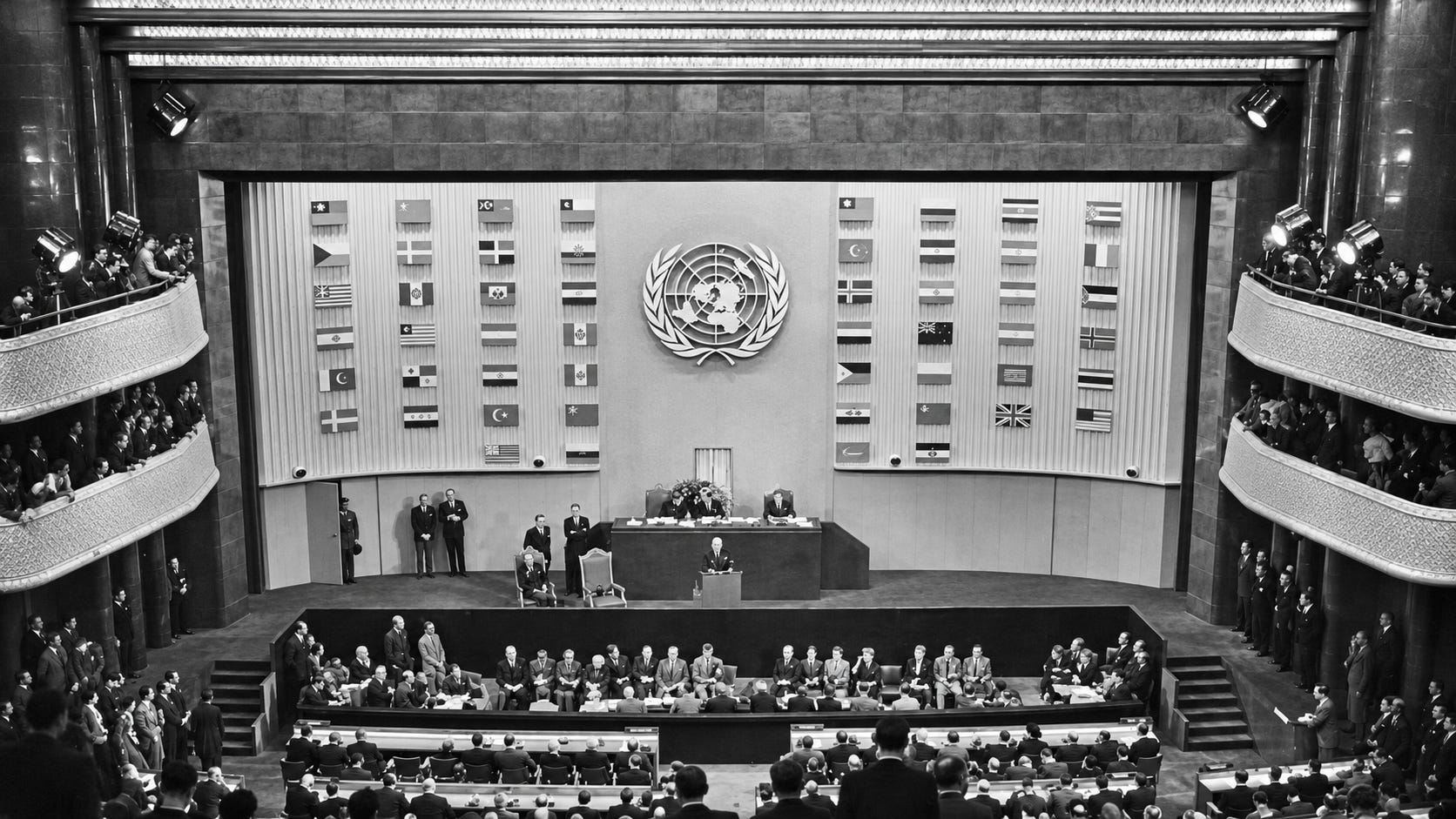
The judges in The Hague command no armored divisions. The Court’s decrees bind only the parties, and their enforcement is left to the United Nations Security Council, where the American veto sits like a rusted padlock. For Israel, it will be the opening salvo of a siege, and I find myself drawing up an inventory of the consequences.
The boycotts already underway in academic journals will become formal policy, barring submissions from Tel Aviv. Governments will widen arms embargoes and plead that the judges tied their hands. Airlines, pension boards, municipal councils, and film festivals will consult their general counsels, who will cite the ruling as an unanswerable liability.
Germany will absorb the decision in its own psychological cellar. A republic that painstakingly rebuilt its civic soul upon the remembrance of the Holocaust will find in a verdict against the Jewish state a strange, intoxicating promise of absolution.
Before the current war, a 2021 Bertelsmann Stiftung survey found that over a third of Germans agreed that Israel’s treatment of the Palestinians was essentially no different from what the Nazis did to the Jews. Social scientists call the reflex Schuldabwehrantisemitismus: the antisemitism of guilt-deflection. If the grandchildren of the survivors can be convicted of the crime their forebears endured, the ledger is balanced.
Closer to home, the verdict will slip inside the sanctuary. In our synagogues, the blue-and-white flag stands near the ark, beside the Stars and Stripes. Will a nervous rabbi, hoping to avoid a schism in the pews, suggest moving it to a corridor, trusting that no one will notice its retirement among the memorial plaques? Will the prayer for the welfare of the state be read with an uneasy drop in volume, or omitted under cover of liturgical revision?
Every one of these adjustments will be carried out far from the Peace Palace, and every one of them will invoke its name.
I will print the decision, as I print every document I intend to interrogate, and go through it with a pen, checking the footnotes and googling my way back through the case law. I will look at how the judges weighed the frantic rhetoric of politicians against the operational logs of the General Staff, and whether they established an unambiguous purpose to destroy a people or merely recorded the hideous costs of a total war.
I will be reading for the exact sentence where an accusation becomes a certified conclusion.
It is possible that my work on antisemitic libels has made me over-sensitive to patterns a detached jurist would weigh differently; that possibility belongs inside the calculation.
The strongest case against Israel deserves an answer. Its proponents, among them Amnesty International and a UN commission of inquiry, argue that the statements of senior officials, the months of restricted aid, and the scale and pattern of destruction leave genocidal intent as the only reasonable inference. My reply is that each strand admits a different explanation, and the law forbids a court to weave plausible inferences into a necessary one.
The leaf blower has stopped. Before I read another line of the judgment, I owe myself an accounting of what evidence would compel me to surrender my skepticism.
I will yield if the record contains verified operational directives or cabinet minutes showing that the campaign was planned to destroy Palestinians as a people, whatever military aims accompanied it. I will yield if a sustained pattern of strikes shows no plausible military purpose under independent scrutiny and is demonstrated to be official state policy. I will yield if the restriction of food and supplies is proven to have been managed as an engine of deliberate mass death.
And I will yield to an opinion that scrutinizes Israel’s defenses as severely as the Court has scrutinized those of other states and finds them wanting.
I have little confidence that the International Court of Justice is capable of producing such an opinion. It will have pronounced its judgment upon Israel. The street will direct its verdict at the Jews. Between those two acts of condemnation lies an abyss that international law has neither the competence nor the desire to close.
Then the panic settles in, sharp and cold. In my mind’s eye, the timeline collapses: I see the boy who could not find a clean hoodie this morning sitting in a university lecture hall, taking down as historical fact what his mother is still struggling to parse in the margins of the footnotes.
“Laundering Libel.” Tablet.

Very interesting topic. I remember on October 8, 2023, I was walking to work in New York City and someone had spray painted on the sidewalk: “End the genocide in Gaza.”
Israel hadn’t even responded yet, not a single dead soul in Gaza, and local Anti-Semites had already accused us of wiping out their population.
This story was the clearest example I have of the Free Palestine delusion; the movement itself is more about hatred of Jews than dignity of Palestinians.
If it weren't for the loss of presumably innocent lives that this would entail, the thought occurs to me that if Israel is to be convicted of genocide despite all the evidence to the contrary, it might just as well ramp up its firepower and actually commit one at that point to show the world the difference. It will already have been convicted, after all. But I would never actually advocate that, tempting as it may seem.