


Please consider supporting our mission to help everyone better understand and become smarter about the Jewish world. A gift of any amount helps keep our platform free of advertising and accessible to all.
This is a guest essay by Vanessa Berg, who writes about Judaism and Israel.
You can also listen to the podcast version of this essay on Apple Podcasts, YouTube Music, YouTube, and Spotify.
We tend to remember the 1973 Yom Kippur War through the same familiar images: Golda Meir, Egyptian soldiers crossing the Suez Canal, Israeli tanks in the Golan Heights, and the eventual Israeli counteroffensive.
But beyond the battlefield is a much richer history involving secret diplomacy, extraordinary espionage, military innovation, Jewish immigration, economic warfare, and political upheaval.
Here are seven chapters of that history that deserve considerably more attention.
1) Jordan’s king warned Israel about the coming war, and then sent his own soldiers to fight it.
On September 25, 1973, Jordan’s King Hussein secretly met Israeli Prime Minister Golda Meir. Although Jordan and Israel had no diplomatic relations, the two leaders had maintained discreet contacts for years. Hussein warned that Syrian military preparations suggested an impending war and indicated that Egypt might participate. He did not provide the precise date of the attack.
Eleven days later, Egypt and Syria attacked.
What happened next is even more extraordinary: Hussein initially avoided opening a third front directly across the Jordan River, but pressure from other Arab leaders eventually led him to send an armored brigade to Syria.
On October 11th, American intelligence reported that Hussein was preparing a personal message to Meir explaining why he was moving Jordanian armor into Syria and asking Israel to avoid attacking the brigade if possible. By October 15th, another American diplomatic cable reported that Hussein had informed Israel that his forces would inevitably enter combat.
His brigade subsequently fought Israeli forces alongside Syrian and Iraqi units.
2) One of Israel’s most important spies was the son-in-law of the Egyptian president who lost the Six-Day War.
His name was Ashraf Marwan.
He was married to Mona Abdel Nasser, daughter of Egyptian President Gamal Abdel Nasser, the leader whose country had suffered a devastating defeat against Israel in 1967. Following Nasser’s death in 1970, Marwan became a close aide to his successor, Anwar Sadat.
He was also supplying information to Israel’s Mossad.
On October 5, 1973, Marwan met Mossad chief Zvi Zamir in London and warned that Egypt and Syria would launch a coordinated attack the following day. The warning reached Israel in the early hours of October 6th, giving its leaders time to begin mobilization but not enough to complete it before the assault.
Marwan’s reported timing was also wrong. He indicated that the attack would begin toward evening. Egypt and Syria struck at 2 p.m.
The story becomes even more intriguing after the war.
Was Marwan genuinely working for Israel, or was he an Egyptian double agent who helped manipulate Israeli expectations? The question became the subject of a long-running dispute among intelligence officials and historians. Zvi Zamir defended Marwan’s reliability, while others argued that aspects of his reporting served Egypt’s deception strategy. Intelligence historian Uri Bar-Joseph has argued that Marwan was a genuine Israeli source.
3) Israel had a secret plan to evacuate children from the Golan Heights months before the war.
One of the most revealing documents in Israel’s Defense Ministry archives concerns a plan with an almost painfully innocent name: Pekudat Yeled, or “Child Order.”
In May 1973, five months before the war, the Northern Command prepared a contingency plan to evacuate civilians from 14 Israeli communities established in the Golan Heights after 1967. The plan was approved on May 31st, but commanders decided to keep it confidential, partly because they feared opposition from residents.
Two days before the war, Defense Minister Moshe Dayan visited communities in the Golan and reassured residents who were worried about an impending conflict. By the morning of October 6th, however, the military was discussing the immediate evacuation of women and children.
During one discussion, Dayan even considered presenting the evacuation as an organized children’s outing.
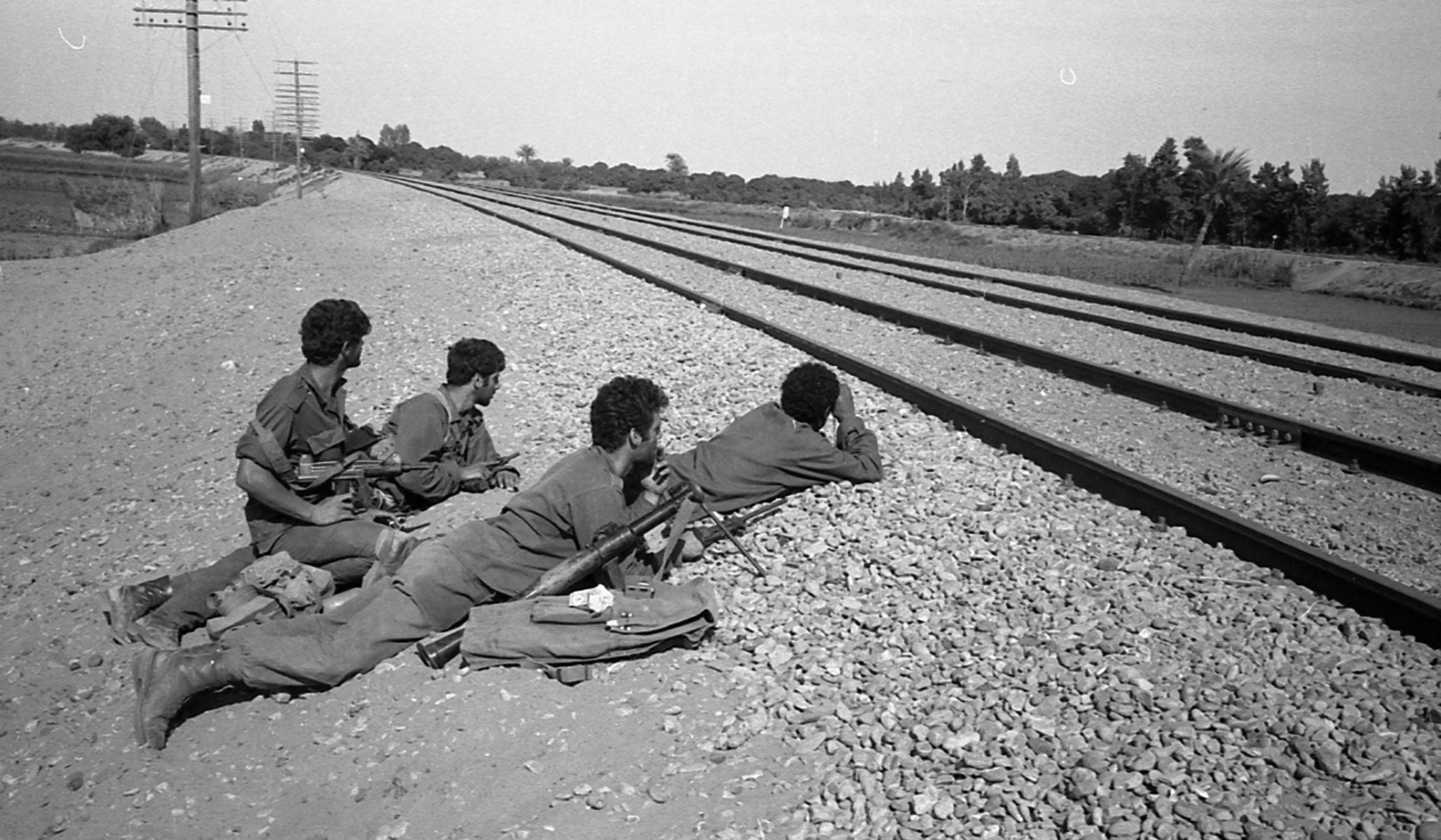
The evacuation began as the war approached, but the Syrian offensive complicated it. Heavy shelling delayed buses, and several communities had to arrange their own transportation. By that evening, the military reported that the evacuation of women and children had been completed. During the night, the order was extended to the men. Some residents refused to leave and had to be persuaded by military personnel.
4) The Israeli Navy fought the world’s first missile-boat battle on the very night the war began.
While Israeli ground forces were suffering severe setbacks, something very different was happening at sea.
During the night of October 6th and 7th, Israeli missile boats engaged Syrian naval vessels near the port of Latakia. The battle became the first naval engagement in history between missile-armed boats using ship-to-ship missiles.
In the years preceding the war, the Israeli Navy had developed an extensive program involving Gabriel anti-ship missiles, electronic countermeasures, and new tactics. Syrian missile boats possessed Soviet-made Styx missiles with a considerably longer range than the Israeli Gabriels.
The Israelis developed ways to counter those missiles electronically, allowing their vessels to close the distance and fire their own weapons.
The engagement ended with five Syrian vessels destroyed and no Israeli vessels lost.
The war that exposed serious weaknesses in Israeli preparedness also demonstrated the capabilities of an Israeli military branch that had approached its challenges differently.
5) Egypt opened a little-known third front nearly 1,000 miles away from the main fighting.
When people visualize the Yom Kippur War, they imagine the Golan Heights or the deserts of Sinai. Almost nobody thinks of the Bab el-Mandeb Strait.
Yet Egypt sought to cut off Israeli shipping through this narrow passage connecting the Red Sea to the Gulf of Aden and the Indian Ocean. The blockade threatened maritime access to Eilat, Israel’s southern port, and the commercial connections linking Israel with parts of Africa and Asia. Egypt deployed naval forces far from the principal battlefields to enforce restrictions on shipping associated with Israel.
This third front continued to burden Israel’s economy even after ceasefires had taken effect on the main battlefields.
6) Soviet Jews continued immigrating to Israel even after war broke out.
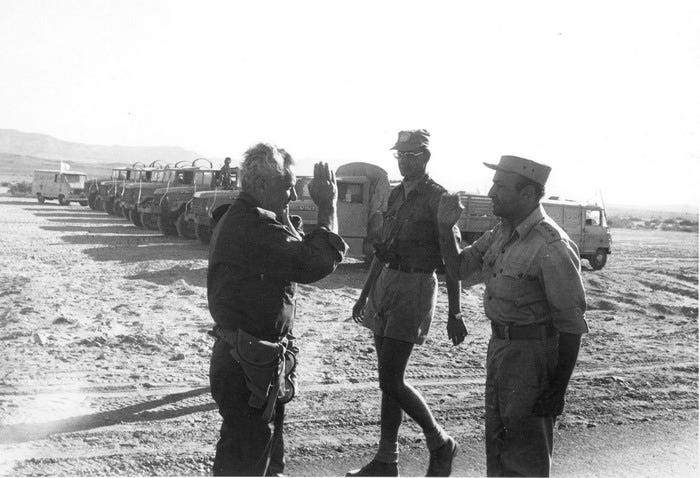
The 420 Soviet Jewish immigrants who landed in Israel on October 7, 1973 were not an isolated case.
Another 150 immigrants arrived through Vienna on October 10th. Among them was Shlomo Dresner, a defendant in the Kishinev trial who had been sentenced to three years in prison and had subsequently obtained permission to emigrate.
Many of the arrivals wanted to be sent immediately to assist the soldiers. The Jewish Agency and Absorption Ministry instead directed them to immigrant absorption centers across the country.
There was another fascinating detail: 45 Soviet Jews sent a cable to the Israeli government and people expressing solidarity. They acknowledged that the fighting would cause suffering among Arabs and Jews while affirming their connection to Israel and its people. The message was an act of Jewish identification sent from a country whose government was supplying military assistance to Egypt and Syria.
7) Portugal became the indispensable stopover for America’s emergency airlift.
When Israel began running short of essential military supplies, the United States organized Operation Nickel Grass, a major airlift of weapons and equipment. But flying massive military transport aircraft from the United States to Israel presented a significant logistical problem.
Many European countries refused to grant American aircraft landing or overflight permissions because of concerns about Arab retaliation, particularly restrictions on oil supplies.
Portugal allowed the United States to use Lajes Air Base in the Azores, enabling American aircraft to cross the Atlantic, refuel, and continue toward Israel through a carefully planned Mediterranean corridor.
The first American military airlift aircraft arrived at Lod Airport in Israel on October 14th. It carried approximately 186,200 pounds of cargo. A second aircraft carrying material-handling equipment was delayed by mechanical problems. As a result, American crew members and Israeli civilians had to unload the first C-5 manually.
By November 14th, the American airlift had delivered more than 22,000 tons of material in 567 missions.
Portugal’s assistance was not without consequences. The Arab oil embargo imposed during the war eventually targeted Portugal alongside the United States, the Netherlands, and South Africa.
The story of Portugal and the Azores is one of the least-discussed but most consequential logistical chapters of the war.
Bonus: Golda Meir won an election after the war, and then resigned four months later.
The conventional version of the story suggests that the Yom Kippur War brought down Golda Meir’s government. It did, but the process was considerably more complicated.
Israel had been scheduled to hold a general election on October 30, 1973. The war forced the election to be postponed until December 31st.
Despite the public anger over the military and intelligence failures, Meir’s Labor-led Alignment won 51 Knesset (Israeli parliament) seats, compared with 39 for the newly formed Likud. She subsequently assembled another government, but public dissatisfaction continued, particularly among soldiers returning from the front.
One of them was Motti Ashkenazi, who had commanded the Budapest outpost along the Suez Canal. His position was the only Bar-Lev Line strongpoint that had remained in Israeli hands throughout the war.
Ashkenazi had warned of serious shortcomings before the fighting. When he returned to civilian life, he launched a solitary protest outside the prime minister’s office in Jerusalem, demanding that Defense Minister Moshe Dayan resign and that the government accept responsibility.
What began with one reservist developed into a much larger protest movement.
Then came the Agranat Commission. Its interim findings placed substantial responsibility on senior military commanders but did not assign comparable personal responsibility to Meir and Dayan. The conclusions provoked considerable public controversy.
Meir resigned in April 1974. Yitzhak Rabin formed the next government in June.
The war also contributed to longer-term changes in Israeli politics, culminating in the end of Labor’s uninterrupted period in power when Menachem Begin’s Likud won the 1977 election. Other social and political developments contributed to that transformation as well.
Fifty-three years later, the Yom Kippur War remains an extraordinary study of how a single conflict can affect almost every dimension of a nation’s existence.
Perhaps the most striking fact is how young Israel was when all of this happened. The state had existed for just 25 years. Many of the people defending it had been born before it existed, and some had spent their childhoods in countries where Jewish sovereignty had seemed unimaginable.
Their country possessed an army, intelligence agencies, an independent government, and the power to make decisions that earlier generations of Jews had never been able to make. Yet 1973 exposed how vulnerable those institutions could be when faced with mistaken assumptions, determined adversaries, and unexpected circumstances.
Israel’s survival was one chapter of the Yom Kippur War. What the war revealed about Israel, and what Israelis did with that knowledge afterward, is the history we should be studying, too.
👏👏👏 An incredible article by Vanessa Berg loaded with fascinating facts I never knew about one of the most important conflicts in recent Middle Eastern history and of the twentieth century! I enjoyed this piece immensely and learned a great deal! For those who’d like to learn more about the Yom Kippur War I’d recommended the following volumes:
• The Yom Kippur War: The Epic Encounter That Transformed the Middle East by Abraham Rabinovich
• Eighteen Days in October: The Yom Kippur War and How It Created the Modern Middle East by Uri Kaufman
• The War of Atonement: The Inside Story of the Yom Kippur War by Chaim Herzog
• The Eve of Destruction: The Untold Story of the Yom Kippur War by Howard Blum
• The Two O'Clock War: The 1973 Yom Kippur Conflict and the Airlift That Saved Israel by Walter J. Boyne
Fascinating read about this episode in Israel’s history, thanks for sharing this story❣️🙏🇮🇱✝️🇮🇱🙌🇮🇱😻