


Please consider supporting our mission to help everyone better understand and become smarter about the Jewish world. A gift of any amount helps keep our platform free of advertising and accessible to all.
This is a guest essay by Leonard Karp, a retired biotech entrepreneur turned writer.
You can also listen to the podcast version of this essay on Apple Podcasts, YouTube Music, YouTube, and Spotify.
On May 14, 1948, David Ben-Gurion proclaimed the establishment of the State of Israel. Eleven minutes later, U.S. President Harry S. Truman announced that the United States recognized the new Jewish state.
It was a defining moment in modern Jewish history.
After centuries of persecution, exile, and the unimaginable horrors of the Holocaust, the Jewish People had re-established their national home. The recognition of the United States, the world’s most powerful democracy, gave the fledgling nation an extraordinary measure of international legitimacy.
Harry Truman deserves credit for that decision, but there is another side to this story — one that deserves far more attention.
The man celebrated as one of Israel’s most important early supporters privately expressed deeply troubling attitudes toward Jews. His own writings reveal prejudices that stand in stark contrast to the image of an unquestioning friend of the Jewish People.
This raises two important questions: What did Truman really think about Jews? And if he harbored such prejudices, why did he recognize Israel?
The answers reveal something much larger than the character of one American president.
On July 21, 1947, President Truman recorded an entry in his personal diary following a telephone conversation with Henry Morgenthau Jr., Franklin Roosevelt’s former Treasury secretary.
Morgenthau was pressing the president to intervene on behalf of Jewish refugees aboard a ship seeking entry into British Mandate Palestine. Truman was irritated by the conversation. His diary included these words: “The Jews have no sense of proportion nor do they have any judgement on world affairs.” He continued: “The Jews, I find are very, very selfish.”
He went further, writing that Jews who acquired physical, financial, or political power could be as cruel to those beneath them as Hitler or Stalin. These were not words attributed to Truman by a political opponent. They were his own private observations, recorded in his own diary.
The significance is difficult to dismiss. Truman was not merely criticizing Morgenthau or disagreeing with a particular political position. He was making sweeping generalizations about Jews as a people. Other examples of derogatory language appear in his earlier correspondence. We should not minimize these statements simply because they came from a president who subsequently made an enormously important decision for the Jewish People.
Why would a man with such prejudices recognize Israel?
This is the central historical contradiction, and the answer is more complicated than we might expect. Truman’s support for Israel was not necessarily inconsistent with his personal prejudices. Several forces shaped his decision, and they deserve examination.
His religious beliefs mattered. Truman was a deeply religious Baptist who read the Bible and believed in the historical connection between the Jewish People and the land of Israel. His understanding of the Old Testament contributed to his belief that Jews had a legitimate claim to a homeland in the Land of Israel.
For Truman, the establishment of a Jewish state had a moral and religious dimension. He could believe in Jewish national self-determination while simultaneously holding prejudiced attitudes toward Jews.
The Holocaust and the refugee crisis also mattered. In August 1945, Truman received the Harrison Report, which documented the appalling conditions facing Jewish survivors in displaced-persons camps in Europe. The report genuinely disturbed him. He subsequently urged British Prime Minister Clement Attlee to permit 100,000 Jewish refugees to enter British Mandate Palestine.
Truman understood that the survivors of the Holocaust could not simply be returned to the countries where so many had been persecuted and murdered. His humanitarian concern was genuine. He recognized that the Jewish refugee crisis demanded an answer.
Personal relationships also mattered. One of the most interesting figures in this story was Eddie Jacobson, Truman’s longtime friend and former business partner. Jacobson was Jewish. He personally appealed to Truman to meet Chaim Weizmann, a leading Zionist statesman who would become Israel’s first president.
Initially, Truman resisted the meeting, but Jacobson persisted. On March 13, 1948, he personally visited the White House and appealed directly to his old friend. Truman finally agreed. Five days later, he met Weizmann and indicated that the U.S. would recognize the Jewish state if one were proclaimed and the United Nations failed to establish a temporary trusteeship.
This personal intervention was important. It demonstrated that Truman’s relationship with an individual Jewish friend could be meaningful even while his private writings revealed troubling generalizations about Jews.
Politics mattered, too. We cannot ignore the approaching 1948 presidential election. Jewish voters were an important constituency for the Democratic Party, particularly in New York. Truman’s political advisers understood the electoral implications of abandoning support for a Jewish state.
Clark Clifford, Truman’s presidential counsel, strongly advocated recognition. The Truman Library’s historical account acknowledges that Jewish votes were part of the political calculations surrounding the decision. Secretary of State George Marshall, meanwhile, strongly opposed immediate recognition. He warned that it could damage American relationships with Arab nations and jeopardize important strategic interests.
Marshall’s opposition was so strong that he reportedly told Truman he would vote against him if he followed Clifford’s advice. Truman proceeded anyway.
On May 14, 1948, just 11 minutes after Ben-Gurion’s declaration, the U.S. extended de facto recognition to Israel. It was a consequential decision, made in the face of substantial opposition. Truman’s religious beliefs, humanitarian concerns, personal relationships, public opinion, and political calculations all contributed to the circumstances surrounding his decision.
One of the most disturbing aspects of Truman’s story is that he was not an isolated example of a political leader whose public relationship with Jews or Israel contrasted sharply with his private attitudes. Two other American presidents deserve examination, starting with Richard Nixon — the president whose antisemitism was caught on tape.
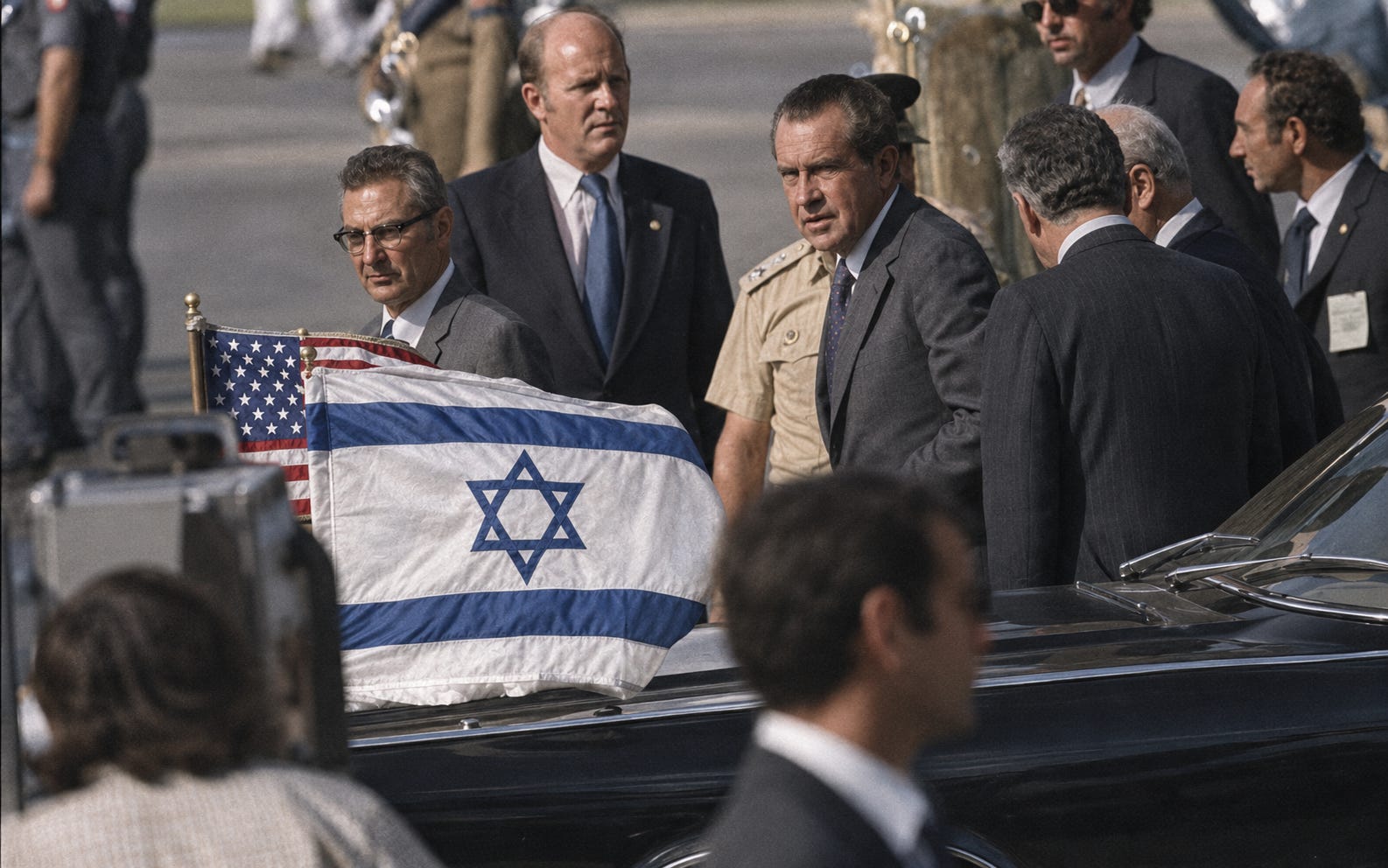
Nixon employed prominent Jewish advisers, including Henry Kissinger and Leonard Garment. His administration also played a critical role in Israel’s survival during the 1973 Yom Kippur War. When Israel faced a potentially devastating military crisis, Nixon authorized a massive American military airlift to replenish Israeli weapons and supplies. Yet Nixon’s private White House recordings reveal something profoundly disturbing.
On July 5, 1971, in a conversation with senior aides H.R. Haldeman and Ronald Ziegler, Nixon made the sweeping declaration: “The Jews are born spies.” He proceeded to associate Jews with espionage, disloyalty, and what he described as inherent deviousness. These were not comments made by an opponent or an unfriendly journalist. They were recorded conversations inside the Oval Office, intended to remain private.
Nixon had a Jewish national security adviser, a Jewish presidential counselor, and a government that would ultimately provide Israel with essential military assistance. Yet he privately expressed antisemitic stereotypes about Jews as a people. His support for Israel was consequential. His private prejudice was equally real.
Nixon demonstrates that political friendship, professional relationships, and even military support for Israel do not necessarily establish genuine acceptance of Jews.
There was also Franklin D. Roosevelt, the president beloved by Jewish Americans. He surrounded himself with influential Jewish advisers, including Henry Morgenthau Jr., his Treasury secretary, and Felix Frankfurter, who later served on the Supreme Court. Yet historical accounts and private records from people within his administration reveal troubling prejudicial attitudes.
Vice President Henry Wallace’s diary recorded Roosevelt discussing the need to distribute Jewish families more widely throughout the country so they would assimilate rather than remain concentrated in particular communities. Other accounts attributed to Roosevelt reveal concerns about Jewish influence and the concentration of Jews in certain professions.
There is an additional and particularly painful dimension to Roosevelt’s record: his administration’s restrictive immigration policies during the Holocaust. Despite the growing knowledge of Nazi persecution, the U.S. maintained immigration restrictions that prevented many Jewish refugees from finding safety in America. Roosevelt eventually established the War Refugee Board in 1944, which helped save tens of thousands of people. But that action came very late in the Holocaust.
Truman, Nixon, and Roosevelt were very different men, and their records should not be treated as identical. But their histories raise a common question: How much can we really know about someone’s attitudes toward Jews based on their public behavior?
Truman recognized Israel. Nixon supplied Israel with essential military assistance. Roosevelt surrounded himself with prominent Jewish advisers. Yet all three histories contain evidence of troubling attitudes or decisions involving Jews. The lesson is not that their contributions were meaningless. It is that political support and personal acceptance are not necessarily the same thing.
You never really know what someone thinks about you as a Jew. This is the broader reality.
How many times have Jews assumed that someone was a friend because that person was cordial, supportive, professionally cooperative, or even publicly defended Israel? How often do we confuse political support with genuine acceptance?
Antisemitism does not always announce itself. It does not necessarily come from someone who openly hates Jews, refuses to associate with them, or participates in anti-Jewish demonstrations. Sometimes it exists beneath the surface, under the skin of otherwise friendly relationships. A person can have Jewish friends, work alongside Jewish colleagues, support Israel, and still harbor stereotypes and prejudices about Jews.
Truman is one illustration of that uncomfortable reality. Nixon provides another. Their public records might have led Jews to regard them as dependable friends. Yet their private words revealed attitudes that many Jews would have found deeply offensive. And this is not simply a matter of personal relationships.
Prejudice does not disappear when someone enters government. It can exist among elected officials, political advisers, diplomats, bureaucrats, and people responsible for shaping national policy. We should never assume that public expressions of friendship, political alliances, or positions of authority automatically reveal someone’s private attitudes toward Jews. But we should recognize that antisemitism can exist in places where Jews least expect to find it.
There is a difference between being tolerated and being accepted, which brings us to a larger historical pattern that Jews should never forget.
For centuries, Jewish communities have lived in societies where they were permitted to participate, prosper, conduct business, contribute to culture, and even achieve positions of extraordinary influence. Yet being tolerated is not the same as being accepted.
Jews have repeatedly discovered that the acceptance they thought they enjoyed could be conditional. When political circumstances changed, economic pressures intensified, or societies needed someone to blame, Jews could suddenly become outsiders again. The same neighbors who had been cordial could become indifferent. The same institutions that had welcomed Jewish contributions could become hostile.
This is one of the most troubling characteristics of antisemitism: It can remain dormant, concealed beneath the surface of ordinary social relationships, until circumstances provide an excuse for its expression. Truman’s private writings remind us that even someone capable of making a historic decision in Israel’s favor could carry prejudices that were never fully reconciled with that decision.
I am not interested in turning Harry Truman into either a villain or a saint. He made a decision that changed Jewish history. His recognition of Israel was important, courageous, and consequential. The Jewish People have good reason to remember it with gratitude.
But gratitude should not require historical amnesia. We should also remember the man who privately described Jews as selfish and made sweeping comparisons between Jews and some of history’s most notorious dictators. And we should remember Nixon’s recorded words and the troubling aspects of Roosevelt’s private attitudes and public record.
These realities belong in the historical record — and that is among the most important lessons of this story.
We cannot always know what people think about Jews when the cameras are off. We cannot assume that political support means personal acceptance. We cannot confuse a favorable decision with the absence of prejudice. We should be grateful for friends who stand with Israel, but we should never be so comfortable with those friendships that we stop recognizing the possibility of prejudice beneath the surface.

One thing missing from an otherwise excellent piece is that yes Truman recognized Israel but did not end an arms embargo that began on December 5, 1947 instituted by George Marshall’s DOS. In fact Israel needed to smuggle American weapons to Israel.
I believe this is not unusual. My husband's father was American Italian Catholic and mother was Sephardic Jew. My father-in-law voiced many negative attitudes about Jews in general but he loved his wife and her family. It's some sort of weird disconnect that I never understood.