


Please consider supporting our mission to help everyone better understand and become smarter about the Jewish world. A gift of any amount helps keep our platform free of advertising and accessible to all.
You can also listen to the podcast version of this essay on Apple Podcasts, YouTube Music, YouTube, and Spotify.
Editors Note: Israel and Lebanon just signed a Trilateral Framework in the U.S. — envisioned as an initial step toward “ensuring the sovereignty and security of both countries, and establishing peaceful neighborly relations between them.”
If you only started paying attention to Israel and Lebanon in the last few years, you might assume these two countries have always been sworn enemies.
They were not.
In fact, for decades after the State of Israel was established, many Israeli leaders quietly hoped Lebanon would become the first Arab country to make peace.
That hope was not naïve optimism. It was strategic reading of the region.
Israel’s early leadership saw Lebanon as structurally different from its neighbors: less dominated by military regimes, more commercially oriented, and with a powerful Christian political establishment that, at various points, was comparatively open to quiet engagement.
Unlike Egypt, Syria, or Iraq — where pan-Arab ideology, Islamism, and centralized authoritarianism made peace politically non-viable — Lebanon had internal fragmentation that, in theory, could allow pragmatic factions to shape foreign policy.
There were also periods of indirect coordination and backchannel contact, particularly with Lebanese Christian leaders during moments when Palestinian armed presence in southern Lebanon was destabilizing both countries.
From Israel’s perspective, Lebanon was not just another frontline adversary. It looked like the most plausible “first crack” in the Arab-Israeli conflict, where local interests might eventually override regional ideological alignment.
That expectation ultimately underestimated how quickly Lebanon’s internal balance would be overwhelmed by civil war dynamics and external actors, especially Syria, the Palestine Liberation Organization, and later the Islamic Republic of Iran.
Instead, Lebanon became something else entirely: a cautionary tale of what happens when a weak state allows increasingly powerful armed groups (and eventually the Iranian regime) to hollow it out from within.
Understanding today’s Israel-Lebanon agreement requires understanding how we got here. It is a story of missed opportunities, civil war, foreign intervention, terrorism, and a country that slowly stopped controlling its own territory.
Modern Lebanon is an unusual creation. After the collapse of the Ottoman Empire following the First World War, France carved out Greater Lebanon in 1920 from territories that had previously belonged to Ottoman Syria.
Unlike most neighboring countries, Lebanon was not built around one dominant ethnic or religious identity. It was (and remains) a mosaic of Maronite Christians, Sunni Muslims, Shia Muslims, Druze, Greek Orthodox, Armenians, and smaller communities.
To keep the peace, Lebanon created an elaborate power-sharing system: The president would always be a Maronite Christian, the prime minister a Sunni Muslim, and the speaker of parliament a Shia Muslim. On paper, it looked ingenious. In practice, it froze sectarian divisions into the political system itself. Everyone had a seat at the table, but no one fully trusted anyone else.
When the State of Israel declared independence on May 14, 1948, Lebanon technically joined the immediately ensuing Arab invasion, but compared to Egypt, Syria, Jordan, and Iraq, its participation was limited. The two countries eventually signed an armistice agreement in 1949.
For decades afterward, Israel viewed the Lebanese differently from their neighbors. Lebanon was not dominated by military dictators, but had a vibrant press, banking sector, universities, and tourism industry. Beirut became known as the “Paris of the Middle East.”
Many Israelis believed Lebanon might eventually decide commerce mattered more than conflict. There were even quiet contacts over the years between Israeli officials and some Lebanese Christian leaders. Peace never materialized, but neither did all-out war. At least, not yet.
The relationship changed because of something neither Israel nor Lebanon originally created: The Israeli-Palestinian conflict spilled across Lebanon’s border. It started with “Black September” in Jordan, a violent conflict from 1970 to 1971 between the Jordanian government (led by King Hussein) and Palestinian armed factions, mainly the Palestine Liberation Organization.
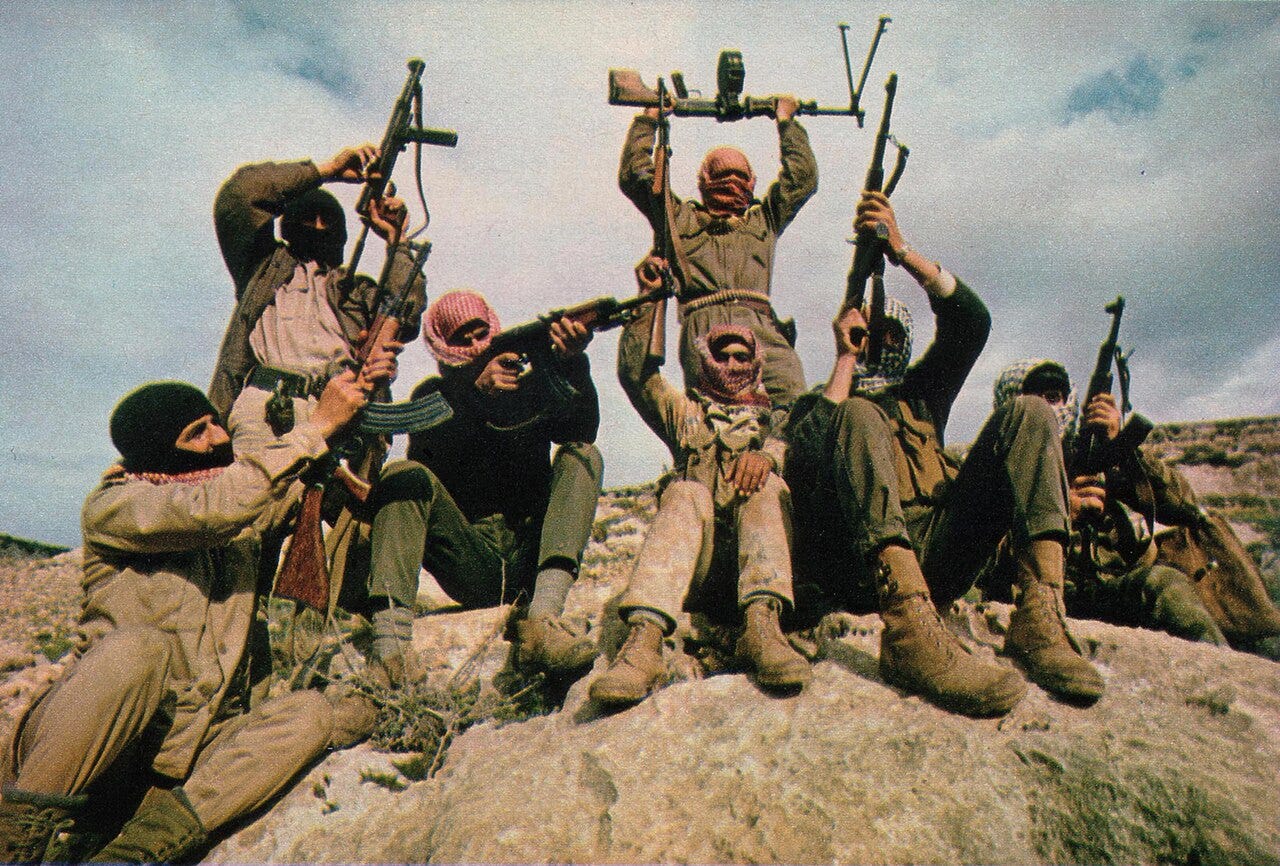
After 1967, many Palestinian guerrilla groups had become extremely powerful inside Jordan — running checkpoints, operating independently of the state, and launching attacks on Israel from Jordanian territory. Over time, this started to look less like “guests operating in a host country” and more like a parallel armed authority inside Jordan.
Tensions exploded in 1970 when Palestinian factions attempted to challenge the monarchy’s control. The Jordanian army responded with a large-scale military crackdown. The fighting was intense and deadly, especially in cities like Amman and Irbid. By 1971, the Jordanian government had effectively expelled the Palestine Liberation Organization leadership and most of its armed units from the country — primarily into Lebanon, especially southern Lebanon, right on Israel’s northern border.
That relocation dramatically changed Lebanon’s internal balance: Instead of being just a fragile multi-sectarian state dealing with its own tensions, Lebanon suddenly became the main base of operations for Palestinian armed groups launching attacks into northern Israel.
In 1974, for example, Palestinian terrorists entered northern Israel from Lebanon, took over a school, and held students hostage. When Israeli forces attempted a rescue, the situation turned deadly, and many children were killed. The attack deeply shaped Israeli security doctrine around hostage crises.
Then, in 1978, a Palestinian terrorist unit infiltrated Israel from Lebanon, hijacked a bus on the coastal highway, and killed dozens of civilians. It became one of the most shocking mass-casualty terror attacks in Israel’s early decades.
After Palestinian terrorists repeatedly launched raids, rocket attacks, and cross-border infiltrations, southern Lebanon became known in Israel as “Fatahland.” (Fatah comes from the Palestinian group Fatah, which in Arabic means “conquest,” “opening,” or “victory.”) Israel predictably retaliated, and the cycle escalated. The Lebanese government, already fragile, struggled (or simply refused) to assert control over the south.
Increasingly, armed groups, not the Lebanese state, were deciding whether Israelis would wake up to rockets and terror attacks.
Then everything fell apart.
In 1975, Lebanon descended into one of the bloodiest civil wars in modern history. Nearly every faction fought nearly every other faction: Christian militias, Sunni militias, Shia militias, Palestinian factions, leftists, and Islamists, with Syria, Israel, Iran, and the United States all eventually intervening in different ways. It became one of those wars where making a flowchart actually makes things less clear.
By the early 1980s, southern Lebanon had become a launchpad for repeated attacks against Israel. The Israelis, rightfully so, concluded that the status quo was unsustainable.
In 1982, after years of attacks culminating in the attempted assassination of Israel’s ambassador in London, Israel launched “Operation Peace for Galilee.” Its initial objective was limited: Push the Palestine Liberation Organization’s forces away from Israel’s northern border.
But military plans sometimes expand, and Israeli forces advanced all the way to Beirut (about 120 kilometers, or 75 miles, from Israel’s northern border), and eventually the Palestine Liberation Organization’s leadership, including the notorious mega-terrorist Yasser Arafat, was evacuated to Tunisia.
From Israel’s perspective, a major objective had been achieved: The organization directing many attacks on Israeli civilians had been removed from Lebanon. But another problem emerged: Israel became stuck.
Nature hates a vacuum, and so did the emerging Islamic Republic of Iran, whose founding in 1979 resulted in the new Iranian regime quickly moving to export its revolutionary ideology abroad by cultivating, funding, and arming proxies across the Middle East. In the early 1980s, Iran’s Islamic Revolutionary Guard Corps helped establish Hezbollah.
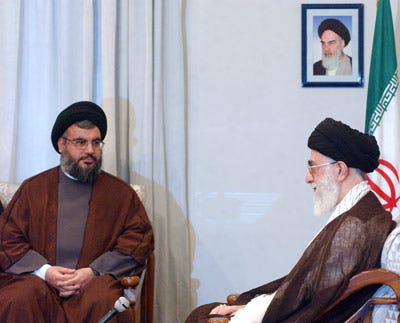
Unlike earlier Lebanese militias, Hezbollah fused an Iranian-backed Islamist movement, a heavily armed military force, and a criminal-patronage network deeply embedded inside Lebanese society. Its loyalty was not primarily to Lebanon, but to Iran’s revolutionary ideology and its supreme leadership. Hezbollah marketed itself as a resistance movement against Israel, but that description only captures part of the picture.
Inside Lebanon, it also built something resembling an Islamist mafia: its own intelligence services, military wing, communications network, social services, and economic empire. It enforced its dominance through intimidation and violence against critics, journalists, activists, and political opponents, contributing to a climate where open opposition carries real risk.
This is why the suggestion that “Lebanon should simply get rid of Hezbollah” misunderstands how it functions. It is not just a militia. It is an armed state within the state.
In 2000, Israel unilaterally withdrew from southern Lebanon. Many Israelis hoped this would remove the justification for continued attacks. Instead, Hezbollah declared victory, framing the withdrawal as proof that armed resistance works. That narrative dramatically increased its popularity in parts of the region. Rather than disarm, it expanded. And Iran poured in money, weapons, and training. Over time, Hezbollah developed one of the largest missile arsenals in the world held by a non-state actor.
In 2006, Hezbollah crossed the border, killed Israeli soldiers, and kidnapped others. Israel responded with a major military campaign lasting 34 days. Northern Israel came under sustained rocket fire, while Lebanese infrastructure suffered extensive damage. Neither side achieved a decisive outcome, but one lesson became central in Israeli strategic thinking: leaving Hezbollah alone allows it to grow stronger.
Today, Lebanon still has a government, elections, and ministries, but key national security decisions are heavily influenced (or effectively controlled) by Hezbollah. When Hezbollah chooses to escalate against Israel, it does so without national consensus or democratic mandate. The Lebanese Armed Forces are not the primary decision-maker, and parliament does not meaningfully direct such actions.
Because Hezbollah is funded, armed, and strategically supported by Iran, Lebanon increasingly functions as an Iranian-aligned state in matters of war and peace. According to a recent report from the website Iran International, Lebanon’s parliamentary speaker allegedly receives more than $500,000 per month from Tehran to support Iranian interests and those of Hezbollah.
Many Lebanese oppose this reality, but many also fear challenging it openly.
Meanwhile, critics often ask why Israel does not simply destroy Hezbollah. The reality is more complex. Hezbollah embeds military infrastructure inside civilian areas, including beneath homes and within villages, deliberately blurring the line between military and civilian space. This strategy makes military operations significantly more difficult and ensures that civilian casualties become a political and media weapon regardless of who initiated the conflict.
Any democracy facing an enemy that operates this way faces difficult tradeoffs without clean solutions.
In the immediate aftermath of October 7, 2023, Hezbollah entered the conflict within a day by opening a northern front against Israel, launching rockets and anti-tank fire across the Lebanon–Israel border in what it framed as support for Hamas. What followed was a sustained but initially calibrated exchange of strikes that steadily escalated into the most serious Israel–Hezbollah confrontation since 2006, with both sides probing thresholds while trying to avoid full-scale war.
Tensions spiked again in 2024 as the conflict’s character shifted toward deeper intelligence and covert dimensions. One of the most widely discussed episodes was the so-called “pager incident,” in which coordinated explosions targeting communication devices used by Hezbollah operatives were attributed to Israeli operations.
A further turning point came with the assassination of Hassan Nasrallah, the long-time leader of Hezbollah. His death in an Israeli strike in Beirut’s Dahiyeh suburb marked a dramatic escalation, removing a central figure who had shaped the organization’s strategy for decades.
Hezbollah again launched attacks on Israel in support of Iran following the U.S.-Israeli attacks on the Iranian regime starting February 28th, and Israel again found itself in a conflict it had long tried to avoid. Israeli forces have again entered southern Lebanon, dismantled tunnel networks and weapons infrastructure, and targeted senior commanders.
The longer-term goal is the disarmament of Hezbollah, but whether that succeeds remains uncertain, given Hezbollah’s scale, entrenchment, and external backing. Disarmament is not comparable to post-war policing. It would require dismantling one of the most powerful non-state military organizations in the world.
As such, the Israel-Lebanon conflict has never been simply two states fighting over a border. The central question has always been: Who actually controls Lebanon? If the answer becomes the Lebanese state alone, sustained peace becomes conceivable. If the answer remains Hezbollah and Iran, then history suggests cycles of escalation and ceasefire will continue.
Israel has fought in Lebanon repeatedly, but it has never sought permanent control of the country. Its core objective has remained consistent: preventing its northern border from becoming a launchpad for attacks on its civilians.
Whether this agreement marks a turning point will depend less on troop withdrawals and more on whether Lebanon can finally become fully sovereign in practice, not just in principle.
I lived in Israel for 3 months in 1982, from February 1st to April 30th, spending two months as a volunteer in Kibbutz Lohamei Hagetaot on the coast highway north of Acre and south of Nahariya. I recall sometime in March most all the men in the kibbutz were gone, having been called up to the Reserves in anticipation of the conflict in Lebanon which began full scale on June 6th. I was one of two Jewish volunteers living on the kibbutz, the other was from England. Most of the volunteers were gentiles from Australia, Japan, Canada, and various European countries. One of the kibbutz leaders, Peninah, spoke with me and the English Jew and requested we "stand watch" since so many of the men left the kibbutz. She gave us security assignments in addition to our jobs on the kibbutz. Since my job was working in the chicken house from 4 am to 8 am, and much work had stopped with the men gone, I had time on my hands. The chicken house work was dirty, hard, and no woman worked it. A large French woman volunteer insisted on working the chicken house detail, she lasted 2 days as her fingers and hands became sore and bloody. We had to pick up 4 chickens in each hand and put them in large cages that had spring latches and if you didn't get it right the latches caught your hand, or the chickens pecked your hands, and if the latch snapped on a chicken it had to be discarded as it couldn't be used.
After about one week the men returned, so whatever caused the call up was delayed by a couple of months. In April I left the kibbutz to travel around Israel, returning to the States at the end of the month. During the call up I witnessed first hand how the call up of so many men to the Reserves affected Israeli society, from buses that seldom ran, to shops closing, greatly affecting work on the kibbutz. Six weeks after I left Israel, on June 6th, Israel launched its military operation into Lebanon. My memories from 44 years ago remain vivid in my mind, as does the affinity and love I have for the staunch and brave Israelis and how resilient and strong they have become out of nature and necessity.
Joshua thank you for the timeline - I lived it -
I sat in the salon with my husband watching the black september terrorists murder /hostage taking our Israeli Olympic team at the summer Munich Olympics in September 1972, in 1973 in between terrorist attacks we had a war-The Yom Kippur War - I stood trembling scared out of my mind, and 7.5 months pregnant with my oldest son, while my husband was called up to miliuim at his base.
The entire decade from 1970 onwards until today are the same cast of characters... PLO- Fatah - Black September - Hamas - Hezbolleh despite the names they use they are all jihadists and yet the western world seems to give them credit as if they are just “militants” ...or better yet politicians..
Beirut was once a thriving beautiful coastal city until the Fedayeen marched with their kafiyahs and guns- all the Jews and Christian Arabs left in fear for their lives.
The Avivim School Bus Bombing (May 22, 1970): Terrorists from the PFLP-GC fired two rocket-propelled grenades at an Israeli school bus near the Lebanese border, killing 12 civilians (nine of whom were children) and wounding 25.
Sabena Flight 571 Hijacking (May 8, 1972): Black September terrorists hijacked a Belgian airliner flying to Tel Aviv and demanded the release of Palestinian prisoners. Israeli commandos (including future Prime Minister Ehud Barak) successfully stormed the plane, rescuing the hostages.
Lod Airport Massacre (May 30, 1972): PFLP and Japanese Red Army terrorists opened fire with automatic weapons and threw grenades in the passenger terminal at Lod Airport (now Ben Gurion International Airport), killing 26 people and injuring 78
Kiryat Shmona Massacre (April 11, 1974): PFLP militants infiltrated an apartment building in Kiryat Shmona, killing 18 residents, including eight children.
Ma'alot School Massacre (May 15, 1974): PFLP terrorists took over 100 students and teachers hostage at the Netiv Meir Elementary School in Ma'alot. A failed rescue attempt resulted in the deaths of 27 hostages (21 of whom were children) with 78 others wounded.
The 1974 Nahariya Attack :( June 24, 1974 ) Three militants from the Fatah faction Details: The attackers infiltrated the city by sea in the first operation of its kind. They killed three civilians and one Israeli soldier before being neutralized.
Coastal Road Massacre (March 11, 1978): Fatah militants landed on a beach north of Tel Aviv, hijacked a bus on the Coastal Highway, and drove toward Tel Aviv while shooting at passing vehicles. In the ensuing shootout and explosion, 38 Israeli civilians, including 13 children, were murdered and 71 were wounded.
The 1979 Nahariya Attack Date: (April 22, 1979 ) Four militants from the Palestine Liberation Front (PLF) Details: Arriving by rubber dinghy, the cell shot and killed a police officer. They then broke into the Haran family home, abducting father Danny and 4-year-old Einat. During a subsequent gun battle on the beach, the terrorists murdered the hostages. Two of the militants were killed in the firefight, while the surviving attackers, including Samir Kuntar, were captured and imprisoned
Now for those unaware the convicted terrorists who murdered were captured alive and imprisoned - each time hostages were taken we would have to negotiate their release by releasing murderers to bring our people home.
A broken record.