


Please consider supporting our mission to help everyone better understand and become smarter about the Jewish world. A gift of any amount helps keep our platform free of advertising and accessible to all.
This is a guest essay by Nachum Kaplan, a longtime journalist and commentator who writes the newsletter, “Moral Clarity.”
You can also listen to the podcast version of this essay on Apple Podcasts, YouTube Music, YouTube, and Spotify.
October 7th did more than change Israel. It changed the Jewish relationship with the world.
Jewish history is a long study in what civilised people are capable of tolerating, excusing, rationalising, aestheticising, and eventually repeating.
What changed after October 7th — more precisely, in its aftermath — was not Jew-hatred’s existence, but the speed of people’s exposure to it. Before the victims’ blood had dried, the machinery of justification was already moving. Context arrived before compassion.
The West’s great moral bureaucracies retained their old mastery of transforming Jewish suffering into a footnote in someone else’s political narrative. October 7th revealed that much of the world does not hate dead Jews; it hates living ones who refuse to die.
The murdered Jew can be mourned — briefly — if his death is useful, tasteful, historical and safely concluded. The defiant Jew is different. The armed Jew is intolerable. The Jewish state that fights back is a scandal against the preferred arrangement of history.
For centuries, the world knew what to do with Jews as victims. It built museums, issued statements, lit candles, and said “Never Again” in careful tones beneath tasteful lighting. It praised Jewish memory, resilience, and contribution, provided it all remained safely in the past tense.
October 7th tested whether those words meant anything when Jews were attacked in real time. The answer was devastating. The massacre happened on Saturday and the excuses began the very next Sunday. By Monday, the world was already lecturing Israel about the need for restraint.
Jews discovered the international sympathy account was mostly empty. Israel was allowed to be mourned for approximately 48 hours, on condition that it did not do anything as vulgar as defend itself. After that, the old catechism returned: ceasefire, “proportionality,” root causes, “occupation,” “resistance,” and — everyone’s favourite — context.
The language and performance were familiar. Only the speed had changed. The bodies were still being identified when the “enlightened” classes moved from condolence to indictment.
Many Jews had believed, perhaps cautiously, that the post-Holocaust order had created a moral floor beneath which respectable societies would never again fall. They knew antisemitism survived, but believed it had been wholly discredited. October 7th destroyed that illusion. The universities proved less guardians of moral memory than finishing schools for euphemism.
Human rights organisations did not first ask how a civilisation should respond to pogromists with GoPros. They asked how Israel might be prevented from winning. The media did not display curiosity about Hamas’ theological barbarity. It displayed an almost obsessive fascination with Israeli culpability. The “progressive” movements that had spent years instructing everyone to believe victims suddenly discovered forensic caution when the victims were Jews.
Believe women, unless they are Israeli. Decolonise everything, unless Jews are the indigenous people returning to Zion. Stand against racism, unless the racism comes with a keffiyeh and a vocabulary borrowed from campus theory. Protect minorities, unless the minority has an army because it has been massacred every time it has not had one.
This was not hypocrisy in the ordinary sense. Hypocrisy suggests failure to live up to stated principles. What October 7th revealed was that, for many people, Jews were never truly included within the moral community those principles were designed to protect. Their suffering counted only when it did not interfere with preferred politics.
That is why October 7th changed the Jewish relationship with the world. It ended the assumption of good faith.
The Jewish question after October 7th is no longer simply, “Who hates us?” That question is too easy. The question now is: “Who will explain away our murder if the explanation flatters their ideology?” This is called Jewish suspicion or paranoia. It is better understood as evidence. Jews watched neighbours stay silent, colleagues become abstract, and friends suddenly discover complexity.
They watched public figures who could issue moral verdicts on every fashionable injustice lose the ability to speak plainly when babies were slaughtered and grandmothers were dragged into Gaza. They watched people who had never met a Western institution they did not wish to dismantle suddenly treat Hamas propaganda as sacred testimony.
October 7th was a betrayal that clarifies. It taught Jews that social acceptance is not the same as safety, professional inclusion is not the same as solidarity, and diversity statements are not the same as moral seriousness.
Jews will never again hear “Never Again” the same way. They will hear the clause that follows it: “Never Again,” unless it is complicated, unless Israel responds, or unless the victims are inconvenient.
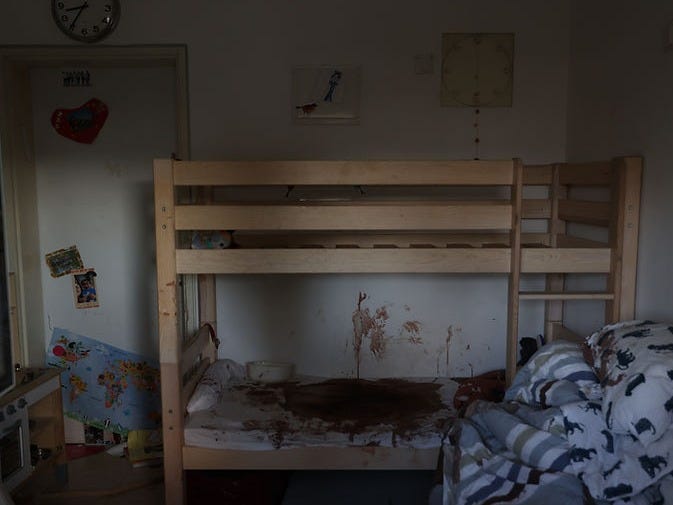
The aftermath of October 7th did not create Jewish distrust; it vindicated it. It made old warnings feel contemporary again. It gave ancient instincts a modern evidence file. The relationship has changed because Jews have seen the gap between much of the West’s self-image and its moral reflexes.
It knows how to condemn antisemitism when the antisemites wear jackboots in black-and-white photographs. It is far less competent when they wear lanyards, quote Foucault, speak the language of “liberation,” and demand the liquidation of a Jewish state in the grammar of “social justice.”
This is the modern scandal. Antisemitism did not return from the grave. It graduated. It entered universities. It acquired footnotes. It learned the language of human rights. It discovered that if it called Jewish sovereignty “settler colonialism,” many so-called educated people would applaud.
The massacre revealed Hamas. The aftermath revealed everyone else.
Hamas showed the world what it is: a death cult with video cameras, an army of sadists sanctifying barbarism with scripture and grievance.
Yet it also showed Jews who needed convincing that massacring Jews is wrong. It showed them who could look at the worst day for Jews since the Holocaust and immediately ask what the Jews had done to deserve it; who regarded Jewish self-defence as more offensive than Jewish death; who had learned nothing from history except how to use Jewish corpses as props in speeches about tolerance.
That knowledge cannot be unlearned.
A line has been crossed inside Jewish consciousness. Jews will still work with others. They will still build, trade, study, argue, create, vote, serve, and contribute. Jewish life does not end because the world disappoints us. But something has hardened. The sentimental contract has been broken. The belief that liberal societies automatically protect Jews has been severely damaged. The belief that Israel can depend on rightful global sympathy in moments of existential danger has become absurd.
The new Jewish realism is simple. We still have murderous enemies and require power to stop them. That word — power — still unsettles many people because they prefer Jews as conscience, not as actors; as victims, not as soldiers; as symbols, not as a sovereign nation capable of imposing consequences on those who murder its children.
October 7th made the necessity of Jewish power undeniable. The pogrom did not happen because Israel is too strong. It happened because Israel’s enemies believed, for one catastrophic morning, that Israel was weak enough. They produced an armed enclave ruled by genocidal fanatics who turned aid into tunnels, schools into launchpads, hospitals into shields and civilians into strategic instruments.
Much of the world’s response after October 7th confirmed the point. Had Israel been weaker, Jews would not have received more sympathy. They would have received more memorials. That is the hard lesson. Our world loves the Jew who can no longer defend himself. Israel is full of Jews who can.
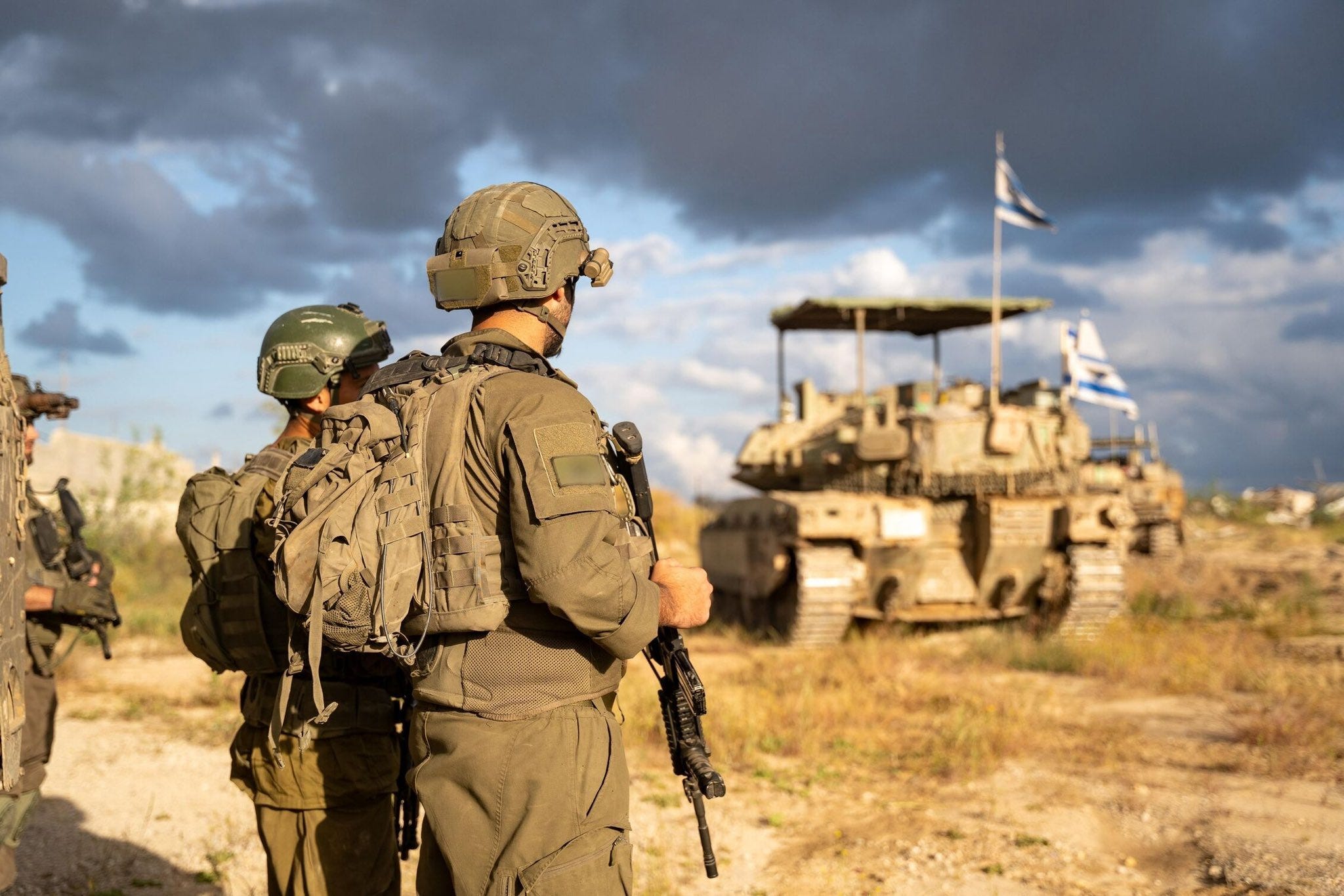
This has changed the Jewish relationship with diaspora politics too.
Many Jews outside Israel now understand that their safety is connected to Israel’s strength in ways polite societies prefer not to admit. When Israel is demonised, Jews abroad are threatened. When Israel is accused of monstrous crimes, Jews in London, Paris, New York, and Sydney are made to answer for them. When mobs chant against Zionists, everyone knows which schools need guards, which synagogues need police, and which children are told not to wear visible symbols in public.
Then they insist that none of this has anything to do with Jews, but October 7th made this distinction harder to sustain.
When Jews celebrating Chanukah on an Australian beach are hunted, when Jewish students are harassed because Palestinians attacked Israel, when synagogues are vandalised because Israel fights back, when Jewish restaurants are targeted because of a war thousands of miles away, and when Jewish children are told to hide their identity because the street has become unsafe, the fiction collapses.
The world may still pretend. Jews cannot afford to — and that is perhaps the deepest change.
The Jewish relationship with the world has become less sentimental, less trusting, and less susceptible to flattery. Jews have heard the applause at diversity festivals and seen the silence after slaughter. We know the difference now. October 7th did not make Jews abandon the world. It made us see it more clearly.
It burned away illusion. It revealed how conditional acceptance can be. It exposed the fragility of liberal pieties, the cowardice of institutions, the vanity of intellectuals, and the moral deformity of movements that can look upon a massacre and call it resistance.
And yet, October 7th also clarified Jewish strength. Jews are not merely traumatised by what happened. We are instructed by it. We know more now. We know who spoke, who hid, who celebrated, and who explained. We know who waited to see which opinion would become fashionable. That knowledge is painful, but also useful.
The post-October 7th Jewish relationship with the world will be colder, sharper, and more sober. There will be greater insistence that Jewish life is not conditional on others’ comfort. The world wanted the Jews to learn the approved lesson of history: Be moral, be wounded, be useful, be grateful, be quiet.
But October 7th taught us a different lesson: Be vigilant, lucid, and loyal to our people.
This article is very well written, and right on the money. I would only add one thing. October 7th also revealed that the Jews have some real friends in the world, and I am one of them.
Nachum, you forgot one word. That word is "nuanced." It seems to be the favorite word coming out of the mouths of the Jews of New York (specifically) and the Jews here in the U.S. (generally) who are trying to explain away their votes for radical Jew-hating politicians (Mamdani in NYC comes to mind) and their barely disguised disgust for Israel. They remind me of the "arrogant child" at the Passover Seder table. They will not be included in the community of fellow Jews if they don't turn it around. And one final thought. Jews with guns! Oh, my! Practice, practice, practice.