


Please consider supporting our mission to help everyone better understand and become smarter about the Jewish world. A gift of any amount helps keep our platform free of advertising and accessible to all.
This is a guest essay by Alan Mairson, a journalist and former staff writer and editor at National Geographic magazine.
I keep having conversations like this one, which is driving me a bit crazy:
Someone: “Why is Israel killing innocent people in Gaza, Lebanon, and Iran? Netanyahu and the Jews have lost their mind. I refuse to sit silently during this genocide!”
Me: “First, words have defined meanings, and this is a war, not a “genocide.” Second, “the Jews” don’t have one, singular mind. (You should spend more time with us!) And third, are you familiar with the goals of Hamas in Gaza, Hezbollah in Lebanon, and the mullahs in Tehran? Have you read their speeches, their charters, their manifestos? Do you know that those maniacal Islamists want to wipe Israel off the map, and all the Jews, too?”
Someone: “Oh, for Christ’s sake, stop playing the victim! You Jews are not the only people who have suffered. And sure, Iran has its extremists, but so does Israel! Netanyahu, Ben-Gvir, and Smotrich — they’re no better than the mullahs and their proxies. There are crazy people on both sides!”
I am not a psychiatrist nor have I read DSM-5, so I’m not qualified to determine who is crazy and who is not.
But I do want to make the case that Jewish extremists and Islamic extremists differ in at least one significant way: their geographic ambitions.
How much land, exactly, do they want to call their own?
Consider the most extreme view of Israel’s religious Right, like politicians Itamar Ben-Gvir and Bezalel Smotrich, whose worldview, political program, and deed to the Holy Land emerge from Scripture.
For example, Genesis 15 says:
“On that day G-d made a covenant with Abram: ‘To your offspring I assign this land, from the river of Egypt to the great river, the river Euphrates…”
What exactly is the “river of Egypt”? What section of “the river Euphrates” is G-d talking about?
The details are provided in Numbers 34, which, when mapped, look something like this:
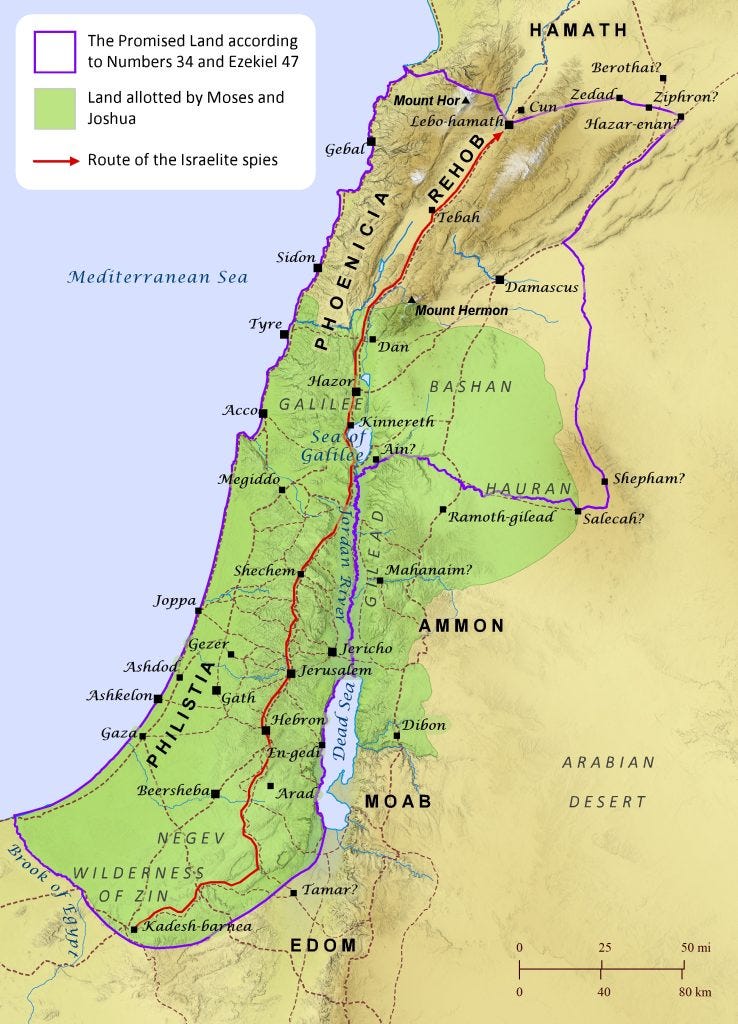
Do a handful of religious Zionists believe G-d promised them a chunk of land roughly four times bigger?
Yes. Let’s call them the maximalists.
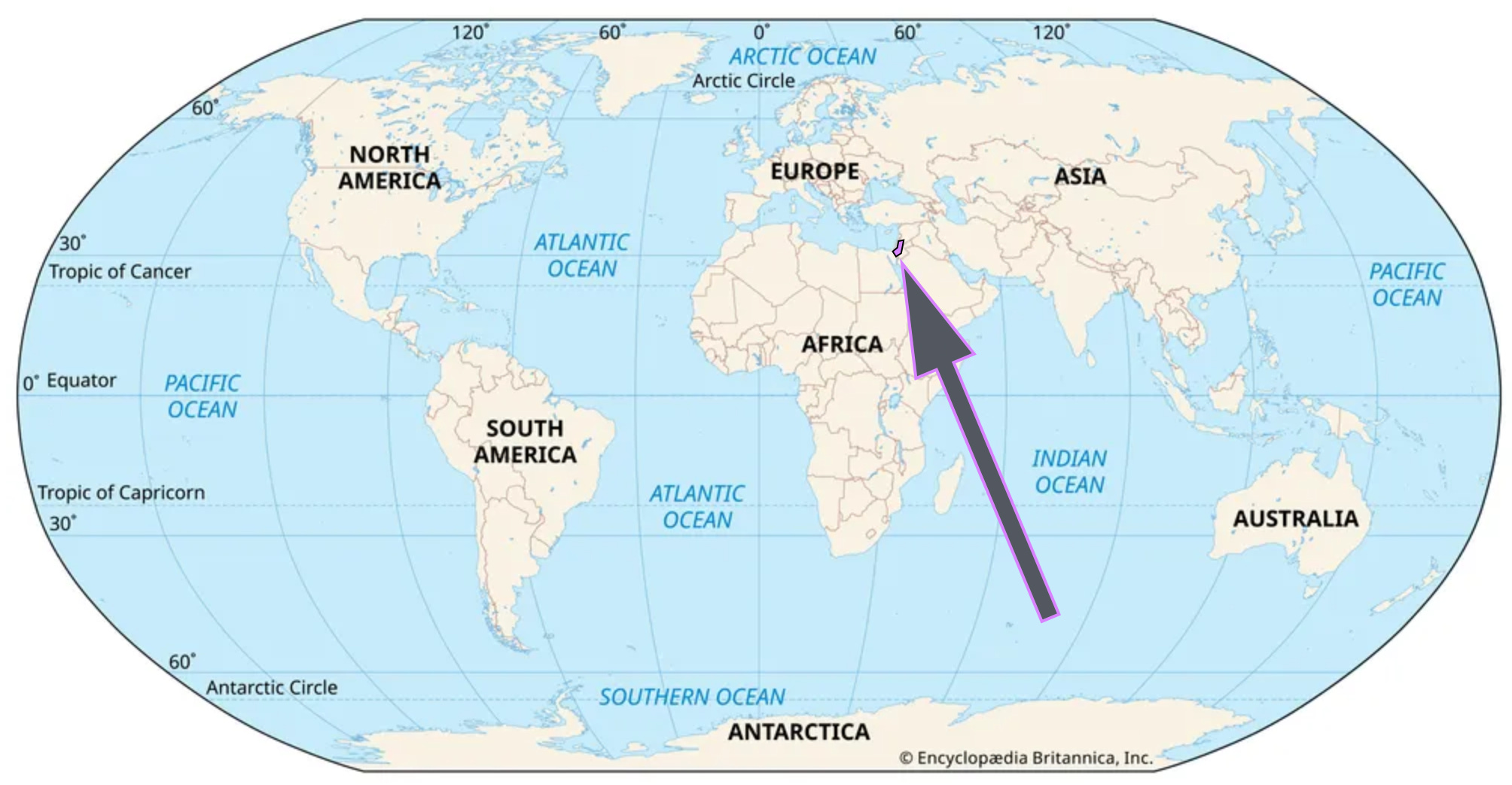
Whether your Biblical vision of “the Promised Land” is minimalist, the tiny sliver of land shaded in lavender is your inheritance, sayeth the Lord in Numbers 34:
The larger chunk of land shaded in red is your inheritance if you read Genesis 15 too casually, and then stop reading, which I strongly advise against, sayeth the Lord.
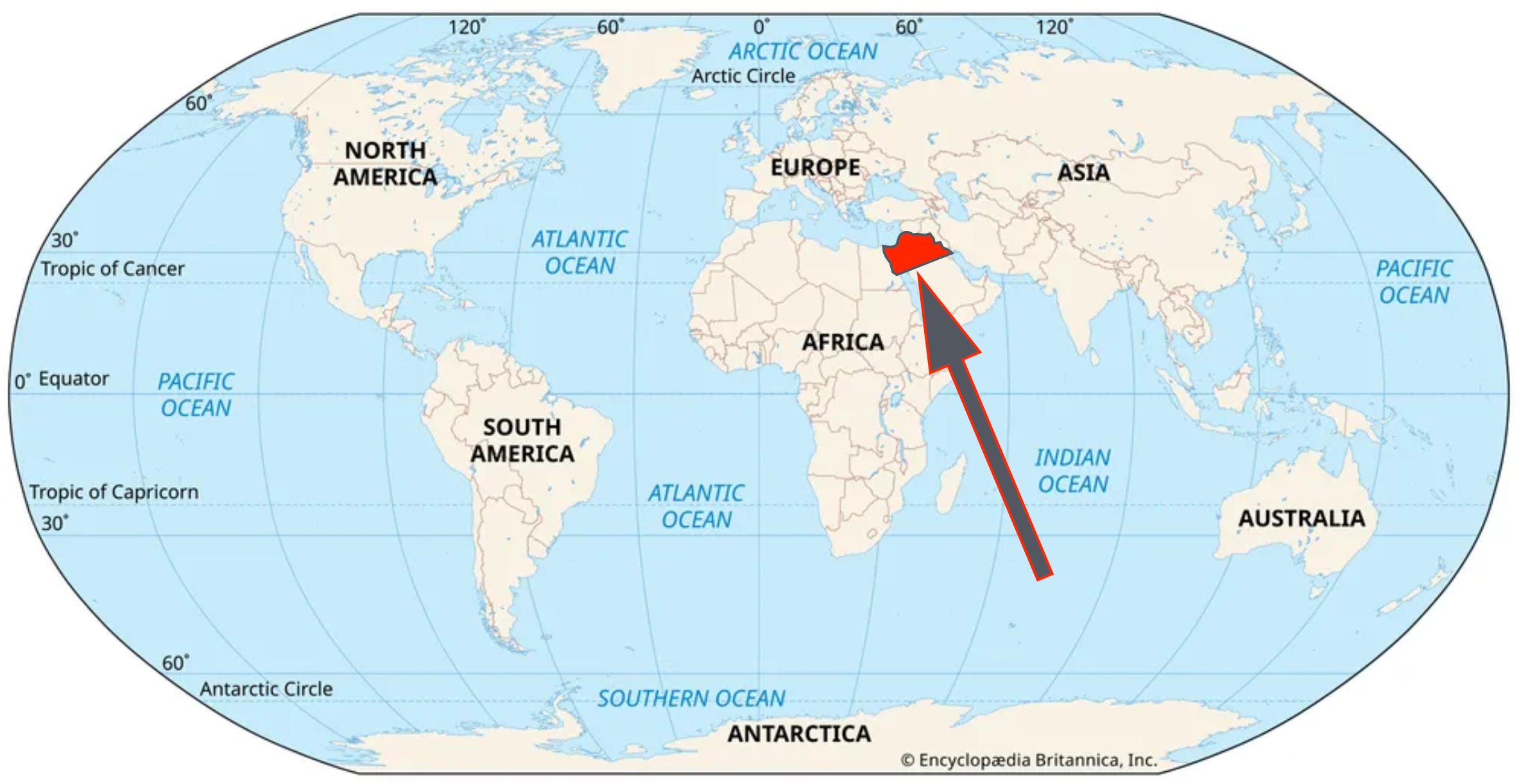
My point remains the same: According to Biblical literalists, G-d has established hard limits — a border, a perimeter, a fence — around how much land the Jews can claim as part of their Covenant.
Put another way: Jews have a dream of living peacefully in their ancestral homeland, but we do not have any imperial ambitions or fantasies about an ever-expanding Jewish empire. As the prophet Micah said:
“But every family shall sit under its own vine and fig tree with no one to disturb them. For it was G-d of Hosts who spoke.”
“Though all the peoples walk each in the names of its gods, we will walk in the name of the Eternal our G-d forever and ever.”
The scribes and prophets of Jerusalem envisioned a day when every member of the family of nations had a home of their own, a day when “all the peoples walk, each in the names of its gods.”
Judaism, wrote Rabbi Jonathan Sacks, embraces “the dignity of difference.” The G-d of Sinai doesn’t expect Jews to eventually become Christians, or Christians to become Muslims, or everyone to convert to Hinduism. Because if G-d wanted us all to speak the same language, to think the same thoughts, and to recite the same prayers, then the Bible’s final scene would be the triumphant rise of the Tower of Babel.
On the other hand, Islam is a missionary faith because its foundational texts instruct all believers to spread the truth (da’wah in Arabic). This global outlook originates from the Koranic mandate that the Prophet Muhammad’s message is ultimately for everyone, everywhere.
Sometimes, Muslims have spread Muhammad’s revelation peacefully. At other times, they have wielded both the literal and metaphoric sword. Either way, the Koran’s centrifugal force continues to push Muslims ever outward from Islam’s birthplace on the Arabian Peninsula. The ultimate goal of the extremists: a global caliphate.
So, how is that project progressing?
Today, 1,400 years after Muhammad and his followers galloped out of Mecca and Medina to convert the infidels, the Islamic world looks like this:
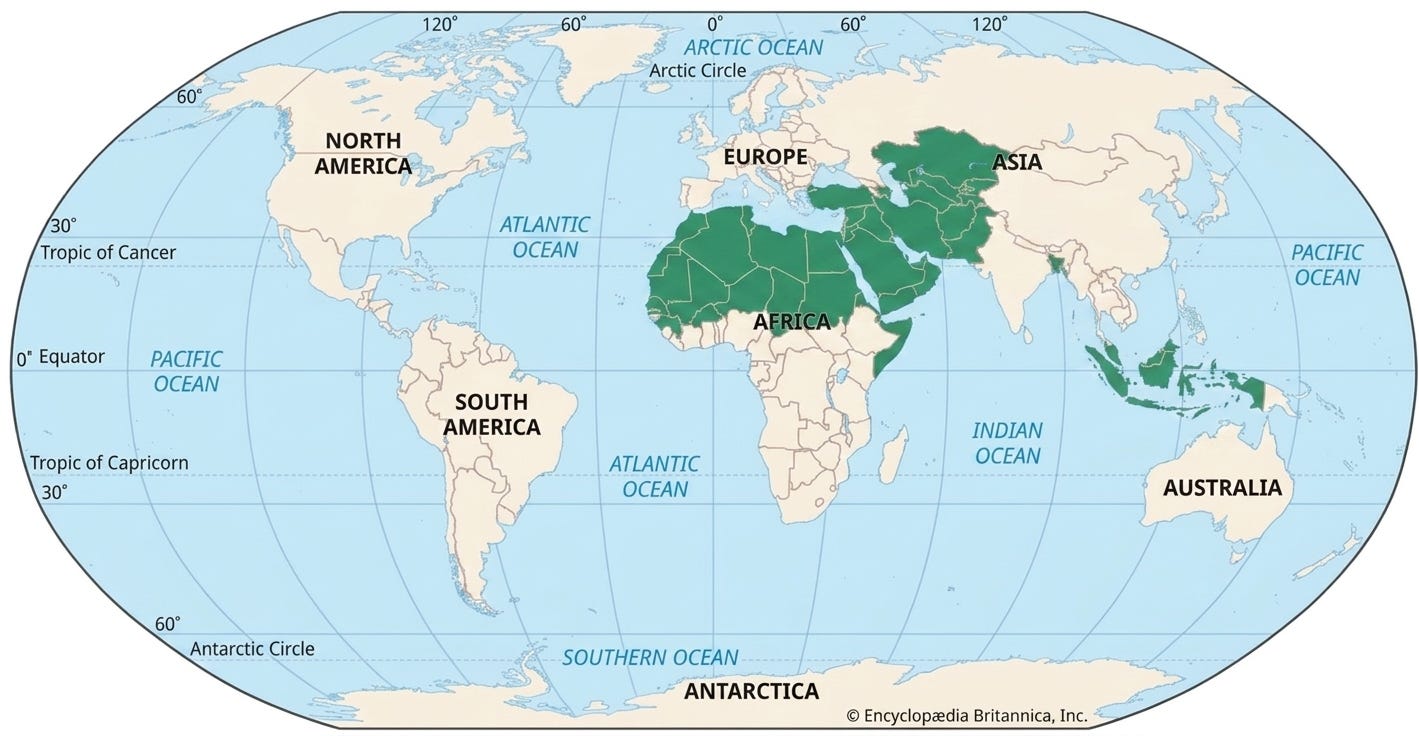
If you’re a faithful Muslim, you might call the green areas “The Promised Lands Thus Far, per Muhammad.”
The long-range vision of Islamic extremists looks more like this:
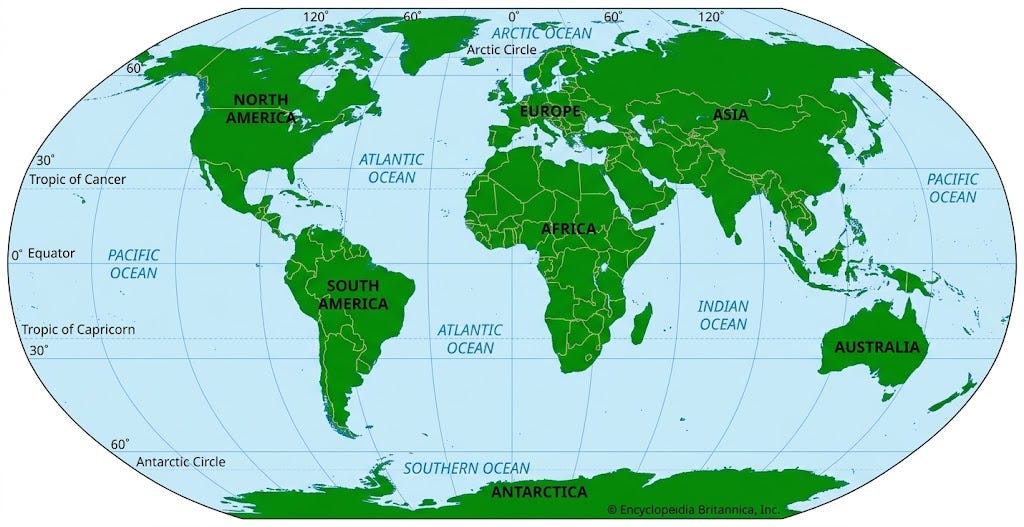
Islam’s ultimate “Promised Land” has no borders, no fences, and no fixed perimeter — and today’s nation-state of Israel is a splinter in the eye of Muslims who want to Make Islam Great Again.
To regain their former glory and to see themselves and the world clearly again, Islamists must remove that Jewish splinter, no matter its size. Because as long as Israel and the Jews remain sovereign on land once controlled by Muslims, Muhammad’s vision, his philosophy of history, and his theory of change all might appear to be a tragic mistake.
From 537 to 1453 CE, the Hagia Sophia was Constantinople’s main cathedral. Today, it is Istanbul’s central mosque. On May 29, 1453, Muslim forces (led by Ottoman Sultan Mehmed II) conquered Constantinople. Within days, the Hagia Sophia, a cathedral built by Byzantine emperor Justinian I in the 6th century, was immediately stripped of Christian iconography and converted into a mosque.
In 1935, following World War I and the dissolution of the Ottoman Empire, Mustafa Kemal Atatürk (the founder of the modern Turkish Republic) turned Hagia Sophia into a museum. His message: The Islamic caliphate is dead. Turkey is now a secular nation.
In 2020, Turkish President Recep Tayyip Erdoğan officially ordered the conversion of the Hagia Sophia back into a mosque. The first official Muslim prayers were subsequently held in the building on July 24, 2020. Erdoğan’s message: After an 85-year hiatus, the Ottoman Turks are back in the game, and so is Islam.

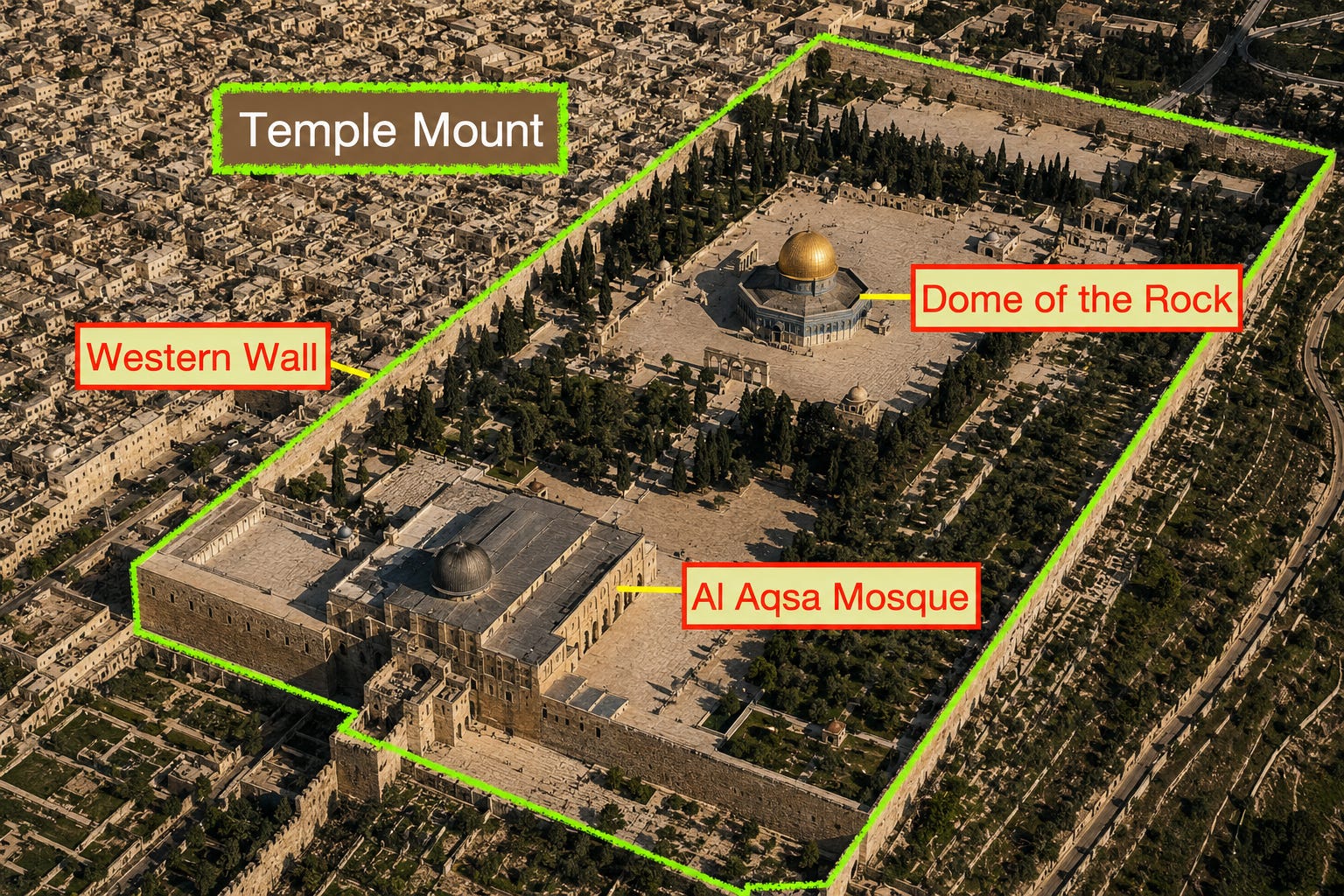
Compare that sequence (from cathedral to mosque to museum to mosque) to this timeline for Jerusalem’s Temple Mount:
In 70 CE, Roman legions besieged Jerusalem, burned the city, and destroyed the Second Temple.
In 691 CE, the Umayyad Caliphate, which had conquered Jerusalem, constructed the Dome of the Rock over the historic site of the First and Second Jewish Temples.
In 715 CE, Al-Aqsa Mosque was completed on the southern end of the Temple Mount compound.
Fast forward more than 1,200 years — in June 1967, during the Six-Day War, Israeli paratroopers captured the Old City of Jerusalem and the Temple Mount from Jordanian occupation, bringing the entire city under Jewish control for the first time in almost 2,000 years.
Shortly after capturing the Temple Mount, Israeli Defense Minister Moshe Dayan made several pivotal decisions to establish what became known as the status quo.
Dayan transferred the daily administration and management of the site back to the Jordanian Islamic Waqf (the religious trust). To avoid religious friction and maintain the peace after the war, Dayan barred Jewish prayer on the Temple Mount itself. Jews were permitted to visit the mount as tourists, but Jewish prayer was restricted solely to the Western Wall. When Israeli troops initially raised the Israeli flag over the Dome of the Rock, Dayan ordered it to be taken down within hours.
This status quo is still intact, more or less. The Dome of the Rock and Al-Aqsa Mosque are still standing. Muslims can still pray there. And no Israeli flag flies above the site.
In other words, the maximalist visions of Israel’s Far-Right theocrats are still marginal at best. Very few Israelis dream about a “Greater Israel” with a Third Temple built where the Dome of the Rock now stands. And instead of turning Al-Aqsa Mosque into a synagogue, say, or a social hall, Israel has left the entire site alone.
Yes, Itamar Ben-Gvir and Bezalel Smotrich are part of Prime Minister Benjamin Netanyahu’s governing coalition, but they do not have their hands on the reins of national power. Meanwhile, in the Islamic Republic of Iran, theocratic Islamists have been fully in charge since they deposed the Shah almost 50 years ago.
Today, the Iranian regime is still on the same mission to Islamize the world (and acquire nuclear weapons). Their first order of business is to eliminate Israel, which they officially refer to as “the Little Satan.” Then, perhaps, it might make sense to reconquer the Iberian Peninsula, which was part of the Caliphate from 711 to 1492. And one day, Allah willing, “the Great Satan” — the United States — will be destroyed, too.
The point is that the Iranian regime’s Islamic extremists have global ambitions. Israel’s Jewish extremists want to live on a sliver of land in the eastern Mediterranean. Islamic extremists are universalists who are coming soon to a city near you. Jewish extremists are particularists who have no interest in pestering 99.8 percent of the world’s population.
So, the next time someone claims: “Iran has its extremists, but so does Israel! Netanyahu, Ben-Gvir, and Smotrich are no better than the mullahs and their proxies. There are crazy people on both sides!” — they should know: All religious fanatics are not created equal.

I am all in on this article and thank you for it. You might want to review for accuracy in the citation from Micah. You left an H in the middle of the word sit!;)
This is a brilliant article, and Baruch HaShem, more and more “liberal” Jews are waking up to the realization that making these kinds of “equivalencies” is a fool’s game, and very naive and uninformed.
I’m grateful that I’m becoming more and more informed over the last year and a half or so.