


Please consider supporting our mission to help everyone better understand and become smarter about the Jewish world. A gift of any amount helps keep our platform free of advertising and accessible to all.
This is a guest essay by Guy Goldstein, the grandson of Holocaust survivors.
You can also listen to the podcast version of this essay on Apple Podcasts, YouTube Music, YouTube, and Spotify.
Israelis go to the polls on October 27th.
The Knesset (Israeli parliament) dissolved this month after becoming the first parliament since 1988 to serve out its full term, and the campaign now beginning will decide who governs a country that has fought on seven fronts, buried its dead, and split itself down the middle over how both of those things happened.
Jews around the world are watching, and a great many of them have started to believe something dangerous: The result will change how the world treats them.
The fantasy comes in two versions. One says that when Israeli Prime Minister Benjamin Netanyahu finally leaves, the world will exhale, the protests will thin, the encampments will fold their tents, and the word “genocide” will quietly retire from polite conversation, because the man on the placards is gone.
The other version says that a decisive victory for the Israeli Right will prove the critics irrelevant, that their deafness to the world’s jeers has been vindicated.
Both versions rest on the same assumption: that the world’s treatment of Israel, and of the Jews who answer for Israel at dinner parties and school gates from Sydney to Toronto, is a response to who sits in the prime minister’s chair, or something that Israel has done.
History has run this test and published the results. The United Nations voted that Zionism is racism in November 1975, when the prime minister of Israel was Yitzhak Rabin, the leftist secular general the world would later canonize as its favorite Israeli.
Shimon Peres took office as the anointed man of the New Middle East, a Nobel Peace Prize on his shelf and the affection of every foreign ministry on earth, and within six months the same press corps that adored him at Davos was calling Qana a massacre and his government its author.
The world’s tone toward Israel does not track its prime minister. The leader is a mask the world nails onto the state, and when the mask changes, the nails stay.
The upcoming election in Israel will change none of that. What it can change is the evidence file the world keeps on Israel, and the next 90 days will decide how much that file grows.
An Israeli election stopped being a domestic event some years ago, and this one will be the least domestic ever held. Every speech is subtitled within hours. Every attack ad is clipped, translated, and rehosted by social media accounts whose followers will never vote in Israel and never stop talking about it.
Campaign professionals in Tel Aviv will write messages for a voter in Rishon LeZion, and those messages will be consumed, in far greater volume, by a graduate student in London, an activist in Brooklyn, and a diplomat in Brussels. There is no internal discourse anymore. Everything said for the room is heard by the world, and all of it is admissible.
The discourse in Hebrew is not safe either; in fact, it may be even more dangerous since translation presents an opportunity for Israel’s enemies. A sentence spoken in Hebrew inside Israel carries an invisible cargo of shared premises.
When a bereaved father stands outside the Knesset and says the government abandoned his son, every Israeli listening supplies the rest of the sentence without being asked: Hamas took him, Hamas starved him, Hamas is the enemy, and the government failed to stop the enemy. The accusation lives inside a consensus so total it never needs stating. Move that sentence into English and the cargo does not travel. What arrives in London is four words: Netanyahu abandoned the hostages, Bibi is to blame.
Just imagine for a moment what is about to be said, by Israelis, about Israelis, on the record, in the most documented election in the country’s history.
The Left will argue that October 7th happened because Netanyahu propped Hamas up for a decade, waved the Qatari cash through, ignored the warnings, and tore the country apart over judicial reform until the enemy saw its opening.
The Right will argue that October 7th happened because the security establishment, including the generals and intelligence chiefs now running for office, clung to the conception that the doctrine that Hamas was deterred and could be managed, dismissed the young soldiers watching the border, and left it naked.
Both arguments will be made with evidence, with fury, and with cameras rolling. Neither camp will notice that together they have produced the sentence the anti-Israel movement has spent three years trying to manufacture: October 7th happened because of Israel.
Three years of funded, coordinated effort never quite closed that sale. The movement made Israel’s conduct of the war notorious across the West, and the polling shows it. The narrower project failed: Re-authoring October 7th itself, turning the massacre into resistance or provocation or an inside job, never escaped the fringe, because its only sources were the perpetrators and the people paid to excuse them.
A claim needs a credible author, and the movement had none.
The Israeli election is about to hand it the solution as a gift. A hostile outlet fabricates nothing when a former chief of staff or a sitting minister says it into a microphone. It adds subtitles — and subtitles cost nothing.
The second gift is already wrapped. Each camp will accuse the other of coordinating with the White House or conspiring against it, sometimes to the Biden Administration, sometimes to that of current U.S. President Donald Trump. Some of it may even be true, which makes it worse. Every such accusation, once translated, becomes a citation for the oldest libel still in circulation: that Jewish money and Israeli operatives manipulate American politics. The charge will be aimed at a rival party and will land on every Jew in America.
A third gift converts the war itself. The Left’s closing argument writes itself: Netanyahu prolonged the fighting to hold his coalition and postpone his reckoning, and every additional month, every casualty, every hostage funeral, was a campaign expense.
The Right’s answer writes itself too: The Left and its generals wanted to fold early because they never believed the war could be won, and stood ready to trade victory for quiet. Israelis will hear two rival theories of their own politics, while the world hears one confession, jointly signed: The war was never really about defense. Either it was a racket or it was a fraud, and the clips quoting each half will not include the rebuttal.
None of this argues against accountability. A state commission of inquiry should sit, and its findings should burn whoever they burn. Courtrooms exist. So does the ballot itself, which is the accountability mechanism this entire exercise is supposedly about.
The difference between a commission and a campaign is the difference between the charges. A commission asks who failed to prevent the massacre. A campaign, chasing mandates, drifts toward the charge with voltage in it: who caused the massacre. Failure to prevent and responsibility for authorship are different accusations in any language. The campaign will blur them in Hebrew, for advantage, for a season; the translation will merge them in English, for good.
The world’s hostility toward Israel is a constant; the arsenal that hostility fights with is a variable. Replacing Netanyahu will not soften the coverage, and re-electing him will not harden Israel against it, because the coverage was never about him.
What the next 90 days will decide is how much ammunition the constant gets to work with, and the only people who can supply it are the candidates, their surrogates, and the millions of supporters, inside Israel and out, who will repeat whatever their camp hands them. Whoever wins will govern for a term, and what was said to win will be quoted for a generation.
The war itself will not pause for the campaign. Hamas is not waiting for a coalition to form before deciding what to attempt next, and the Iranian regime will spend these 90 days doing what it has done after every defeat in its history: rebuilding, and reading. A campaign fought in public by a country at war is an intelligence product, delivered daily, free of charge.
When a candidate declares a front unwinnable to score a point, someone in Beirut files it. When a general-turned-politician reveals what the cabinet almost decided, someone in Iran adjusts.
You can bet that the global anti-Zionist movement, which has spent three years working as a selection layer over exactly this kind of feed, will be paying more attention than any Israeli voter. It watches everything Israelis say in public, picks the line that damages most, cuts the premise or context away, and routes the clip to the audience that can spend it, the encampment, the student senate, the rapporteur’s report, the morning show.
The selection is fast, the routing is practiced, and the campaign is about to multiply its raw material a hundredfold. No candidate needs to lose the election for the movement to win it.
Waiting for each clip are teams of prepositioned enemies ready to rush to the presses. The Palestinian diplomatic apparatus will enter every Israeli self-indictment into the record, at the United Nations, in the courts, in the recognition drives now moving through Western parliaments, and those drives will footnote an Israeli general more eagerly than they ever footnoted anything Hamas said.
Further back still sit the states for whom Israel is not even the point. Moscow, Beijing, Doha, and their imitators spent the last decade learning that the fastest way to weaken a Western society is to feed both sides of its bitterest argument, and few arguments in the West are bitterer right now than this one. An Israeli campaign tearing at itself in public hands them clippable content for tearing at everyone else, in Hebrew, with subtitles they will happily add themselves.
Friends are listening too, and friends make policy. A European government deciding whether to resist its arms embargo lobby, a Gulf court weighing whether normalization still pays, will not distinguish between what Israelis said because it was true and what they said because it might move a mandate in some random Israeli city. Statements made to win become the record, and the record becomes the policy.
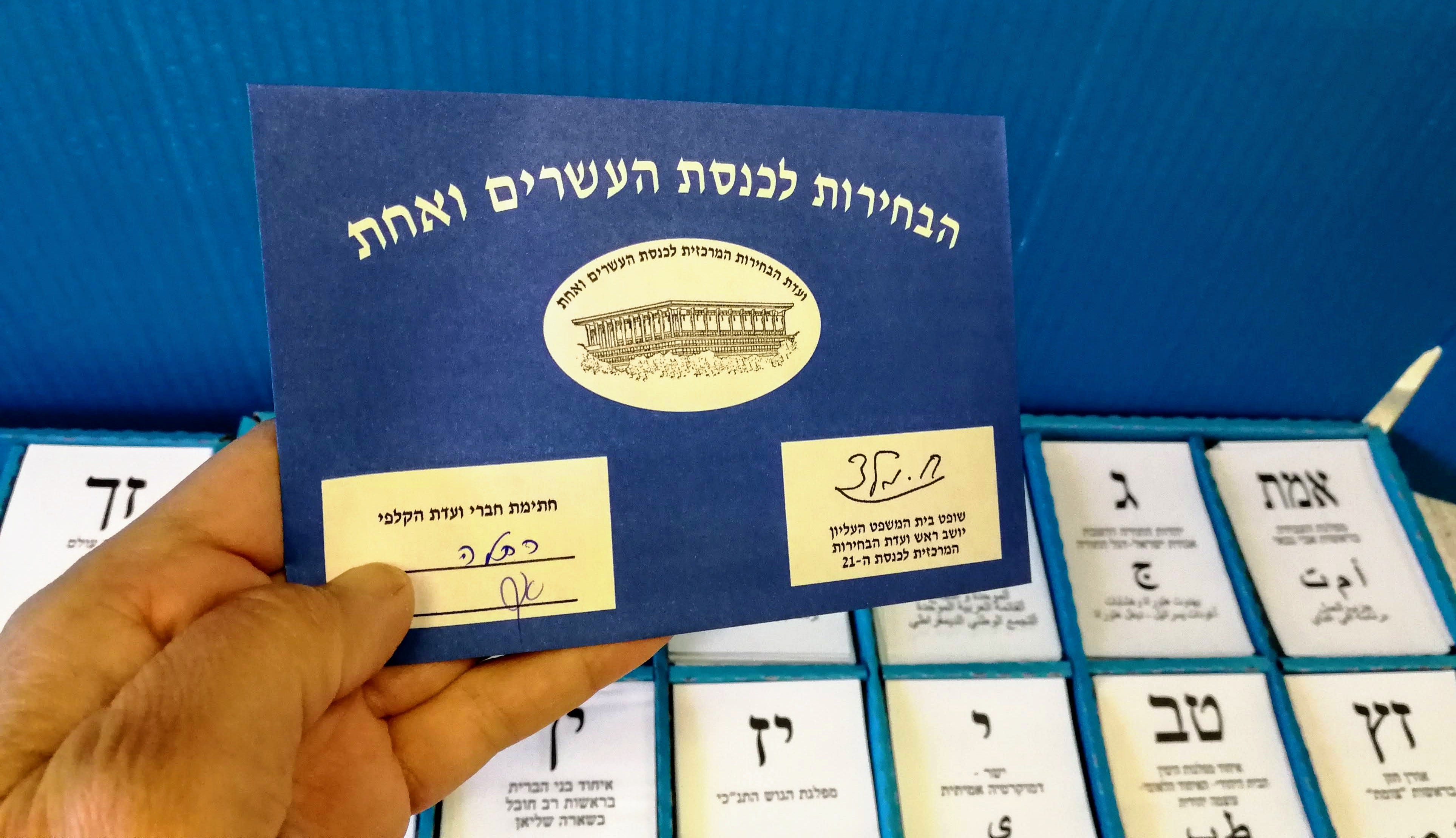
Then there is the partner. America holds its midterm elections on November 3rd, one week after Israelis vote. The two campaigns will run in parallel, climax within seven days of each other, and feed off each other the entire way.
Every Israeli statement about the war, the partnership, the restraint Washington demanded and what that restraint cost, will be harvested by American candidates and spent in American races, by both parties, for opposite purposes.
Israelis will not be influencing the American election, whatever the accusation mills produce; American politicians will be strip-mining the Israeli one. The relationship that emerges on the far side of both votes will be built, in part, out of what Israelis said to each other in October.
All of which makes these the most important elections in the history of the state, and nearly everyone who says that sentence over the next 90 days will mean it wrong. They will mean that survival is on the ballot, that the country’s Jewish character is on the ballot, that its democracy is on the ballot.
None of that is on the ballot.
Israel will endure whoever wins, will remain Jewish whoever wins, will remain a democracy whoever wins, because 78 years of evidence say the country is sturdier than its politicians — and always has been.
What is on the ballot is the war. How this campaign is fought will decide whether the government that finishes it (whichever government that is) inherits a war its public still believes in or a war the campaign retroactively poisoned.
A second round against the Iranian regime, if one is needed, requires two things no strike package contains: an Israeli public convinced the first round was just, and an American administration able to defend it. A campaign that spends three months calling the war a racket or a fraud burns both, and the regime that survived this round gets the decade it needs to become the rival power of the region.
The same 90 days will decide what Israel’s relations with the world are rebuilt from, and what fuel is delivered to the propaganda campaigns already under construction.
Diaspora Jews will not be spectators in this. The op-eds are half-drafted already in New York and London, the WhatsApp groups already sorting themselves into camps. A Jewish columnist in Manhattan who calls Israel’s government a catastrophe for world Jewry believes he or she is participating in Israeli democracy. In reality, they are producing English-language source material, pre-cleared as kosher by its own byline, for the people who will quote it back at their children on campus.
Everyone will demand responsibility from the politicians over these three months, and they should. The politicians are the least of it. The advocate with 200,000 followers choosing tonight’s framing, the legacy Jewish organization drafting its statement of concern, the donor funding the attack ad, the influencer explaining Israeli politics to an audience that votes in Pennsylvania — each of them is about to make the same choice the candidates make, with less scrutiny and the same consequences.
The test before every one of them, before every person who claims to want the best for Israel, is short: Will the hyperbole each one of us is loading do more for our side of the argument than it does for the people constructing the case against the state?
Answer it before you publish, every time, for 90 days. The future of Israel is truly in your hands.
In June 2025, right before the first war with Iran broke out, I was urged by my cousin to join her at what was then called Hostage Square, on Kaplan St. i went against my better judgement.
I heard speaker after speaker decry Bibi this and Bibi that. A Martian landing there would’ve wondered who this Bibi was who was holding all these hostages.
The single word I didn’t hear? You guessed it: HAMAS. I was there for an hour. Not one mention of Hamas.
Here is a story that exemplifies my earlier comment above. Morality not based on Torah is ill-conceived, dangerous and self-destructive. This is an Israeli problem since before the State was formed.
https://vinnews.com/2026/07/30/mk-fumes-after-list-of-teachers-supporting-terror-thrown-into-trash-by-shin-bet/