


Please consider supporting our mission to help everyone better understand and become smarter about the Jewish world. A gift of any amount helps keep our platform free of advertising and accessible to all.
You can also listen to the podcast version of this essay on Apple Podcasts, YouTube Music, YouTube, and Spotify.
One day, October 7th will become a history lesson.
That sentence is difficult for me to accept because October 7th still does not feel like history. It feels too close, too vivid, too unresolved. I can still remember the first siren just before 7 a.m. that Simchat Torah morning, the first headlines, the first images, the first messages, the first realization that something had happened in Israel that would divide time into a before and an after.
I can still remember the disbelief of that morning and the strange, sickening feeling of watching events unfold faster than the mind could process them. October 7th still feels less like a date in the past than a place many Jews are still standing inside.
But time is ruthless. It turns everything into history eventually, and there will come a day when a Jewish child hears the words “October 7th” and feels none of the physical reaction that many of us feel now. There will be no memory attached to the date, no recollection of waking up to notifications, no frantic calls to family and friends, no hours spent refreshing the news, no names that once appeared on hostage posters taped to walls and lamp posts.
For that child, October 7th will arrive through a teacher, a textbook, a documentary, a museum exhibition, or a story told by a parent who pauses for a little too long before continuing.
That child may look at photographs we immediately recognize and have to ask who the people are, and that may be one of the most frightening parts of all. Today, we still know the faces. We know the kibbutzim. We know Nova. We know the photographs of people who were alive only hours before becoming part of Jewish history. We recognize the families, the soldiers, the survivors, the hostages. We remember which stories broke us when we first heard them.
But eventually recognition fades. A photograph that once caused an entire country to stop breathing becomes an image beneath a caption, and a name that once appeared everywhere becomes a name on a memorial wall.
We already know this happens because it has happened before. There are photographs from the Holocaust that once depicted people whose faces were instantly recognizable to everyone who loved them. They had parents, children, nicknames, favorite foods, inside jokes, arguments, ambitions, and plans for the following week.
Today, many of those photographs are anonymous to us. We look at them and see “victims of the Holocaust” where someone once saw a brother, a teacher, a neighbor, or a best friend. History has a terrible way of turning individuals back into categories, and that is precisely what we must resist with October 7th.
Jews are exceptionally good at preserving dates of catastrophe. We have built a civilization around the idea that memory is a responsibility. We remember the destruction of Jerusalem thousands of years later, retell the Exodus every year as though we personally left Egypt, recite Yizkor for people whose voices we can no longer hear, and place stones on graves because memory in Judaism is meant to be tangible.
The deeper danger is that October 7th becomes flattened into a paragraph, a statistic, or a neat sentence saying that terrorists crossed into southern Israel, massacred civilians, attacked communities and a music festival, and abducted more than 250 people to Gaza. All of that would be true, and all of it would still be insufficient.
The truth of October 7th was not only what happened. It was how suddenly an ordinary morning became unimaginable. It was people waking up in homes where they had slept thousands of times before and discovering that the assumptions underpinning their lives had vanished overnight. It was parents trying to keep children silent in safe rooms, young people who had spent the night dancing suddenly running through fields, and families losing contact with people they loved without knowing whether they were alive, dead, wounded, or taken.
A textbook can explain the sequence of events, but it cannot reproduce the feeling of living through a moment when normal life disappears.
That creates an obligation for those of us who remember. Our job is not merely to tell future generations that October 7th happened; our job is to make sure they understand what it meant.
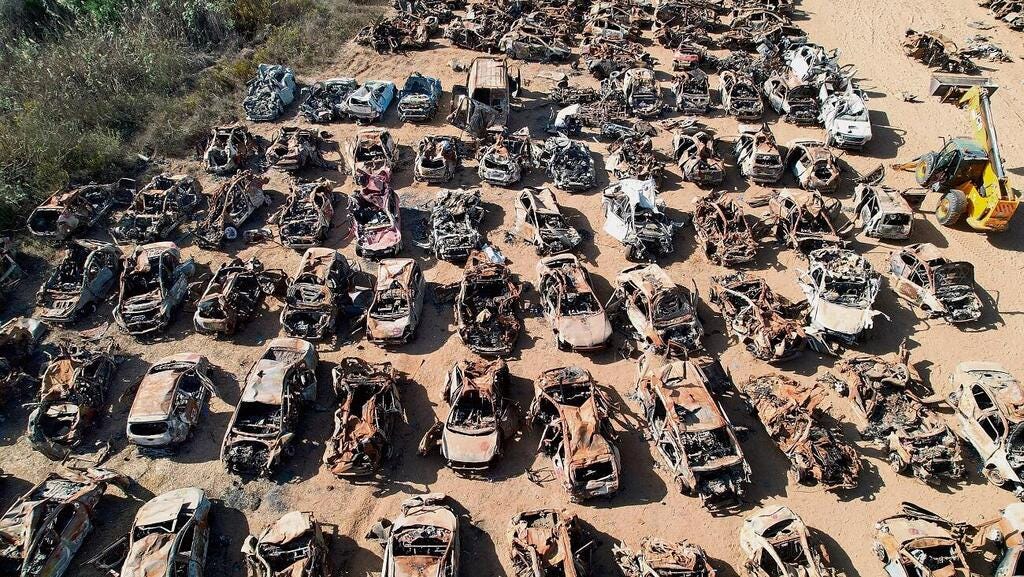
They should know that the people murdered were not symbols. They were people living ordinary lives. They should know what Be’eri looked like before the world knew its name. They should know that Nova was not born as a memorial site but as a place where young Israelis went to dance. They should know that the photographs we now associate with horror were taken in places that were once kitchens, bedrooms, gardens, playgrounds, and roads people drove every day without thinking about them.
They should also understand what October 7th revealed about Israel and the Jewish People. For many Jews, especially those of my generation, Jewish catastrophe had begun to feel historical rather than immediate. The Holocaust was the defining trauma of our grandparents and great-grandparents. The Yom Kippur War belonged to an older Israel. The Second Intifada was remembered vividly by some and inherited by others. Jewish history was filled with massacres, expulsions, wars, and pogroms, but those events seemed to belong behind us.
October 7th destroyed that illusion and reminded us that Jewish history is not finished simply because we happen to be alive now.
It also reminded us why Israel exists. Future generations must understand that October 7th happened in a sovereign Jewish state with an army, borders, intelligence services, technology, and decades of experience defending itself. That fact does not make the case for Israel weaker; it makes it more urgent.
October 7th demonstrated that even Jewish sovereignty cannot eliminate danger. What sovereignty changes is what Jews are able to do afterward. Israel could mobilize, fight, rescue, rebuild, bury its dead as a nation, investigate its own failures, and defend the living as a nation. For most of Jewish history, Jews did not possess that ability.
When Jewish communities were attacked in earlier centuries, their fate often depended on whether someone else chose to protect them. A ruler could intervene or remain passive. A neighbor could hide them or betray them. A government could defend them or abandon them. Jewish survival too often depended on the courage, goodwill, or indifference of others.
October 7th was therefore both a catastrophic failure of Israeli security and a reminder of why Jewish self-determination matters. Future Jews need to understand both truths at once.
They should also understand what happened outside Israel after the massacre. They should know how quickly October 7th became contested, rationalized, politicized, and absorbed into arguments that often seemed to lose sight of the people who had actually been murdered. They should know that Jews around the world watched not only what happened in Israel, but how their own societies responded to it. That matters because history is not only the record of what perpetrators do; it is also the record of what everyone else does afterward.
Someday, children will ask us questions we may not know how to answer. They may ask why people hated Israel so much, why Jews needed security guards outside synagogues, why their grandparents became more Zionist after October 7th, or why their parents still become quiet when they hear certain names. They may ask why a music festival became sacred ground or why photographs of young strangers can still make an older relative cry.
We owe them answers more serious than slogans, because inherited memory is fragile. If we reduce October 7th to political talking points, future generations may know the date without understanding the wound.
October 7th should not be taught only as a story of victimhood, because that would betray what happened next. It is also a story about Israelis who ran toward danger, communities that rebuilt, families that endured impossible losses, soldiers who left their homes to defend people they had never met, and Jews around the world who rediscovered their connection to one another.
Jewish history is filled with catastrophe, but catastrophe is not the reason the Jewish People still exist. We still exist because of what Jews do afterward: We remember, mourn, rebuild, have children, open schools, pray, return, and continue.
That is ultimately the most important thing future generations need to learn about October 7th. Not only that Jews were murdered, but that Jewish life continued. Not only that Israel was attacked, but that Israel remained. Not only that a generation was traumatized, but that it refused to allow trauma to become the final chapter. The Jewish story after October 7th should not be reduced to survival alone; it should also be about continuity, reconstruction, and the refusal to let murderers determine what Jewish life becomes.
One day, there will be no adults left who remember October 7th personally. The last survivor will die. The last parent who remembers waiting for a phone call will be gone. The last child who hid in a safe room will become an old man or woman and eventually pass away. At that moment, October 7th will cross completely from living memory into history, just as every other great Jewish trauma eventually has. That transition is inevitable, but forgetting is not.
What survives will depend on what we preserve now: the testimonies, photographs, names, stories, messages, recordings, places, and small details that seem too ordinary for history books but are precisely what make history human.
Most of all, we must preserve the moral clarity of what happened. We should not allow time to blur the difference between understanding context and erasing agency, between explaining hatred and excusing it, or between remembering tragedy and turning it into abstraction.
October 7th will eventually become a lesson, and the real question is what we will teach. I hope future Jewish children learn what happened in Be’eri, Kfar Aza, Nir Oz, and Nova. I hope they learn about the people who were murdered, the people who were taken, the failures that allowed the attack to happen, and the courage that followed. I hope they understand why October 7th changed Israel and why it changed Jews far beyond Israel’s borders.
More than anything, I hope they learn that Jewish safety is never something to take for granted, that Israel matters just as much as the 613 commandments, and that Jewish memory is not an exercise in grief but a tool for survival. I hope they understand that a people can remember catastrophe without allowing catastrophe to define it, and that the distance they feel from October 7th one day will itself be a privilege created by those who refused to let that day become the end of the story.
One day, October 7th will become history, but our responsibility is to make sure it never becomes merely history. It must remain human enough to hurt, clear enough to teach, and alive enough in Jewish memory that future generations understand not only what happened to us, but what we chose to become afterward.
A catastrophic failure indeed. I am still convinced, three years later, that elements of the Left within the security apparatus hid the danger from Netanyahu hoping to embarrass him enough to leave office.
That we carry on after losing our Temples, after the Holocaust, after 10/7, is a given. G-d wants us here. G-d wants us to survive. And so we shall. We can be persecuted to the edge of extinction, but still, we are here. And those who harm us become footnotes in the dusty pages of history.
Am Yisroel Chai.