


Please consider supporting our mission to help everyone better understand and become smarter about the Jewish world. A gift of any amount helps keep our platform free of advertising and accessible to all.
You can also listen to the podcast version of this essay on Apple Podcasts, YouTube Music, YouTube, and Spotify.
There is a moment at the beginning of Yom Kippur when something extraordinary happens: Jews who have spent the entire year speaking English, Hebrew, French, Spanish, and countless other languages gather in synagogues around the world and listen to a declaration in a language that most of them cannot understand.
The cantor begins chanting Kol Nidre, two Aramaic words meaning “All Vows,” and a melody that seems to carry the weight of Jewish history fills the room.
For many, it is one of the most emotionally powerful moments of the Jewish calendar. Yet few stop to consider an astonishing fact: We are beginning the holiest day of the Jewish year not in Hebrew, the language of the Torah, but in Aramaic, a language that was once spoken across the ancient Middle East and became deeply embedded in Jewish life.
Why Aramaic? Why begin Yom Kippur with a legal declaration about vows rather than a prayer about forgiveness? And why has a text that most Jews cannot translate, containing words about annulments and obligations rather than sweeping declarations of faith, become one of the most recognizable and enduring rituals in Judaism?
The answers take us far beyond the synagogue, into the story of Jewish exile, adaptation, controversy, and survival. They also reveal something profound about the Jewish People: Our history has been shaped not only by the promises we have made, but by what we have managed to preserve when almost everything around us changed.
Aramaic was not originally a Jewish language. It emerged among Aramean communities in the ancient Middle East more than 3,000 years ago and gradually became one of the region’s great languages of communication.
By the eighth century BCE, it was widely used throughout the Assyrian Empire. When the Persians established their vast empire, they adopted Aramaic for administration across territories stretching from Egypt to Central Asia. It was a language of government, commerce, diplomacy, and everyday life. Long before English became the international language of business, Aramaic performed a similar function across much of the ancient Near East.
And then came one of the great turning points in Jewish history: In 586 BCE, the Babylonians destroyed the First Temple in Jerusalem and deported a significant portion of Judah’s population. Jews found themselves living in Mesopotamia, far from Jerusalem, surrounded by new political realities and languages.
Over time, Aramaic became deeply embedded in Jewish life, both among the exiles and, increasingly, among Jews in the Land of Israel. Hebrew did not disappear. It retained its religious and literary importance, and its spoken use continued in various forms. But Aramaic became a central language through which Jews conducted business, discussed religious questions, and understood the world around them.
The historical evidence is remarkable. In the fifth century BCE, a Jewish military community on Elephantine, an island in the Nile River in Egypt, left behind documents written in Aramaic. Parts of the biblical books of Ezra and Daniel are written in Aramaic. Jewish scholars produced Aramaic translations of the Hebrew Bible, known as Targumim, allowing communities that no longer understood Hebrew fluently to access their sacred texts.
Centuries later, the rabbis of the Babylonian academies debated Jewish law in a form of Aramaic that became the language of much of the Babylonian Talmud, one of the foundational works of Jewish civilization.
Consider what this means. The Jewish People lost political independence, endured exile, and found themselves living under foreign empires. Their response was not to pretend that nothing had changed. They learned the language of their surroundings and used it to preserve, interpret, and expand their own civilization.
In other words, a language that had once belonged to the wider world became a language of Jewish scholarship, law, prayer, and identity. The empire provided the language. The Jews filled it with their own ideas.
Aramaic eventually became so intertwined with Jewish life that it entered some of our most intimate religious experiences.
When we mourn someone, we recite Kaddish, written largely in Aramaic. When a couple marries, the traditional ketubah, the marriage contract outlining their obligations, is written in Aramaic. At the Passover Seder, we begin the storytelling with Ha Lachma Anya, the Aramaic declaration introducing the bread of affliction and inviting those in need to join us. Even the Zohar, the great medieval work of Jewish mysticism, was composed largely in a distinctive form of Aramaic.
Aramaic is far less foreign to modern Jews than we might imagine. Every day, Israeli children call their fathers Abba (אבא) and their mothers Ima (אמא), words with Aramaic roots.
When a Jewish boy becomes a Bar Mitzvah, the word bar is Aramaic for son, the equivalent of the Hebrew ben. When Israelis encounter a problem, they call it a be’aya (בעיה). When they establish a fact, they call it an uvda (עובדה). They say agav (אגב), meaning “by the way,” and bedi’avad (בדיעבד), meaning “after the fact.” A mortgage is a mashkanta (משכנתא).
Even Hebrew grammar bears Aramaic’s fingerprints: Several Aramaic nouns ending in -a, originally a marker of definiteness, entered Hebrew as feminine nouns. The language did not merely contribute a few borrowed expressions. It helped shape the vocabulary and structure of modern Hebrew itself.
Aramaic survives not only in ancient manuscripts and synagogue rituals, but also in the everyday language of the modern State of Israel. The ancient empires that spread it have long since disappeared, yet Jews continue to carry their language forward.
There is something beautiful about this continuity. Aramaic appears when we remember our dead, when we celebrate a marriage, when we tell our children the story of the Exodus, and when we confront our own mortality and imperfections on Yom Kippur. It accompanies us through some of the most significant moments of Jewish existence. A language that was once a practical necessity of exile became part of the spiritual vocabulary of Jewish civilization.
But what, exactly, are we saying when we recite Kol Nidre?
Contrary to what many assume, Kol Nidre is not technically a prayer. It is a legal declaration concerning the annulment of certain vows and oaths. In its traditional forms, it addresses vows that were made or might be made rashly, inadvertently, or without proper consideration.
Different Jewish communities have historically used different versions: Some refer to the vows of the year that has passed, while others anticipate those of the coming year. Crucially, Kol Nidre does not erase promises made to other people, cancel debts, or release us from our moral and legal responsibilities. It deals with a restricted category of personal religious vows, and Jewish law places important conditions on their annulment.
Judaism takes words seriously. A promise is not merely a collection of sounds that disappears once it leaves our mouths. Words can create obligations. They can establish trust, transform relationships, and bind us to a course of action. A person who makes a vow is placing something of themselves into the future. But human beings are imperfect. We speak impulsively, make commitments we cannot fulfill, and occasionally mistake our intentions for our capabilities. Kol Nidre acknowledges this reality without suggesting that our responsibilities to other people can simply be wished away.
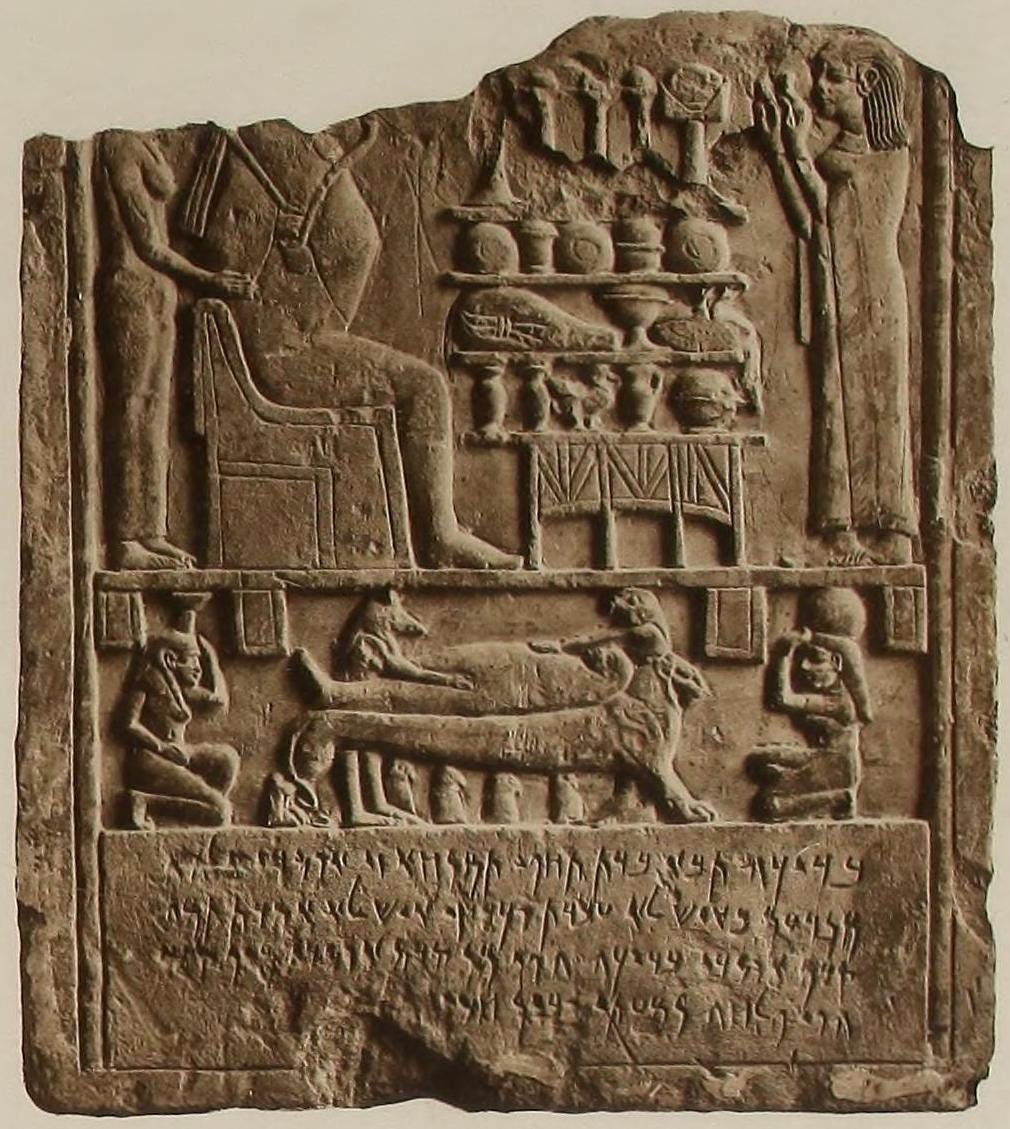
The history of Kol Nidre itself is just as fascinating as its meaning. Its precise origins remain unknown, but it was already being discussed by Babylonian rabbinic authorities in the eighth and ninth centuries. Some of those rabbis strongly opposed it. Amram Gaon, a prominent ninth-century Jewish scholar, criticized the custom, concerned that people might misunderstand the declaration and treat their vows too casually.
Yet Kol Nidre continued to spread. In the 12th century, rabbis in France and Germany helped reshape its wording to address future vows rather than simply attempting to cancel past ones. Various Jewish communities preserved different versions, including Hebrew forms of the declaration.
Even this history contains an important lesson: Kol Nidre was not handed down as an entirely unchanging text that every Jewish community adopted simultaneously. Rabbis debated it, criticized it, revised it, and struggled to reconcile its emotional significance with Jewish law. Its place in the Yom Kippur service emerged through a long historical process. Jewish tradition survived not because it was incapable of change, but because generations of Jews cared enough about it to argue over what should be preserved and how it should be understood.
There is also a popular story linking Kol Nidre to the Jews of Spain, who were forcibly converted to Christianity and secretly maintained their Jewish identity. According to this interpretation, the declaration allowed them to renounce the religious vows imposed upon them and return to their people. It is a powerful image, but it should not be confused with established history.
Kol Nidre existed centuries before the Spanish Inquisition, and historians have not established that forced conversion was the reason it was originally created. The association nevertheless helps explain the emotional meaning that later generations attached to it: the yearning of Jews who had been separated from their community to find their way back.
There is a detail in the traditional ceremony that speaks directly to this idea. Before Kol Nidre is chanted, the congregation recites a formula invoking the authority of the heavenly and earthly courts and granting permission to pray with transgressors.
Think about the implications: At the beginning of the holiest day of the year, Judaism does not announce that only the righteous may enter. It explicitly makes room for those who have fallen short. The community is not assembled from perfect Jews. It is assembled from imperfect Jews who have chosen to stand together.
Perhaps that is why Kol Nidre is so emotionally powerful even for people who cannot understand its words. We are not merely listening to a legal declaration. We are participating in an inherited ritual that has accompanied generations of Jews through remarkably different circumstances. The language has become a bridge between people who may share neither a country nor a mother tongue, yet recognize something of themselves in the same ancient words.
And the language itself has an extraordinary afterlife. Aramaic gradually lost its position as the dominant everyday language of most Jewish communities, but it never disappeared entirely. Jewish communities in Kurdistan and neighboring regions continued speaking various forms of Neo-Aramaic into the modern era. Many of their descendants now live in Israel and elsewhere, and these dialects survive today, although they are endangered.
The history of Aramaic teaches us that Jewish continuity has never depended on freezing Judaism in a particular century. The Jews of ancient Babylonia did not preserve their identity by refusing to learn a foreign language. They learned it, mastered it, and made it a vehicle for Jewish civilization. Later generations continued that process in Greek, Arabic, Yiddish, Ladino, English, and modern Hebrew.
The languages changed, but the central challenge remained: How do we carry our inheritance into a world that looks nothing like the one in which it was created?
We face the same question today.
When the cantor begins chanting Kol Nidre this Yom Kippur, listen closely. Behind the melody is the history of a people who learned to speak in the languages of empires without surrendering their own voice. Behind the legal declaration is a recognition that human beings fail, that our words matter, and that responsibility cannot be replaced by beautiful intentions. And behind the ancient Aramaic is an invitation to reconnect with a tradition that has reached us across an almost unimaginable distance of time.
The empires that once used Aramaic to administer their territories have disappeared. The Jewish People remain, still speaking some of their words, still debating their meaning, still gathering on Yom Kippur to confront the same human imperfections.
The extraordinary fact that Kol Nidre has survived is not, by itself, enough. The real question is what we will do with the inheritance we have received. Our ancestors preserved the words. It is our responsibility to preserve their meaning.