


Please consider supporting our mission to help everyone better understand and become smarter about the Jewish world. A gift of any amount helps keep our platform free of advertising and accessible to all.
You can also listen to the podcast version of this essay on Apple Podcasts, YouTube Music, YouTube, and Spotify.
Seventy-eight years after Israel’s modern founding, Arab-led parties have won a record 19 seats in the Knesset (Israel’s parliament).
Multiple Israeli security agencies are investigating suspected foreign interference in last week’s Israeli election, potentially involving Qatar, Turkey, and other countries paying Arab Israeli voters to boost their turnout at polling stations. But that does not diminish the extraordinary history of Arab Israelis, a side of the Jewish state that much of the world barely understands.
To understand how extraordinary this moment is, we need to go back nearly eight decades, to the very birth of the modern State of Israel. And the story begins with the Arabs who stayed.
In November 1947, the United Nations voted to partition British Mandatory Palestine into two states, one Jewish and one Arab. The Jewish leadership accepted the proposal, despite serious reservations about the territory it had been allocated. The proposed Jewish state would have consisted of three geographically separated areas connected by narrow corridors, excluded Jerusalem — the historic and spiritual heart of the Jewish People — and included a substantial Arab population.
Nevertheless, Jewish leaders accepted these compromises because they recognized the historic opportunity to establish an independent Jewish state. The Arab leadership (many of whom did not refer to themselves or the local Arab population as “Palestinians”) rejected it outright, and violence quickly escalated into a war that would transform the region.
For local Arabs, the war brought enormous upheaval. Following the Arab rejection of partition and the Arab-initiated outbreak of war against the emerging Jewish state, hundreds of thousands left their homes. Some fled the fighting, others were encouraged or ordered to evacuate by Arab leaders and commanders, often expecting to return after an Arab victory, and some were expelled by Jewish or Israeli forces.
Israel emerged victorious from its War of Independence in 1949 and refused to permit the mass return of Arabs who had left during the fighting. While that decision remains controversial, Israel’s security rationale was straightforward: Having just survived a war intended to prevent its very existence, the newly established Jewish state was determined not to create the conditions for another attempt to destroy it.
But approximately 150,000 Arabs remained within the borders of the new State of Israel. Some stayed in their villages. Others had been displaced from their original communities but remained elsewhere inside the new country. Some lived in predominantly Arab towns, while others lived in cities such as Haifa, Jaffa, Acre, and Lod, where Jews and Arabs had lived alongside one another for generations.
These were the people who would become Israel’s Arab citizens. They did not immigrate to the Jewish state. The Jewish state came into existence around them.
Suddenly, they found themselves members of a national minority in a country established explicitly as the homeland of another people. They were Arabs in a Jewish state, Palestinians living in Israel, citizens of a country whose independence had coincided with a national catastrophe for much of their own community. It was an extraordinarily complicated position to occupy, and nobody had prepared them for it.
Israel’s Declaration of Independence had explicitly promised equal social and political rights to all citizens, regardless of religion, race, or sex. It also appealed directly to the Arab inhabitants of the new state to participate in building the country on the basis of equal citizenship and representation. Israel had not merely declared itself a Jewish state. It had declared itself a Jewish state in which non-Jews would also enjoy citizenship and political rights.
And yet the reality of those early decades was considerably more complicated.
From 1948 until 1966, most of Israel’s Arab population lived under a military administration that restricted movement, controlled access to certain areas, and required permits for various activities. For a nascent country that was just genocidally attacked by five Arab countries, it is not too difficult to understand why this unfolded the way it did.
And, unsurprisingly, the situation was imperfect and led to conflict.
In 1956, for example, Israeli Border Police officers killed 49 Arab civilians in and around Kfar Qasim after a curfew had been moved forward without adequate notice to residents returning from work. The massacre became one of the darkest episodes in the history of Jewish-Arab relations inside Israel. The subsequent trials also produced an important Israeli legal principle concerning the duty to disobey manifestly illegal orders.
These experiences left lasting scars. But there was another side to the story that is frequently overlooked: Even while many Arab citizens lived under military administration, they were voting in Israeli elections.
From Israel’s very first national election in 1949, Arab citizens participated in the country’s parliamentary system. Some elected Arab representatives through lists associated with the governing Mapai party, the predecessor of today’s Labor tradition. Others voted for the Israeli Communist Party, which included both Jewish and Arab politicians.
In fact, Arab voter turnout during Israel’s early decades was remarkably high, averaging approximately 84 percent between 1949 and 1973. It meant Arab citizens were represented in the Knesset from the very beginning.
The abolition of the military administration in 1966 marked a major turning point. Restrictions were lifted, educational opportunities expanded, and Arab citizens increasingly entered Israeli universities, professions, and public institutions. Then came the Six-Day War in 1967, which was essentially initiated by Egypt, later joined by Syria and Jordan.
For Israel, the war represented an extraordinary military victory over neighboring Arab armies. For many of its Arab citizens, it also brought a deeply personal transformation. Israel’s capture of Judea and Samaria (also known as the West Bank, back then administered by Jordan) and the Gaza Strip (then administered by Egypt) made it possible for some families and communities separated since 1948 to reconnect.
The experience effectively invented Palestinian national consciousness among many mainstream local Arabs. They were citizens of the Jewish state, but they also belonged to a wider Arab world whose fate remained deeply intertwined with Israel’s. This dual identity would become one of the defining features of Arab political life in Israel.
A second turning point arrived in 1976, during what became known as Yom al-Ard, or Land Day. Arab citizens organized strikes and demonstrations against government land expropriations, particularly in the Galilee. Six Arab citizens were killed during confrontations with security forces.
Land Day became an important milestone in the political development of Israel’s Arab minority. It reflected a growing willingness among Arab citizens to organize independently, demand greater equality, and articulate their collective interests.
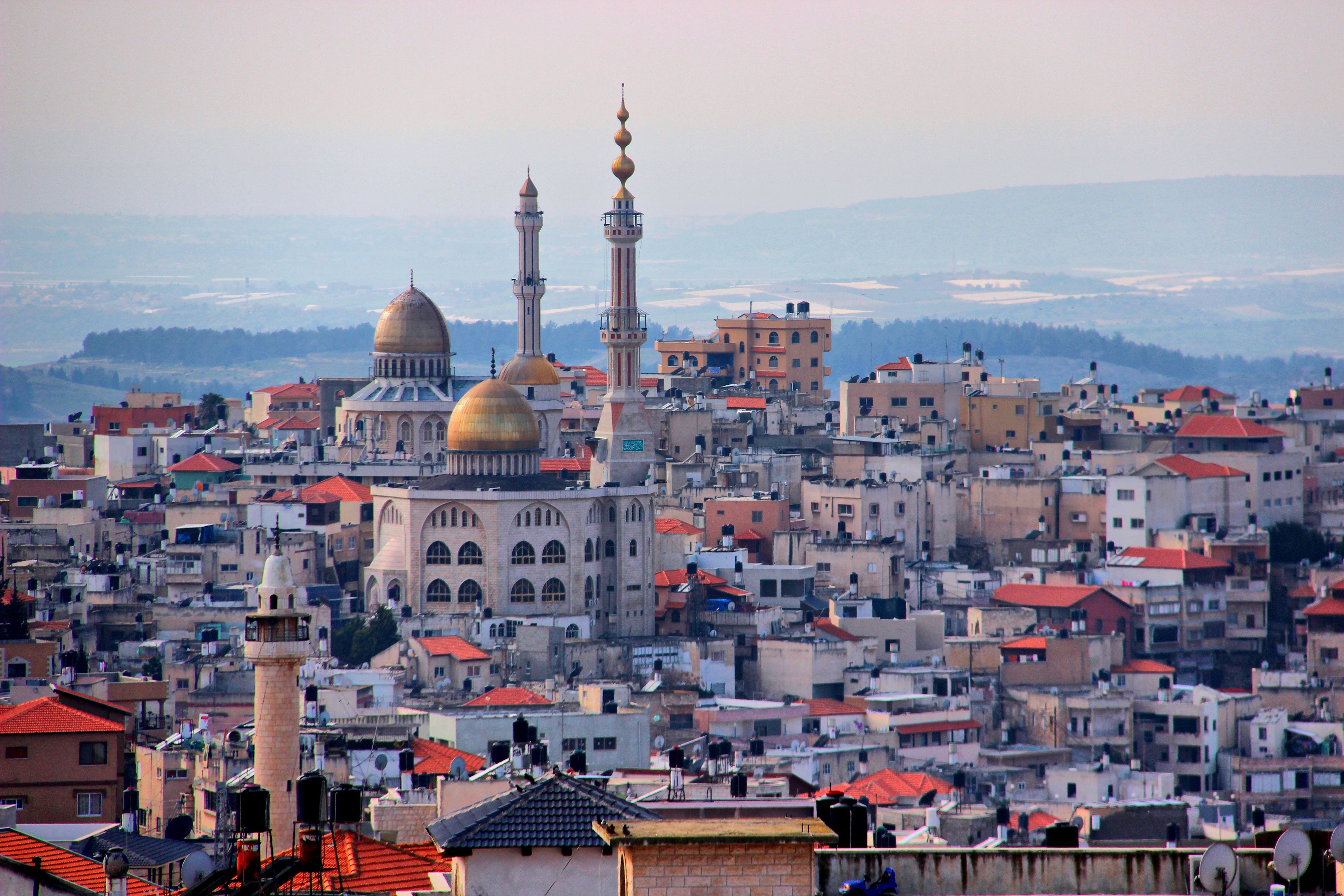
Over the following decades, Arab political movements became increasingly diverse and independent. Some focused on Palestinian nationalism. Others emphasized socialism, cooperation between Jews and Arabs, Islamic identity, or pragmatic participation in Israeli institutions.
And here is something that foreign observers often miss: There has never been one single Arab Israeli political identity.
Israel’s Arab population includes Muslims, Christians, Druze, and Bedouin communities with different histories, traditions, and relationships to the state. Some identify as Palestinians. Others prefer Arab Israeli, Israeli Arab, or simply Israeli. Some combine several of those identities, while others reject particular labels altogether.
The differences are not merely semantic. They influence how people understand national belonging, religious obligations, military service, political participation, and their relationship with the Jewish majority.
Druze men, for example, have generally been subject to compulsory service in the Israel Defense Forces for decades. Most Muslim and Christian Arab citizens are not conscripted, although some volunteer. Arab citizens can also be found in Israel’s police, universities, courts, hospitals, and other public institutions. Indeed, the country’s Arab citizens have become an increasingly important part of Israel’s professional life. Arab Israelis account for approximately 25 percent of employed physicians, 27 percent of nurses, and nearly half of pharmacists in Israel today.
In other words, in the same country where Jewish and Arab politicians can barely agree on the time of day, Jewish and Arab doctors routinely work together treating Jewish and Arab patients. Anyone who has spent time in an Israeli hospital knows that the actual country is considerably more interesting than the version presented in international political arguments.
Arab Israelis have also served as Supreme Court justices, university professors, business leaders, athletes, journalists, and cultural figures. Their presence has become woven into the ordinary functioning of the country.
None of this means that Israel has eliminated discrimination or inequality. Arab communities continue to face major challenges involving poverty, infrastructure, housing, educational resources, employment, and violent crime. These issues are real, but not all of them are the Israeli state or society’s fault. Some are related to Arab culture and mentality, just as Black Americans, for example, face many issues that are some combination of systemic and self-inflicted. Regardless, Arab citizens have become deeply embedded in Israeli society.

In the 1990s and 2000s, independent Arab political parties gained greater prominence. The Islamic movement developed its own parliamentary representation through Ra’am, while nationalist and Arab-Jewish political movements pursued different visions for the community’s future. In 2015, several major Arab political factions joined forces under the Joint List, winning 13 Knesset seats. Five years later, in 2020, the alliance captured 15 seats, setting a new record.
Then, in 2021, something happened that would have been almost unimaginable to many Israelis a generation earlier: An independent Arab Islamist party joined an Israeli governing coalition. Led by Mansour Abbas, Ra’am became part of the diverse government headed by Naftali Bennett and Yair Lapid. Its participation was historic, not least because the coalition included parties with profoundly different positions on Israeli-Palestinian relations and the character of the Jewish state.
Abbas approached participation with a pragmatic argument: Arab citizens had everyday concerns that could not be solved through speeches about the Israeli-Palestinian conflict alone. They needed safer streets, improved infrastructure, better schools, housing, and greater public investment. Participating in government offered one possible way to pursue those objectives.
It was a striking development. An Islamist Arab political party had become a partner in governing the world’s only Jewish state. The coalition eventually collapsed, but the precedent remained.
And now, Arab-led parties have surpassed even their previous electoral records, winning a combined 19 seats. An estimated 80 percent of Arab voters participated in the election, a dramatic increase from the previous contest. Some voted out of opposition to the current government. Others were motivated by concerns over organized crime, government investment, equality, or the Palestinian issue. Some supported pragmatic cooperation with Jewish parties, while others preferred more confrontational parliamentary opposition.
And importantly, not all Arab citizens vote for Arab-led parties. Some vote for Jewish-led parties across Israel’s political spectrum, just as some Jewish Israelis vote for Arab-led or joint Jewish-Arab lists. This is, after all, Israel. Even the country’s minorities are not particularly interested in agreeing with one another.
But the 2026 election has placed a familiar question in a particularly dramatic light: What role should Arab political parties play in the government of the Jewish state?
The arithmetic suggests they could be important. The politics are considerably more difficult. Some Jewish-led opposition parties have ruled out governing with Arab parties, while others are more open to cooperation. The Arab parties themselves differ over whether they would join a coalition, support one from outside, or remain in opposition.
There is no guarantee that their 19 seats will translate into participation in the next government. Nevertheless, the fact that Arab-led parties now hold such a substantial number of seats is historically significant.
It also raises a larger question about how the world understands Israel.
The phrase “Jewish state” is often interpreted by outsiders as though it means a country populated exclusively by Jews, or one in which non-Jews have no meaningful civic or political role. In reality, Israel has always been home to substantial non-Jewish communities.
Its Jewish identity reflects the Jewish People’s right to national self-determination in our historic homeland. Its democratic institutions provide a framework through which citizens of different religions and national identities participate in public life.
Balancing those two principles has never been entirely straightforward. The Jewish character of the state is not merely ceremonial; it shapes immigration policy, national symbols, the workweek (Sunday through Thursday), holidays, and important constitutional questions — all creating tension among the Arab Israeli population. But we should be careful not to confuse the existence of those arguments with the absence of democracy.
An Arab citizen does not have to embrace Zionism, support the Israeli government, or sing Hatikvah (“The Hope” — Israel’s national anthem) to exercise the rights of citizenship. In fact, when Hatikvah is sung at the Knesset, many Arab Israeli politicians walk out of the chamber. One of them was asked why, and he said simply, “Because I don’t have a Jewish soul” — referring to the “nefesh yehudi” (Jewish soul) part of the anthem.
And that is precisely what makes Israel’s democracy so fascinating. An Arab Israeli politician can refuse to sing the Jewish national anthem, openly challenge the Jewish character of the state, and still serve in its parliament, vote on its laws, and potentially help determine who becomes its next prime minister.
That is not a contradiction of Israel’s democratic character. It is one of the most fascinating expressions of it.
Fascinating? Or is dangerous a better description? The majority of the Arabs living in Israel as equal citizens just came out en masse to vote for Arab parties that refused to call Hamas a terrorist organisation. I read that the election committee chose to abolish them (as they should have!) but that the Supreme Court overturned it at the last minute. If this is true, you seriously need judicial reform!
19 seats in the Knesset 🔥
There's an investigation 🔎 by the police and Shabak about fraud and foreign intervention.
Composing a goalition with "Palestinian" parties who support and fund "Palestinian" terrorist organizations is an abomination and a serious danger to the Jewish State.