


Please consider supporting our mission to help everyone better understand and become smarter about the Jewish world. A gift of any amount helps keep our platform free of advertising and accessible to all.
This is a guest essay by Vanessa Berg, who writes about Judaism and Israel.
You can also listen to the podcast version of this essay on Apple Podcasts, YouTube Music, YouTube, and Spotify.
On paper, the world can appear simple. There are good people and bad guys, right and wrong.
When an authoritarian regime brutalizes its people, threatens its neighbors, and destabilizes entire regions, the moral instinct feels obvious: Stop it, do the right thing, stand on the side of good.
But reality rarely cooperates with moral clarity.
In practice, the line between what feels righteous and what actually produces good outcomes is thin, fragile, and easily crossed. History is full of moments where intervention was morally justified in theory but catastrophic in execution.
Iran is one of those cases where ethical instinct collides with strategic reality. The Islamic Republic is cruel, repressive, and widely despised by its own people — yet the question of whether to strike it militarily is not a test of values, but a test of consequences.
What looks like a simple choice between good and evil on paper becomes, in the real world, a web of second- and third-order effects that can worsen the very suffering intervention is meant to relieve. That is why the question is not whether the Iranian regime deserves to fall, but whether force can achieve that outcome without unleashing something even worse. That tension — between moral clarity and practical complexity — is what makes an attack on Iran so difficult to contemplate, and so dangerous to get wrong.
Over the past several weeks, Iran has been wracked by some of the largest protests in its history. What began as a reaction to economic hardship — including inflation, currency collapse, and shortages of essentials — has grown into a broader movement challenging the Islamic Republic itself.
Iranians both inside the country and around the world saw a promise of support from U.S. President Donald Trump, but his shift away from backing the protesters left many feeling abandoned.
Meanwhile, Trump has issued deadlines and moved significant U.S. military assets into the region, raising the specter of a potential military strike on Tehran. This unfolding moment highlights why any attack on Iran isn’t simple; it’s fraught with strategic, regional, and global complexities.
1) Iran is a huge country.
Iran is not a small state with a few strategic facilities; it is vast, geographically and demographically. Iran’s total area is about 1.65 million square kilometers (636,000 square miles), making it the 17th-largest country in the world and the second-largest in the Middle East after Saudi Arabia.
Its size provides natural defense and dispersal of key infrastructure. Unlike smaller countries where a military strike might quickly degrade command, control, and logistics, Iran’s extensive territory makes it far harder to deliver decisive blows without massively scaling an operation.
Targets are spread out, and destroying one part of the infrastructure does not immediately paralyze the whole. This means planners must either commit to a large, costly campaign or risk a limited strike that may have limited impact on Iran’s overall capabilities.
2) Military action in the Middle East almost always has regional ripple effects.
A military strike in the Middle East is not like, for example, the conflict in Ukraine, where surrounding countries were relatively insulated and did not get directly dragged into war or experience major destabilizing aftershocks.
Conversely, the Middle East is tightly interconnected by alliances, rivalries, and sectarian divisions. A weakening or collapse of Iran’s leadership could unsettle neighboring governments and embolden militant groups. For example, the fear of a power vacuum or new instability has made many regional leaders cautious about aggressive moves; unlike Russia’s invasion of Ukraine, a U.S. attack on Iran could easily spark new conflicts or inflame ongoing ones.
Key Gulf allies such as Saudi Arabia have publicly refused to allow their airspace to be used for strikes, preferring to avoid direct involvement in a conflict that could rapidly spiral beyond anyone’s control. Their caution is not born of sympathy for Tehran, but of hard-earned experience. These states sit within immediate reach of Iranian missiles, drones, and proxy forces, and they understand that even indirect participation would almost certainly make them targets for retaliation.
For Gulf governments, the risks extend far beyond military exchanges. A regional war could destabilize internal security, disrupt energy infrastructure, trigger refugee flows, and unsettle carefully managed balances between rival factions, tribes, and sects. Years of investment in economic diversification, tourism, and global capital markets could be undone overnight by sustained instability. From their perspective, allowing foreign aircraft to launch strikes from their airspace is not a symbolic gesture; it is a strategic commitment with consequences they would bear first and most heavily.
This reluctance also reflects a broader regional reality: Many Middle Eastern regimes fear chaos more than they fear adversaries. The collapse or severe weakening of Iran’s central authority could unleash unpredictable forces across the region, altering power balances in ways that even Iran’s rivals may struggle to contain. In that sense, Gulf restraint is not about avoiding responsibility, but about preventing a conflict whose second- and third-order effects could redraw the region’s political and security landscape for decades.
For example, after Israel significantly downgraded Hezbollah in Lebanon following October 7th, the balance of power in Syria shifted, contributing to pressures on Bashar al-Assad’s regime that ultimately led to his overthrow in 2024.
3) Economic Shockwaves: The Strait of Hormuz and Beyond
This week, Iran unveiled an extensive network of underwater missile tunnels connected to the Strait of Hormuz, housing hundreds of long-range cruise missiles. Footage aired on Iranian state television showed rows of launch-ready rockets, with ranges exceeding 1,000 kilometers (620 miles).
The Strait of Hormuz is one of the world’s most important maritime chokepoints, through which roughly 20 percent of the world’s crude oil and liquefied natural gas flows every single day. Any major conflict or threat to shipping through this narrow waterway could spike global energy prices and disrupt supply chains.
Unlike other theaters, fighting here directly threatens global economic stability. That isn’t limited to the Persian Gulf; terror groups aligned with Iran, such as the Houthis in Yemen, could expand attacks into the Red Sea, the Bab el-Mandeb Strait, and the Gulf of Aden, disrupting major global shipping lanes and compounding the economic impact, as happened after October 7th and the resulting Israel–Hamas war.
Any tangible threat to these waterways is enough to create spikes in insurance, shipping, and energy costs worldwide. For example, the multinational shipping conglomerate Maersk suspended Red Sea shipping to protect crew, vessels, and cargo from escalating attacks by the Houthis starting in late 2023. These attacks posed severe safety risks, forcing vessels to reroute around the Cape of Good Hope, which caused significant global shipping delays and higher costs. As of early 2026, Maersk has begun a staggered, conditional return to the Red Sea due to improved security stability.
Another layer of complexity comes from China, Iran’s largest energy customer. Beijing purchases roughly 80–to–90 percent of Iran’s crude oil exports, making the country’s stability a direct economic interest. A major U.S. strike or regional destabilization could disrupt that supply.
It is therefore plausible that, behind closed doors, China is signaling to Washington its preference for restraint, quietly warning that escalation could threaten Beijing’s energy security and draw China into the conflict.
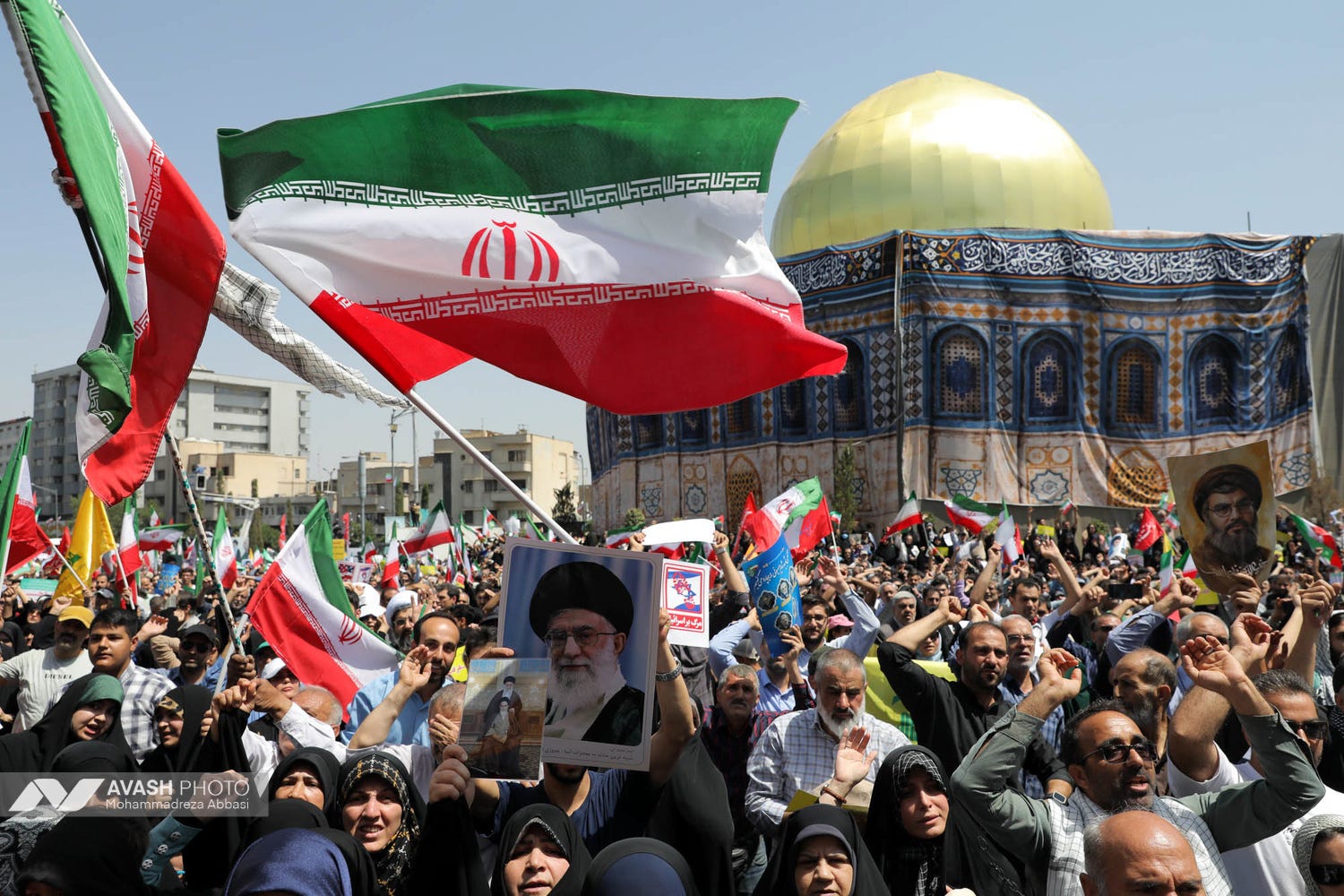
4) Limited strikes might not achieve political ends.
Targeted strikes can weaken certain military or nuclear facilities, but many analysts — including some within Israel — doubt that a limited strike alone would topple the Islamic Republic’s leadership or fundamentally alter its political trajectory. The regime is deeply entrenched, supported by powerful institutions like the Islamic Revolutionary Guard Corps and a sprawling bureaucratic apparatus capable of absorbing shocks and maintaining control in crises.
In fact, military action could have the opposite effect of what external actors intend. A strike might provide the regime with a potent propaganda tool: framing the attack as foreign aggression against the nation, not just its leaders. In this narrative, the Islamic Republic could portray itself as the defender of Iranian sovereignty, rallying nationalist sentiment and uniting the population around the government, even those who previously opposed it. Hardliners could exploit such an event to suppress dissent, justify crackdowns on protests, and strengthen their grip on power.
The potential for such unintended consolidation makes strategists wary of assuming that limited military force can produce meaningful political change. Rather than weakening the regime, a strike could deepen its domestic legitimacy, inflame anti-foreign sentiment, and entrench the very forces that external actors might hope to diminish. Any military option, therefore, carries the risk of strengthening the regime instead of destabilizing it.
5) Regime change is more than removing one leader.
Decades of rule have embedded Iran’s Islamic Republic deeply into society, governance, and administration. Ali Khamenei, the 86-year-old Supreme Leader is central, but he is also intertwined with a vast network of clerics, commanders, bureaucrats, and local officials.
Unlike a kingdom or a dictatorship centered around a single family, Iran is not a top-down system where removing one leader automatically dissolves the state. The Islamic Republic is a sprawling Islamist bureaucracy, with authority dispersed across multiple layers of government, the judiciary, the Revolutionary Guards, religious institutions, and local administrative networks.
Power in Iran flows through institutions, not personalities, which enables the regime to withstand leadership losses, internal purges, or external shocks, such as the untimely death of President Ebrahim Raisi in 2024. Raisi had been considered one of the leading candidates to succeed Khamenei, rather than a member of Khamenei’s family, highlighting how the Islamic Republic differs fundamentally from a traditional monarchy or personalist dictatorship. Khamenei himself rose to the role of Supreme Leader after serving nine years as President, illustrating the Republic’s design as a theocratic-republican system: Authority rests on religious credentials, political alliances, and institutional legitimacy, not heredity.
Therefore, any attempt to change the political order would require dismantling not only the top leadership but the entire institutional framework — a monumental task that cannot be accomplished through precision strikes alone.

6) Iran’s retaliation doctrine is asymmetric by design.
One of the central reasons an attack on Iran is so complicated is that Iran does not intend to fight a conventional war. Its military doctrine is explicitly asymmetric, built around the idea of raising costs rather than winning battles. Tehran understands it cannot defeat the United States or Israel in a head-to-head conflict, so it has designed a strategy that avoids one.
Iran’s response would likely be indirect, deniable, and stretched over time. This includes missile and drone attacks through regional proxies, cyberattacks against financial systems and critical infrastructure, harassment of shipping, and strikes on foreign interests abroad. The goal would not be immediate victory, but political exhaustion — forcing adversaries to manage a persistent, globalized security problem rather than a focused military campaign.
This kind of retaliation is especially effective against democracies, where public patience is finite and escalation thresholds are politically constrained. Even a successful initial strike could open the door to years of instability that are difficult to attribute, deter, or decisively end.
7) The Risk of a Domestic Iranian Backlash
Another uncomfortable reality is that foreign military action often produces the opposite of its intended political effect. While millions of Iranians openly oppose the Islamic Republic, history shows that external attacks tend to rally populations around the state — even deeply unpopular ones.
A U.S. or Israeli strike would almost certainly be framed by Tehran as an attack on Iranian sovereignty rather than on the regime itself. That narrative would give the government justification to intensify repression, silence dissent, and portray internal opposition as collaborators with foreign enemies. Protest movements that are currently rooted in economic frustration and demands for freedom could fracture or lose legitimacy overnight.
This tension, between moral sympathy for the Iranian people and the strategic consequences of intervention, lies at the heart of the dilemma. An action meant to help catalyze change could instead delay it, hardening the regime’s grip at the very moment it appears most vulnerable.
The Most Dangerous Question: What comes after?
Perhaps the greatest complication of all is not how to strike Iran, but what follows.
There is no clear successor movement with unified leadership, nationwide legitimacy, and the capacity to govern a country of Iran’s size and complexity. Without a credible plan for “the day after,” the risk is not a smooth transition; it’s fragmentation, internal power struggles, or the emergence of a more radical and militarized regime.
Military force can destroy facilities and degrade capabilities. It cannot, on its own, design a political future for a nation of more than 80 million people.
None of this diminishes the brutality or illegitimacy of the Islamic Republic, nor the courage of Iranians demanding a different future. But it does explain why even moments of apparent opportunity are met with serious hesitation. An attack on Iran is complicated not because the stakes are unclear, but because they are painfully clear — and extraordinarily high.
Yes, your points are well taken. Those are all legitimate reasons to be cautious and concerned. There were also many legitimate reasons to avoid confronting Hitler back in the 1930s. Ultimately, the choice remains the same: whether to confront radical evil when the odds are still very much in our favor. Or to let the beast live and eventually menace us with nuclear weapons. There will never be a better time than now to cut the head off the snake.
"Military force can destroy facilities and degrade capabilities. It cannot, on its own, design a political future for a nation of more than 80 million people."
Silence and inactivity will ensure that more than 80 million people have no future.