


Please consider supporting our mission to help everyone better understand and become smarter about the Jewish world. A gift of any amount helps keep our platform free of advertising and accessible to all.
This is a guest essay by Melissa Brodsky, a writer focused on media literacy, modern antisemitism, and history.
You can also listen to the podcast version of this essay on Apple Podcasts, YouTube Music, YouTube, and Spotify.
Philip IV of France had expensive problems.
He’d fought costly wars with England and Flanders. He’d quarreled with the Pope. He’d drained the royal treasury and needed to replenish it.
Philip was a man who understood power as a financial instrument, and he was creative about where he looked for solutions. In 1306, he found one.
On June 21st of that year, Philip issued a secret order: Every Jew in France was to be arrested simultaneously at dawn, held for one day, and then given notice to leave the kingdom. They could take the clothes on their backs and a small amount of coin. Their homes, synagogues, Torah scrolls, land, livestock, furniture, tools, and businesses all became property of the French crown.
The arrests happened on July 22nd, the eve of Tisha B’Av, the saddest day on the Jewish calendar. For Jews, that date already carried the weight of centuries. It marks the destruction of both the First and Second Temples, as well as the Fall of Betar in 135 CE, the decisive final battle of the Bar Kokhba Revolt, marking the end of Jewish self-governance in ancient Judea — a long string of catastrophes that Jewish memory has never let go.
Philip may not have known the significance of the date. It didn’t matter. The calendar had a long memory even if he didn’t.
Between 100,000 and 125,000 Jews were expelled. They had one day’s notice to leave a country where many of their families had lived for generations.
But the financial mechanics of the expulsion tell a different story.
When Jewish moneylenders were expelled, the debts owed to them didn’t disappear. They transferred directly to the crown. Philip didn’t just take Jewish property; he took the money that other French citizens owed to Jewish creditors, and he collected it himself. He turned the entire structure of Jewish financial life in France into a revenue stream for the royal treasury.
It was a clean operation: Seize the creditors, keep the debts. In one coordinated move, Philip cleared his Jewish subjects out of the kingdom and filled his coffers with what they were owed.
Philip IV wasn’t working from nothing. He had recent precedent, and it was his own family’s.
In 1182, Philip II had expelled French Jews and seized their property, then quietly readmitted them in 1198 when the crown needed revenue again. The Jews of France understood they lived at the pleasure of the monarchy. Their legal status was that of property, not persons. The king owned them, which meant the king could dispose of them.
By the time Philip IV came to power, this cycle was established: Jews could be expelled when they became inconvenient and readmitted when they became useful. Their presence in France was transactional, not a matter of right. And the crown had every incentive to let that ambiguity stand.
Philip IV died in 1314. His son Louis X needed money too, so on July 28, 1315, he issued a charter authorizing the return of France’s expelled Jews.
The readmission was not a restoration of rights; it was a transaction. Jewish leaders were required to pay 22,500 pounds for the privilege of returning, plus 10,000 pounds per year to the royal treasury. Those who came back had to wear identifying badges in public, live only in towns they had occupied before 1306, and accept a 12-year limit on their stay. The crown reserved the right to expel them again with one year’s notice when that period expired.
The Talmud could not be brought back into the kingdom at all. Princeton historian William Chester Jordan, drawing on the original royal Ordonnances, estimates that only about 30,000 Jews returned, roughly 30 percent of those expelled nine years earlier. They were not coming home; they were being licensed to exist temporarily, on terms the crown had written entirely for its own benefit.
Which is exactly what happened. Famine hit northern Europe the same year the readmission charter was issued, and it didn’t let go for seven years. Jews permitted to work as pawnbrokers became visible targets during the crisis. Massacres followed. By 1322 the experiment had collapsed, not through a formal order of expulsion but through sustained violence, crown exploitation, and the steady departure of those who had survived.
Over the next several decades, the cycle repeated — expulsions, partial readmissions, restrictions, seizures. Each iteration left the Jewish community smaller, poorer, and more legally exposed than the last. There was no arc bending toward justice, only the rhythm of exploitation and removal, timed to the financial needs of whoever held the throne.
By the late 14th century, the crown had squeezed the arrangement as far as it would go.
On September 17, 1394, King Charles VI issued an ordinance declaring it an irrevocable law and statute that no Jew would dwell in his domains. The text is recorded in the Ordonnances des rois de France (“Ordinances of the kings of France”), volume seven.
This edict was different in character from 1306. It wasn’t primarily a property grab, though the crown took what it could. Charles framed it in religious terms, citing violations of the agreement Jews had made with the crown, and declared the exclusion permanent. Jews were given time to sell their belongings and settle their debts, after which everything remaining transferred to the king. They were permitted to leave with the clothes on their backs and twelve sous each.
It very nearly was permanent.
Jews were not officially readmitted to France until 1791, following the French Revolution. Small communities survived in Alsace, which France absorbed in 1648, and among Sephardic families in Bordeaux who held narrow royal tolerations going back to the 1550s. But these were islands, not restoration.
Nearly 400 years passed between Charles VI’s edict and the moment France declared Jewish residents full citizens under the law — 400 years during which Jews who had once lived in France, whose families had built communities, maintained cemeteries, established trade networks, copied manuscripts, raised children, simply did not exist in the kingdom in any legal sense.
Where did they go?
Some moved to the Papal territories around Avignon, which were not under the French crown. Others went east, into the German states and eventually deeper into Eastern Europe. Some went south into the Iberian Peninsula, at least until Spain expelled its Jews in 1492 and Portugal followed in 1496 and 1497. The Jewish world of the late 14th and 15th centuries was one of people in motion, looking for somewhere they would be allowed to stay.
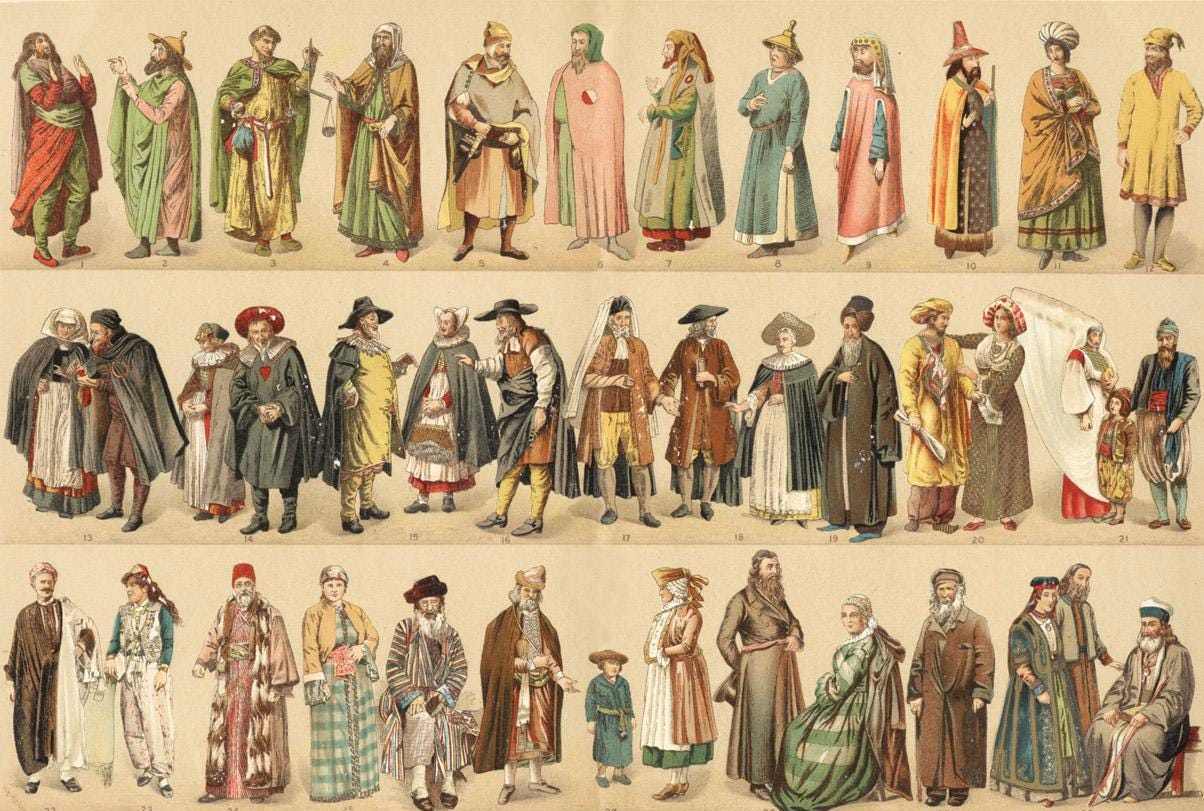
France’s emancipation of its Jews in 1791 is often cited as one of the great milestones of Jewish civil rights in the modern world. In formal legal terms, it was. The French Revolution granted Jews citizenship and declared them equal before the law.
What it didn’t do was change what a significant portion of French society actually believed about Jews.
The Dreyfus Affair made that clear. Alfred Dreyfus was a French army officer, a decorated patriot, a man who had built his life around service to the French republic. In 1894, exactly five hundred years after Charles VI’s edict, he was falsely accused of treason, tried on fabricated evidence, publicly stripped of his rank, and sent to Devil’s Island. The crowds outside didn’t chant legal arguments. They chanted, “Death to Jews!”
Dreyfus was eventually exonerated. But the journalist Theodor Herzl, who covered the trial, left Paris convinced that Jewish emancipation in Europe was a fragile promise, and that Jews would never be fully safe in a country that was not their own. He spent the rest of his life building the argument for a Jewish state.
France gave Herzl his evidence, then France kept providing it.
During the German occupation, the Vichy government didn’t wait for Nazi orders to begin stripping French Jews of their rights. The Statut des Juifs (“Statute of the Jews”) was passed in October 1940, before Germany had demanded it.
Vichy excluded Jews from public life on French initiative, out of French ideology, using French bureaucracy. When the deportations to the death camps came, French police participated. The rafle du Vél d’Hiv (“Winter Velodrome Roundup”) in July 1942 (the mass roundup of more than 13,000 Jews in Paris including 4,000 children) was organized and carried out by French authorities. The Nazis provided the destination; France provided the manpower.
The children had French citizenship, but it didn’t help them.
After World War II ended and Nazi Germany was defeated, France’s Jewish community rebuilt. Then it was transformed. Between 1956 and 1967, approximately 235,000 Sephardic Jews from Algeria, Morocco, Tunisia, and Egypt emigrated to France as those countries gained independence and Jewish life in North Africa became untenable. Jews from Algeria arrived as French citizens, since Algeria had been French territory for over a century.
By 1968, Sephardic Jews from North Africa constituted the majority of the Jewish population in France. Their arrival is what made France the largest Jewish community in Europe and the third largest in the world. The French Jewish community most people picture today (in terms of its size, its geography, and its culture) is largely their community. Their children and grandchildren are the ones now buying apartments in Israel and pulling their kids out of French schools.
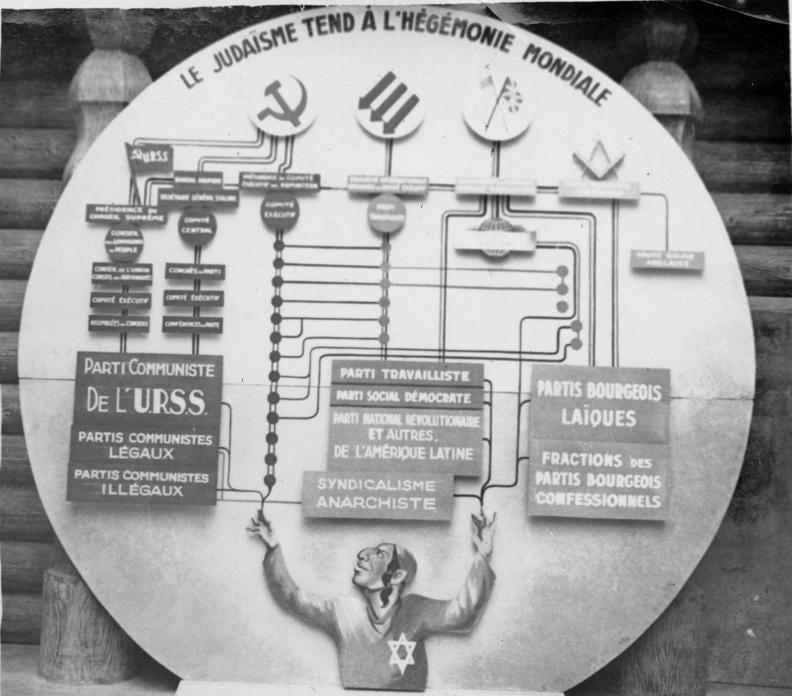
France has a Holocaust memorial, as well as official days of remembrance. French politicians give speeches about never again. The Republic has a full suite of laws against hate speech and incitement.
And yet, France’s Jews are leaving.
They’re leaving — steadily, family by family, year by year — in numbers that have alarmed Israeli officials, French Jewish community organizations, and demographers who track these things. They’re not leaving in a single overnight convulsion the way they were expelled in 1306; they’re leaving in a slow, steady drain that doesn’t make for dramatic headlines but shows up clearly in the data.
Beginning in 2013, France became the top source country for aliyah (diaspora Jewish immigration to Israel), a position it held for two consecutive years. In 2015, The Jewish Agency for Israel recorded 7,892 French Jews making aliyah, the highest number from France since Israel’s founding in 1948. The decade between 2010 and 2019 saw approximately 38,000 French Jews immigrate to Israel, comprising about a third of all French aliyah since the State of Israel was established.
The numbers spiked in response to events that made the abstract threat feel immediate and concrete.
In 2006, Ilan Halimi, a young Jewish man in Paris, was kidnapped, tortured for three weeks, and murdered by a gang that targeted him because they believed Jews had money. His torture was observed and participated in by multiple people over 24 days. Neighbors knew, some helped.
In January 2015, a gunman who had pledged allegiance to ISIS stormed the Hyper Cacher kosher supermarket in Paris and murdered four Jewish men who had gone to buy groceries before Shabbat. Their names were Philippe Braham, 45; Yohan Cohen, 22; Yoav Hattab, 21; and François-Michel Saada, 64. They were posthumously awarded the Legion of Honour by the French Republic. The attack came two days after the Charlie Hebdo attack, when employees of the French satirical weekly magazine Charlie Hebdo were targeted in a terrorist shooting by two French-born Algerian Muslim brothers.
The kosher supermarket was chosen because it was Jewish.
In 2017, Sarah Halimi, a 65-year-old Jewish woman and retired physician, was beaten and thrown from her third-floor apartment window in Paris by her neighbor, who shouted religious invocations during the attack. The French courts ultimately ruled her killer not criminally responsible because he had consumed cannabis before the attack and was deemed to have been in a state of acute psychosis. He wasn’t tried or convicted. Instead, he was sent to a psychiatric facility.
Tens of thousands of French Jews took to the streets after that ruling. Many of them were not protesting to change the verdict; they were saying goodbye to any illusion that the French legal system would protect them.
In 2018, Mireille Knoll, an 85-year-old Holocaust survivor who had escaped the “Winter Velodrome Roundup” in 1942 as a child, was stabbed 11 times and set on fire in her apartment in Paris. Her killer had known her for years. He knew she was Jewish.
France has the largest Jewish population in Europe and the third-largest in the world, behind Israel and the United States. Jews represent less than one percent of the French population. According to the French Interior Ministry and the Service de Protection de la Communauté Juive (“Jewish Community Protection Service”), they account for 53 percent of all anti-religious incidents recorded in the country.
The Jewish Community Protection Service recorded 436 antisemitic acts in France in 2022. In 2023, that number rose to 1,676 — a figure the organization described as the worst on record. In the three months following October 7, 2023, the number of antisemitic acts in France equaled the cumulative total of the previous three years combined.
On October 7th itself, before Israel had launched a single retaliatory strike, antisemitic incidents in France increased by more than 700 percent compared to the daily average. In the 30 days that followed, France recorded an average of 25 antisemitic acts per day. Antisemitic acts in schools surged by more than 1,200 percent.
The Jewish Community Protection Service found that “Palestine” was referenced in nearly a third of all antisemitic acts committed after October 7th. In more than a third of those cases, the remarks also advocated jihadism, and in more than a quarter they included explicit calls for murder.
Fondapol, an independent French think, found that one in four French Jews reported being a victim of an antisemitic act since October 7th. Among those under 25, that figure rose to 37 percent. Of those who had experienced an antisemitic act in their lifetime, only 14 percent filed a complaint.
French Jewish organizations have documented the situation for years. The incidents are concentrated in certain neighborhoods and repeat in recognizable ways, and the perpetrators are not drawn from any single political direction, though researchers who track the data have noted that a disproportionate share of violent antisemitic attacks in recent years have been committed by perpetrators with roots in communities where Islamist ideology has taken hold.
The French government has been reluctant to say this directly, since saying it directly is considered “divisive” and “inflammatory.” It collides with the French republican model of citizenship, which officially doesn’t recognize ethnic or religious communities as distinct categories in public data. That framework was designed to guarantee equality. In practice, it has made it harder to document and address targeted violence against Jews.
Meanwhile, French Jews move. They move to Israel, to the United States, and to Canada. They sell apartments, pull children out of schools, hide visible signs of their identity at home and on the street, and quietly relocate.
A community that was rebuilt from near-nothing after the Holocaust — swelled and revitalized by Jewish families who had themselves been driven from North Africa — is contracting again in real time, and the French government’s response has been a combination of condemnation, memorial services, and a persistent unwillingness to name what’s clearly happening.
The French will rue this departure, which I heartily support. My dear departed husband Rabbi Mordecai Kieffer said that Europe does not deserve the Jews. He is correct. The French economy will suffer because of the Jews leaving. We have been kicked out of many countries, all of which suffered economically as a result. Look at Germany after WW II. Ruined. Wrecked. Had to be rescued by the Americans and their Marshall Plan. Have you noticed the outpouring of gratitude from the rulers of the European nations? Hopeless. I am amazed that people can’t see what has happened right before their eyes. Finally after paying an unspeakable price, the Jews were able to capture Israel/Judea again. Seven Arab nations attacked the next day. The Israelis were few. Many of them were refugees from the Shoah (Holocaust), frail and undernourished. They had very few weapons. It looked hopeless. Jews from the Diaspora rallied and did what they could, but against seven Arab nations? But, guess what? The Jews, the Israelis won the unprovoked war. This scenario has been repeated again and again ad nauseum. And who wins? Not easily or gladly. With misery, because the Israelis are forced to fight the Arabs, which means a lot of people are killed. Men, women and children. Israelis are decent people. The soldiers are husbands and fathers and sons and also wives, mothers and daughters. It causes the soldiers unending pain when they have to kill other people in order for Israel to survive. Jews have been through many centuries of suffering and oppression. That they have survived, when the ancient kingdoms and empires who reviled them have gone to dust, is a miracle. A miracle. And who or what ( depending upon your philosophy) is in charge of miracles? People have been trying to get rid of the Jews for thousands of years. Do you ever wonder why the Jews are still here? Read about the wonder that Judaism is. The way Jews have been obeying the Torah (Bible) and having a good time doing it even with all the suffering. We have something very precious. A holy Covenant with HaShem (God). We entered the Covenant at the foot of Mt Sinai in the desert when God gave us the Torah, which, by the way, contains 613 commandments. Some of which we can no longer obey because they have to do with the Holy Temple that the Romans destroyed in 70 AD when they kicked the Jews out of their homeland. However we do our best, at least a proportion of us do, to obey the ones that are left. Just fyi. I just wish that people would stop with this insane hatred of Jews. Please. What does it take?
It's over for France.
I'll never forget that in the shadow of the Charlie Hebdo murders, the French marched in the streets, wearing "Ju suis Charlie!" t-shirts, but I never saw one single person after the Jewish murders that followed wearing a Ju suis Juif T-shirt.
France is also the country that gave sanctuary to Yassir Arafat's family. They made their alliance with Muslims decades ago, partly to ensure plenty of oil from opec countries.
Now, there are "no-go" zones is Paris, ruled by islamists, where the police will neither patrol nor intervene.