


Please consider supporting our mission to help everyone better understand and become smarter about the Jewish world. A gift of any amount helps keep our platform free of advertising and accessible to all.
This is a guest essay by Vanessa Berg, who writes about Judaism and Israel.
You can also listen to the podcast version of this essay on Apple Podcasts, YouTube Music, YouTube, and Spotify.
The world desperately wants to believe that Hamas is willing to surrender its weapons.
U.S. President Donald Trump has announced that the United States-backed Board of Peace reached what he described as a historic agreement for the complete disarmament of Hamas and the other armed factions in Gaza.
The announcement was immediately treated as a possible breakthrough: Hamas would give up its weapons, Israel would withdraw from Gaza, the Strip would be reconstructed, and the long nightmare might finally begin to end.
There is only one problem: The agreement does not actually require Hamas to disarm.
Read the document rather than the headlines. The word disarmament does not appear in the roadmap. Instead, it calls for Hamas’ weapons, tunnels, production facilities, and military infrastructure to be gradually “decommissioned and stored.”
The weapons are not necessarily destroyed. They cannot be transferred to Israel or any non-Palestinian party. Hamas and the other factions are permitted to participate in the process. Even the implementation schedule has not been written yet; the parties have another 14 days to negotiate it, and that deadline can be extended.
Weapons may remain legal under future Palestinian regulations. Existing police structures will absorb newly trained officers. Employees cannot be excluded merely because of their political affiliation. The National Committee for the Administration of Gaza will supposedly handle internal security, while the International Stabilization Force is explicitly prohibited from performing police work inside Palestinian society.
This does not sound like the surrender of Hamas. It is an elaborate promise that the terror group might someday participate in a Palestinian-controlled process for storing some of its weapons while Israel gradually abandons the territory from which it can enforce compliance.
Hamas has not agreed to cease being Hamas. It has agreed to discuss the conditions under which the world will pretend that it has.
The fundamental mistake behind the disarmament narrative is the belief that Hamas is an ordinary political organization that happens to possess a military wing.
It is not.
Hamas is a revolutionary Islamist movement in which religion, governance, education, charity, propaganda, policing, and terrorism have always reinforced one another. Its military infrastructure did not suddenly appear after Hamas entered politics. Its political and social infrastructure helped produce the military organization.
Hamas emerged from the Muslim Brotherhood network in Gaza. Long before it governed the territory openly, the movement built influence through mosques, schools, youth programs, religious institutions, and social services. These were not merely charitable activities taking place beside the revolutionary project. They were part of the mechanism through which the movement recruited supporters, established legitimacy, spread its ideology, and built a state within a society.
This is why describing Hamas as having a “political wing” and a “military wing” is so misleading. The distinction is useful to diplomats because it makes negotiations easier to imagine. It is less useful for understanding the organization itself.
The politician raises money. The preacher sanctifies the mission. The teacher passes the worldview to the next generation. The administrator distributes patronage. The police officer suppresses rivals. The propagandist turns defeat into martyrdom. The terrorist carries out the violence. They are different jobs inside the same enterprise.
Taking a rifle from one Hamas member while leaving the movement’s financial networks, educational institutions, command structure, loyal civil servants, ideological authority, and coercive power intact does not dismantle Hamas. It merely changes the form through which Hamas exercises control. A terror movement does not become peaceful because its weapons have been placed in a warehouse controlled by people it may still influence.
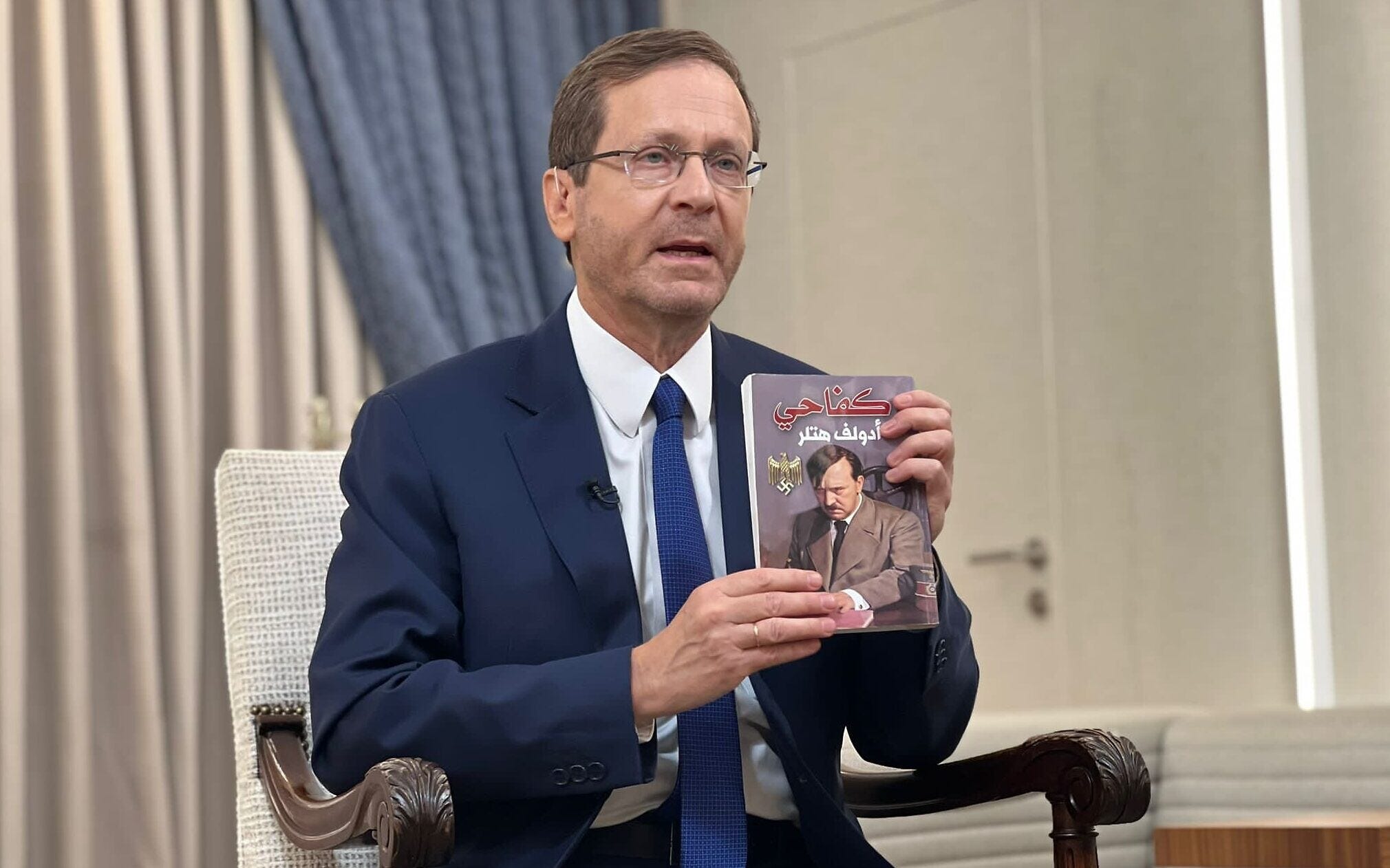
For decades, Western leaders have treated Hamas’ ideology as if it were an embarrassing collection of outdated slogans rather than an explanation of the movement’s behavior.
The original 1988 Hamas charter combined the theology of the Muslim Brotherhood with conspiracy theories and explicit antisemitism. It described the conflict not merely as a territorial dispute between Israelis and Palestinians, but as part of a religious struggle in which Jewish sovereignty itself was intolerable. The updated political document in 2017 removed some of the most openly antisemitic language and adopted the vocabulary of national liberation. Western observers rushed to present this as moderation.
But Hamas did not recognize Israel. It continued to claim all the land between the Jordan River and the Mediterranean Sea. It maintained the legitimacy of armed “resistance” and treated a Palestinian state within the 1967 lines not as a permanent settlement alongside Israel, but as a possible intermediate national consensus. The vocabulary changed. The objective did not.
October 7th should have ended the West’s habit of treating Hamas’ ideology as theatrical excess. Hamas did not merely attack a military position or attempt to improve its bargaining power. It launched a mass assault against Israeli communities, killed roughly 1,200 people, and took 251 hostages.
The attack was also intended as a message to Jews everywhere: Jewish sovereignty can be penetrated, Jewish security can be shattered, and the resulting violence can be transformed into a worldwide campaign against Israel’s legitimacy. Hamas understood that the physical battlefield was only one theater. The information war would begin almost immediately, with Israel placed on trial for responding to an attack that Hamas had initiated.
This does not mean every Palestinian supports Hamas, nor that every Muslim shares its ideology. It means that Hamas itself should be judged by its own doctrine, institutions, conduct, and declared objectives — not by the version of Hamas that foreign diplomats need it to become for their peace plans to work.
Hamas does not need to believe in the agreement to benefit from signing it. By accepting the general roadmap, Hamas changes the diplomatic conversation. Until now, the central demand was simple: Hamas must disarm. Now Hamas can claim that it has accepted disarmament in principle and that Israel is the party preventing peace.
Every Israeli objection can be described as obstruction. Every Israeli operation can be portrayed as a violation. Every demand for stronger verification can be called an attempt to sabotage the agreement. The burden of international pressure begins shifting from the terrorist organization that has retained its weapons to the Jewish state that does not trust it. That is not an accidental consequence. It is the strategy.
Even analysts sympathetic to increased pressure on Israel acknowledge that Hamas’ acceptance is likely a pragmatic move designed to keep the organization involved in Gaza’s future, delay actual decommissioning, and shift the appearance of intransigence toward Israel. Hamas has avoided the language of surrender, rejected the destruction of its weapons, and attached its obligations to Israeli withdrawal and other conditions. ement gives Hamas nearly everything it needs to begin the next phase of the struggle.
It gives Hamas time. It gives Hamas diplomatic legitimacy. It creates pressure for an Israeli withdrawal. It opens the door to “reconstruction” money (which Hamas has notoriously syphoned in years past). It leaves the weapons inside Palestinian hands. It places internal enforcement under a new Palestinian authority whose ability to withstand Hamas has not yet been demonstrated. It allows Hamas to present survival as compromise and compromise as victory.
Most importantly, it preserves ambiguity. Hamas can surrender obsolete weapons while concealing functional ones. It can classify operatives as ordinary civil servants. It can allow loyalists to enter supposedly neutral institutions. It can retain influence over clans, charities, unions, mosques, businesses, and local power brokers while insisting that its formal military organization has disappeared.
That is an inference from the agreement’s gaps, not proof that every one of these tactics will occur. But Israel is being asked to make irreversible territorial concessions before those risks have been eliminated. The standard cannot be whether Hamas has provided enough promises to satisfy international negotiators. It must be whether Hamas has lost the physical and institutional capacity to threaten Israel again.

Let’s recall that Israel withdrew its soldiers and Jewish communities from Gaza in 2005. The hope was that ending Israel’s permanent presence would reduce conflict and give Palestinians an opportunity to govern themselves.
Instead, Hamas eventually took control and transformed Gaza into the base of an increasingly sophisticated military threat. Civilian infrastructure was intertwined with the machinery of war. Tunnels expanded underground. Rockets were produced and imported. International aid flowed into a territory where the governing power openly rejected the legitimacy of the Jewish state.
Israel was repeatedly told that deterrence would hold. It was told that Hamas had become more pragmatic because it had to govern. It was told that economic incentives would moderate the movement. It was told that Hamas wanted stability. It was told that the organization understood the devastating consequences of starting a major war. Then came October 7th.
Israel’s skepticism is therefore not paranoia. It is experience. No responsible country would be expected to remove its military from territory bordering its own communities while an organization that recently invaded those communities retains weapons, personnel, tunnels, money, and political influence. Yet Israel is routinely asked to treat this standard of national self-preservation as evidence that it does not want peace.
The reverse is true: Israel wants a peace that does not require Jews to pretend that their enemies have changed before those enemies have actually changed.
The Board of Peace agreement can still be useful, but only if it is treated as a test of Hamas rather than proof of Hamas’ transformation. “Zero trust” cannot be a slogan. It must determine the sequence. Israel should not withdraw from an area because Hamas has promised to disarm there. Withdrawal should occur only after the previous phase has been completed, independently verified, and proven durable.
Weapons must be destroyed, not merely stored for possible future use. Tunnels must be permanently demolished, not placed under the nominal supervision of a committee that cannot safely inspect them. Manufacturing sites, supply chains, financing networks, and command systems must be dismantled. Former Hamas fighters cannot simply remove their uniforms and reappear as police officers, administrators, contractors, or unofficial enforcers.
Inspectors must have unrestricted access. Obstruction must automatically pause Israeli withdrawals and reconstruction funding. The new governing authority must demonstrate that it can arrest armed Hamas members, seize hidden weapons, suppress military parades, and operate without seeking permission from the organization it is supposedly replacing.
Reconstruction should proceed alongside verified demilitarization, not ahead of it. The people of Gaza deserve homes, schools, hospitals, and a functioning economy. They do not deserve another “reconstruction” cycle in which civilian recovery provides cover for Hamas to rebuild the infrastructure of the next war.
And Israel must retain the right to act when the enforcement system fails. An international force unwilling or unauthorized to confront Hamas cannot become the shield behind which Hamas regenerates. Anything less is not disarmament. It is subcontracted denial.
Hamas’ weapons matter because the ideology controlling them remains intact. The organization was not created because Gaza lacked enough development assistance. It was not radicalized because Israel failed to offer the correct diplomatic formula. Hamas arose from a movement that sees Jewish sovereignty as a religious, political, and civilizational offense. Its antisemitism is not an unfortunate public-relations problem attached to an otherwise negotiable agenda. It has helped define the agenda itself.
That does not mean ideas can be defeated only through military force. It means military force cannot safely be removed while the people committed to those ideas retain the capacity to implement them.
A genuinely post-Hamas Gaza would not merely contain fewer rifles. It would contain fewer institutions teaching that murdering Israelis is heroic. It would contain leaders who regard Palestinian prosperity as more important than destroying Jewish sovereignty. It would contain police officers prepared to confront terrorists rather than protect them. It would contain educators who teach children how to build lives instead of how to sacrifice them.
That transformation may take years. It cannot be manufactured by announcing that Hamas has agreed to a document.
Perhaps individual Hamas members are exhausted. Perhaps some commanders understand that the movement has reached the limits of what its military campaign can achieve. Perhaps regional pressure has forced its leaders to search for a way out. Those possibilities should be tested, but they should not be mistaken for evidence.
The Jewish People have paid too many times for the world’s determination to believe that those who openly threaten us do not really mean what they say. Israel was created in part so that Jewish survival would no longer depend on the optimism, promises, or protection of others.
Hamas may sign papers. It may change terminology. It may place weapons in storage, transfer responsibilities to friendly administrators, or disappear temporarily behind a new Palestinian institution. But Hamas has not disarmed until it can no longer rearm. It has not surrendered until it has surrendered control.
And peace has not arrived until an Israeli child living near Gaza can sleep safely — not because an international committee published another roadmap, but because the organization that invaded Israel has been permanently deprived of the means to do so again.
Unfortunately most Palestinians agree with Hamas or it wouldn’t have stayed in power this long. Their children are taught that the only way to heaven is to kill infidels. Their only reason for being on this earth is to kill Jews. This has been taught by parents schools Imans etc for thousands of years. It has been strongly pushed on the population since Israel was created. This indoctrination was found in the schools in the West Bank after the war in 1967. It is now the same in Iran. It’s the same with the people in the US who have become the ultra liberal left wingers and read the NYT like it’s their Bible. Even many Israelis will not see the truth. These are the immigrants whose ancestors come from democratic western cultures. The Sephardim know with whom they are dealing. Even our own Jewish politicians don’t understanding the situation.
Anyone that believes this rubbish is a complete imbecile.
Israel is absolutely right to be concerned. The IDF need to take control of this on their terms.