


Please consider supporting our mission to help everyone better understand and become smarter about the Jewish world. A gift of any amount helps keep our platform free of advertising and accessible to all.
This is a guest essay by Melissa Brodsky, a writer focused on media literacy, modern antisemitism, and history.
You can also listen to the podcast version of this essay on Apple Podcasts, YouTube Music, YouTube, and Spotify.
I keep wondering what the last three years would have looked like if the world were right-side up.
In a right-side-up world, the first thing people would have done on October 8th was call their Jewish friends.
Not to discuss Netanyahu or to find out what they thought Israel would do next. Just to call or offer a shoulder. By then, everyone had seen enough to know that something indescribably horrific had happened. It should have simply been one of those moments when people knew what to do, or what not to do.
In a right-side-up world, Jews would remember October 8th as the day everybody showed up. There would have been Israeli flags in windows that didn’t belong to Israelis, or to Jews. Candles outside synagogues left by people who didn’t pray there. Flowers at Jewish schools. A neighbor knocking on the door and offering a hug because she didn’t know what else to do. Rabbis hearing from the priest down the street. Jewish college students getting texts from roommates who had gone home for the weekend.
Are you okay? I saw the news. I’m here.
In a right-side-up world, nobody would have celebrated. This seems like such a low bar, but people were still hiding from terrorists when celebrations began. Parents were calling children who weren’t answering. Bodies were still at Nova. Families in the kibbutzim hadn’t all been accounted for. Whatever grievance somebody carried against Israel on October 6th, there should have been something inside them that said, “Not today.”
In a right-side-up world, nobody would have been telling Jews why it happened. The history books weren’t going anywhere. Neither were the arguments over borders, settlements, Netanyahu, 1948, 1967, or anything else people wanted to drag into October 7th before the blood was dry. Some families didn’t know whether to prepare a funeral or wait for a hostage list. They should have been allowed to find their children first.
In a right-side-up world, a photograph of a kidnapped person taped to a wall or pole would have brought out something decent in people. Maybe the tape comes loose and someone presses it back down on the way to work. Maybe it rains and somebody puts a piece of plastic over it. Maybe flowers begin collecting underneath. A child asks about the baby in the picture, and his mother tells him the truth: Somebody took him from his home. His family is waiting for him. Instead, we watched people walk up to those faces, grab the paper, and rip it down.
In a right-side-up world, the women who had spent years teaching us that rape was never the victim’s fault would have taken to the streets, fists raised into the air to defend the women. Israeli women wouldn’t have needed a separate set of rules. There would have been marches for them, signs with their names, vigils on college campuses, and women’s organizations demanding answers about what had happened. Nobody would have needed months to decide whether a raped Israeli woman was sufficiently sympathetic. There shouldn’t be a border where “believe women” ends.
In a right-side-up world, those beautiful red-headed Bibas boys would have been everybody’s babies. You wouldn’t need to know anything about his parents or where they lived. You wouldn’t need a position on the Israeli government. You wouldn’t need to understand the Middle East. He was nine months old when he was kidnapped. Somewhere along the way we became capable of making even that complicated.
In a right-side-up world, the 251 hostages would have been impossible to forget because the world wouldn’t have wanted to forget them. Their names would have been read before concerts and football games. Their faces would have hung in shop windows. Television programs would have kept a counter in the corner of the screen. Every diplomat who talked about the war would have been asked whether there was proof of life.
Where are they? Have they seen a doctor? Do they have their medications? Are the children alive?
In a right-side-up world, the families wouldn’t have had to do so much of the heavy lifting themselves. They became travelers because they had to. They carried photographs into meetings and stood in front of cameras and told the same stories again and again. This is my daughter. This is my husband. This is my son. The Red Cross should have been making so much noise about access that nobody needed to ask what it was doing.
In a right-side-up world, the tents on college campuses would have appeared much earlier and for a very different reason. There would have been 251 photographs strung between them along the fairy lights. Students would have learned the names. Somebody would have brought a box of coffee at midnight. Somebody else would have shown up with candles. Jewish students wouldn’t have walked past those tents wondering whether the people inside hated them. They would have known exactly why the tents were there.
In a right-side-up world, a Jewish kid wouldn’t have learned to tuck a Star of David under a shirt. A mezuzah wouldn’t suddenly feel like information you might not want to advertise. Parents wouldn’t have looked at the police car outside the Jewish school and felt both relieved and sick about why it was there. Hebrew wouldn’t have become something to lower your voice before speaking. When Jews became afraid, people would have noticed the fear before arguing with them about whether they had a right to feel it.
In a right-side-up world, October 7th wouldn’t have ended friendships that had survived everything else — elections, divorces, moves, children, deaths, 20 years of disagreeing about nearly everything. You didn’t have to suddenly become a Zionist to call a Jewish friend and say, “My God, this is horrible.” You didn’t have to approve of Netanyahu. You didn’t have to know what you thought should happen next. You just had to know your friend was hurting. There should never have been two sides to that.
In a right-side-up world, Jews wouldn’t have discovered how quickly friendship could turn into an entrance exam. Condemn this. Denounce that. Say the right thing about Israel and maybe you can stay. There wouldn’t be a “good Jew” whose goodness depended on how far he was willing to stand from other Jews. Some Jews love Israel. Some are furious with its government. Most are capable of doing both before breakfast. None of that should determine whether they deserve a place at the table.
In a right-side-up world, nobody would have needed reminding that the Jewish bakery in Toronto doesn’t set Israeli military policy. Neither does the synagogue in London, the Jewish school in Melbourne, the college student in Boston, or the old man wearing a kippah on the subway. Yet somehow anger at Israel kept finding addresses with a mezuzah on the door.
In a right-side-up world, changing “Jew” to “Zionist” wouldn’t have worked like a permission slip. If the target is a synagogue, Jewish students, a kosher restaurant, or somebody identifiable as Jewish, explaining afterward that you meant “Zionists” doesn’t make the Jew disappear. We have a very long history of finding new names for the same old target.
In a right-side-up world, October 7th would have made Zionism easier to understand. Jews were murdered in the one country created to give Jews somewhere to go when other countries stopped being safe for them. People could still fight about settlements, borders, wars, and Israeli politics forever. Jews have certainly never needed help arguing. But after watching Jews hide in their homes while terrorists came looking for them, perhaps the idea that Jews might need somewhere they can defend themselves wouldn’t seem quite so sinister.
In a right-side-up world, nobody would have spent three years making Jews prove October 7th over and over again. The killers wore GoPros. Victims had phones. Houses had security cameras. Cars had dashcams. People sent messages from hiding places. Survivors came out. Bodies came out. Funerals happened. There are only so many ways to prove that dead people are dead.
In a right-side-up world, Nova would still be remembered as a music festival. These weren’t soldiers assembled for battle. They were mostly young people who stayed up all night dancing and wanted to watch the sunrise. They had drinks in their hands and plans for later. Then they were running through fields, hiding in bushes, calling their parents, or lying beneath other bodies trying not to move. Some never came home. Others were dragged away. They went there to dance.
In a right-side-up world, Be’eri, Kfar Aza, Nir Oz, and the other communities attacked that morning would still look like neighborhoods when people talked about them. A half-eaten breakfast. Laundry. A dog waiting for somebody. A child’s room. Bikes outside. The ordinary mess of people who expected to be alive that afternoon. There is a point where history becomes a very poor answer for a terrorist walking into somebody’s kitchen.
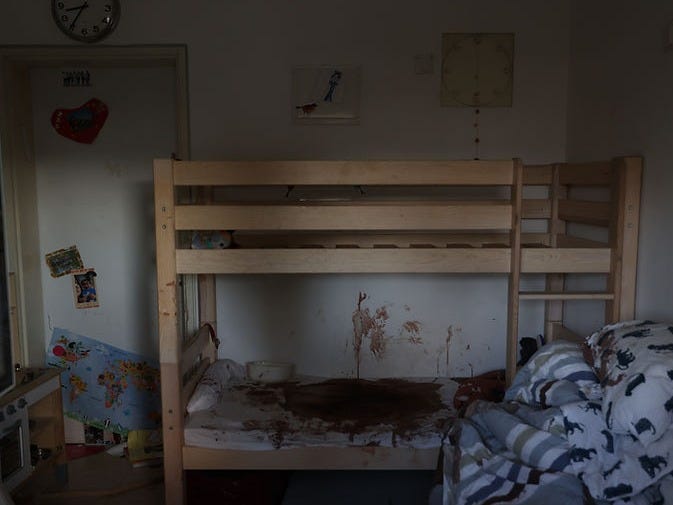
In a right-side-up world, nobody would have watched any of that and decided “resistance” or “occupation” was the word. Shooting people at a music festival isn’t resistance. Kidnapping a grandmother isn’t resistance. Abducting a baby isn’t resistance. People in Western cities would not have turned Hamas into something romantic because they liked the politics they could attach to it.
In a right-side-up world, “Globalize the Intifada” would have sounded as ugly as it does to the people who remember what the intifadas actually looked like. We remember buses. We remember cafés and restaurants. We remember hotels. We remember ordinary people going somewhere ordinary and being blown apart. Nobody would chant that history at Jews and then tell us they’re interpreting the chant incorrectly.
In a right-side-up world, 80 years of Holocaust education would have bought us more than this. We built museums. Survivors spent the last years of their lives walking into classrooms and telling children what happened to them. Schools held assemblies. Politicians said “Never Again” every January. We put those words on walls. After October 7th, somebody besides the Jews should have remembered what we meant.
In a right-side-up world, “Never Again” wouldn’t need an asterisk. It wouldn’t mean never again to Jews in Europe but maybe something different for Jews in Israel. It wouldn’t depend on whether the murderer had a grievance, or whether the murdered Jew had the correct politics, or whether Jewish self-defense made other people uncomfortable. We’ve had eighty years to learn two words.
In a right-side-up world, a claim from Hamas would remain a claim from Hamas, known and agreed upon lies. That’s what reporters are there for. A statement shouldn’t ever begin as “Hamas says” and then regurgitated across the world as some kind of “truth” everyone knows happened. And when a story is wrong, the correction shouldn’t whisper after the headline screamed.
In a right-side-up world, the halls of the United Nations would have been covered with hostage photographs. Put them beside the elevators. Put them outside the meeting rooms. Leave 251 empty chairs. Make diplomats walk past those faces every morning. It would be harder to reduce a kidnapped grandmother to an agenda item if her photograph were looking at you while you waited for the elevator.
In a right-side-up world, being Israeli wouldn’t have become a disqualification. A violinist could play the violin. A professor could give a lecture. A soccer player could play soccer. A filmmaker could show a film. Nobody would first have to produce a statement proving that he held the correct opinions about his government. We understand this principle perfectly well for nearly every other nationality.
In a right-side-up world, Israel could have buried its dead before being asked to defend its right to exist. Argue about the war. Argue about military decisions. Argue about Netanyahu. Israelis certainly do. But there is something very wrong about a country being invaded and massacred and somehow finding itself on trial for being a country at all.
In a right-side-up world, Iron Dome would be considered one of the good things. Somebody fires a rocket at a city, Israel manages to knock it out of the sky, and people live. That’s a successful ending. The rocket doesn’t become less real because it missed, and the person who fired it doesn’t become less responsible because Israeli engineers figured out how to stop it.
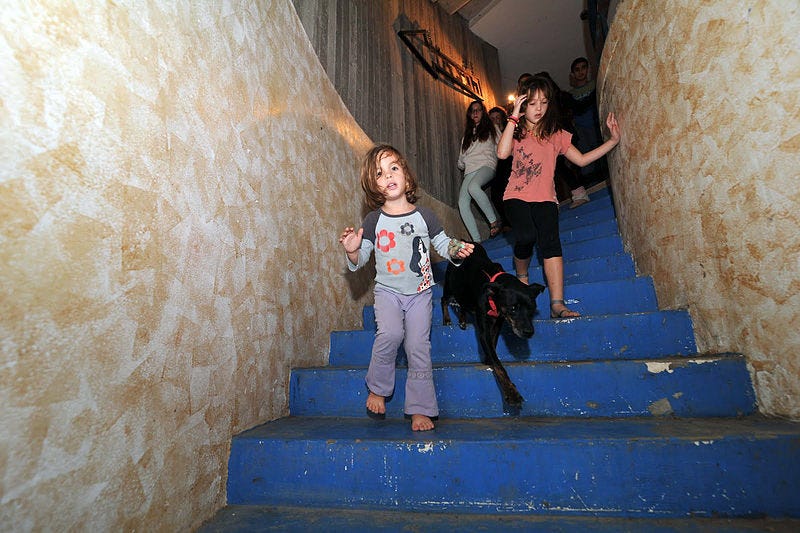
In a right-side-up world, nobody would look at a bomb shelter and see privilege. Israeli parents wake sleeping children and carry them into reinforced rooms because sirens are screaming outside. They know whether they have 15 seconds, 30 seconds, or a minute and a half. Children learn that sound before they’re old enough to understand the politics behind it. A country spending money to keep those children alive shouldn’t somehow be evidence against it.
In a right-side-up world, nobody would be suspicious of a Western Jew for caring whether Israelis live. People are allowed to love more than one place. They are allowed to have relatives somewhere else, history somewhere else, memories somewhere else. An Irish American can care about Ireland without being asked to prove his loyalty to America. Jews shouldn’t need a special rule.
In a right-side-up world, someone would have put Iran and Israel on the same map every time the “Axis of Resistance” came up. Iran has more than 90 million people, huge territory, oil and natural gas, missiles, military forces, and armed partners spread across the region. You can drive Israel up and down in under 6 hours and east to west in less than one. Zoom out far enough and it looks like a brine shrimp stuck to the Mediterranean. Iran spent decades helping build an armed network across Lebanon, Syria, Iraq, Yemen, and Gaza and calls that network the “resistance” to Israel. Put the map up and leave it there for a minute.
In a right-side-up world, Israelis wouldn’t have had to be the perfect victim before people cared about them. They wouldn’t need the right politics, the right address, the right family history, or a sufficiently heartbreaking photograph. A frightened Israeli child would get to be a frightened child. A murdered Israeli would get to be mourned before someone researched how he voted.
In a right-side-up world, Jewish fear would have been treated like fear. When Jewish schools added guards, when synagogues called the police, when students stopped wearing a Star of David, and when parents wondered whether it was safe to send a child somewhere visibly Jewish, people would have asked what they could do. Nobody would stand beside an armed police officer outside a synagogue and tell the Jews inside that they were overreacting.
In a right-side-up world, politicians and political candidates wouldn’t use phrases like “hurt people hurt people,” “violence is a cycle,” or “resistance” after Jews have been attacked. They wouldn’t explain the pain of the man who drove a truck into a synagogue or the grievances of the men who murdered families in their homes.
Nobody asks the family of a murder victim to consider what the murderer had been through. Nobody asks a woman who was raped to think about what happened to her rapist before he attacked her. Hurt people go to therapy. Being hurt doesn’t give anyone permission to murder, rape, kidnap, burn, or terrorize someone else, and elected leaders shouldn’t need that explained to them.
In a right-side-up world, Jews would have been allowed to mourn without submitting a disclaimer first. A mother could talk about her murdered daughter without acknowledging every other tragedy in the Middle East before saying her name. A hostage family could beg for its son without proving that it cared about everybody else’s sons. Grief doesn’t work that way for anyone else.
In a right-side-up world, October 7th would be remembered as the day Jews were murdered in their homes, hunted through fields, raped, shot, burned, and kidnapped. October 8th would be remembered for what happened next: the day people came to the door, called their Jewish friends, lit candles, put up photographs, sat beside frightened students, and said, “We’re here for you.”
In a right-side-up world, those hostage posters would be faded by now. Three years of sun and rain would have done that. The tape would have been replaced so many times there might be layers of it around the edges. There would be old candle wax on the sidewalk and dead flowers tucked behind the paper. Somebody passing on the way to work might notice a corner coming loose and press it back against the wall — because someone was kidnapped, and of course you put the poster back up.
That is the world we should have been living in since October 7th. We found out less than 24 hours later that we weren’t.
I’m coming to believe that our role as Jews is a test for the world’s ability to distinguish truth from lies and good from evil. And much of the world is failing. It makes me appreciate all the more those who have their heads screwed on properly.
Well done, profound, and sad.