


Please consider supporting our mission to help everyone better understand and become smarter about the Jewish world. A gift of any amount helps keep our platform free of advertising and accessible to all.
You can also listen to the podcast version of this essay on Apple Podcasts, YouTube Music, YouTube, and Spotify.
We’re less than 72 hours into the U.S.–Israel coordinated attacks on the Islamic Republic of Iran, and the stories already coming out of Israel would make any Hollywood scriptwriter salivate.
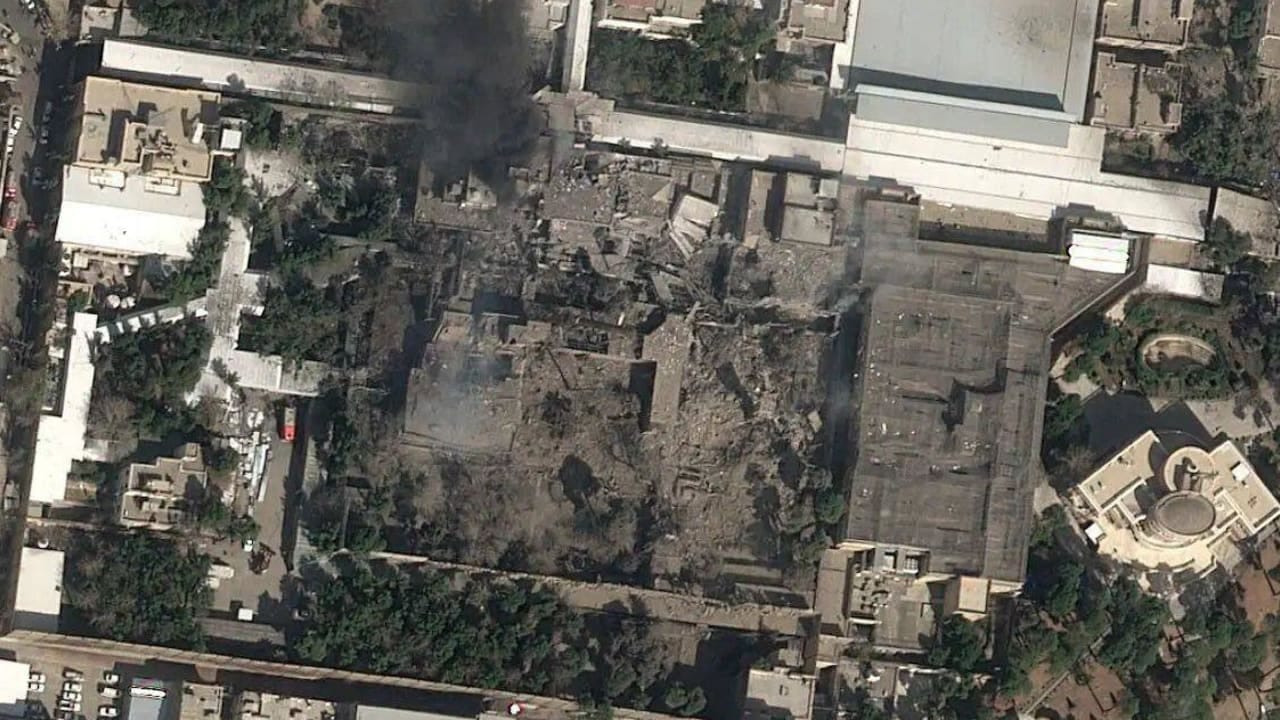
The Financial Times revealed that Israel had penetrated nearly the entire network of traffic cameras across Tehran. Their feeds were reportedly encrypted and streamed in real time to servers in Tel Aviv and southern Israel. By the time the security teams and drivers assigned to senior Iranian officials arrived near Pasteur Street — the compound where Supreme Leader Ali Khamenei was killed in a Saturday Israeli airstrike — Israeli intelligence was already watching.
One camera, according to a source cited by the paper, offered an especially valuable vantage point. It showed where guards routinely parked their personal vehicles, exposing subtle but consistent habits inside one of the most fortified compounds in the country. Advanced algorithms absorbed this information, expanding detailed personal profiles of the security personnel: home addresses, duty rotations, commute routes, and, crucially, which officials they were assigned to protect. Intelligence professionals call this building a “pattern of life.” Israel had constructed one for each of them.
This capability did not emerge overnight. It was the culmination of years of intelligence work. Real-time camera feeds were only one thread in a vast tapestry of collection. They were not the sole means by which Israeli and CIA officials determined precisely when the 86-year-old Khamenei would be in his office that Saturday morning, and who would be with him.
In addition to visual surveillance, Israel reportedly interfered with roughly a dozen cellular antennas in the vicinity of Pasteur Street. Phones dialed in the area returned busy signals. Any last-minute warnings to Khamenei’s security team were effectively silenced.
Long before the strike, one Israeli intelligence officer told the newspaper, “We knew Tehran the way we know Jerusalem. And when you know a city like the street you grew up on, you notice when something is out of place.”
The dense intelligence map of Tehran was the product of meticulous data gathering: IDF Unit 8200’s cyber capabilities, Mossad human sources, and the IDF Intelligence Directorate’s daily synthesis of enormous data streams. According to sources familiar with the effort, Israel relied heavily on network analysis, a mathematical method capable of sorting billions of data points to reveal hidden decision hubs and new targeting opportunities. All of it fed what one official described as an “assembly line” with a single output: targets.
“In Israeli intelligence culture,” said Brigadier General (reserve) Itai Shapira, a 25-year veteran of the intelligence corps, “target intelligence is the essential tactical element that enables strategy. When a decision is made to eliminate someone, the answer is not whether we can. The answer is: we will provide the intelligence.”
Evidence of this capability had already surfaced during the opening phase of last June’s 12-Day War, when Israeli forces neutralized Iranian air defenses in a coordinated campaign of cyberattacks, drones, and precision strikes that disabled the radars of Russian-made missile systems.
In both the June war and the strike that killed Khamenei, Israeli pilots reportedly deployed long-range “Sparrow” missiles, capable of striking a target the size of a dining table from more than 1,000 kilometers away, well outside Iranian air defense coverage.
According to the report, U.S. and Israeli intelligence identified a rare convergence: Khamenei and much of Iran’s senior leadership would be gathered together that Saturday morning at the compound near Pasteur Street. The opportunity was unusually advantageous. Once open war began, officials assessed that Iranian leaders would disperse and descend into hardened underground bunkers beyond the reach of available munitions.
Khamenei, unlike longtime Hezbollah chief Hassan Nasrallah — who spent years in underground bunkers before being killed in a massive Israeli strike in Beirut in September 2024 — had not lived in permanent concealment. He had publicly spoken about martyrdom, at times dismissing the significance of his own life to the Islamic Republic’s future. Still, he took precautions.
Tracking high-value individuals once required laborious visual verification and constant filtering of false leads — a near Sisyphean undertaking. In recent years, however, algorithm-driven collection has automated much of that process.
For a target of Khamenei’s stature, Israeli doctrine required extraordinary certainty. Two independent senior officers had to confirm his presence and identify those accompanying him. Signals intelligence, from compromised cameras and penetrated cellular networks, indicated the meeting was proceeding as planned. And the Americans contributed something more concrete: a human source inside the circle.
Israeli aircraft flew for hours to reach the designated airspace before releasing approximately 30 precision-guided munitions. The strike was conducted in daylight, a deliberate choice. Morning provided tactical surprise for a second time, despite elevated Iranian readiness.
The result was not simply the success of advanced technology. It was the convergence of long-term intelligence preparation, political will, and a fleeting window that, once opened, could not be allowed to close.
Former Israeli Defense Minister Yoav Gallant described how the IDF prioritizes which targets it attacks first, writing:
“The sequence unfolding now follows a logic that those of us in the defense establishment have long understood. First, you strike fleeting and mobile targets: military and political leadership, weapons scientists, command and control nodes. These are the targets that disappear if you wait. So far, this phase has been successful, with Supreme Leader Ali Khamenei killed in strikes on his compound in Tehran alongside many other political and military leaders.”1
In the bestselling book, “Rise and Kill First: The Secret History of Israel’s Targeted Assassinations,” Israeli journalist Ronen Bergman explained why and how Israel has likely carried out more assassinations than any other country since World War II.
And we know this isn’t just history; it’s current events. Since October 7th, Israel has systematically eliminated senior Hamas and Hezbollah operatives, often in daring operations deep inside enemy territory, including Tehran and Beirut. Names that once seemed untouchable are now obituaries. Israel’s reach is long, and its message is blunt: If you slaughter our people, you will pay with your life.
The Israeli approach to assassination — what military planners call mabam, a Hebrew acronym for ma’arecha bein milchamot (“the war between wars”) — is built on a core principle: Eliminate imminent threats before they materialize. From the earliest days of the Jewish state, this doctrine has been as much about deterrence as justice.
But for years, assassinating Iran Supreme Leader Ali Khamenei wasn’t an option, and the reasons were both practical and philosophical: Israel has never assassinated the leader of a sovereign state, and it didn’t want to set that precedent now. Even during existential wars decades ago, Israel never assassinated Egyptian President Gamal Abdel Nasser, Syrian President Hafez al-Assad, or Iraqi President Saddam Hussein.
Plus, assassinating a head of state does not automatically weaken a regime. History shows the opposite can occur: internal factions harden, radical elements consolidate power, and ethno-religious narratives energize the system. Removing a leader at that level is not a tactical maneuver. It is strategic escalation — overt, dangerous, and irreversible.
But during the last few months, taking out Khamenei became a real possibility, as Nadav Eyal, a columnist for Yediot Aharonot, one of Israel’s largest newspapers, explained.2
Israel’s Military Intelligence Directorate (AMAN) supplied the overwhelming majority of the actionable intelligence. Abroad, observers often conflate AMAN with the Mossad. In reality, while the Mossad played a role, the heavy lifting in both wars was done by military intelligence. By some estimates, more than 90 percent of the intelligence architecture behind these campaigns came from AMAN, the same branch whose failures on October 7th cast a long shadow over the system.
By June 2025, once Iran’s air defense network had been largely dismantled, the challenge was no longer technical. It became temporal. The question was not “Can we strike?” but “When?
At the heart of the decision was a stark calculation: Which carries the greater risk — allowing him to remain in power, or absorbing the consequences of removing him? Inside Israel’s intelligence community, the issue was not rubber-stamped. It was debated seriously. Counter-arguments were aired. Worst-case scenarios were modeled. The possibility of unintended escalation was not dismissed.
The prevailing assessment that emerged was this: Whatever Khamenei once represented, he no longer functioned as a stabilizing force. Age had not mellowed him into caution. It had hardened him. His worldview appeared less pragmatic, more absolutist — perhaps even infused with a kind of fatalistic or messianic rigidity. In that assessment, he was no longer containing radicalism within the regime; he was accelerating it.
Even the possibility that he might be replaced by a younger, sharper Revolutionary Guard commander — someone more tactically capable — did not reverse the conclusion. The costs were real. But the long-term trajectory under his continued rule was judged worse.
Khamenei devoted decades to preserving and exporting the Islamic Revolution — repression at home, militancy abroad, ideological confrontation as doctrine. Unlike his predecessor Ayatollah Ruhollah Khomeini, who demonstrated occasional tactical flexibility at pivotal moments, Khamenei rarely showed an instinct for retreat. He doubled down.
As regional economies diversified and modernized, Iran stagnated. Currency crises deepened. Water infrastructure deteriorated. Corruption metastasized. Sanctions compounded the strain. Subsidies distorted markets. Political repression hollowed out civic life. The revolutionary project continued, but prosperity bypassed the country it claimed to defend.
Leaders who architect ideological systems of repression rarely pay personal costs. They are insulated by security rings and loyal institutions. The consequences fall on citizens. This time, the insulation failed.
Assassinating a sitting head of state in the modern era is extraordinary. It guarantees retaliation in some form, whether immediate or deferred. If the regime survives, even in altered form, it will remember. Israeli officials understand that survival under humiliation can be as dangerous as collapse — which is precisely why the decision was framed not as a tactical victory, but as a long-term strategic gamble, one taken with full awareness that eliminating a man does not automatically eliminate the system he built.
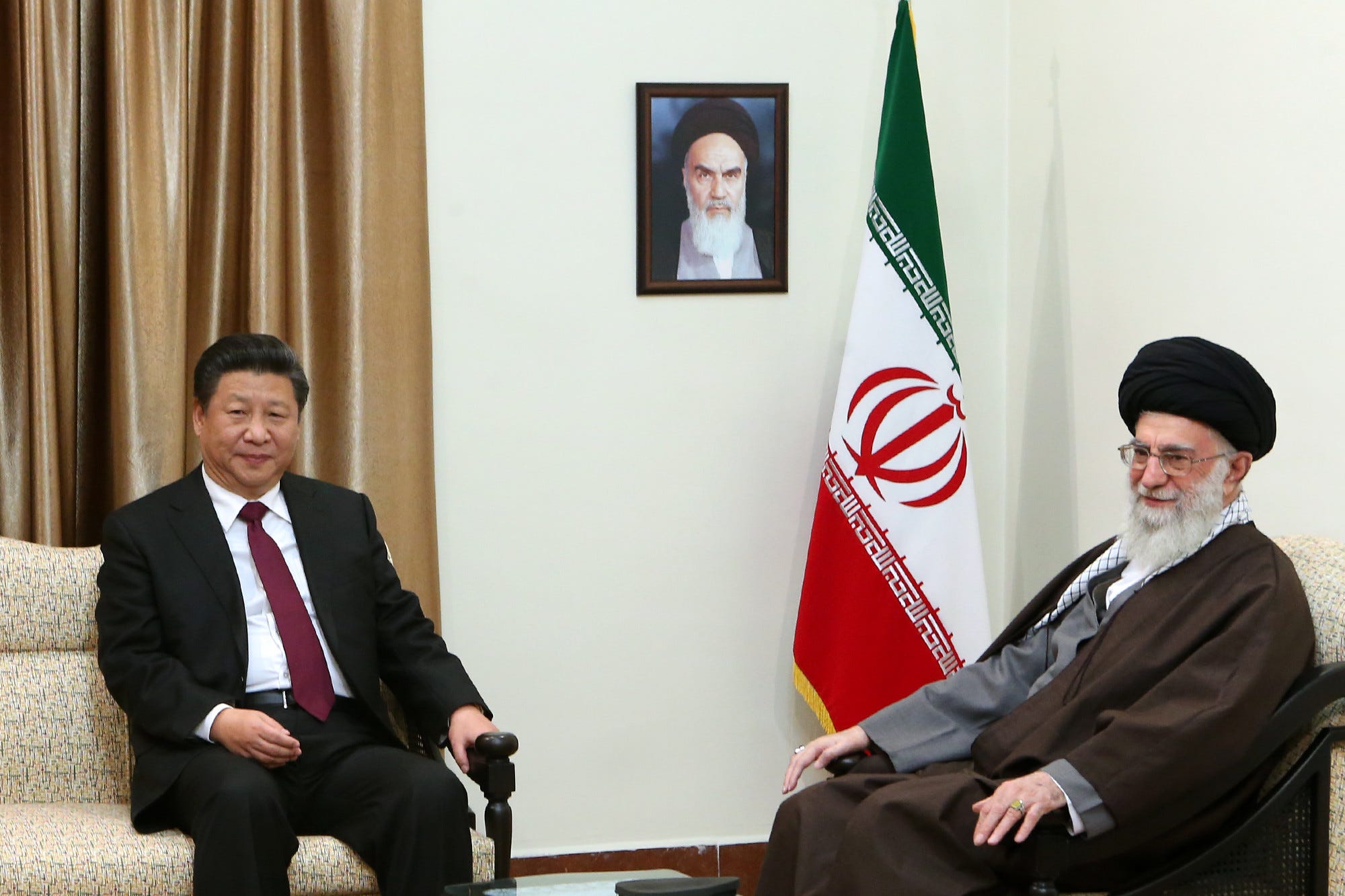
According to a new report by Nadav Eyal, the American–Israeli campaign against the Islamic Republic of Iran rests on two distinct pillars.3
The first is military degradation: targeted assassinations, the systematic erosion of Iran’s missile infrastructure, strikes on nuclear facilities, and the dismantling of key regime institutions. Beyond the elimination of Iran’s top leadership meeting — and ultimately of Khamenei himself — Israeli aircraft reportedly destroyed the Iranian Intelligence Ministry within the opening hours of the campaign.
The scale of what was struck matters. Between Tel Aviv and the Korean Peninsula, no government has executed, imprisoned, and repressed more of its own citizens than the regime Khamenei presided over. The damage inflicted on its coercive machinery is not incidental; it is cumulative, and ongoing.
There was also a political signal layered into the military phase. Prime Minister Netanyahu’s Persian-language address — generated and distributed using advanced AI tools — was not mere psychological warfare. It was a formal gesture toward regime change, something Israel has not openly pursued at this scale since the 1982 First Lebanon War.
If one views this in stages, the first stage was military: Dismantle capabilities, blind systems, eliminate leadership nodes. The second stage is political: Shape what comes next.
It strains credulity to assume Washington and Jerusalem would initiate such an operation without serious thought about the aftermath. Dwight Eisenhower once said, “Plans are worthless, but planning is everything.” The point was not that plans fail — though most do, at least in detail. It was that the act of planning forces clarity about contingencies, risks, and alternatives.
The planning here appears extensive.
In what can reasonably be described as the war’s second phase, pressure is expected to generate visible political shifts, internally or externally, that could culminate in regime transformation. Calling this an “assessment” feels almost redundant after the U.S. president openly indicated he has views about who might be suitable to lead Iran after Khamenei.
None of this is simple. Precision bombing based on high-grade intelligence is inherently risky. Regime change is exponentially more so.
The United States and Israel have spent years building dense intelligence cooperation and operational trust. IDF Chief of Staff Eyal Zamir reportedly devoted enormous attention to these preparations, briefing U.S. President Donald Trump directly in granular detail. The president, by all accounts, pressed beyond broad strategic framing into tactical specifics — what could fail, what contingencies existed, how escalation might unfold.
Had Trump not been persuaded that the probability of success — and the potential strategic upside for American interests — justified the risk, this operation would not have proceeded. American calculations are global: economic stability, energy markets, alliance structures, and, ultimately, the interests of U.S. citizens. These factors will determine both the duration and limits of the campaign.
One of Tehran’s most consequential miscalculations was its direct aggression against Arab states — particularly the United Arab Emirates and Bahrain. That decision shattered unspoken regional codes and accelerated something already underway: a tightening security alignment among the United States, Israel, Jordan, the Emirates, Bahrain, Saudi Arabia, and others. Chief of Staff Zamir has been in active contact with regional counterparts in recent days.
So what should observers watch now?
First: defection.
Are Iran’s security institutions — the army, Revolutionary Guards, police, Basij — holding firm? Or are cracks appearing? How they respond to protests will be decisive. Western strategists are looking for signs of fragmentation: units refusing orders, elements aligning with opposition currents, fractures in loyalty. A recently circulated video showing a drone strike against Basij forces in Tehran may be an early indicator of escalating internal pressure.
Second: energy.
Thus far, Iranian oil and gas infrastructure has been left untouched. That restraint may not hold. Even a limited strike on energy facilities would send an unmistakable signal: The regime’s economic lifeline is no longer sacrosanct. Without hydrocarbon revenue, the Iranian state cannot function — salaries go unpaid, patronage networks collapse, internal cohesion erodes.
If Washington were to authorize such strikes, it would signal one of two conclusions: either a determination to fully collapse the regime, or a final warning — change internally now, or face extinction.
At present, three broad trajectories are conceivable: stagnation and survival under pressure, internal reform that preserves the Islamic Republic label, or outright collapse through coup or revolution. Western capitals and Jerusalem clearly prefer the latter.
On Sunday, Israeli Ambassador to Washington Yechiel Leiter briefed members of U.S. Congress and American Jewish organizations, saying: “We don’t know what will happen next, but whatever happens in Iran after the war is better than the current regime.”4
“Finish the Job.” The Defense Memo.
“The Decision to Kill Khamenei - And the Secret Phase B of the War.” Between Us.
“השלב הבא: שינוי משטרי באיראן.” Ynet News.
“שגריר ישראל בוושינגטון: מתחילים לראות סדקים בצמרת ההנהגה האיראנית ששרדה את מכת הפתיחה.” N12.
While morons were marching in western streets calling to globalize the intifada, yiddishe kops were busy planning the Iranian mullahs' demise. Good for Jewish heads! But there is still work to be done in the immediate neighbourhood - Gaza, Judea and Samaria, whence come the murderous crazed and sexually depraved Palestinian assassins. Remember, as both the Bible and Hamlet's father's ghost would say.
Excellent articles. You guys are the best!