


Please consider supporting our mission to help everyone better understand and become smarter about the Jewish world. A gift of any amount helps keep our platform free of advertising and accessible to all.
You can also listen to the podcast version of this essay on Apple Podcasts, YouTube Music, YouTube, and Spotify.
The Israeli strike on a Syrian airbase this week was the latest chapter in a relationship that has moved from refuge to alliance to rivalry — and a warning that Israel’s next northern threat may not come from the Islamic Republic of Iran.
The most important fact about the Israeli airstrike in Syria this week is what Israel did not claim to be bombing. It did not claim to be destroying an Iranian weapons shipment. It did not claim to be stopping missiles from reaching Hezbollah. It did not claim that terrorists were preparing an imminent attack.
Israel said it bombed the Abu al-Duhur airbase in northwestern Syria because Turkey was preparing to deploy forces there. The base had not functioned as a dedicated military airfield since 2013, but its runways had recently been repaired.
Israel has conducted thousands of operations in Syria over the past decade, largely to prevent Iran from establishing a permanent military presence and supplying advanced weapons to Hezbollah. But this was something different: an Israeli attack, publicly acknowledged by the Israeli government, intended to stop the military expansion of Turkey (a NATO member, a major regional power, and one of Israel’s closest strategic partners only a generation ago).
The strike did not start the Israeli-Turkish rivalry. But it may have marked the moment that rivalry became militarily real.
There is another important fact.
On August 14, four days before the strike, Mossad director Roman Gofman reportedly spoke by telephone with Syrian Foreign Minister Asaad al-Shaibani. The two men discussed Turkish military deployments in Syria. It was one of the highest-level contacts between Israel and Syria’s new government since Bashar al-Assad’s fall.
Abu al-Duhur is nowhere near Israel’s border. That makes Israel’s action look disproportionate unless one understands what could eventually be stationed there.
The principal concern is not a few hundred Turkish soldiers. It is what those soldiers might bring with them: drones, radar, electronic-warfare equipment, combat aircraft and, most importantly, advanced air-defense systems.
Israel’s operational freedom over Syria has become one of its most important strategic advantages. It has allowed Israel to attack Iranian positions, weapons convoys, Hezbollah infrastructure, and Syrian military installations without facing a serious air-defense challenge. A Turkish-operated airbase equipped with modern radar and surface-to-air missiles could begin closing that sky.
Turkey would not need to attack Israel to change the balance. It would merely need to make Israeli operations more detectable, expensive, and dangerous.
From Ankara’s perspective, the story looks different. Turkey argues that it is helping Syria rebuild a national army after 14 years of civil war. It wants a stable, centralized Syrian government capable of restraining Kurdish forces, securing the Turkish border, and facilitating the eventual return of Syrian refugees. Turkey regards its military cooperation with Damascus as an agreement between two sovereign governments.
Israel sees a former jihadist movement governing Syria with Turkish sponsorship. Ankara sees Israel bombing the institutions that might prevent Syria from collapsing again.
Both perspectives contain some truth. Neither country is acting out of charity.
After Assad fell in December 2024, Israel destroyed much of the former Syrian military’s remaining strategic arsenal. Israel also moved into the United Nations-monitored buffer zone established under the 1974 disengagement agreement, arguing that Assad’s disappearance had rendered the old arrangement unenforceable and left Israeli communities exposed.
Turkey, meanwhile, emerged as the most influential foreign supporter of Syria’s new government under Ahmed al-Sharaa. Ankara helped train Syrian forces, rebuild institutions, and negotiate the incorporation of armed factions into the new Syrian state.
The two countries’ interests soon collided.
In early 2025, Turkish teams reportedly evaluated the T4, Palmyra, and Hama airbases for possible use under a planned defense partnership with Damascus. Israel then heavily bombed those facilities. The T4 runway, control tower, and hangars were rendered unusable.
Israel subsequently told Turkey that the establishment of Turkish bases near Palmyra would be a red line. The two countries began technical talks in Azerbaijan to prevent accidental clashes, but those talks produced a limited communication channel rather than a political resolution.
In August 2025, Turkey and Syria formalized military cooperation. The agreement included Syrian troop training, military consulting, logistical assistance, and the procurement of Turkish weapons systems. Turkey already had forces across parts of northern Syria; it was now helping construct the new Syrian military itself. The agreement transformed Turkish influence from temporary intervention into an institutional partnership.
Israel and Syria also began their own discussions. In January 2026, American-mediated talks produced a joint communication mechanism covering intelligence, military de-escalation, and diplomatic engagement. Syria wanted Israel to withdraw from territory seized after Assad’s fall. Israel wanted enforceable security guarantees. No comprehensive agreement was reached, and the precise meaning of the “security status quo” cited by Israeli Prime Minister Benjamin Netanyahu this week has never been publicly explained.
The strike on Abu al-Duhur was therefore not an isolated event. It was the second time Israel destroyed Syrian air infrastructure after learning that Turkey might use it.
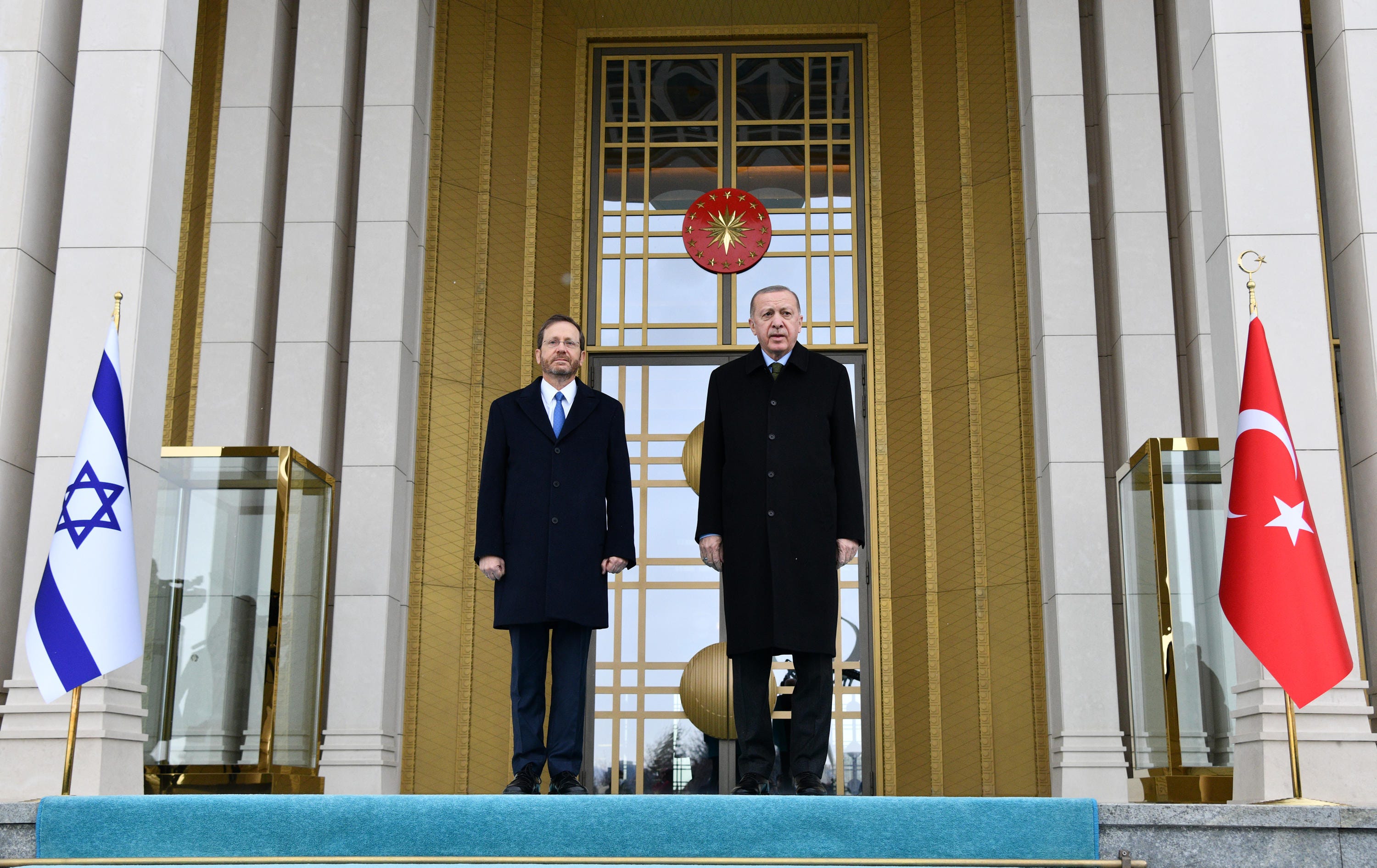
It is tempting to describe Israel and Turkey as former friends who suddenly became enemies under Turkish President Recep Tayyip Erdoğan. The real history is more complicated.
Jews lived in Anatolia centuries before either modern Turkey or the Ottoman Empire existed. After the Ottoman conquest of Constantinople in 1453, the empire encouraged the resettlement of Jewish communities in its new capital. Following the expulsion of Jews from Spain in 1492 and forced conversions in Portugal beginning in 1497, tens of thousands of Sephardic Jews found refuge across Ottoman territory.
They established flourishing communities in Constantinople, Salonika, Izmir, Edirne, Safed, and elsewhere. They became physicians, merchants, printers, diplomats, and court advisers. Ladino became one of the great Jewish languages. The Sephardic arrivals became so influential that they reshaped Jewish life throughout the empire. They became the dominant cultural force among many Ottoman Jewish communities.
This history deserves recognition, but not mythology.
The Ottoman Empire was generally safer for Jews than much of Christian Europe. It was not a modern pluralistic democracy. Jews were protected but subordinate non-Muslims. They possessed communal autonomy while living with legal and social restrictions that Muslims did not face.
The Ottoman Empire conquered the Land of Israel in 1517 and ruled it for four centuries. During that period, Jewish communities remained in Jerusalem, Safed, Tiberias, Hebron, and elsewhere. Modern Zionist immigration began in the 1800s while the land was still Ottoman territory.
The “First Aliyah” (the first major wave of Zionist immigration) began in the early 1880s. Ottoman authorities soon imposed restrictions on foreign Jewish immigration and land acquisition in Palestine. Sultan Abdul Hamid II feared that a concentrated Jewish population, especially one supported by European powers, could eventually seek autonomy in an empire already being torn apart by nationalist movements.
Theodor Herzl repeatedly tried to reach an agreement with the sultan. He proposed helping reorganize Ottoman debt in exchange for a charter permitting large-scale Jewish settlement in Ottoman-era Palestine. Herzl finally met Abdul Hamid in 1901. The sultan welcomed Jewish refugees elsewhere in the empire but would not surrender political control over Palestine. The Ottoman government’s concern was not simply religious hostility; it feared Zionism could become another European-sponsored separatist movement.
After the Young Turk Revolution of 1908, some Zionists hoped the restored Ottoman constitution might create space for Jewish national aspirations inside a decentralized empire. David Ben-Gurion and Yitzhak Ben-Zvi (Israel’s future first prime minister and second president) studied law in Istanbul and initially advocated Jewish integration into Ottoman political life.
That dream did not survive the First World War.
Ottoman authorities deported Ben-Gurion and Ben-Zvi in 1915. In 1917, as British forces advanced from Egypt, the Ottoman military ordered the evacuation of Jaffa and the young Jewish city of Tel Aviv. Arab residents were also displaced, but Jewish exiles faced prolonged restrictions on returning, and many died from hunger and disease.
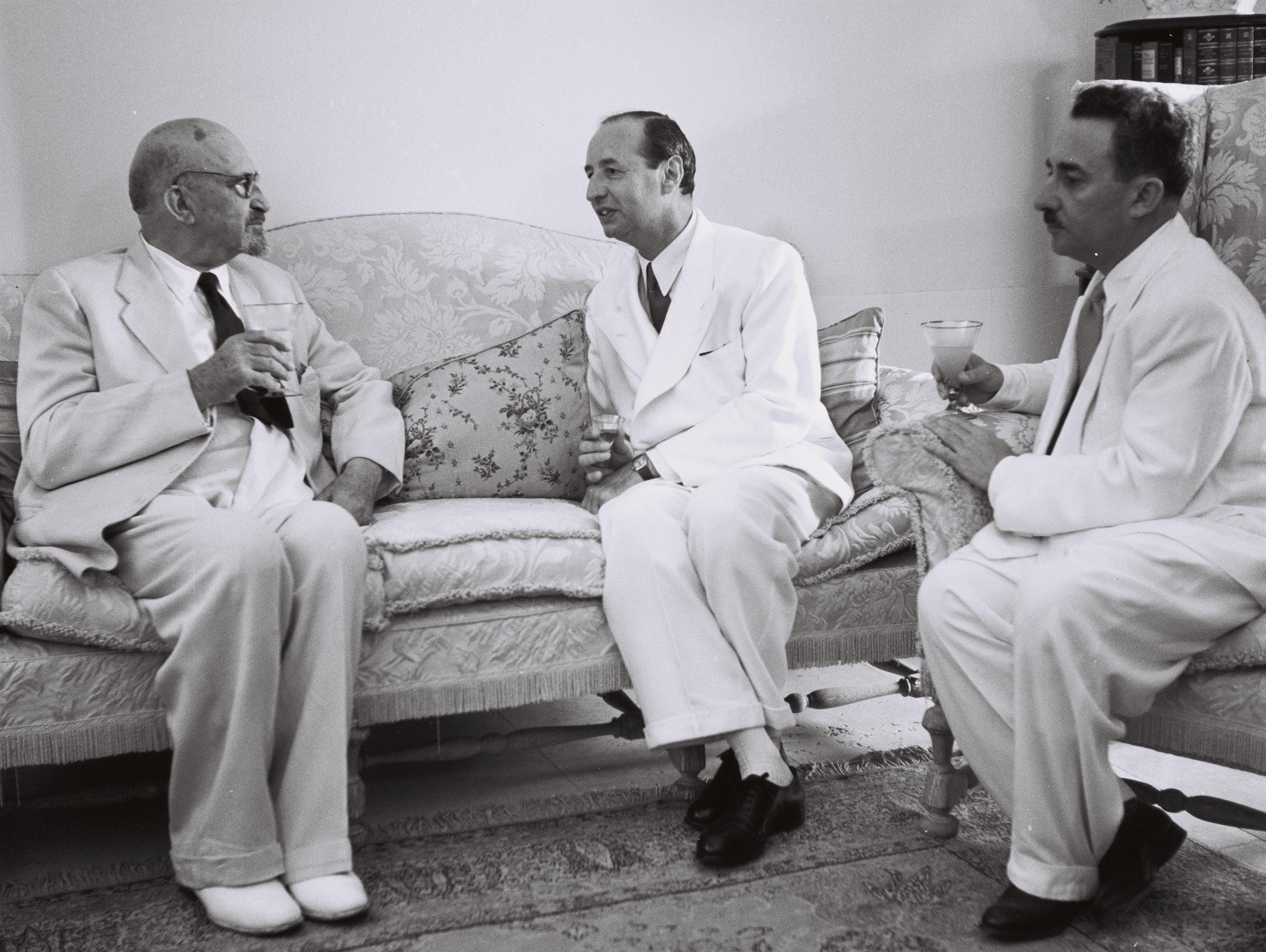
The Turkish Republic founded by Mustafa Kemal Atatürk in 1923 was secular, nationalist, and determined to replace Ottoman identity with a unified Turkish one.
Jews were citizens of the new republic, but equality on paper did not always mean equality in practice. National campaigns pressured Jews to abandon Ladino and speak Turkish. Antisemitic violence in Thrace in 1934 drove thousands from their homes. During the Second World War, the government imposed a discriminatory wealth tax that fell disproportionately on Jews, Greeks, and Armenians, destroying businesses and sending some who could not pay to labor camps. It contributed to the disappearance of non-Muslim-owned enterprises.
Turkey remained neutral through most of the Holocaust. Individual Turkish diplomats helped save Jews, and Turkey served as an escape route for some refugees. But the state’s record was hardly heroic. In 1942, Turkish authorities refused to allow the Struma, carrying 769 Jewish refugees, to disembark in Istanbul. The disabled ship was towed back into the Black Sea, where it was torpedoed. Only one person survived. Turkey’s restrictions on Jewish refugee transit helped produce the disaster.
Turkey also voted against the 1947 United Nations partition plan, which proposed ending the British Mandate and dividing the territory into independent Arab and Jewish states — and then reality changed.
Turkey recognized Israel in March 1949, becoming the first Muslim-majority country to do so. It opened a diplomatic mission in Tel Aviv the following year and removed restrictions that had hindered Turkish Jewish emigration. Nearly 35,000 Turkish Jews moved to Israel between 1948 and 1951, roughly 40 percent of Turkey’s Jewish population at the time.
The relationship remained deliberately quiet. Turkey wanted access to Israel without alienating the Arab world. Israel wanted a Muslim partner beyond the ring of hostile Arab states surrounding it.
After the 1956 Suez War, Turkey downgraded relations but did not sever them. Two years later, David Ben-Gurion and Turkish Prime Minister Adnan Menderes developed a secret “peripheral pact” based on intelligence sharing, military cooperation, and resistance to Soviet influence and radical Arab nationalism. It was not an alliance of shared values. It was an alliance of shared enemies.
Turkey condemned Israel after the 1967 Six-Day War and called for withdrawal from captured territory, although it declined to label Israel an aggressor. In 1980, after Israel passed the Jerusalem Law, Turkey again downgraded relations to a symbolic level. Even then, the channel never fully disappeared.
The end of the Cold War transformed the relationship. The 1991 Madrid Peace Conference and the Oslo process made public cooperation with Israel less politically costly. Turkey restored ambassador-level relations. Israel and Turkey discovered that they shared a particularly useful adversary: Syria.
Hafez al-Assad’s regime supported Hezbollah and allowed Iran to transfer weapons through Syrian territory. It also sheltered and supported the Kurdistan Workers’ Party, which was waging an insurgency against Turkey. Israel needed strategic depth, intelligence cooperation and access to Turkey’s enormous airspace. Turkey needed Israeli intelligence, military technology, and a partner willing to sell equipment when European governments hesitated.
In 1996, Israel and Turkey signed landmark military-training and defense-industry agreements. Israeli aircraft trained over Turkey. Turkish pilots trained in Israel. The countries exchanged intelligence, conducted naval exercises, and cooperated on weapons development. Israel modernized Turkish fighter aircraft and tanks. A free-trade agreement expanded civilian commerce. The military partnership as unprecedented.
Israel rushed assistance to Turkey after the devastating 1999 earthquake. Tourism flourished. Trade expanded. For Israelis, Turkey became an inexpensive and welcoming destination. For Turkey’s secular military establishment, Israel was a technologically advanced partner with powerful connections in Washington.
The honeymoon was real, but it was built upon conditions that would not last.
In Turkey, the Justice and Development Party came to power in 2002. Its leader, Recep Tayyip Erdoğan, brought an Islamist political tradition, neo-Ottoman rhetoric, and a far deeper emotional and ideological identification with the Palestinian cause. Still, the relationship with Israel initially survived.
Erdoğan visited Israel in 2005, met Ariel Sharon, and visited Yad Vashem (Israel’s official memorial institution to the victims of the Holocaust). Turkey purchased Israeli drones and surveillance technology. Ankara helped facilitate contact between Israel and Pakistan and later mediated indirect negotiations between Israel and Syria.
The break came gradually.
In the Gaza Strip, Hamas won the Palestinian legislative elections in 2006, and Turkey received its leaders despite Israeli objections. The Second Lebanon War and repeated fighting in Gaza hardened Turkish public opinion. Then, in December 2008, Israel launched Operation Cast Lead only days after Prime Minister Ehud Olmert had visited Ankara for discussions involving Turkish mediation with Syria. Erdoğan regarded the timing as a personal humiliation.
At the 2009 World Economic Forum in Davos, Erdoğan angrily confronted Israeli President Shimon Peres, accused Israel of killing, and stormed off the stage. The performance turned him into a hero across much of the Muslim world.
In May 2010, the Mavi Marmara attempted to break Israel’s naval blockade of Gaza. Israeli commandos boarded the ship and encountered violent resistance. Ten Turkish activists ultimately died, while several Israeli soldiers were injured. The United Nations’ Palmer inquiry found Israel’s naval blockade lawful and raised serious questions about the flotilla organizers, especially the Turkish organization Humanitarian Relief Foundation, but also concluded that the force used by Israel was excessive and unreasonable.
Turkey expelled Israel’s ambassador and downgraded relations in 2011.
Netanyahu apologized in 2013 for operational mistakes that may have contributed to the loss of life. A formal reconciliation agreement followed in 2016, with Israel paying $20 million into a compensation fund and Turkey promising that Hamas would not conduct military activity against Israel from Turkish territory.
But the old strategic alliance never returned. Turkey expelled Israel’s ambassador again in 2018 following deadly clashes on the Gaza border and the opening of the American Embassy in Jerusalem.
In 2022, the two countries tried once more. Israeli President Isaac Herzog visited Ankara. Ambassadors returned. Erdoğan and Netanyahu met in person in New York in September 2023. Then came October 7th.
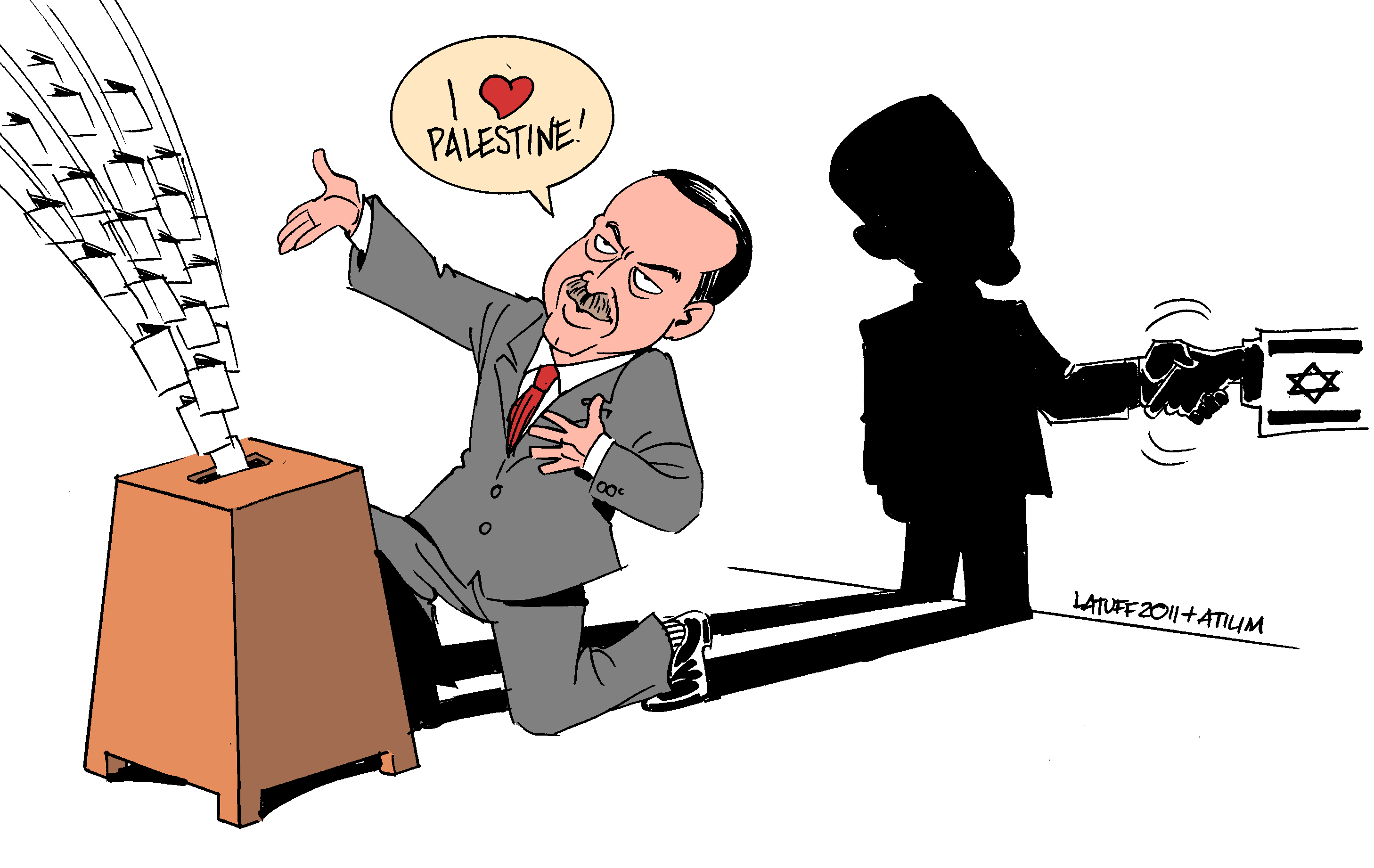
Erdoğan initially attempted to position Turkey as a mediator. As Israel’s war against Hamas intensified, he abandoned that restraint. He called Hamas a “liberation movement” rather than a terrorist organization. Turkey continued hosting senior Hamas figures. Erdoğan compared Netanyahu to Hitler, accused Israel of genocide, and presented Turkey as the leader of the global campaign against it.
Both countries recalled diplomats. In May 2024, Turkey halted approximately $7 billion in annual trade with Israel, becoming the first major Israeli trading partner to impose a comprehensive embargo over the Gaza war. Turkey later barred Israeli-linked vessels from its ports and imposed aviation restrictions. Diplomatic relations technically survived, but the political relationship effectively collapsed.
In June 2026, the Israeli Cabinet approved a proposal formally recognizing the Armenian genocide, reversing years in which Israel had avoided the issue partly to preserve relations with Ankara. The measure still required parliamentary approval, but the political message was obvious: Neither government was protecting the sensitivities of the other anymore.
By then, the dispute had grown far beyond Gaza.
Turkey and Israel were competing in the Eastern Mediterranean, cultivating rival partnerships, and lobbying against one another in Washington. Turkey saw Israel’s relationships with Greece and Cyprus as an attempt at containment. Israel saw Turkey’s support for Hamas and Islamist movements as evidence that Ankara no longer sought mere Palestinian statehood but regional ideological leadership.
Syria turned that cold rivalry into a potential military confrontation.
The lazy conclusion is that Turkey has simply become another Iran. It has not.
Turkey is not an isolated revolutionary state built around Israel’s destruction. It is a NATO member with a large conventional military, deep economic ties to Europe, a sophisticated defense industry, and competing factions within its political system. Erdoğan’s hostility is real, but Turkey and Iran are different challenges requiring different strategies.
Underestimating Turkey would be foolish. Treating war with Turkey as inevitable would be even more foolish.
The first conclusion Israel should draw is that Erdoğan’s rhetoric can no longer be dismissed as domestic theater. Turkey’s support for Hamas, trade restrictions, military relationship with Syria, and efforts to constrain Israeli operations now affect Israel’s security. Israel is justified in opposing the placement of advanced Turkish air defenses, drones, or strike capabilities in Syria — especially while Ankara hosts an organization that carried out the October 7th massacre.
The second conclusion is that preventing a Turkish military monopoly over Syria is a legitimate Israeli interest. Removing Iran from Syria only to permit a hostile Erdoğan-led Turkey to dominate the same territory would not constitute a strategic victory. The flag over the base matters less than the weapons, intelligence systems, and political intentions behind it.
The Abu al-Duhur strike may have enforced a necessary red line, but because the “status quo” agreement remains opaque and the feared weapons deployment has not been publicly documented, it is impossible to know whether the operation prevented an immediate strategic threat or preempted one that diplomacy might have contained.
The third conclusion is that Israel must preserve the distinction between Erdoğan and Turkey.
The old alliance was not imaginary. Turkish and Israeli officials cooperated for decades because their interests aligned. Turkish citizens traded with Israelis, vacationed alongside them, and benefited from Israeli technology and disaster assistance. Governments change. Regional conditions change. Israel should deter the current Turkish government without turning permanent hostility toward the Turkish nation into state doctrine.
Finally, Israel should remember the central lesson of the entire relationship: Countries do not remain friends because of historical gratitude.
The Ottoman Empire gave refuge to generations of Jews — and later restricted Zionism and expelled Jewish leaders. Republican Turkey opposed partition, and then became the first Muslim-majority state to recognize Israel. Turkey condemned Israel in public while cooperating with it in secret. The two countries became strategic partners because they shared an enemy in Syria. Today, they are becoming adversaries because they envision incompatible futures for that same country.
History did not betray Israel. History behaved exactly as history always does: Interests changed. The strike on Abu al-Duhur was Israel’s announcement that Turkey’s ambitions in Syria have reached the edge of what Jerusalem is willing to tolerate.
Israel must prevent Syria from becoming a Turkish-controlled military platform. It must confront Erdoğan’s alliance with Hamas. It must protect its northern border and its freedom to act against emerging threats.
The old alliance is gone. A new rivalry has taken its place.
Good history. Erdogan is an enemy of democracy both in Turkey and outside his own country. Perhaps things will change after Erdogan is gone, which can’t come soon enough by whatever means are most effective. As for Syria, that country has never made peace with Israel, so its claims of sovereignty are irrelevant, justifying Israel in using whatever it takes to thwart threats actual or potential, including from wannabe Ottoman Erdogan.
Given Erdogan's rhetoric and behavior, Ankara has lost the benefit of the doubt on anything they do affecting Israel. That this Islamist ruled country remains in NATO is a serious problem.