


Please consider supporting our mission to help everyone better understand and become smarter about the Jewish world. A gift of any amount helps keep our platform free of advertising and accessible to all.
This is a guest essay by Andrew Fox, a former British Army paratrooper and lecturer in war studies and behavioural science at the Royal Military Academy Sandhurst.
You can also listen to the podcast version of this essay on Apple Podcasts, YouTube Music, YouTube, and Spotify.
On June 3rd, U.S. President Donald Trump posted to social media:
“There will be no deal with Iran except UNCONDITIONAL SURRENDER!”
Yesterday, Trump announced the deal he had spent weeks insisting he did not need. The White House has called it a peace deal.
At this stage, it is a memorandum of understanding, scheduled for formal signature in Switzerland on Friday. The text remains opaque; we do not yet know the final terms.
However, the outline is clear enough to grasp the political meaning. Washington appears to have bought time; Hormuz is to reopen; the naval blockade is to be lifted; Iran receives some combination of oil waivers, asset releases, sanctions relief, or economic breathing space; the nuclear file moves into a 60-day negotiating window; Trump gets a ceasefire and lower oil prices; and Tehran gets survival, liquidity, and time.
That is the endpoint of the debacle, at least for now. A war launched with maximalist assumptions has reached an interim understanding that leaves the regime in place, Hezbollah in the field, Iran’s missile architecture as the central fact of regional security, and the nuclear question in the long grass.
What forced Washington’s hand was the oil clock. Emergency reserves, rerouting schemes, naval workarounds, tanker insurance, Asian demand destruction, and political patience were all running down at once. Trump rushed to a deal because the alternative was a global oil shock that would hit American gas stations just in time for the domestic political season.
The war was supposed to show that American and Israeli power could reorder the region. Instead, it showed how quickly tactical dominance can become strategic dependence.
Washington could destroy targets inside Iran, but it could not force Tehran to surrender its political position. It could not open the Strait of Hormuz by military means at an acceptable cost. It could not push Saudi Arabia into war. It could not impose normalisation with Israel on the Gulf states. It could not get Europe to join the campaign. It could not convince China to pull away from Iran. It could not stop Gulf states from privately seeking understandings with Tehran to keep themselves off Iran’s target list. It could not protect allies from cheaper Iranian missiles without burning through expensive Western interceptors at a rate that made every other theatre nervous.
The global image of American power has been significantly diminished. The United States remains capable of extraordinary destruction. The war has made something else equally clear: Destruction is not the same thing as control. The limits of American hard power have been brutally exposed.
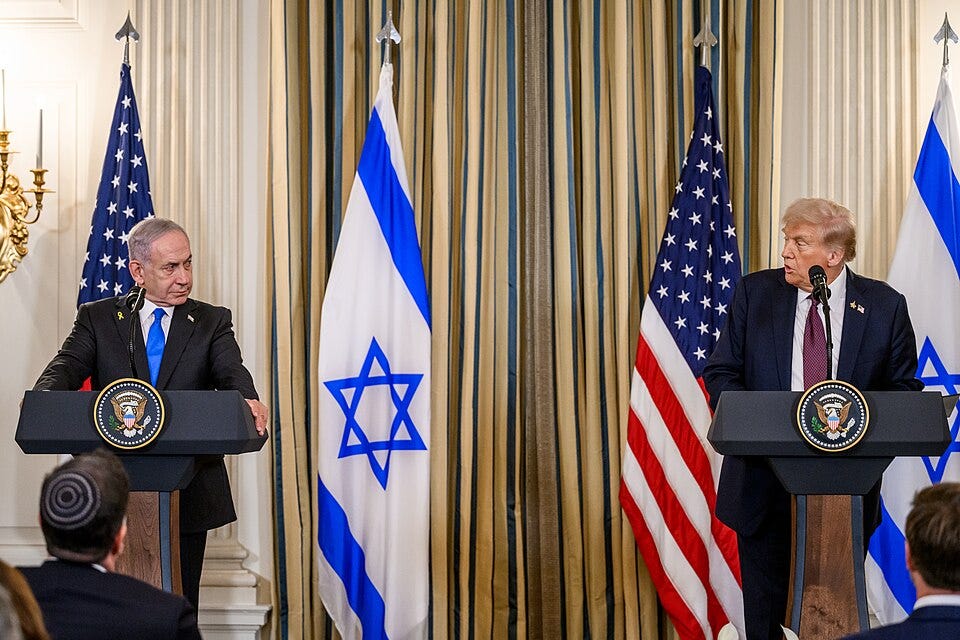
Every military debacle reaches a point when fantasy hardens into strategy in the planning process. The Iran operation appears to have had several such points, though the decisive moment came when Israeli Prime Minister Benjamin Netanyahu secured Donald Trump’s initial buy-in for a war plan centred on regime collapse.
According to leaks to the New York Times and Ynet, the presentation was cinematic by design. (Although credible given subsequent events, we must be wary of leaks clearly from U.S. Vice President JD Vance’s camp, which allowed him to wash his hands of the decision to go to war.) Allegedly, Netanyahu arrived at the White House with Mossad Director David Barnea on screen, Israeli military officials arrayed behind him, and a theory of victory tailored to a president who favours audacity, speed, and historical drama.
The premise was simple enough: Kill the leadership, smash the missile infrastructure, paralyse the coercive organs, stir the streets, open a Kurdish front from Iraq, present an alternative leadership, and let the Islamic Republic collapse under the weight of its own unpopularity.
For Netanyahu, this was the culmination of a career-long project. For the Mossad, it was a rare operation in which tactical penetration, psychological warfare, targeted killing, and political engineering could be fused into a single decisive blow. For Trump, it offered something even more dangerous: a fast war with the feel of history.
American officials claim they saw the weak point almost immediately. The CIA assessment reportedly broke the Israeli presentation into four components: decapitation, military degradation, popular uprising, and regime change. The first two were achievable with American and Israeli capabilities. The last two were judged fantasy.
CIA Director John Ratcliffe reportedly called the regime-change scenario farcical. U.S. Chairman of the Joint Chiefs of Staff General Dan Caine warned that the Israelis were overselling. Even U.S. Secretary of State Marco Rubio, hardly a dove on Iran, understood that destroying missiles and birthing a new regime were different projects.
Whilst one or some of these officials may have leaked this to exonerate themselves from the subsequent mess, it has the opposite effect: It speaks to the spinelessness and yes-man culture that Trump has created in his administration.
Either way, it appears the United States and Israel embarked on a campaign whose political success hinged on assumptions that their own intelligence process had already downgraded.
Within days of the first strikes, regime change was treated as a welcome possibility rather than a genuine operational requirement, even as the campaign’s initial logic still depended on it. The air war could damage the Iranian state, kill officials, destroy buildings, erase depots, blind radars, and sever command networks. None of that created a governing coalition. None of it made frightened Iranians take to bombed streets. None of it converted Kurdish militias, Israeli influence operations, royalist nostalgia, and American airpower into a credible national transition.
This is a familiar pattern. Foreign powers are often adept at identifying the weaknesses of an enemy regime. They are much worse at understanding the sources of its survival. The Islamic Republic is corrupt, brutal, loathed by tens of millions, and economically incompetent.
It is also deeply practised in repression.
It has survived war, sanctions, assassination, protest waves, elite factionalism, and decades of external pressure. Its security organs exist and were designed for moments like this. The Basij and Islamic Revolutionary Guard Corps merely need to be feared, armed, and organisationally intact enough to make rebellion costly.
Externally imposed regime change has a poor record of producing stable, friendly, durable political orders. Intervening powers can remove rulers and deform institutions. Legitimacy cannot be air-dropped. The coercive apparatus does not dissolve because a foreign intelligence service has identified a replacement. Citizens do not become the infantry of someone else’s war because a foreign president tells them help is coming.
The Iranian people made the only rational choice available to many of them. They stayed alive. From Washington or Tel Aviv, it is easy to imagine a population rising once the tyrant is wounded. It is harder to persuade a parent in Tehran to step into the street unarmed, while bombs fall from above and regime gunmen wait below. Hatred of the regime is real. Fear of being shot as a collaborator is also real. Fear usually wins in the opening phase of a war whose outcome remains uncertain.
The Kurdish component revealed the second major failure. There was sufficient circumstantial reporting at the time to support recent media accounts that the plan required a ground invasion from Iraqi Kurdistan. Kurdish, Baluchi, and Ahwazi elements were to stretch the regime and create the appearance of internal disintegration. Israeli aircraft had begun clearing a corridor. The force was reportedly hours from crossing.
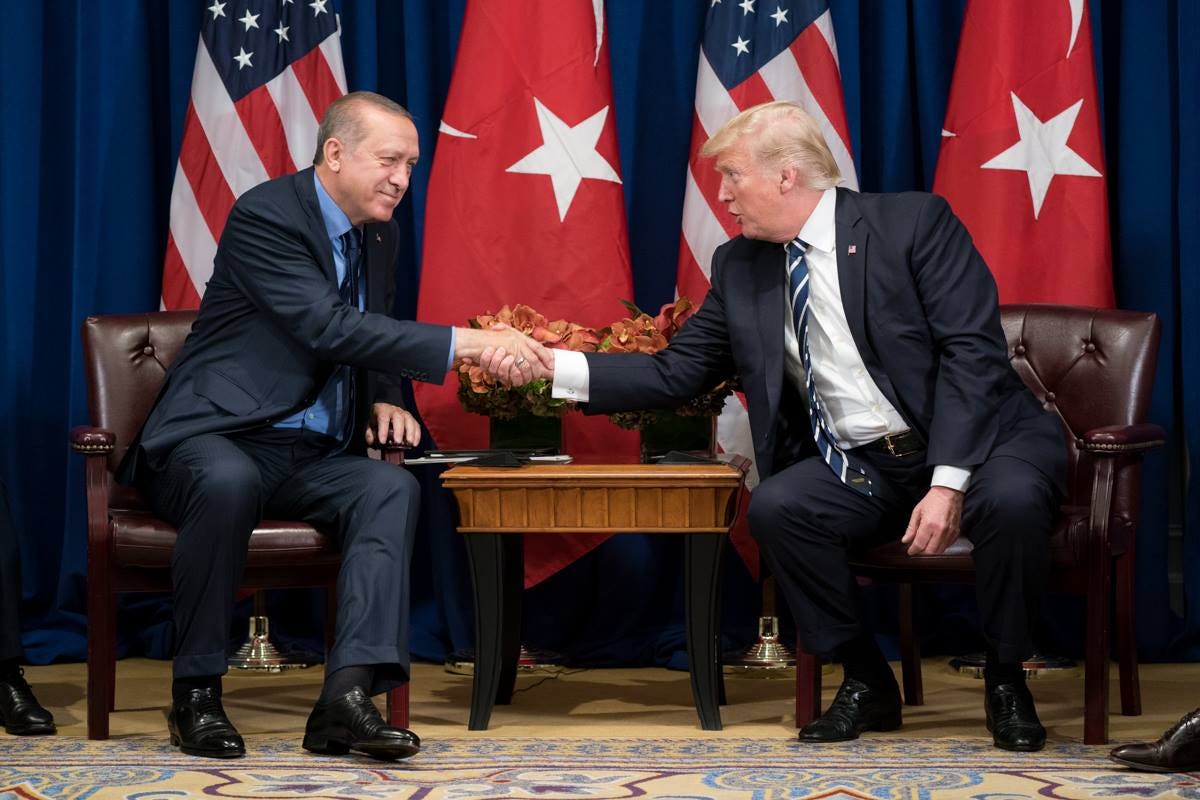
Then Turkish President Recep Tayyip Erdogan called Trump — and Trump folded.
From Ankara’s perspective, the intervention made perfect sense. Erdogan had no interest in seeing Kurdish forces become the heroic vanguard of a victorious regional war. A successful Kurdish march into Iran would have echoed across Turkey, Iraq, and Iran. It would have revived separatist anxieties and threatened Erdogan’s claim to regional primacy. It would also have given Israel a spectacular political win in an arena where Turkey seeks influence.
Erdogan saw the plan’s vulnerability and pressed it.
The scandal is that the vulnerability existed at all. A regime-change plan dependent on a Kurdish ground front required a serious answer to the Turkish veto. Evidently, there was none. Trump approved the war, adopted the Israeli theory of victory, then removed one of its central pillars under pressure from Ankara within days of the first bombs falling.
From that point, Israeli influence over events declined, and a clear divergence of interests emerged between the two allies. The United States became both indispensable and unreliable. The campaign kept moving, while its internal logic broke down.
This is how debacles take shape. The original fantasy meets the first serious political constraint, and the plan is adjusted to preserve motion while destroying coherence.
The Strait of Hormuz was the third and most significant failure. Any campaign against Iran should have begun there. It is the lever Tehran has always held.
Iran did not need to defeat the United States Navy; it simply needed to threaten shipping, mine waters, harass tankers, raise insurance costs, create uncertainty, and force markets to price in the possibility of prolonged disruption. Iran could impose serious costs in the Strait even while losing a conventional fight. The channel is narrow. Traffic is dense. The global economy is exquisitely sensitive to disruption there.
Trump appears to have assumed the regime would collapse before it could use that lever. That assumption deserves a long life in war colleges. It reveals a whole strategic culture: impatient, theatrical, contemptuous of logistics, indifferent to escalation, and convinced that adversaries will conform to an American timetable.
Failing to secure Hormuz before launching this war was a first-order planning failure. Treating it as a manageable contingency only made the failure worse. The regime did not fall. The Strait was closed. Oil markets began to price in political reality rather than White House confidence.
ExxonMobil executive Neil Chapman’s warning that oil could reach $150 to $160 a barrel gives the domestic consequences a concrete figure if Trump had not managed to reopen Hormuz in the next week or so. A barrel contains 42 gallons. At $150 a barrel, crude alone is roughly $3.57 per gallon. At $160, it is roughly $3.81 per gallon. That is before refining, transport, federal taxes, state taxes, retail margins, and regional constraints.
In practical American terms, this points to gasoline well above $5 nationally, with $6 or $7 plausible in expensive states and stressed local markets. Diesel would transmit the shock through trucking, agriculture, food, construction, and retail. Heating, petrochemicals, aviation, fertiliser, and freight would all absorb the blow.
A war sold as a strategic masterstroke would arrive in American life as a pump price.
The oil shock mechanism is well known. Energy shocks squeeze household incomes, push up inflation, distort consumption, and can tip weak economies into recession. Gasoline has an additional political dimension: voters see the price every day. They do not need to see the news headlines. They need only the number on the sign outside the gas station.
That is why Trump became desperate for a deal. He could continue the war and own the oil shock, the munitions burn, the risk of wider escalation, and the possibility that Iran survived anyway. Or, he could seek a Memorandum of Understanding and concede that the regime he tried to break remained the negotiating counterparty. If he escalated, the costs would fall to America. If he retreated into diplomacy, the result would look like a rescue operation for his own misjudgement. He chose the latter.
Yesterday’s announcement is best understood in that light. We do not yet know the final terms. Current reporting points to a preliminary understanding, a formal signature in Switzerland on Friday, the reopening of the Strait of Hormuz, the lifting of the U.S. blockade on Iranian ports, some form of oil or sanctions relief, and a 60-day period during which the nuclear question is deferred to further negotiations.
That is a ceasefire with economic relief attached, but it is also a confession that the war could not be sustained on its original strategic theory.
There is another reason Washington needed an exit: Iran’s missile performance shifted the debate. The verified picture remains severe and explains why Washington could not afford to return to all-out war.
Iran repeatedly targeted the infrastructure on which American airpower depends: radars, communications nodes, tankers, and battle-management aircraft. Iranian strikes damaged multiple KC-135 aerial refuelling tankers and an E-3 Sentry, with the E-3 likely beyond economical repair. Radar sites across the Gulf and wider region were struck or degraded. Kuwait reported damage to airport radar following an Iranian strike. Earlier evidence indicates damage to radar and radome infrastructure in Bahrain.
The volume is a strategic fact. By mid-April, more than 2,000 Iranian ballistic missiles had been launched since the start of the war. That is roughly comparable to the combined short- and medium-range ballistic missile inventory the Pentagon attributed to China in its 2024 report.
However one slices the comparison, Iran forced the United States to experience, in real time, the operational logic usually discussed in Taiwan scenarios: Missiles can close airbases, suppress radars, threaten tankers, complicate sortie generation, and compel the defender to expend expensive interceptors against cheaper offensive systems.
Iran’s best systems performed far beyond legacy assumptions about Iranian missiles. Some effects appear consistent with single-digit-metre accuracy. The political conclusion is already safe: Iran is a serious missile power, and it showed.
That fact imposes an unfavourable exchange ratio on the United States and its partners. Iranian missiles are cheaper to produce than the interceptors needed to stop them. Even while heavily degraded, Iran could fire enough to force ammunition consumption, expose vulnerabilities, and impose operational paralysis, even when most incoming missiles are intercepted.
The United States and Israel can win many individual engagements and still lose the campaign’s economics. Each Patriot, THAAD, Arrow, David’s Sling, SM-3, or SM-6 fired in the Middle East is one less available for Europe, Taiwan, Japan, or the next Gulf contingency until the industrial base catches up. The industrial base is nowhere near catching up.
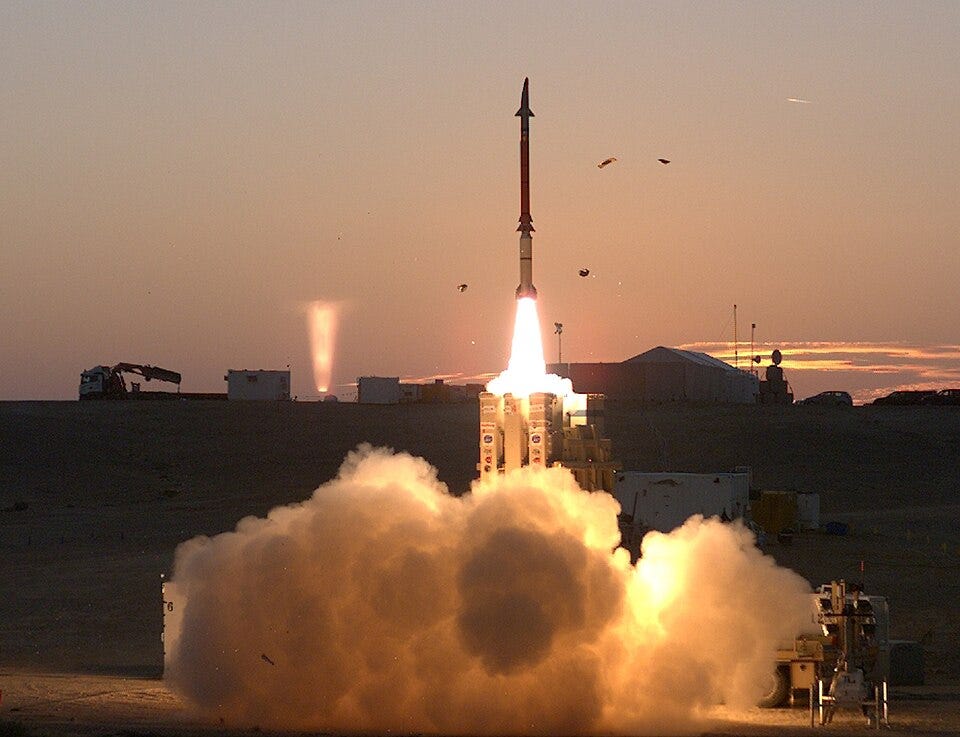
Depleted missile interceptors are the root of the problem. A war with Iran consumes the same scarce high-end munitions, interceptors, air-defence systems, and precision weapons that Europe and Taiwan also need. When supplies to Europe and Taiwan are halted or delayed because Washington has burned through its reserves in the Middle East, the message is brutal: American weapons are excellent until everyone needs them at once.
Taiwan will notice. Europe will notice. Future buyers of American arms will notice. A weapons supplier whose production base cannot keep pace with simultaneous crises is selling uncertainty with every platform. States that planned around American arsenals will now begin hedging, diversifying suppliers, expanding domestic production, and asking whether American kit carries an invisible caveat: available only if Washington is not already overextended.
The rare-earth problem makes this worse. Reconstituting advanced weapons production goes beyond congressional appropriations alone. It depends on industrial capacity, supply chains, critical minerals, skilled labour, and processing networks. Rare-earth permanent magnets and related materials are integral to the industrial base of modern power, including defence-relevant technologies. China’s position in these supply chains gives Beijing leverage at exactly the moment Washington needs to rebuild.
This is the strategic irony: A war launched to display American and Israeli dominance may end up advertising Chinese leverage over the material foundations of American power. Beijing only needs to appear patient, solvent, predictable, and useful, while Washington appears impulsive, depleted, and trapped.
As Iran rebuilds, China will be there with energy demand, infrastructure finance, diplomatic bandwidth, and the quiet confidence of a power that did not spend its missile stocks proving a theory of collapse that failed.
As money flows from Dubai to Tehran, the emerging rapprochement between the United Arab Emirates and Iran exposes another flaw in the assumptions underpinning the campaign. For much of the past year, Israeli policymakers appeared to believe that the war would accelerate regional alignment against Tehran, deepen the Abraham Accords, and encourage Gulf states to move closer to Israel.
The opposite is now evident.
Across much of the Gulf, there is growing frustration that they were drawn into a confrontation which imposed economic and security costs while offering few tangible benefits. The strikes on Qatar, threats to energy infrastructure, and the vulnerability of U.S. bases across the region reinforced a lesson Gulf capitals will not forget: Escalation can be initiated elsewhere, while the bill is delivered to them.
Gulf states are not naïve about Iran. They remain acutely aware of Tehran’s capacity for subversion, coercion, missile attacks, and regional interference. Their calculation is simply more pragmatic. Their political economies depend on capital inflows, aviation hubs, energy exports, sovereign wealth deployment, tourism, logistics, and the perception that their territory is insulated from the region’s worst convulsions.
If the choice is between symbolic alignment with Israel and a working channel to Tehran that reduces the risk of missiles over Doha, Abu Dhabi, Manama, or Riyadh, the Gulf will choose the backchannel. Jerusalem may call that appeasement, but Gulf rulers will call it preservation and prosperity.
Consequently, the prospect of major new normalisation agreements has receded. Without meaningful progress on the Palestinian issue, Gulf leaders have little political incentive to deepen ties with Israel.
More importantly, they have reached a sober assessment of Iran itself. Whatever damage has been inflicted on the regime, it remains the dominant power on the northern shore of the Gulf and will continue to be a permanent feature of the regional landscape. Attempts to isolate Tehran completely or force its collapse no longer seem realistic.
The Abraham Accords 2.0 fantasy is therefore buried for the foreseeable future. Trump tried to link an Iran deal to mass normalisation with Israel. Gulf leaders looked at the battlefield, the oil shock, the American rush to secure a Memorandum of Understanding, and Israel’s inability to sustain the campaign without U.S. support. They drew the obvious conclusion:
Why should Arab states absorb the political costs of openly aligning with Israel on Iran if Washington itself is negotiating with Tehran and constraining Israel’s freedom of action? Why break with the wider Arab consensus if the patron is already hedging?
The logic can run in reverse. Existing Abraham Accords states will reassess what they are receiving in return for strategic separation from their Arab partners. If the benefits of remaining within the framework shrink while the costs rise, second thoughts become rational. Arms, investment, technology, and access are valuable. Security against Iran is even more valuable. If the United States cannot deliver that security without negotiating with Tehran, the structure of incentives changes.
Saudi Arabia looks vindicated. Riyadh refused to be drawn into the conflict. It resisted pressure to normalise relations with Israel in exchange for security. It resisted efforts by more hawkish regional actors to form an Arab-Israeli front for the war. It deepened coordination with Pakistan and Turkey on supply chains, routes, and regional de-escalation. It preserved enough space to negotiate quiet arrangements with Iran. Saudi policy was derided by some as passive, but it now reads as disciplined self-preservation.
Israel succeeded in convincing the United States to go to war with Iran, a notable achievement. It failed to achieve the strategic aims that were supposed to justify that risk — no regime change, no Arab-Israeli coalition, no decisive solution to the missile problem, no durable removal of Hezbollah from the northern border, no regional normalisation dividend.
Instead, Netanyahu has been publicly rebuked by Trump after last week’s attack on Beirut, forced into a deal he adamantly opposed, and Israel is left facing an American public debate in which Jerusalem will increasingly be blamed for pulling Washington into an unnecessary war.
The consequences for the U.S.-Israeli relationship could be generational. Israel can initiate certain operations alone, but it cannot sustain a major regional war for long without American munitions, air defence replenishment, spare parts, financing, intelligence support, forward-deployed systems, and diplomatic cover. The war has exposed that dependency at the worst-possible moment.
Israel is now in a difficult position. It can accept Hezbollah’s continued presence on its northern border, with all the strategic humiliation that follows months of war, or it can break with Washington by continuing a campaign the White House wants closed. This is why the Lebanon clause in the emerging deal is so dangerous for Netanyahu. Hezbollah survives as an armed actor. Iran has tied the Lebanese front to the broader ceasefire architecture. Washington now has an interest in restraining Israel to preserve the Iran Memorandum of Understanding.
Israel can denounce that outcome, but denunciation does not solve the total reliance on and subordination to Washington that Netanyahu has embedded into Israeli strategy since Trump’s election. It does not remove Hezbollah from the hills, villages, and networks that define the northern front. Israel cannot accept this latter point, so a breach with Washington looms.
Erdogan’s position has improved. Israel tried to use the war with Iran to drive a wedge between Ankara and Washington, but the opposite happened. Erdogan blocked the Kurdish ground component, preserved Turkey’s red lines, and emerged as one of the indispensable actors in the diplomatic aftermath.
Trump has asserted his personal friendship with Erdogan, thanked him publicly for helping move the deal, and signalled his belief in Turkey as a stabilising force by elevating figures around him who are far more sympathetic to Ankara than Israelis would like.
U.S. Ambassador to Turkey Tom Barrack’s expanded regional role fits within that shift. Israelis resent his partiality and positive view of Ankara for good reason. Personnel choices reveal hierarchy. If Washington is leaning on Turkey to manage Syria, Lebanon, and the wider de-escalation architecture around Iran, Israel’s room for unilateral action narrows.
Ankara’s post-war message is simple: Every superpower seeking regional stability must pass through Turkey. Erdogan has been saying this for years. The Iran debacle made the case for him.
Pakistan also emerges stronger. The Islamabad channel, Prime Minister Shehbaz Sharif’s role, and the prominence of Pakistani military leadership in the background all point to a regional order in which Washington cannot simply dictate terms through traditional Gulf partners and Israel.
Pakistan has energy exposure, links to China, ties to the Gulf, its own nuclear status, and a security relationship with Saudi Arabia that cannot be ignored. In a war whose end required mediation, those attributes presented Pakistan with a golden opportunity that it seized with both hands.
The nuclear file has also become more intractable. U.S. intelligence sources believe Iran has sharply escalated efforts to seal off its stockpile of near-weapons-grade uranium, deliberately collapsing tunnels and placing explosive mines at the entrances.
The objective is clear: Tehran wants to make any future attempt to seize, inspect, remove, dilute, or destroy the material vastly more difficult and dangerous.
That detail captures the entire war.
Rather than negotiating from a position of helplessness, Tehran appears to be hardening its most valuable strategic asset ahead of any peace settlement. A campaign launched in part to eliminate Iran’s nuclear threat may have left the international community facing a stockpile that is harder to locate, monitor, and access. Even if a diplomatic agreement is reached, inspectors, engineers, or military personnel may first have to navigate collapsed tunnels, mined entrances, and fortified underground complexes before determining the true status of Iran’s uranium reserves.
The Memorandum of Understanding appears to kick the central problem into a 60-day window. That is strategically revealing.
After months of war, the United States has returned to negotiations on enrichment, stockpiles, verification, sanctions relief, and sequencing that it was conducting with Tehran before the war. This is the same class of problem Trump claimed force would solve. Now he is negotiating it under worse conditions, with a regime that has survived, a nuclear cache reportedly harder to reach, a missile force that has proved its worth, and a global economy desperate for Hormuz to remain open.
There is a final irony. Much of the discussion in Washington assumes that sanctions relief is the prize Tehran seeks above all else. The regime certainly wants access to frozen assets, oil revenue, and relief from economic pressure. It is negotiating for those things, but economic recovery is not the regime’s ultimate objective.
Since 1979, the Islamic Republic has repeatedly accepted severe economic pain in pursuit of ideological and geopolitical goals. Its leadership views the struggle against American influence and Israel as a religious mission and defining features of the revolutionary state, not as temporary bargaining positions.
If a deal is reached, resources will flow into Iran. The key question is where they will go. A state primarily concerned with national prosperity would prioritise reconstruction, consumer welfare, infrastructure, currency stability, and reintegration with the global economy.
The Islamic Republic will prioritise power.
No matter the clauses not to do so in any deal, it is beyond doubt that a significant share of any relief will be directed towards openly or covertly rebuilding missile production, command networks, air defences, hardened facilities, internal security, and the regional networks that project Iranian influence through Hezbollah, Iraqi militias, the Houthis, and other partners.
That will not necessarily make the regime safer. Rebuilding the economy would strengthen its long-term resilience. Rebuilding the military-industrial base will strengthen its ability to threaten Israel, intimidate neighbours, and contest American influence, while recreating the very target set that brought American and Israeli airpower down on it in the first place. The more resources Iran devotes to restoring its war machine, the more it creates the conditions for another confrontation. In seeking security, the regime will deepen its vulnerability.
This is why the deal, if signed on Friday, should not be mistaken for a resolution. It is a pause bought under pressure. It may reopen Hormuz, reduce oil prices, and give Trump a line to sell at home. It may give Tehran the cash and time it needs, give Gulf states space to breathe, or force Israel to swallow a Lebanon outcome it hates. None of that resolves the structural conflict. It only changes the tempo.
The balance sheet is stark:
Netanyahu sold Trump a war.
Trump altered the plan under Turkish pressure.
The Kurdish front died before it began.
The Iranian street did not rise.
The regime survived.
Hormuz became the coercive centre of the conflict.
Oil markets created urgency.
The missile war exposed the cost curve.
American stocks were depleted.
Europe and Taiwan were reminded that U.S. arsenals are finite and that American support is conditional.
Gulf states began hedging.
Saudi Arabia looked prudent.
Turkey gained leverage.
Pakistan gained relevance.
China gained opportunity.
Israel gained dependence and humiliation.
Trump gained a ceasefire that, in strategic terms, looks like an emergency exit.
The war required too many favourable contingencies:
Former Iranian Supreme Leader Ali Khamenei and the senior leadership had to be killed or rendered irrelevant.
Command and control had to collapse.
The Iranian public had to move in vast numbers despite fear and bombardment.
Kurdish forces had to cross without triggering a Turkish veto.
A credible alternative authority had to emerge.
Hormuz had to remain manageable.
Oil markets had to stay calm.
American interceptor stocks had to absorb the burn rate.
Allies had to accept delays and depletion.
China had to remain a spectator.
Trump had to remain steady.
A plan dependent on that many favourable contingencies is unserious.
Trump’s announcement yesterday laid bare the debacle:
Washington entered the war to coerce Iran and ended up negotiating with an Iranian regime that held a position of strength, threatening to collapse the global economy.
Israel entered the war to shift the regional balance and is now being told by Washington to stand down in Lebanon.
Gulf states were expected to rally behind Israel and are now reopening channels to Tehran.
Europe was expected to support American leadership and instead watched from the sidelines, increasingly convinced that an alliance with Washington has become a source of risk.
Taiwan was supposed to trust American abundance, and now sees scarcity and unreliability in motion.
Trump wanted the glory of a decisive war without the burdens that usually follow, the drama of regime change without occupation, the optics of strength without the patience of strategy, and the Israeli promise of regime collapse without the American responsibility for what came after.
Now he has a damaged Iran that has not fallen, a Strait of Hormuz crisis that forced a ceasefire, Gulf partners reconsidering American protection, Europeans questioning American reliability, Taiwan watching munitions flows, depleted missile reserves, Chinese leverage over rearmament, and a White House searching for a final nuclear agreement with the regime it expected to outlast.
The moral of this story, Israel can not depend on anyone.
"The Iran war ended exactly where it began."
No, it didn't.
Doom and gloom sells.
I am waiting to see how this plays out and I am very optimistic.
The US for the second time in 2 years has allied directly with Israel to fight a common enemy. That has never happened since 1948. To you this is nothing. To me it is everything.
In the US our armaments industry is changing at incredibe speed. The two Apache pilots that were shot down weren't saved by Navy Seals, Israeli special froces or any person. They were saved by a autonomous boat made by Saronic whose CEO is Dino Mavrookis an ex-Navy Seal. Other companies like Anduril, Castelion, Dzyne and others are making huge strides in developing incredibly dirt cheap, effective, mass produced weapons systme that do NOT rely on any importation of special materials or parts made in China but from readily available materials here in America.
There are dozens of "Elon Musk" types starting defense companies backed by "Elon Musk" type Venture Capitalists who understand if we don't have a civilization all their venture capital investments in AI and other leading technologies will be worthless so they are backing these new companies with all the money they need. Donald Trump picked Pete Hegsteth for a reason. Our Department of War in a few years will be totally different.
Backward regimes like Iran's are in deep, deep trouble.