


Please consider supporting our mission to help everyone better understand and become smarter about the Jewish world. A gift of any amount helps keep our platform free of advertising and accessible to all.
This is a guest essay by Wayne Chadburn, who writes reflective essays on politics, culture, learning, and modern life.
You can also listen to the podcast version of this essay on Apple Podcasts, YouTube Music, YouTube, and Spotify.
In May 1948, a Polish war hero was led from his prison cell and executed by the communist authorities in Warsaw.
He had fought the Nazis, voluntarily entered Auschwitz, organised resistance inside the camp, and smuggled some of the earliest eyewitness reports of the Holocaust to the outside world.
He escaped from Auschwitz and fought again in the Warsaw Uprising. After surviving all of that, after enduring one of the greatest horrors in human history, he was condemned as an enemy of the state by the regime that replaced Nazi occupation in Poland.
His name was Witold Pilecki — and for decades, much of the world barely knew it.
History produces many victims. It produces far fewer witnesses. Fewer still willingly walk into darkness in order to tell others what they have seen there. Pilecki did exactly that. His story feels almost impossible now. Too extraordinary or cinematic. Too morally stark for an age that often distrusts uncomplicated courage. Yet the reality of his life was not myth but flesh, blood, hunger, brutality, fear, endurance and ultimately death.
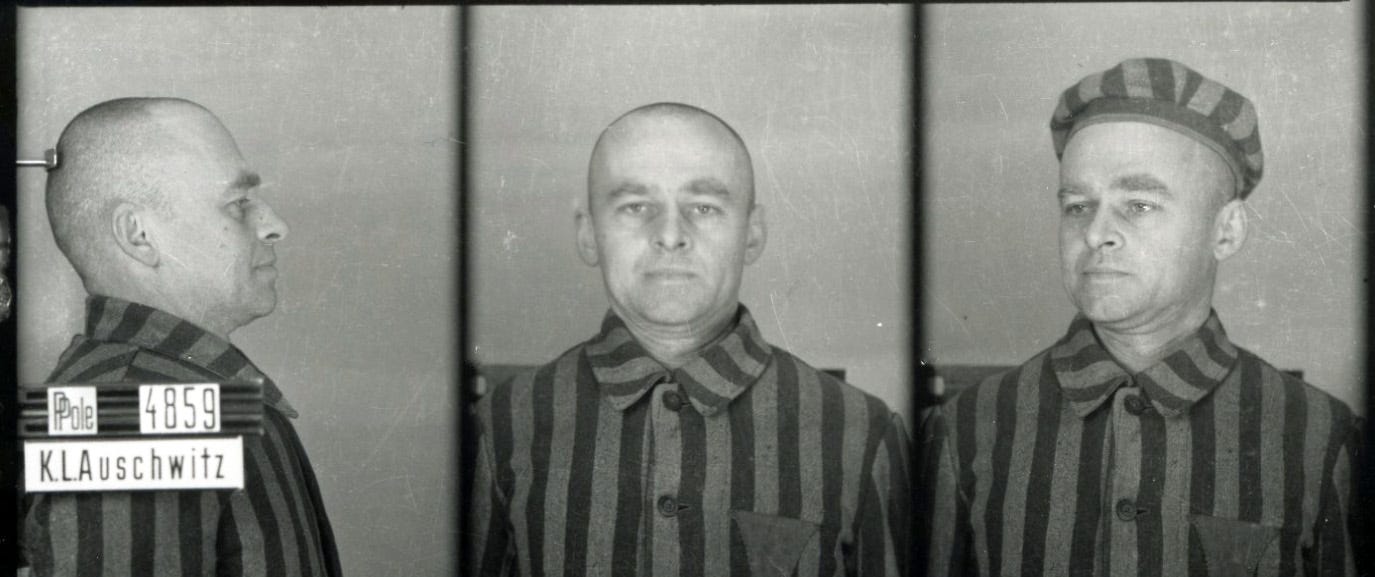
Perhaps what makes his story resonate so powerfully today is that he was crushed between the two great totalitarian systems that disfigured twentieth century Europe: Nazism and Stalinism. The Nazis tried to reduce him to a number. The communists later tried to erase his name altogether. Neither succeeded.
Witold Pilecki was born in 1901 into a Poland that did not formally exist. For more than a century Poland had been partitioned and carved apart by neighbouring empires. Generations of Poles grew up under Russian, German, and Austrian domination while clinging stubbornly to language, culture, and national identity. Patriotism in such circumstances was not merely sentimental; it was survival.
Pilecki was raised in a deeply patriotic family shaped by this atmosphere of dispossession and resistance. He came of age during an era when Europe was convulsing by war and revolution. After the First World War finally restored Polish independence, he fought in the Polish-Soviet War of 1919–1921 as the newly reborn Polish state battled for its existence against Bolshevik expansion.
Those experiences mattered, and they formed a generation for whom national freedom was fragile, hard won, and always vulnerable to destruction. Pilecki was not born a hero in the simplistic sense modern culture often demands. He was instead a product of duty, discipline, Catholic faith, and a belief that citizenship required sacrifice.
By the 1930s, he had settled into a quieter life as a landowner, husband, and father. But history was preparing to drag Poland back into catastrophe.
When Nazi Germany invaded Poland in September 1939, the Polish state collapsed under overwhelming military force. Weeks later, the Soviet Union invaded from the east under the terms of the Molotov-Ribbentrop Pact.
Poland was once again partitioned between hostile powers. For many Poles, this remains one of the defining traumas of national memory: abandonment, occupation, and annihilation squeezed between Hitler and Stalin.
The Nazi occupation was especially savage. Polish elites were targeted for extermination. Intellectuals, priests, officers, and community leaders were arrested or murdered. Entire communities disappeared into prisons and camps. Terror became a governing principle.
Witold Pilecki quickly joined the underground resistance. Like countless others in occupied Poland, he understood that surrender did not simply mean political defeat but the destruction of the nation itself.
Yet even within the unimaginable brutality of the occupation, Auschwitz remained something dark and half understood. By 1940, rumours were spreading about a growing concentration camp near the town of Oświęcim. Reports filtered back about beatings, starvation, and executions — but the full scale of what was happening there was not yet comprehended. Information was fragmentary. The underground needed intelligence.
And so Pilecki made a decision that remains almost incomprehensible. He volunteered to enter Auschwitz.
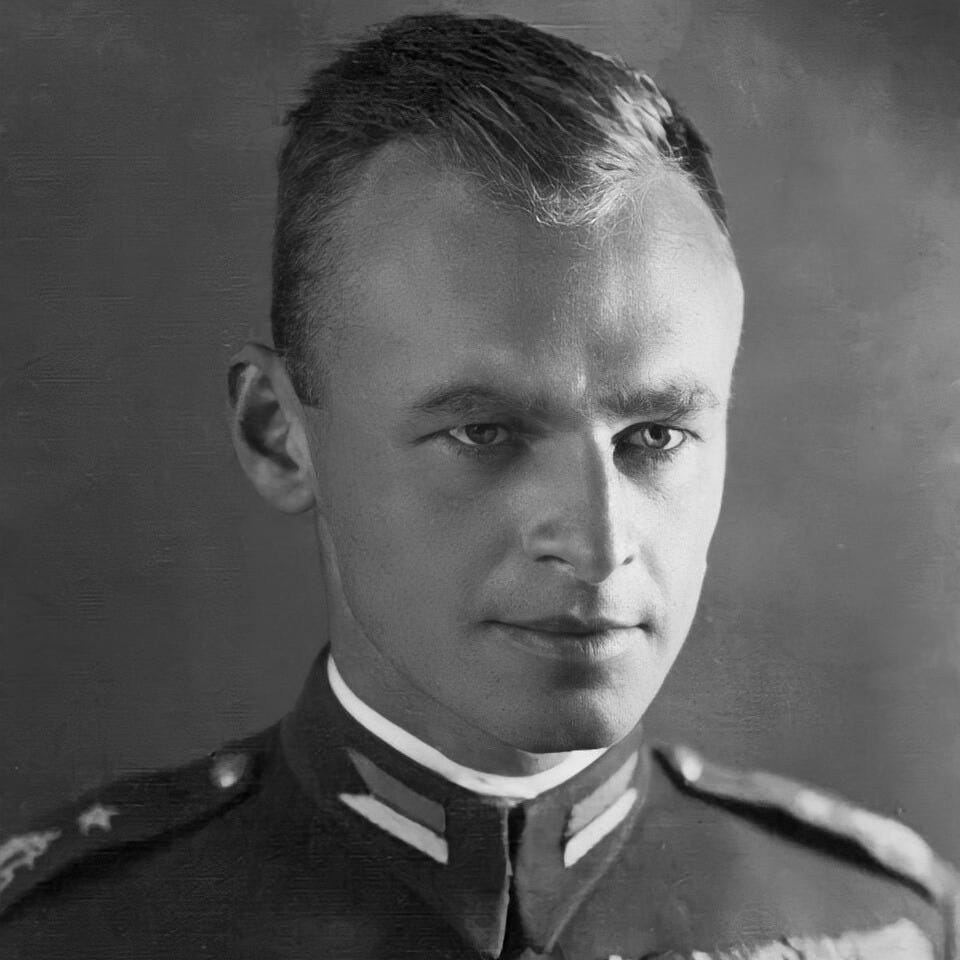
There are moments in history so morally extraordinary that they resist easy explanation.
Witold Pilecki deliberately allowed himself to be caught during a German roundup in Warsaw in September 1940. He entered Auschwitz under the false name Tomasz Serafiński and was assigned prisoner number 4859. He went there not to die, but to observe, organise, and report.
It is difficult to fully grasp what that choice meant. Auschwitz was not yet the industrialised death factory it would later become, but it was already a place of systematic cruelty, starvation and murder. Prisoners were beaten to death for minor infractions. Disease spread rapidly. Exhaustion was constant. Human beings were deliberately stripped of dignity and identity.
Pilecki later described the shock of entering the camp system: the random violence, the degradation, the casual omnipresence of death. Men ceased being individuals and became units of labour to be consumed.
Inside this machinery of terror, Pilecki began organising resistance. He formed underground networks among prisoners, sharing information, boosting morale, and secretly transmitting reports beyond the camp walls. These reports became some of the earliest eyewitness accounts reaching the Allies about Nazi atrocities and the emerging reality of mass extermination.
Today, with the Holocaust so thoroughly documented, it can be difficult to understand the disbelief that initially greeted such reports. The scale of Nazi barbarism exceeded the imagination of many outside observers. Even when information arrived, governments struggled to absorb it fully or respond decisively. This remains one of the enduring tragedies of Auschwitz: The world was told, but the truth was almost too monstrous to process. Inside the camp, survival itself became resistance.
Pilecki witnessed starvation, executions, torture, and the collapse of ordinary human morality under extreme conditions. He also witnessed courage with prisoners sharing scraps of bread, comforting the dying, preserving fragments of humanity inside a system designed to eradicate it.
What emerges most clearly from accounts of Pilecki’s time there is not recklessness, but purpose. He believed the camp could one day be liberated from within if the outside world acted decisively enough. He continued building networks and gathering intelligence despite the constant risk of discovery and death.
Eventually, after nearly three years inside Auschwitz, he concluded that remaining alive long enough to continue reporting mattered more than staying — and in April 1943, he escaped. Even that sentence feels absurdly understated. He escaped Auschwitz.
Most people would have considered survival enough, but not Witold Pilecki.
After escaping, he continued resistance work against the German occupation. Then came the Warsaw Uprising of 1944, one of the most tragic and heroic episodes of the war. As the Polish resistance rose against Nazi rule, hoping to liberate Warsaw before Soviet forces arrived, the city was systematically destroyed. Tens of thousands died. Much of Warsaw was reduced to ruins. Again, Pilecki fought, Poland bled and, again, freedom slipped away.
The war ended, but not in the way many Poles had hoped. Nazi occupation was replaced by Soviet domination and a communist government loyal to Moscow. For many in the Polish resistance, victory brought not liberation but another form of subjugation.
Pilecki remained loyal to the Polish government-in-exile and began gathering intelligence on the new communist authorities. He understood quickly what much of the West was reluctant to acknowledge: that one totalitarian system had been replaced by another. In 1947 he was arrested by the communist secret police.
The torture that followed was severe. Pilecki reportedly told his wife that compared to what he was enduring, Auschwitz had been “a trifle.”
Whether those were his exact words almost matters less than what they reveal. The man who had voluntarily entered Auschwitz — who had witnessed industrialised terror and mass death — now found himself brutalised by the state claiming to have liberated Poland.
His trial was a sham. The verdict was predetermined. In May 1948, Witold Pilecki was executed with a bullet to the back of the head in Warsaw’s Mokotów Prison.
He was 47 years old. His burial place remains uncertain.
Totalitarian systems do not merely kill people; they attempt to erase them.
Under communist rule, Witold Pilecki’s story was suppressed for decades. Mentioning him publicly could bring consequences. Official histories either ignored him or branded him a traitor. An inconvenient hero had to disappear because his life exposed uncomfortable truths about both Nazism and Soviet communism. So one of the bravest men of the 20th century faded into obscurity outside Poland.
Only after the collapse of communism did his story begin to re-emerge fully into public consciousness. Documents resurfaced and historians reconstructed his life. Books introduced him to international audiences and gradually, the man once condemned by the state became recognised as one of the great witnesses of the century.
Yet there is also something revealing in how long this took.
Modern societies often celebrate courage in the abstract while feeling uneasy about the people who actually embody it. Pilecki’s story is profoundly unsettling because it forces difficult questions upon us. What would we risk for truth? At what point does duty outweigh survival? How should ordinary people respond when confronted by evil on an industrial scale?
Most of us like to imagine ourselves as opponents of tyranny. Far fewer are willing to sacrifice comfort, safety or life itself in resistance to it. Witold Pilecki did.
There is a temptation when discussing figures like Pilecki to turn them into saints carved from marble rather than human beings. But perhaps the most important thing is precisely that he was human. He was a husband, father, soldier, and citizen — a man who experienced fear and suffering like many, particularly at that dark period of history, yet when confronted with monstrous circumstances, he chose responsibility over self-preservation.
This is why his story endures — not because it is comfortable or because it flatters us, but because it reminds us what moral courage can actually look like in practice.
The 20th century produced many bureaucrats of evil: men who obeyed systems, processed paperwork, and facilitated death while telling themselves they were powerless. Pilecki represents the opposite impulse: the individual who insists on moral agency even when trapped inside history’s darkest machinery.
The Nazis tried to reduce him to a number. The communists tried to erase his name. But history has a way of recovering its witnesses. Witold Pilecki entered Auschwitz so that the world would know what was happening there.

What a truly extraordinary man. We are not worthy of gathering up the crumbs under his table.
Caught between the two worst evils of human history.