


Please consider supporting our mission to help everyone better understand and become smarter about the Jewish world. A gift of any amount helps keep our platform free of advertising and accessible to all.
You can also listen to the podcast version of this essay on Apple Podcasts, YouTube Music, YouTube, and Spotify.
There is an airplane story that sounds physically impossible.
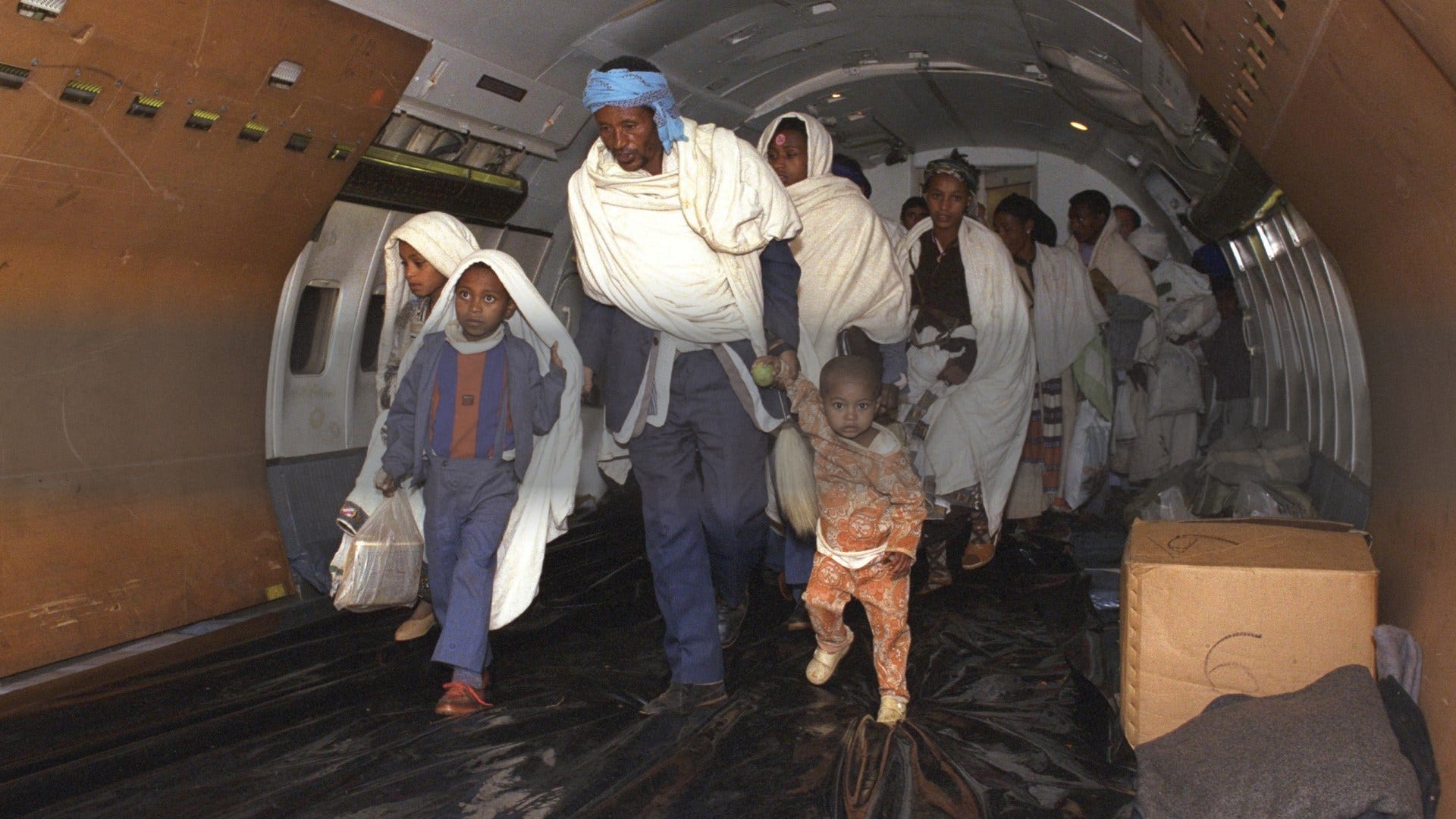
In May 1991, during Operation Solomon, an EL AL Boeing 747 designed to carry a few hundred passengers took off from Addis Ababa carrying more than 1,000 Ethiopian Jews to Israel.
The aircraft had been modified to fit as many people as possible. Seats were removed. Families were packed aboard. Two babies were reportedly born during the journey, meaning the airplane landed with more passengers than it had when it departed.
The flight remains one of the most extraordinary passenger airlifts in aviation history.
But the remarkable thing is not simply that EL AL did it. The remarkable thing is that, after more than seven decades, the story somehow feels completely consistent with the airline that did.
EL AL has been shot at. It has been hijacked. Its passengers have been targeted by terrorists. Bombs have been hidden in luggage intended for its aircraft. Missiles have been fired at Israeli planes. Wars have repeatedly emptied its cabins. Its geographic location has forced it to take longer routes than competitors. Its security requirements impose costs almost no other commercial airline bears. It voluntarily refuses to fly on Shabbat, surrendering roughly one day of revenue every week.
It has faced insolvency, privatization, terrorism, war, COVID, political controversy, and relentless competition. And it is still here. That makes EL AL more than an airline. In many ways, it is Israel with wings.
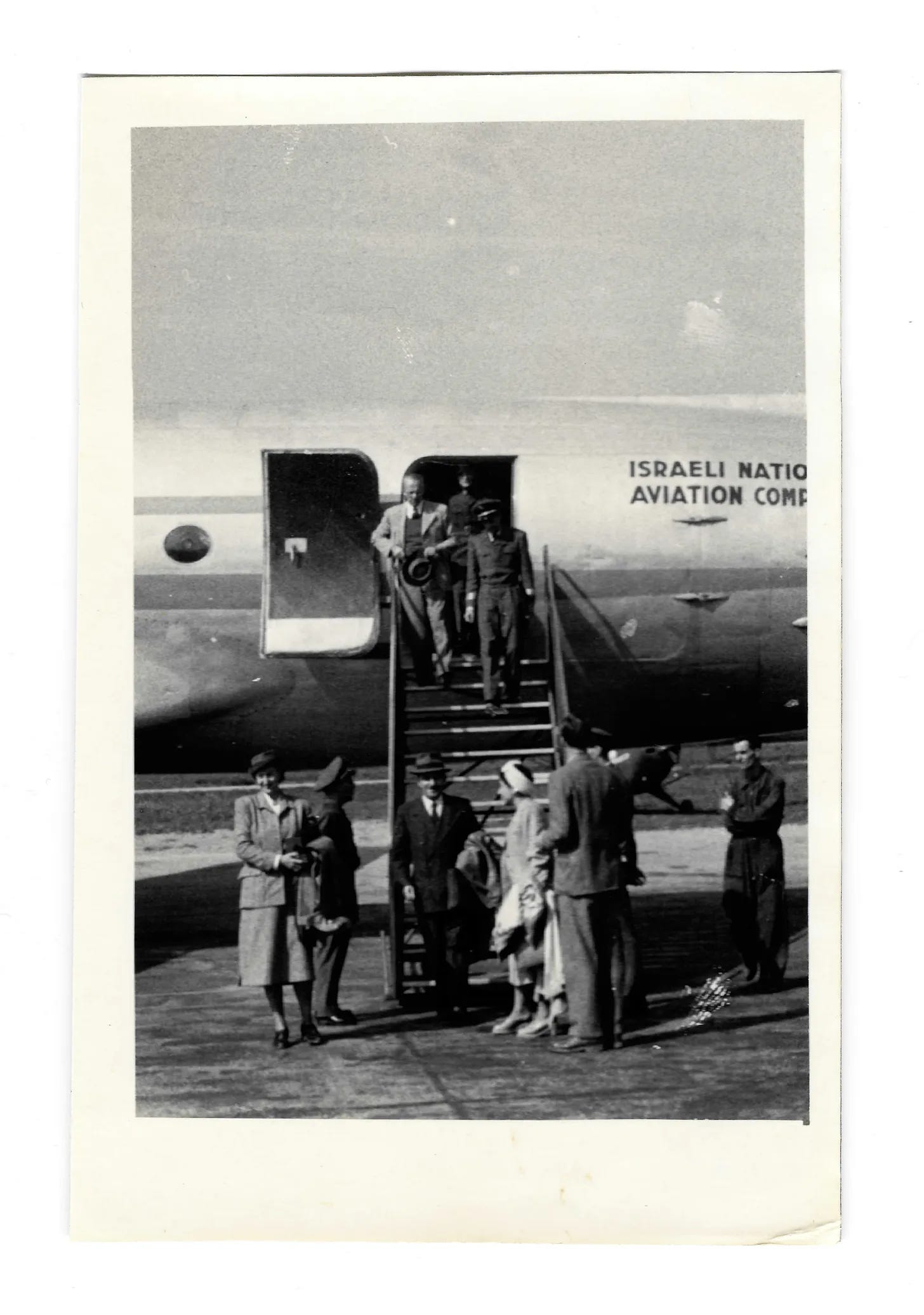
Most airlines begin because somebody sees a commercial opportunity. EL AL began because Israel needed to get someone home. In September 1948, the State of Israel was only months old and already at war. Israel’s first president, Chaim Weizmann, was stranded in Geneva. Foreign airlines were reluctant to fly into the new country.
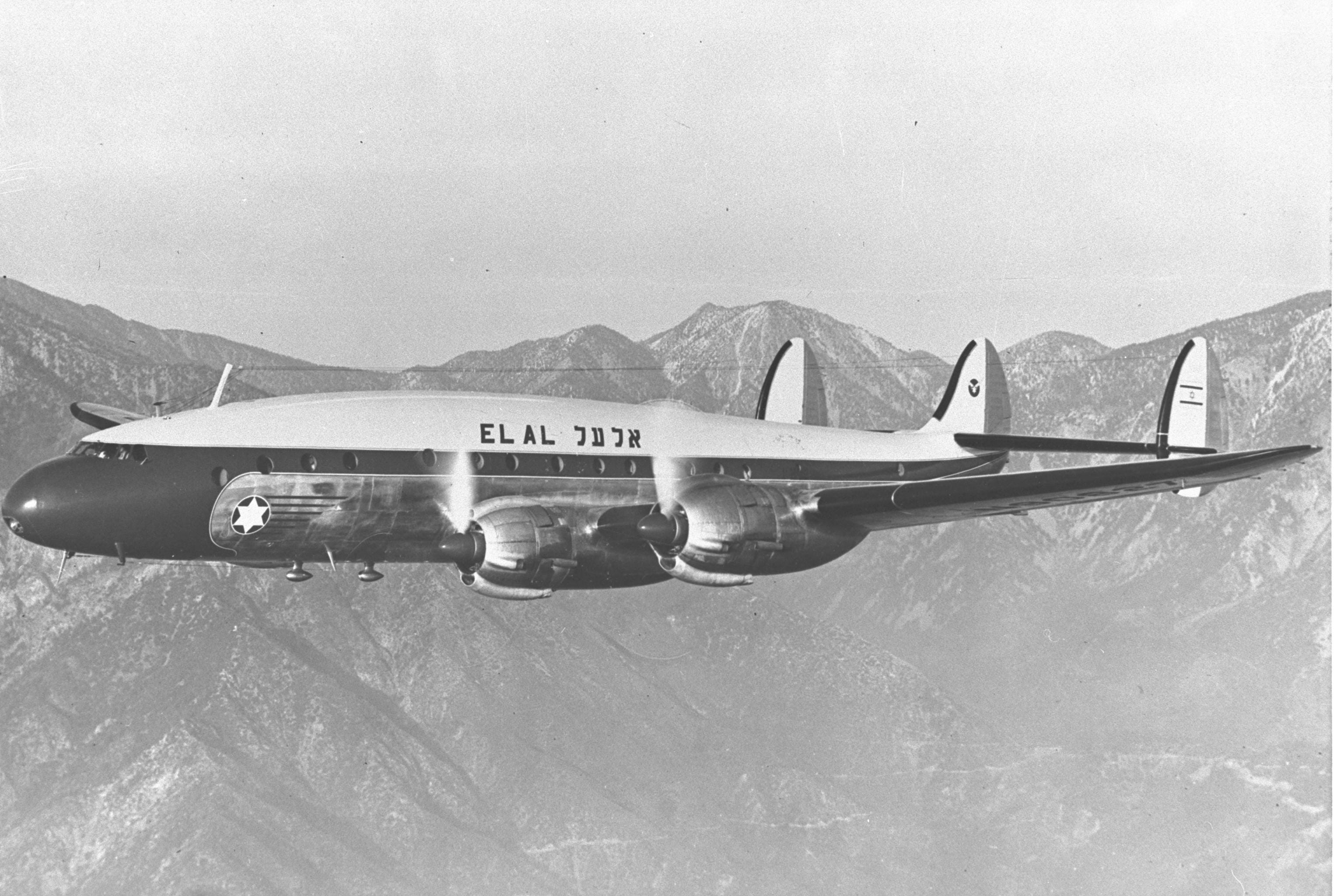
So Israel improvised. A military Douglas C-54 transport aircraft was stripped of its military identity, given civilian markings, and used to bring Weizmann home. What began as an emergency solution soon became an airline. EL AL was formally established shortly afterward. Its first scheduled international service began in 1949, flying from Tel Aviv to Paris.
But ordinary commercial aviation was never going to be EL AL’s only purpose. Israel was absorbing enormous numbers of Jews from around the world, including refugees fleeing hostile or unstable countries. Aircraft became instruments of national rescue. EL AL and other Israeli aircraft helped transport Jews from Yemen, Iraq, Ethiopia, the collapsing Soviet bloc, and elsewhere.
For many of those passengers, the airplane was not taking them on vacation. It was taking them home. Other national airlines became symbols of their countries because they carried their flags. EL AL became a symbol of Israel because it repeatedly participated in the actual building and preservation of the Jewish state. And like Israel itself, it learned very quickly that survival would require doing things differently.
On July 23, 1968, EL AL Flight 426 departed Rome for Tel Aviv. Hijackers seized the Boeing 707 and forced it to Algeria. The hostage crisis lasted for weeks. The passengers eventually returned alive. But EL AL appears to have drawn a distinctly Israeli conclusion from what had happened: Once was enough.
Over the following decades, terrorists repeatedly attempted to attack or hijack Israeli aviation. EL AL responded by building a security culture that often seemed excessive compared with the practices of other airlines.
Until, repeatedly, it did not.
Armed security personnel became part of Israeli aviation. Cockpit protection was strengthened. Passengers were questioned before flights. Baggage procedures became unusually rigorous. EL AL approached airport security differently from much of the aviation industry because it rejected the idea that security began at the metal detector.
Its philosophy was closer to intelligence gathering. Who is the passenger? Where are they going? Who packed the bag? Why are they traveling? Does their story make sense?
It could be intrusive. It could be frustrating. It could dramatically increase the amount of time necessary to board an airplane. But EL AL was optimizing for something other airlines did not yet fully understand: It did not want to discover the terrorist once the terrorist reached the aircraft. It wanted to discover the problem before the aircraft ever left the ground.
That philosophy was tested dramatically in 1970. During the Dawson’s Field hijackings, Palestinian militants targeted several commercial airliners in a coordinated operation. Other aircraft were successfully seized. EL AL Flight 219 was also targeted, but the attempt failed. Members of the crew and security team fought back, and the aircraft ultimately landed safely.
Even more revealingly, additional attackers who had reportedly intended to board the EL AL flight had been rejected during security screening. Unable to get onto the Israeli aircraft, they targeted another airline instead. The lesson was brutal but simple: Security that looks excessive before an attack can look remarkably reasonable afterward.
Perhaps the clearest demonstration came in 1986. A pregnant Irish woman named Anne-Marie Murphy arrived at London Heathrow preparing to fly to Tel Aviv. She believed she was traveling to meet the family of her fiancé before they were married. She had already passed ordinary airport security. Her luggage had been screened, but EL AL personnel began asking questions.
Something did not fit. She was traveling alone. She had not packed her own bag. Parts of her story raised concerns. Eventually, security personnel emptied the luggage. And then somebody noticed something astonishingly simple: The empty bag was still too heavy. Hidden inside was an explosive device. Murphy apparently had no idea it was there. Her fiancé, Nezar Hindawi, had allegedly concealed the bomb in her luggage and intended for it to detonate aboard the aircraft.
Hundreds of people could have died. Technology had not caught the threat. A human being had. Someone asked another question. Someone noticed another inconsistency. Someone picked up an apparently empty suitcase and thought: This does not feel right.
That episode contains the entire EL AL philosophy in miniature: Do not assume, do not rely on one system, and do not become embarrassed by vigilance merely because everything appears normal. Because for Jews, history has repeatedly demonstrated that normal can disappear very quickly.
Eventually, threats moved beyond hijackers and luggage. In 2002, shoulder-fired missiles were launched at an Israeli charter aircraft departing Mombasa, Kenya. They missed. Israel responded by developing defensive systems for civilian aircraft. Israeli planes would eventually carry technology capable of detecting incoming heat-seeking missiles and disrupting their guidance systems.
Think about how extraordinary that sentence is: A commercial passenger aircraft may require missile-defense technology simply because it carries Israelis. That should be absurd. Instead, it became another engineering problem for Israelis to solve.
It is one of the recurring characteristics of Israeli history: Israel is confronted with a circumstance that other societies would consider intolerable, so Israelis build something and keep on keeping on.
EL AL became an airline forced to think like an intelligence service, a military organization, and a commercial transportation company simultaneously. That creates enormous costs, but it also created something extremely difficult to replicate: institutional paranoia disciplined into institutional competence.
Then there is the economics. EL AL should not work as a conventional airline. Its security expenses are enormous. For much of its history, hostile countries prevented Israeli aircraft from using the most efficient flight paths. An airline based at one of the geographic crossroads of Europe, Asia, and Africa frequently had to fly around neighboring countries rather than across them.
Then there is Shabbat. Every week, from Friday evening until Saturday night, EL AL stops flying. Aircraft are some of the most expensive assets a company can own. Airlines make money by keeping them moving. EL AL voluntarily parks them. Competitors continue flying. EL AL does not.
Every meal served on the airline is kosher. Security is unusually intensive. Political instability can destroy tourism overnight. And Israel periodically goes to war. That means EL AL has always had an unusual relationship with profitability. During peaceful periods, it has to compete like a normal airline. During emergencies, it is expected to behave like national infrastructure.
When Israel needs airplanes, commercial optimization suddenly becomes secondary. In wartime, EL AL has transported reservists, supplies, immigrants, and stranded Israelis. The same aircraft expected to turn a profit one month can become part of the national emergency system the next. That is not necessarily a good business model. It is an extraordinary national one.
Nothing demonstrates this better than Operation Solomon. In 1991, Ethiopia was collapsing into political chaos. Thousands of Ethiopian Jews needed to get out. Israel launched an enormous airlift. Over roughly a day and a half, more than 14,000 Ethiopian Jews were flown to Israel. One EL AL Boeing 747 carried 1,088 passengers, setting an extraordinary aviation record.
The symbolism becomes almost too perfect: The captain of the aircraft, Ari Oz, had survived the Holocaust as a child after being hidden from the Nazis by a Dutch family. Decades later, he was commanding an airplane carrying more than a thousand Jews from danger to Israel. A Jewish child once hidden in Europe had grown up to fly Jewish refugees to Jerusalem.
You could spend billions of dollars trying to manufacture national symbolism that powerful and never come close. EL AL did not merely carry them. It completed a circle of Jewish history.
There is another reason EL AL’s story resembles Israel’s: Every time it appears secure, something happens that makes survival uncertain again.
COVID nearly destroyed the airline. International passenger travel collapsed. Most employees were sent home. EL AL owed enormous sums to passengers while carrying substantial debt and maintaining an expensive fleet. The company needed capital.
Then came one of the strangest corporate acquisitions imaginable: In 2020, Eli Rosenberg, a 27-year-old yeshiva student from Jerusalem with no airline operating experience, acquired a controlling stake through his company for a fraction of what a single modern wide-body aircraft costs. A national institution founded alongside the State of Israel had nearly collapsed into the hands of the only bidder willing to take the gamble.
It looked almost ridiculous. A few years later, it looked brilliant. EL AL emerged leaner. Travel returned. The airline became profitable again.
And then October 7th happened.
Following the Palestinian attacks of October 7th and the war that followed, foreign airlines began suspending service to Israel. One after another, familiar carriers disappeared from Ben Gurion Airport. Routes vanished. Flights were canceled. Israel became increasingly isolated from the global aviation system.
But EL AL kept flying. Once again, the airline stopped being merely an airline. It became a bridge. Reservists needed to get home. Israelis abroad needed to return. Families needed routes into and out of the country. Supplies had to move. And once again, the peculiar economics of EL AL reversed themselves.
The security infrastructure, geographic specialization, and willingness to continue operating in Israel during wartime — burdens during normal times — suddenly became enormous competitive advantages.
In 2024, EL AL reported record profits.
That created understandable controversy. Ticket prices rose. Passengers accused the airline of benefiting from a captive market while competitors stayed away. There is a legitimate debate to be had about pricing during a national emergency, but there is another reality that cannot be ignored.
For decades, people asked why Israel needed an airline with such unusual security, such unusual operating rules, and such deep connections to the state. October 7th offered an answer: because one day everyone else might leave.
EL AL’s story is ultimately not interesting because it is an airline story. It is interesting because it is a Jewish story.
Even its contradictions feel Jewish. EL AL is intensely modern and stubbornly traditional. Its jets carry cutting-edge technology, yet they sit on the ground every Shabbat. It participates in one of the most globally interconnected industries on Earth while belonging to a country that periodically finds itself isolated from the world. It is a private business that can suddenly become national infrastructure. It exists to sell airline tickets and, sometimes, it exists to rescue Jews.
The blue Star of David on EL AL airplane tails means something no ordinary airline logo ever could. It does not merely say where the airplane comes from. It says who it is coming home for.
The safest airline in the world. The first time I went to Israel
I went EL AL
How wonderful it was to me, that all the passengers cheered and clapped when we landed in Israel❤️
Loved this article. EL AL is incredible.