


Please consider supporting our mission to help everyone better understand and become smarter about the Jewish world. A gift of any amount helps keep our platform free of advertising and accessible to all.
You can also listen to the podcast version of this essay on Apple Podcasts, YouTube Music, YouTube, and Spotify.
2025 was not a year of comfort for the Jewish world.
It was a year of endurance, moral clarity under pressure, and unexpected courage — often from people and communities who did not seek the spotlight but were forced into it.
These are not “celebrities of the year.” They are the Jews, groups, and allies who carried responsibility when it was heavy, and who shaped Jewish destiny when it was contested.
What follows is not exhaustive. It is a moral snapshot of who mattered most — and why.
The Hostages Who Returned Home
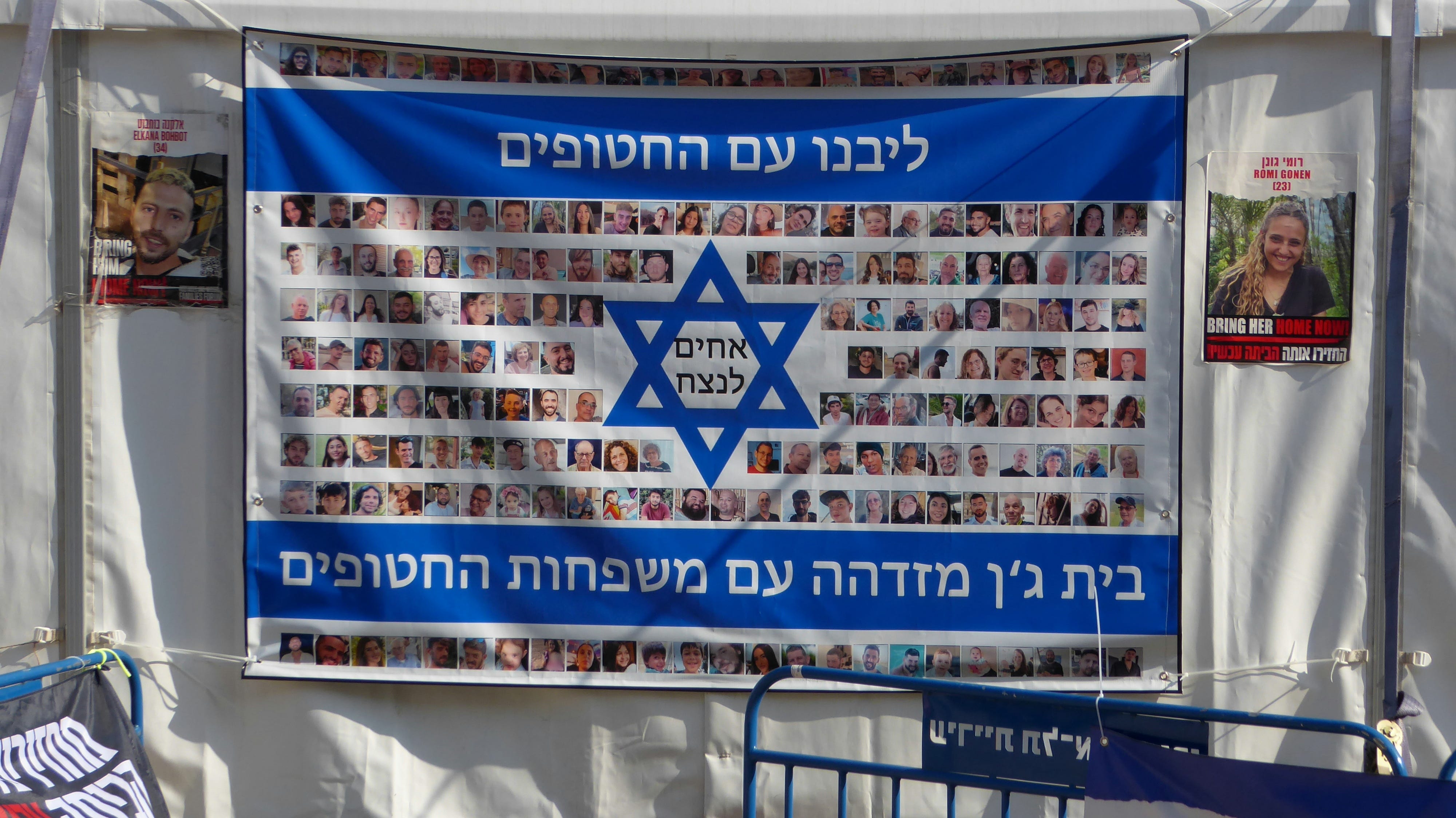
Forty-nine hostages held in Gaza were released in 2025. They are not public figures by choice, yet they became some of the most important people in the Jewish world. Their return was not just a humanitarian moment; it was a civilizational one. Each release reaffirmed a core Jewish principle: that no Jew is expendable, and that memory, responsibility, and persistence matter — even when time stretches unbearably long.
Their presence forced the world to confront what had too often been abstracted or politicized. These were not symbols; they were human beings — families shattered, lives interrupted, futures put on hold. Their survival stood in stark contrast to the way hostage-taking was normalized, justified, or ignored by much of the international community.
These individuals became living testimony to Jewish vulnerability, yes, but also to Jewish resolve. Their return reshaped Israeli society, diaspora conversations, and the moral ledger of the year. Simply put: Nothing that happened in the Jewish world this year can be understood without them.
The Australian Jewish Community
The Australian Jewish community emerged in 2025 as one of the clearest examples of Jewish self-reliance in the diaspora. After dozens of episodes of rising hostility and institutional neglect, Australian Jews found themselves confronting a reality many had long feared: that state protection could not be assumed, and that Jewish safety would require Jewish initiative.
Following the Bondi Beach massacre earlier this month, an event that shocked the nation, the community’s response was neither panic nor passivity. It was organization. Jewish institutions strengthened security, coordinated communal support, and spoke with a moral clarity that many political leaders lacked.
What made Australian Jews “People of the Year” was not victimhood, but posture. They refused erasure, refused silence, and refused to outsource responsibility for Jewish life. In doing so, they offered a sobering but vital lesson to Jewish communities everywhere: Resilience is not theoretical, it must be built before it is needed.
The Mossad
Much of what the Mossad accomplished in 2025 will never be known. That is precisely why it belongs on this list. While public discourse fixated on headlines and outrage cycles, Israel’s intelligence services quietly continued their most essential mission: Preventing Jews from being murdered, often far from Israel’s borders.
“If you knew how many terror attacks the Mossad has prevented,” an Israeli official said, “you would drop your jaw.”1
In a year of heightened global instability, the Mossad disrupted terrorist networks, intercepted plots, and protected Jewish targets across continents. These operations did not generate viral moments or public applause, but they saved lives. And in Jewish history, that has always been the only metric that truly matters.
The Mossad’s inclusion here is not about glorifying secrecy or power. It is about acknowledging the uncomfortable truth of Jewish survival in 2025: that safety is often secured in silence, and that vigilance — however unfashionable — is very much necessary.
IDF Lt. Gen. Eyal Zamir
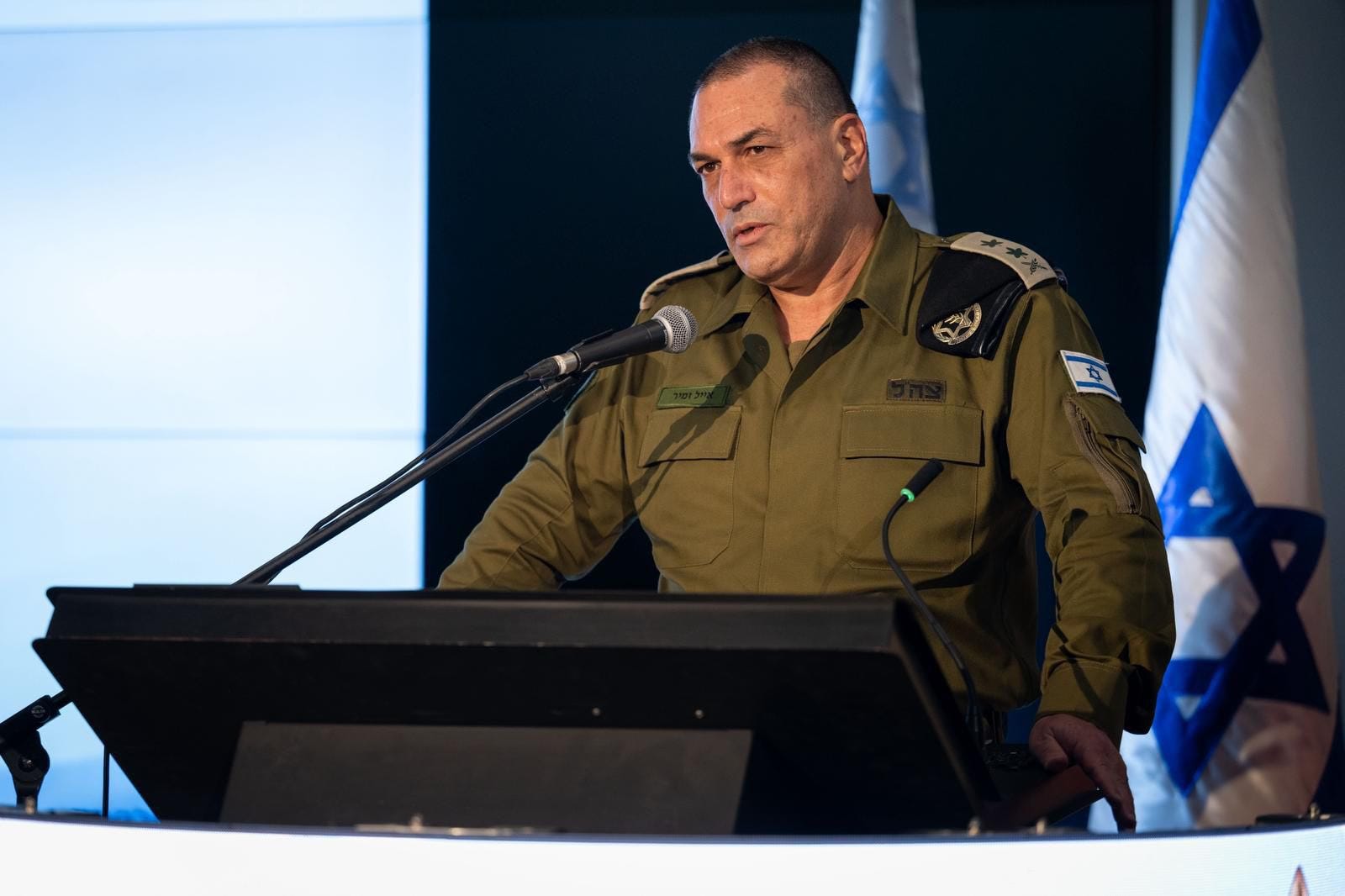
When Eyal Zamir assumed office as Chief of the General Staff in March 2025, he inherited not a crisis, but a condition: a military already fighting on seven fronts with no clean end in sight. Within months, that condition escalated into history. Zamir became the IDF’s commanding general during one of the most complex periods of sustained conflict Israel has ever faced — including a direct, unprecedented 12-day war with Iran in the summer of 2025.
Zamir’s leadership marked a shift from endurance to strategic recalibration. While continuing operations across Gaza, Lebanon, Syria, Judea and Samaria, Yemen, cyber and intelligence theaters, and the maritime arena, he oversaw Israel’s response to Iranian aggression with a doctrine rooted in deterrence, precision, and escalation control. The Iran conflict was not only military; it was psychological and geopolitical. Zamir’s challenge was to defend Israeli sovereignty without triggering a regional collapse — and to do so under the constant gaze of global powers urging restraint from the sidelines.
In 2025, Zamir came to embody the weight of Jewish command in the modern era: the responsibility to fight wars Jews did not choose, against enemies who deny Jewish legitimacy altogether, while being judged by standards no other nation is expected to meet. His tenure began not with speeches or symbolism, but with decisions whose consequences will shape Israel, and the Jewish world, for years to come.
Rabbi Daniel Walker
On Yom Kippur, the holiest day in Judaism, a terrorist rammed a car into and stabbed worshippers at Heaton Park Hebrew Congregation in Manchester, England, resulting in two deaths and four others injured, some seriously.
Rabbi Daniel Walker, head of the Heaton Park Jewish community in Manchester who was leading the Yom Kippur service that day, saved dozens of worshippers when he helped barricade the synagogue’s doors to prevent the terrorist from getting inside. Hundreds of worshippers inside the building were held safely until the police confirmed the premises were clear of danger.
The Ellison Family
When the Ellison family, led by Larry Ellison and his son David, purchased Paramount Global in August 2025, it marked one of the most consequential interventions by a Jewish family in global media in decades. At a time when many legacy media institutions had drifted toward moral equivocation, or outright hostility, on Israel and Jewish issues, Paramount’s platforms underwent a noticeable recalibration.
In October, an organization called “Film Workers for Palestine” circulated a pledge not to “work with Israeli film institutions … that are implicated in genocide and apartheid against the Palestinian people.” Shortly thereafter, Paramount released a statement condemning that pledge for “silencing individual creative artists based on their nationality.”
Then, in November, news broke that a growing number of Hollywood actors and filmmakers who have voiced solidarity with “Palestine” were reportedly being blacklisted by Paramount. And for good reason.
Lorena Khateeb
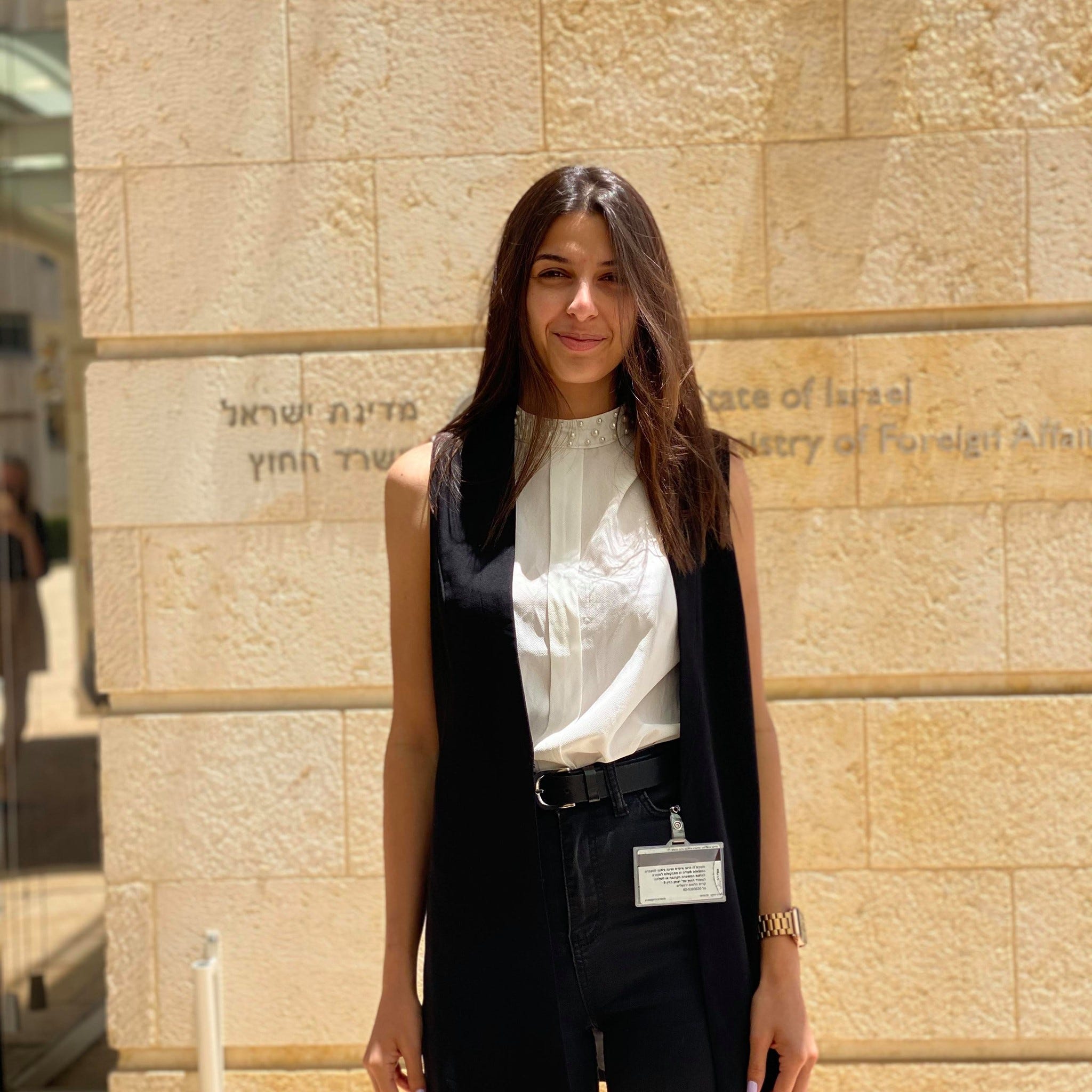
In 2025, Lorena Khateeb, an Israeli Druze media professional and social entrepreneur, became one of the most effective and under-recognized voices in Israeli public diplomacy. Fluent in Hebrew, Arabic, and English, Khateeb operated where Israel’s narrative struggle was most difficult: speaking directly to Arab and Western audiences without mediation, euphemism, or hostility.
Since October 7th, Khateeb intensified her efforts beyond media. She led delegations to Abraham Accords countries and the United States, engaging opinion leaders face-to-face at a time when misinformation about Israel was metastasizing. She also opened her own home to visiting delegations, insisting that understanding Israel requires proximity to real people, not curated talking points. Hosting Gulf delegations as a Druze woman within a traditional society added personal risk and complexity to her work — underscoring the seriousness of her commitment.
Alex Karp
In 2025, Alex Karp, co-founder and CEO of Palantir Technologies, emerged as one of the most consequential Jewish figures operating at the intersection of technology, security, and Western values.
Palantir, known for its government contract work in defense and intelligence, has provided its technology to support the Ukrainian and Israeli militaries in their respective wars. Karp has said he was “exceedingly proud that after October 7th, within weeks, we are on the ground and we are involved in operationally crucial operations in Israel.”2
He also added: “We’ve lost employees. I’m sure we’ll lose employees. If you have a position that does not cost you ever to lose an employee, it’s not a position.”
Immediately after the October 7th Hamas-led massacres and kidnappings, Palantir took out a full-page ad in The New York Times, stating it “stands with Israel.” A few months later, Palantir held its first board meeting of 2024 in Tel Aviv, after which the company agreed to a “strategic partnership” with the Israeli Ministry of Defense to supply the country with additional technology for its military efforts.
What makes Karp’s impact uniquely Jewish was his refusal to separate identity from responsibility. He articulated a worldview in which Jewish survival, democratic resilience, and technological power are inseparable — and in which retreat from moral commitment is itself a form of complicity. In a year when many powerful figures chose silence to protect reputations, Alex Karp chose alignment. In 2025, that choice carried real weight.
Noa Argamani
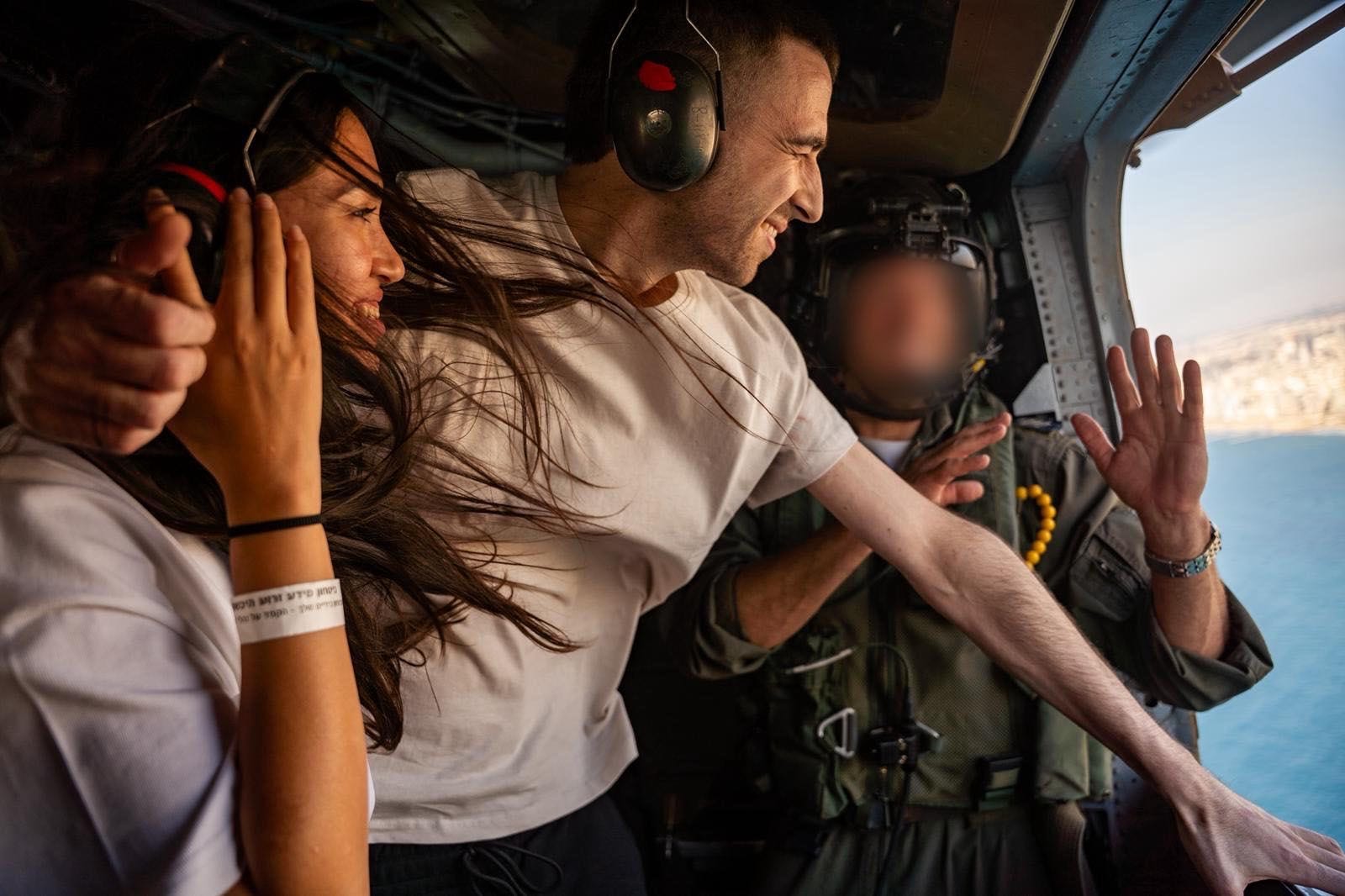
In 2025, Noa Argamani became one of the most powerful moral voices in the Jewish world — not by choice, but by necessity. After being kidnapped from the Nova Music Festival on October 7th and held hostage in Gaza for eight months — rescued in a special operation by Israeli special forces — Argamani emerged from captivity with a resolve that reshaped global attention on the fate of those still held. Her survival was extraordinary; what followed was even more consequential. Rather than retreat into private recovery, she chose to speak for those who could not.
Argamani has traveled extensively, meeting leaders, addressing international audiences, and consistently centering the conversation on the remaining hostages. Her advocacy in 2025 cut through political abstractions and activist noise by insisting on something radically simple: that hostages are human beings, not symbols, and that their captivity is a moral emergency, not a geopolitical footnote.
What made Argamani’s influence especially striking was her restraint. She repeatedly rejected the language of heroism and refused to turn her trauma into spectacle. Instead, she embraced responsibility—with dignity, clarity, and an unwavering focus on collective justice rather than personal narrative. In recognition of this impact, Time Magazine named her one of the 100 Most Influential People in the World in 2025.
Michael Rapaport
In 2025, Michael Rapaport cemented his role as one of the most visible and unapologetic Jewish voices in American popular culture. An actor and comedian by trade, Rapaport evolved into a full-throated cultural commentator, using his massive social media following to defend Israel and confront antisemitism with a style that was raw, confrontational, and unmistakably New York.
Since October 7th, Rapaport’s videos have gone viral repeatedly as he mocked Hamas apologists, challenged celebrities who trafficked in moral distortion, and injected humor into a cultural climate thick with denial and hostility. He was never interested in persuasion through polish. His power came from refusal: refusal to soften language, refusal to defer to elite sensibilities, and refusal to let antisemitism hide behind fashionable rhetoric.
Rapaport mattered in 2025 precisely because he did not sound like an institution. He sounded like family, like the loud uncle at the dinner table who will not let lies pass unchallenged. For Jews who felt isolated, gaslit, or abandoned by cultural gatekeepers, his voice offered something essential: permission to speak plainly. In a year when Jewish visibility came at a cost, Michael Rapaport paid it willingly — and loudly.
“Intelligence warned Australia of Iranian-linked terror activity months before Bondi attack, officials say.” Fox News.
“Palantir CEO says his outspoken pro-Israel views have caused employees to leave company.” CNBC.
I met General Zamir many years ago; he is a true warrior and I would fight for him any time. He inspires confidence! He is a big believer of the greater Israel concept.
He is the type of warrior Israel needs...
Sword of God Militia!
Enjoyed the article. When I saw the line "Much of what the Mossad accomplished in 2025 will never be known" I thought of my US Army career soldier Dad who retired in '68. He was in Army Intelligence in plainclothes and I once asked him what he'd done today before he retired and Pop just looked at me and smiled as he couldn't tell me anything which is surely what Mossad's response would be to my question. I read this quote 40 years ago and it applies here. "People sleep peaceably in their beds at night because rough men stand ready to do violence on their behalf."